Magellan's Circumnavigation Completed
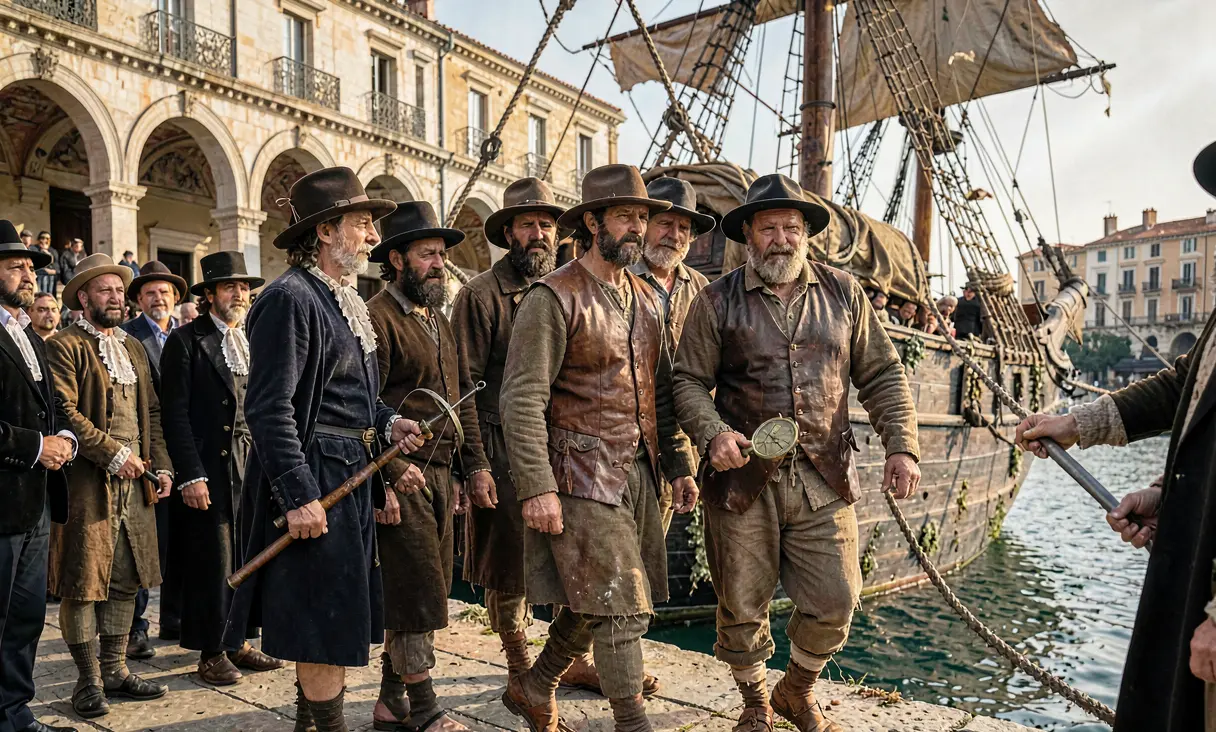
In 1522, Juan Sebastián Elcano returned to Seville with 18 survivors, completing the first circumnavigation of Earth and proving the globe's unity at a devastating human cost.
The Ambitious Departure
In September 1519, a fleet of five ships—the Trinidad, San Antonio, Concepción, Santiago, and Victoria—departed from Seville under the command of the Portuguese explorer Ferdinand Magellan. Sponsored by King Charles I of Spain, the expedition sought a western route to the Spice Islands (the Moluccas) to bypass the Portuguese-controlled eastern passage around Africa. The crew numbered approximately 270 men, a multinational mix of Spaniards, Portuguese, Italians, Greeks, and others, driven by the promise of wealth and the thirst for geographical discovery. Magellan's vision was radical: to prove that the Americas could be circumnavigated and that a vast, navigable ocean connected the Atlantic and Pacific, challenging the prevailing Ptolemaic understanding of world geography.
A Voyage of Suffering and Death
The journey was immediately beset by disaster. After navigating the treacherous strait at the southern tip of South America—now known as the Strait of Magellan—the fleet entered an immense, calm ocean which Magellan named the Pacific. However, the crossing proved to be a nightmare of starvation and disease. For months, the crew subsisted on rotting biscuits, sawdust, and leather, while scurvy ravaged their ranks, causing gums to swell and teeth to fall out. By the time they reached Guam in March 1521, only three ships remained; the San Antonio had deserted and returned to Spain, and the Santiago was lost earlier. The expedition arrived in the Philippines with dwindling supplies and a fractured crew, setting the stage for Magellan's fatal engagement in the Battle of Mactan on April 27, 1521.
The Rise of Elcano
Following Magellan's death, leadership passed through a series of captains before settling on Juan Sebastián Elcano, a Basque navigator who had previously served as the master of the Concepción. With only two ships remaining—the Trinidad and the Victoria—Elcano faced an impossible choice: attempt to return westward across the Indian Ocean or try to sail east back to the Atlantic via the Pacific, risking capture by Portuguese forces. The Trinidad attempted to return east but was forced back by storms and eventually captured; Elcano made the historic decision to take the Victoria westward. He navigated around the Cape of Good Hope, evading a Portuguese fleet that lay in wait, demonstrating exceptional seamanship under extreme duress.
The Return to Seville
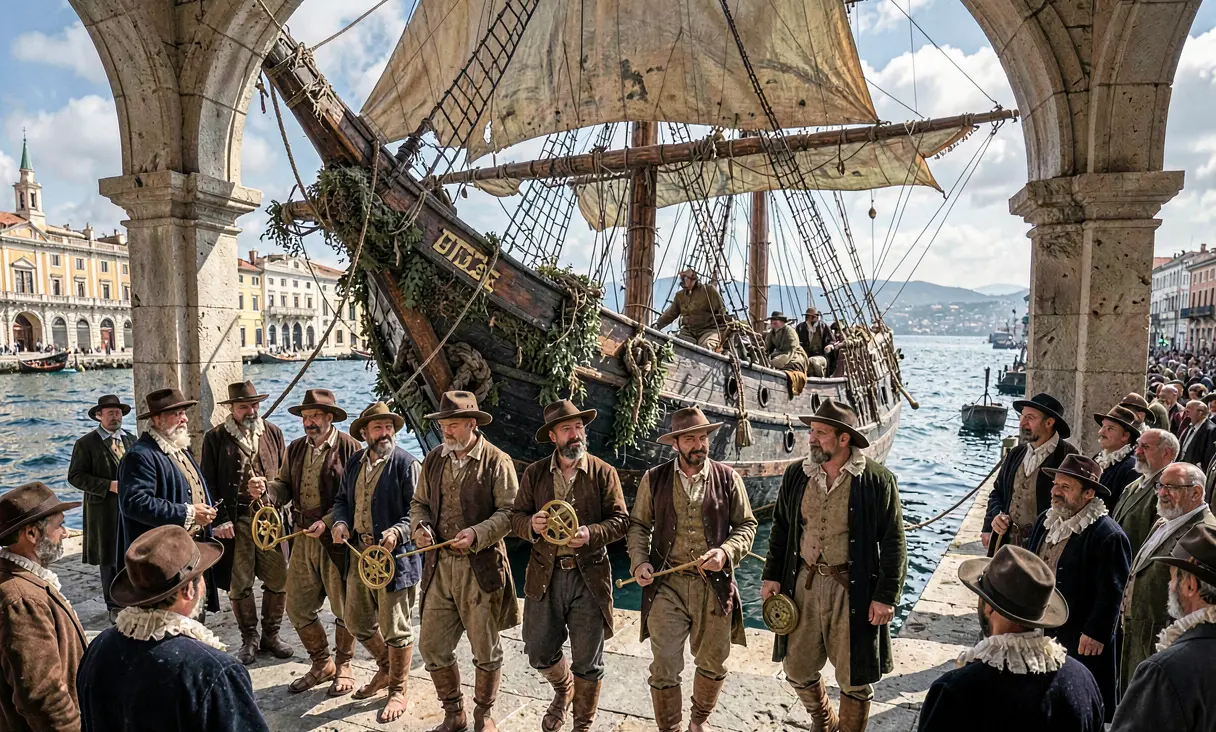
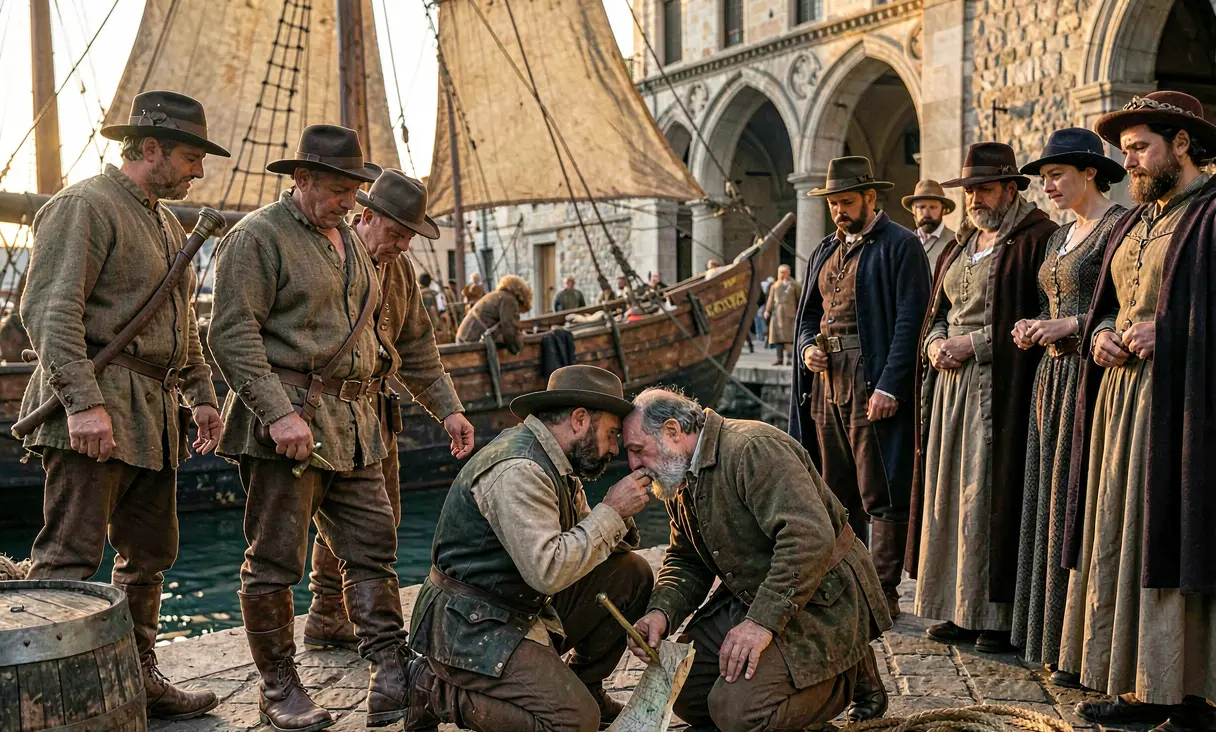
On September 6, 1522, the battered Victoria limped into the harbor of Sanlúcar de Barrameda, near Seville, Spain. Of the original 270 men who had embarked three years prior, only 18 survivors stumbled ashore, many too weak to walk without assistance. They were accompanied by a small group of indigenous Malays and enslaved people captured along the way. The ship itself was in such poor condition that it required immediate repairs before it could be presented to the Crown. Despite the catastrophic loss of life, the expedition had achieved the impossible: they had circumnavigated the globe, proving definitively that the Earth was a sphere with a single, continuous ocean connecting its eastern and western hemispheres.
Geographical and Scientific Revelations
The completion of the voyage provided irrefutable empirical evidence that shattered old world maps. It confirmed the true scale of the Pacific Ocean, which was far larger than previously imagined, explaining why the crossing had taken months rather than weeks. Furthermore, the crew discovered a temporal anomaly: upon returning to Seville, their ship's log indicated they were one day behind the local calendar. This phenomenon, later understood as the International Date Line, proved that traveling westward against the Earth's rotation effectively subtracts time. The expedition also brought back valuable spices and detailed charts of previously unknown coastlines in South America, Asia, and Oceania, fundamentally altering European trade routes and geopolitical strategies.
A Legacy of Human Cost
The significance of the Magellan-Elcano circumnavigation cannot be overstated; it marked the true beginning of globalization, linking continents in a single maritime network. However, this achievement came at a horrific human cost, serving as a grim reminder of the perils of early age exploration. The voyage exposed the lethal reality of scurvy and the fragility of human endurance against the elements. While Magellan is often credited with the feat, it was Elcano's resolve that completed the circle, cementing his place in history alongside his fallen captain. The event transformed Spain into a dominant maritime power for decades and inspired future generations of explorers to push the boundaries of the known world.
It confirmed the Earth is spherical and interconnected by oceans.
Where it happened
Seville, Spain — see it on the interactive map →
Explore related history
 TechnologyIntroduction of the Tomato to Europec. 1520 CE · Rome, ItalyTomatoes arrive in Europe from the Americas, revolutionizing global cuisine.
 WarBabur's Victory at Panipat and Founding of Mughalsc. 1526 CE · Panipat (modern Haryana/India)Babur defeats the Lodi Sultanate at the First Battle of Panipat, establishing the Mughal Empire in India.
 ReligionLuther Posts Ninety-Five ThesesOctober 31, 1517 CE · Wittenberg, GermanyMartin Luther challenges Catholic Church practices sparking the Protestant Reformation.
Discussion
Loading…