Lisbon Earthquake and Tsunami
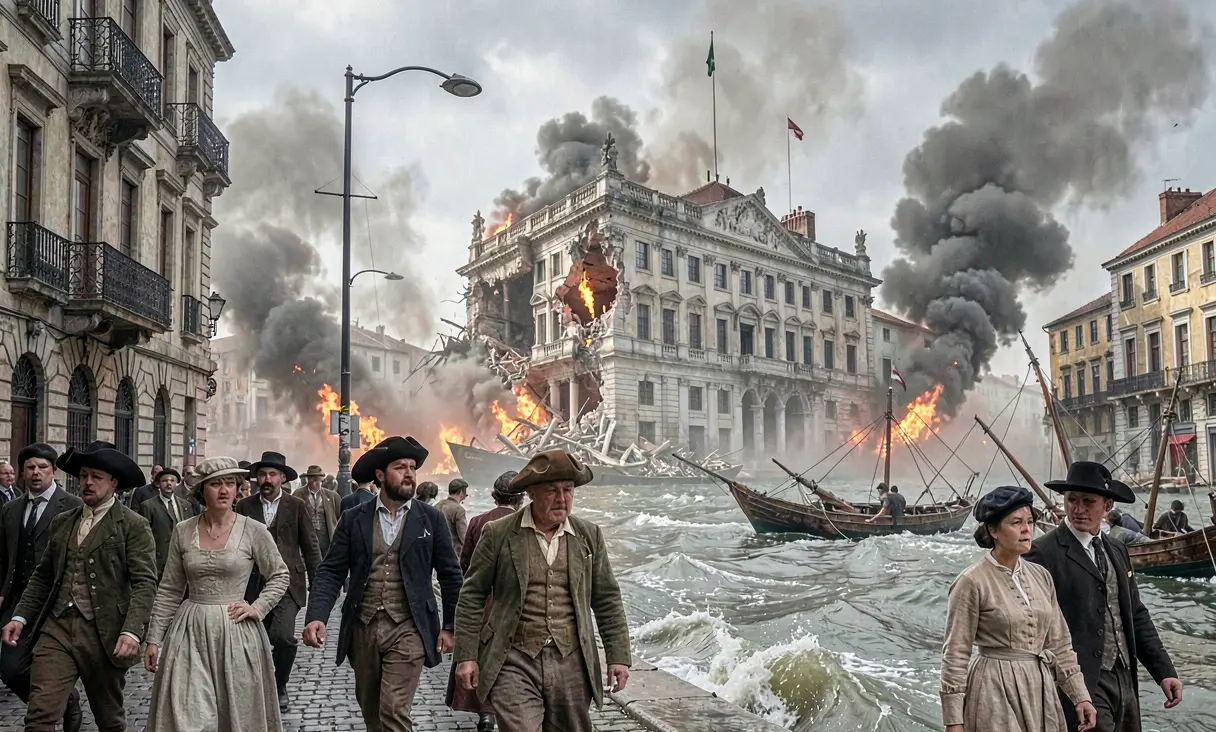
The 1755 Lisbon Earthquake, tsunami, and fires destroyed 85% of the city, killing tens of thousands and sparking a philosophical crisis that reshaped Western thought and birthed modern seismology and
A City of Faith and Commerce
On the eve of November 1, 1755, Lisbon stood as one of Europe's most vibrant capitals, a bustling nexus of global trade where the wealth of the Portuguese Empire flowed from Brazil, India, and Africa. The city was densely packed with narrow medieval streets, baroque churches, and opulent palaces, housing a population estimated at nearly 275,000 souls. It was a day of profound religious significance; as All Saints' Day dawned, the faithful filled the pews early in the morning to attend Mass, lighting candles and offering prayers for the departed. The atmosphere was one of solemn devotion, with the city's architecture reflecting its status as a Catholic stronghold, unaware that the very foundations of their world were about to give way.
The Cataclysm Unleashed
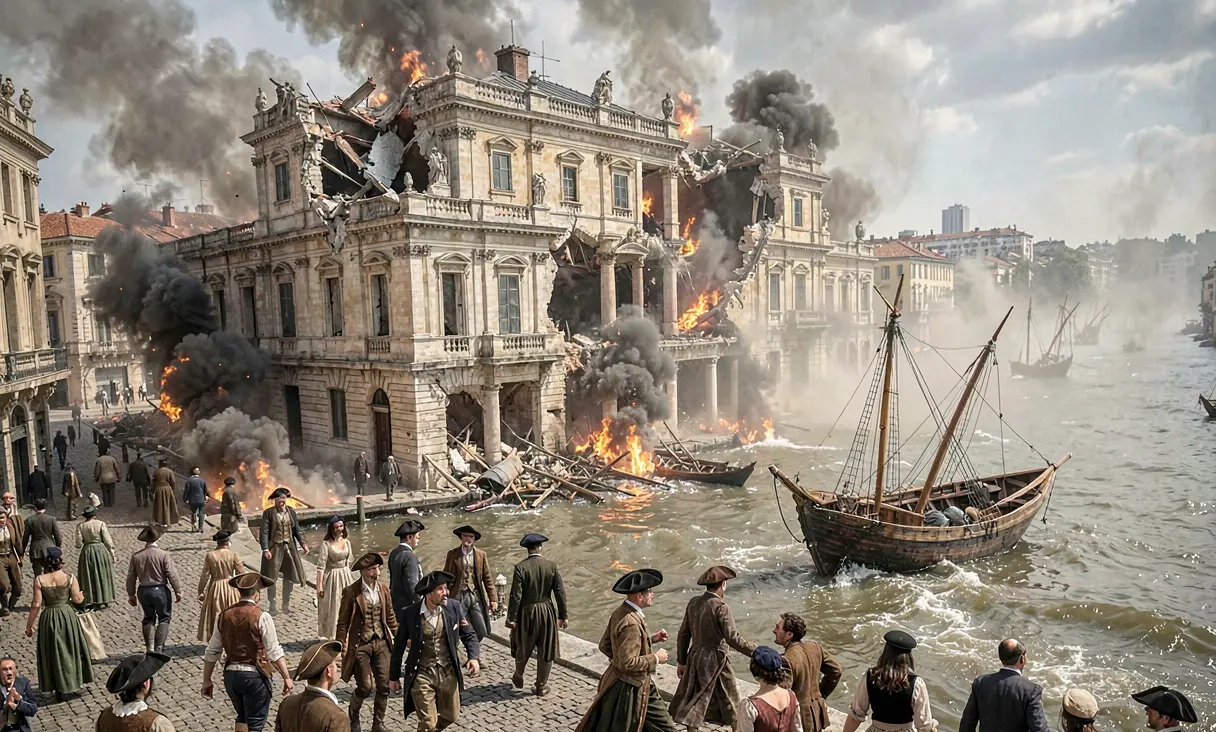
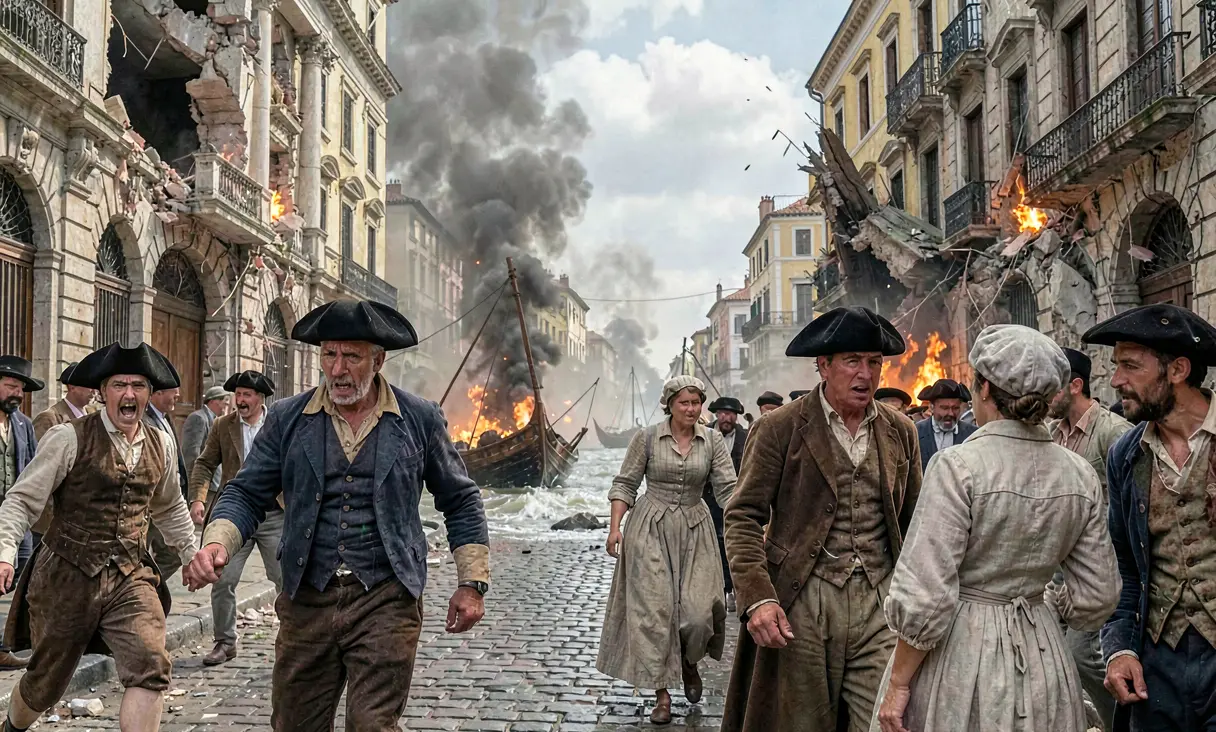
At approximately 9:40 AM, the ground beneath Lisbon heaved with unprecedented violence. Modern seismologists estimate the earthquake's magnitude at between 8.5 and 9.0 on the Richter scale, originating in the Atlantic Ocean roughly 200 kilometers southwest of Cape St. Vincent. The initial tremors lasted for several minutes, causing massive stone structures to crumble instantly; the Royal Ribeira Palace, housing the royal family and the national archives, collapsed into the Tagus River. As the dust settled, a terrifying silence was broken not by rescue efforts, but by a second, more devastating blow: a tsunami. Waves estimated at 30 meters high surged up the Tagus estuary, sweeping away survivors who had fled to the waterfront and destroying what the quake had left standing.
Fire and Ash
The disaster did not end with the waters receding. As the tsunami withdrew, it left behind a city littered with debris and overturned candles from the morning mass. Within hours, fires ignited across the ruins, fanned by strong winds and fueled by spilled oil and timber. These infernos raged for days, consuming an additional 85% of the city's structures. The combination of seismic shock, the tidal wave, and the subsequent fire created a perfect storm of destruction that erased centuries of history in less than twelve hours. Estimates suggest that between 30,000 and 50,000 people perished, representing roughly one-fifth to one-third of Lisbon's total population.
The Enlightenment Response
In the immediate aftermath, King Joseph I and his Prime Minister, Sebastião José de Carvalho e Melo (later the Marquês de Pombal), faced a nation in ruins. While religious authorities interpreted the catastrophe as divine punishment for the city's sins, Carvalho e Melo took a radically secular approach, famously ordering the burial of the dead to prevent plague and declaring, 'Now we must bury the dead and feed the living.' This pragmatic leadership marked a turning point in European governance, prioritizing statecraft over theology. The event also ignited a fierce philosophical debate across Europe; Voltaire, deeply shaken by the sheer randomness of the destruction on a holy day, used it to challenge Leibnizian optimism in his 'Poem on the Lisbon Disaster' and later in 'Candide,' questioning how an omnipotent, benevolent God could permit such senseless suffering.
Rebirth and Modern Urban Planning
Under Carvalho e Melo's direction, Lisbon was rebuilt with a vision that would influence urban planning for centuries. The old medieval labyrinth of narrow alleys was replaced by the Baixa Pombalina, a grid-like district characterized by wide, straight streets designed to facilitate traffic flow and prevent fire spread. Engineers developed innovative anti-seismic construction techniques, utilizing flexible wooden frameworks known as 'gaiola pombalina' (Pombaline cage) within masonry walls to absorb shock. This reconstruction was not merely about restoration; it was a deliberate act of modernization that established Lisbon as the first city in history to be rebuilt according to seismic safety standards and rational urban design principles.
A Legacy of Science and Philosophy
The Lisbon Earthquake remains a watershed moment in human history, marking the birth of modern seismology as Carvalho e Melo conducted one of the first systematic surveys of natural disasters, sending questionnaires to parishes across Portugal to gather data on the event's effects. Philosophically, it shattered the Enlightenment's uncritical faith in progress and divine order, forcing a re-evaluation of humanity's place in the universe. The event demonstrated that nature operates with indifference to human morality or calendar dates, a realization that fundamentally altered Western thought. Today, the rebuilt city stands as a testament to resilience, while the memory of 1755 continues to serve as a global benchmark for disaster preparedness and urban engineering.
It catalyzed early seismology and secular philosophical thought in Europe.
Where it happened
Lisbon, Portugal — see it on the interactive map →
Explore related history
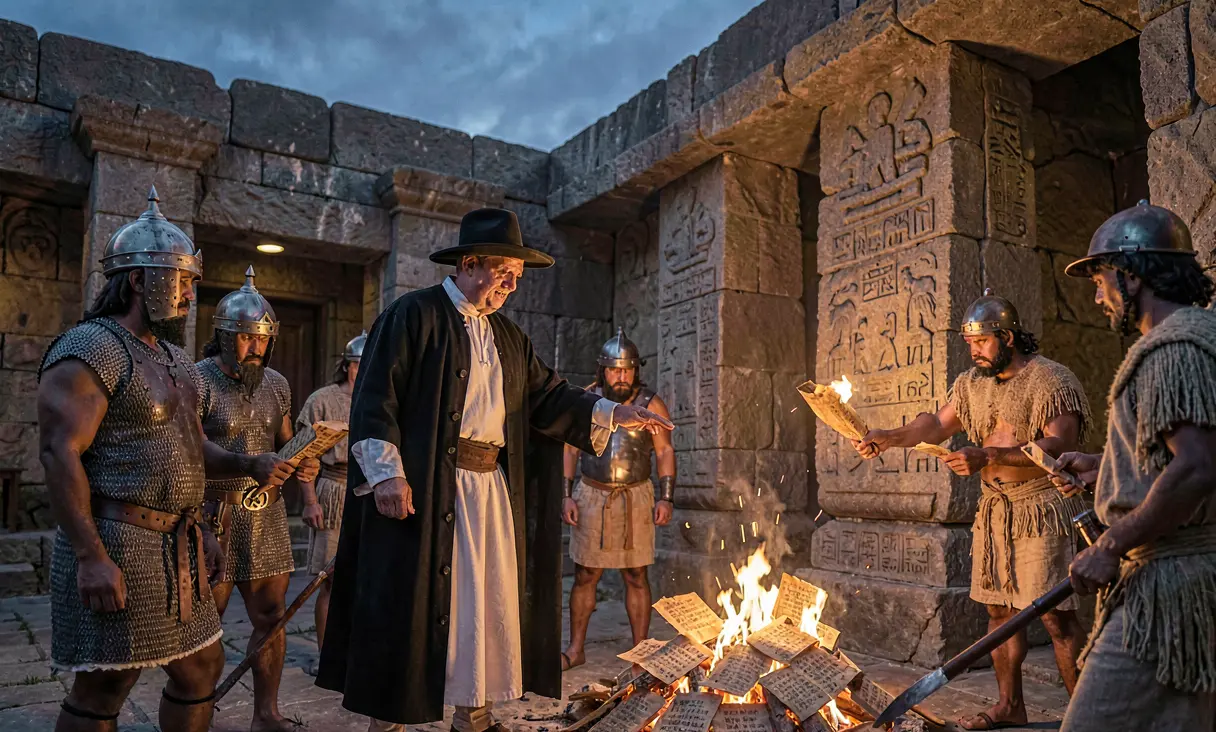 DisasterBurning of Maya Codices by Bishop LandaJuly 1562 CE · Mani, Yucatan, MexicoSpanish Bishop Diego de Landa orders the destruction of most surviving Maya written records in a campaign against idolatry.
 DisasterDestruction of Maya Codices by Bishop LandaJuly 12, 1562 · Maní, Yucatán, MexicoSpanish friars burn nearly all surviving Maya books in a purge of idolatry.
 DisasterGreat Fire of LondonSeptember 2, 1666 · London, EnglandCatastrophic fire destroys medieval London, leading to major urban reconstruction.
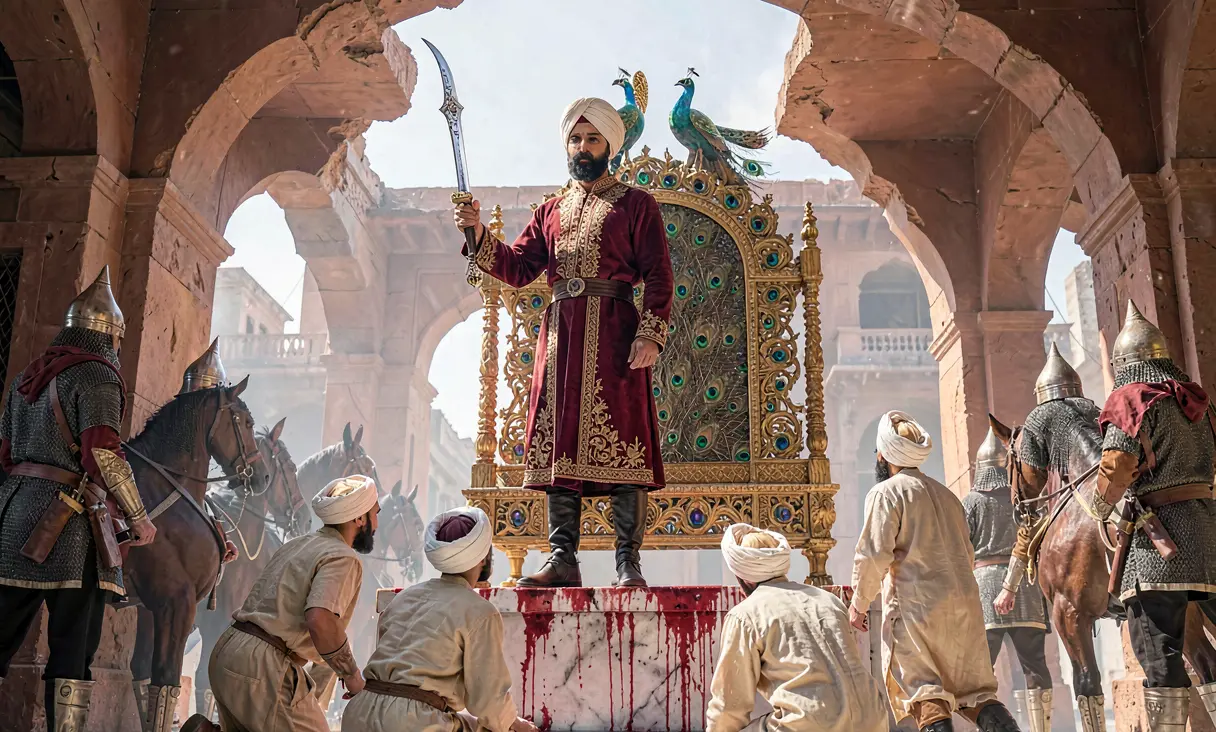 WarNader Shah Sacks Delhi and Takes Peacock Thronec. 1739 CE · Delhi, IndiaPersian ruler Nader Shah invades the Mughal Empire, defeating the army at Karnal and looting Delhi, taking the Peacock Throne.
 PoliticsAdoption of US Declaration of IndependenceJuly 4, 1776 CE · Philadelphia, USAThirteen colonies declare independence from Britain asserting natural rights.
 PoliticsStorming of the BastilleJuly 14, 1789 · Paris, FranceRevolutionaries storm the Bastille prison, symbolizing the start of the French Revolution.
Discussion
Loading…