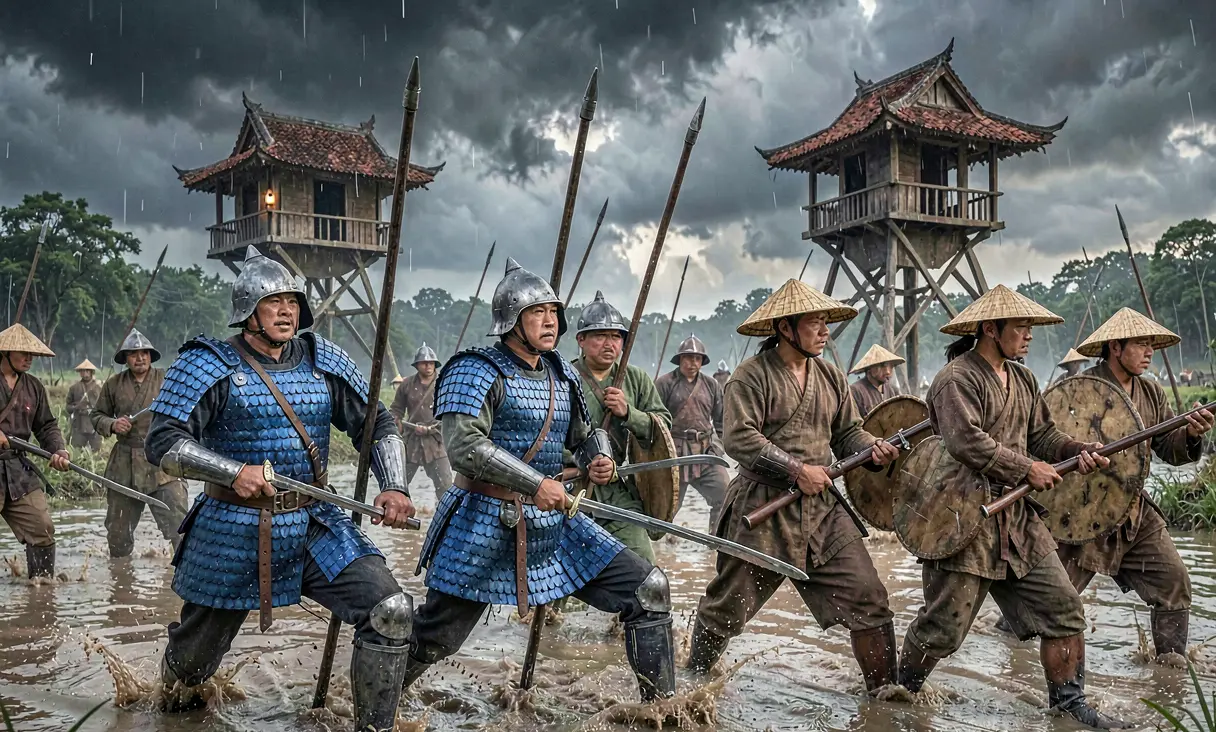
Tran and Le Dynasties Split Vietnam (North-South Division)
The 1533 establishment of rival courts solidified a two-century North-South split between the Trịnh and Nguyễn lords, fragmenting Vietnam politically while fostering distinct regional cultures that sh
The Collapse of Central Authority
By the early 16th century, the Later Le Dynasty, which had ruled Vietnam since 1428, was crumbling under the weight of internal corruption and weak imperial leadership. The decisive blow came in 1527 when Mac Dang Dung, a powerful general from the north, usurped the throne, establishing the short-lived Mac Dynasty. This act shattered the Confucian mandate of heaven, plunging the nation into civil war. Loyalist forces, refusing to recognize the Mac usurpers, rallied behind Le Chieu Tong, a young Le prince who fled south. The political landscape fractured instantly: the north fell under Mac control, while the loyalists sought refuge in the mountainous and coastal regions of central Vietnam, setting the stage for a prolonged bifurcation of the state.
The Restoration of 1533
In 1533, the pivotal moment of formal division occurred when Le Chieu Tong was formally enthroned in A Mon (modern-day Thanh Hoa province), establishing a rival court to the Mac Dynasty in Hanoi. This event marked the beginning of the 'Restoration of Le' (Le Trung Hung). However, real power did not reside with the emperor but with two emerging warlord families: the Trinh and the Nguyen. The Trinh lords seized control of the northern territories in the name of the Le emperors, effectively becoming the de facto rulers of the North. Simultaneously, the Nguyen lords were granted authority over the southern provinces, tasked with expanding the realm and securing the frontier against Champa and potential Mac incursions. By 1533, this arrangement had solidified into a distinct North-South split that would define Vietnamese geopolitics for nearly two centuries.
The Rise of the Lord Families
The division was sustained by the rivalry between the Trinh and Nguyen families, both descendants of high-ranking officials in the Later Le court. The Trinh lords, based in Hanoi (Dong Kinh), controlled the traditional heartland and the imperial capital, wielding power under the guise of restoring the Le dynasty's legitimacy. Their rule was characterized by a rigid adherence to Confucian orthodoxy and a defensive posture against the Mac remnants and later the Nguyen. Conversely, the Nguyen lords, ruling from Hue (Thuong Tu) in the south, operated with greater autonomy. Facing fewer internal threats but constant external pressures from Champa and Cambodia, the Nguyens developed a more pragmatic, expansionist policy, gradually pushing the Vietnamese frontier southward into the Mekong Delta.
The Seventeen-Year War and the DMZ
For decades, the two regimes engaged in intermittent warfare along a narrow strip of land known as the 'Dai Bang' or Demilitarized Zone (DMZ), located roughly between the Gianh River in Quang Binh province. This boundary became one of the longest-running frontiers in pre-modern history. The conflict was characterized by trench warfare, fortification building, and naval skirmishes along the coast. Despite numerous attempts to break the stalemate, neither side could achieve a decisive victory due to the formidable defensive lines constructed by the Nguyen in the south and the superior manpower of the Trinh in the north. This military deadlock froze the political map of Vietnam, creating two distinct administrative entities that functioned almost as separate nations, each with its own bureaucracy, economy, and foreign policy.
Divergent Paths: Culture and Economy
The prolonged division fostered unique cultural and economic trajectories in the North and South. The North, under the Trinh, remained the center of traditional Confucian scholarship, civil service examinations, and classical arts, heavily influenced by Chinese models. In contrast, the South became a melting pot of innovation and expansion. The Nguyen lords encouraged migration from the north to populate new territories, integrated Cham and Khmer influences into local culture, and developed a robust maritime trade network with Japan, China, and later European powers like the Dutch and Portuguese. This era saw the rise of Hue as a sophisticated imperial city and the transformation of the Mekong Delta from a sparsely populated frontier into Vietnam's rice bowl.
Legacy of the Division
The Trịnh-Nguyễn split, often termed the 'Period of Division' (1533–1786), ended only with the rise of the Tay Son Rebellion in 1771, which overthrew both lord families and briefly reunified the country. However, the two-century separation left an indelible mark on Vietnamese identity. It established a lasting cultural dichotomy between the conservative North and the dynamic, open South that persists in modern Vietnamese society. The administrative boundaries and settlement patterns created during this era laid the foundation for the modern nation-state's geography. Furthermore, the period demonstrated the resilience of Vietnamese political structures, as the country maintained its sovereignty against foreign intervention despite being internally fractured.
The split between Trịnh and Nguyễn created a prolonged civil war that shaped Vietnam's internal geography and delayed central unification for nearly 200 years.
Where it happened
Hanoi / Hue, Vietnam — see it on the interactive map →
Explore related history
 PoliticsSargon of Akkad Establishes the First Empirec. 2334 BCE · Akkad (Location uncertain, near Baghdad, Iraq)Sargon unifies Sumerian city-states to create the world's first multi-ethnic empire.
 PoliticsPromulgation of the Code of Ur-Nammuc. 2100 BCE · Ur, Southern Mesopotamia (Iraq)The earliest known surviving law code is established in the Sumerian city of Ur.
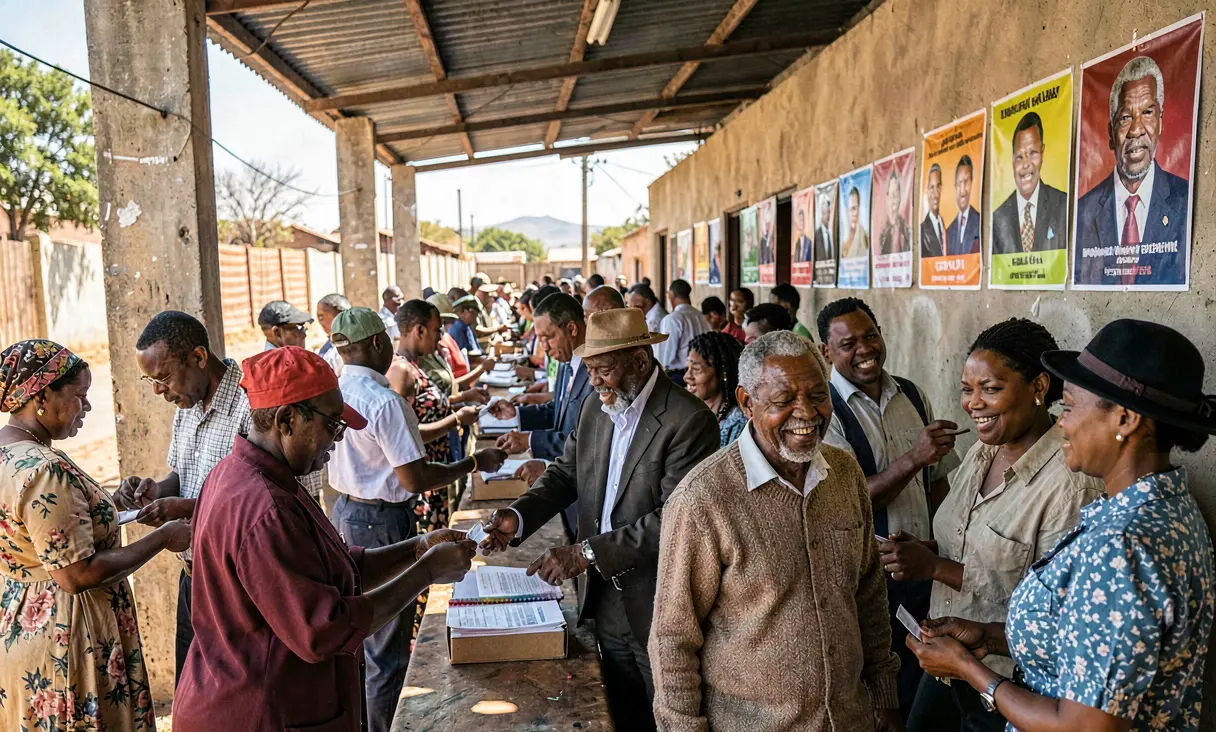 PoliticsNelson Mandela Elected President of South AfricaApril 27, 1994 · Cape Town, South AfricaSouth Africa holds its first democratic election, ending the apartheid regime and establishing a multiracial government.
 WarOda Nobunaga's Battle of Okehazama1560 CE · Okehazama, Aichi, JapanOda Nobunaga defeats a massive army of Imagawa Yoshimoto in a surprise attack.
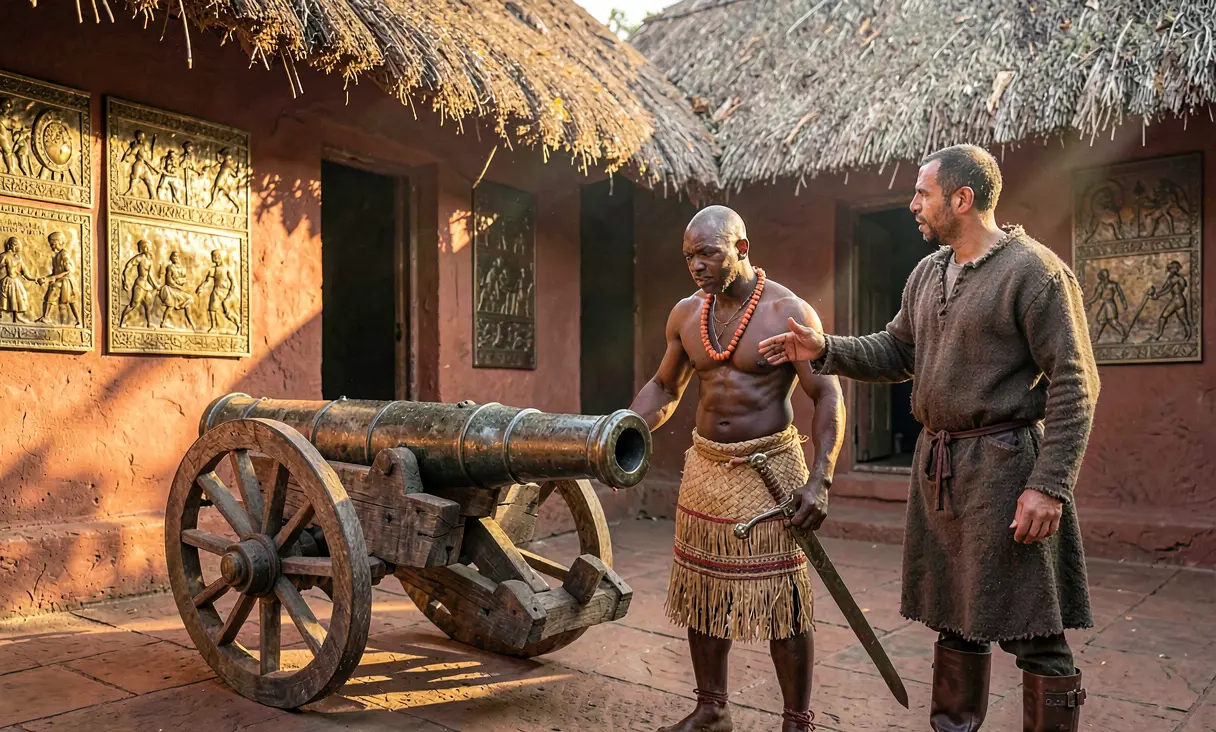 TechnologyBenin Acquires Cannon Technology from Portugalc. 1500 CE · Benin City, NigeriaThe Kingdom of Benin integrates Portuguese cannon technology into its military arsenals.
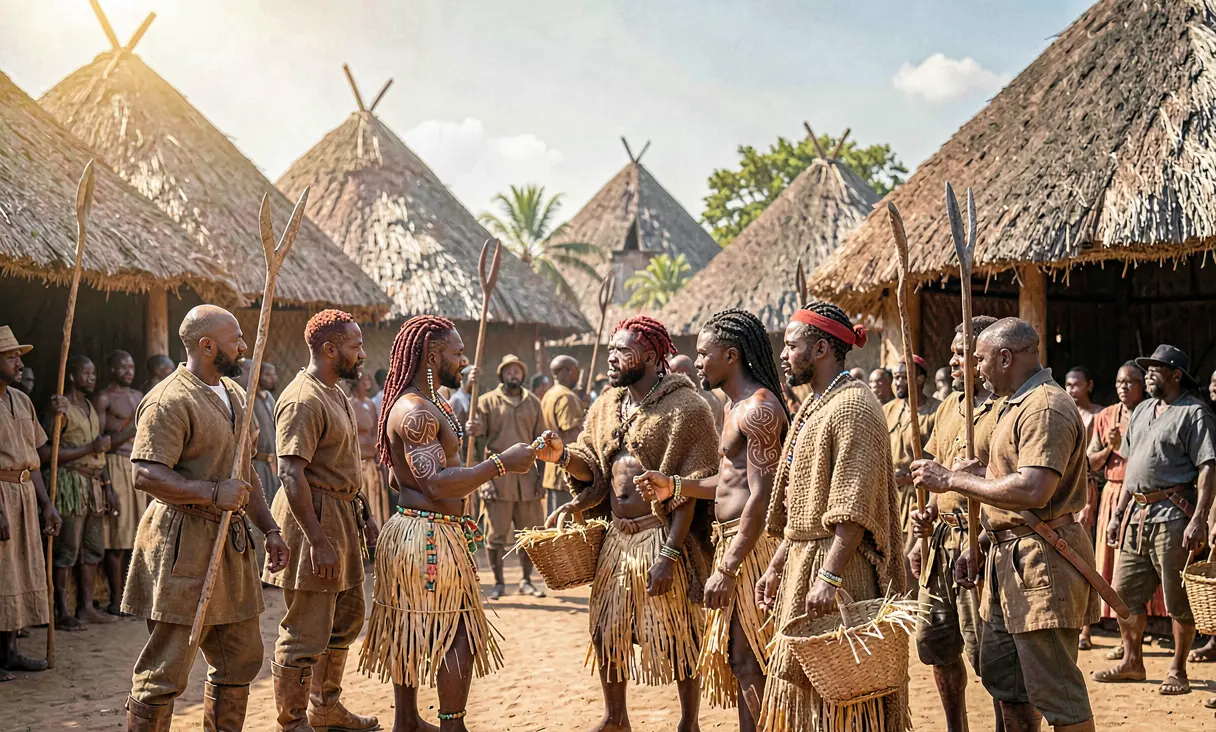 PoliticsKingdom of Kongo Engages in Large-Scale Slave Tradec. 1500 CE · Mbanza Kongo, AngolaThe Kingdom of Kongo begins exporting significant numbers of captives to Portuguese traders in exchange for goods.
Discussion
Loading…