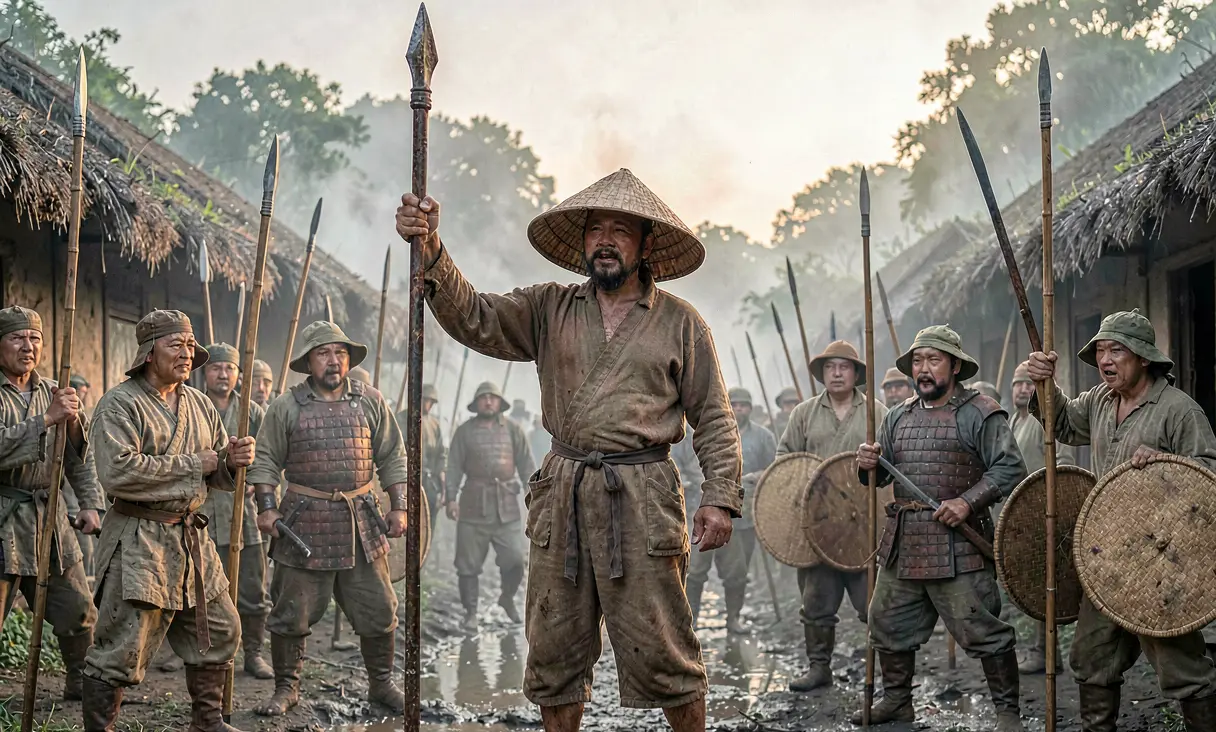
Lam Son Uprising Begins Against Ming China
In 1418, Lê Lợi launched a decade-long guerrilla war from Thanh Hóa that successfully expelled Ming China, restoring Vietnamese independence and founding the powerful Later Lê Dynasty.
The Shadow of Jiaozhi
In 1407, the Ming Dynasty under Emperor Yongle completed the annexation of Đại Việt, dismantling the independent Hồ dynasty and reorganizing the territory as the province of Jiaozhi. This marked the end of a millennium of Vietnamese autonomy that had persisted since the fall of the Tang Dynasty in the 10th century. The Ming administration imposed heavy taxation, conscripted local labor for massive infrastructure projects, and systematically attempted to erase Vietnamese cultural identity by confiscating royal archives and deporting scholars to Beijing. While the initial resistance led by the Trần loyalist general Nguyễn Súy was crushed by 1413, a deep-seated resentment festered among the populace, creating a volatile political landscape ripe for a new movement.
The Call at Lam Son
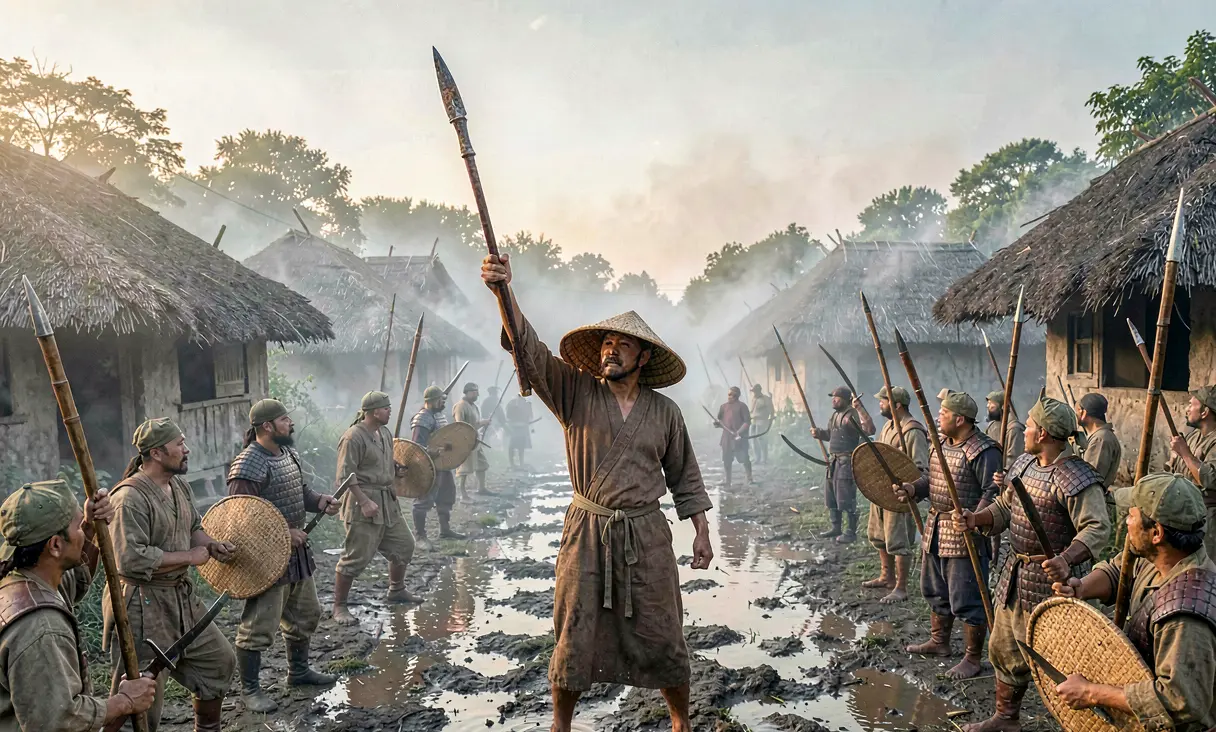
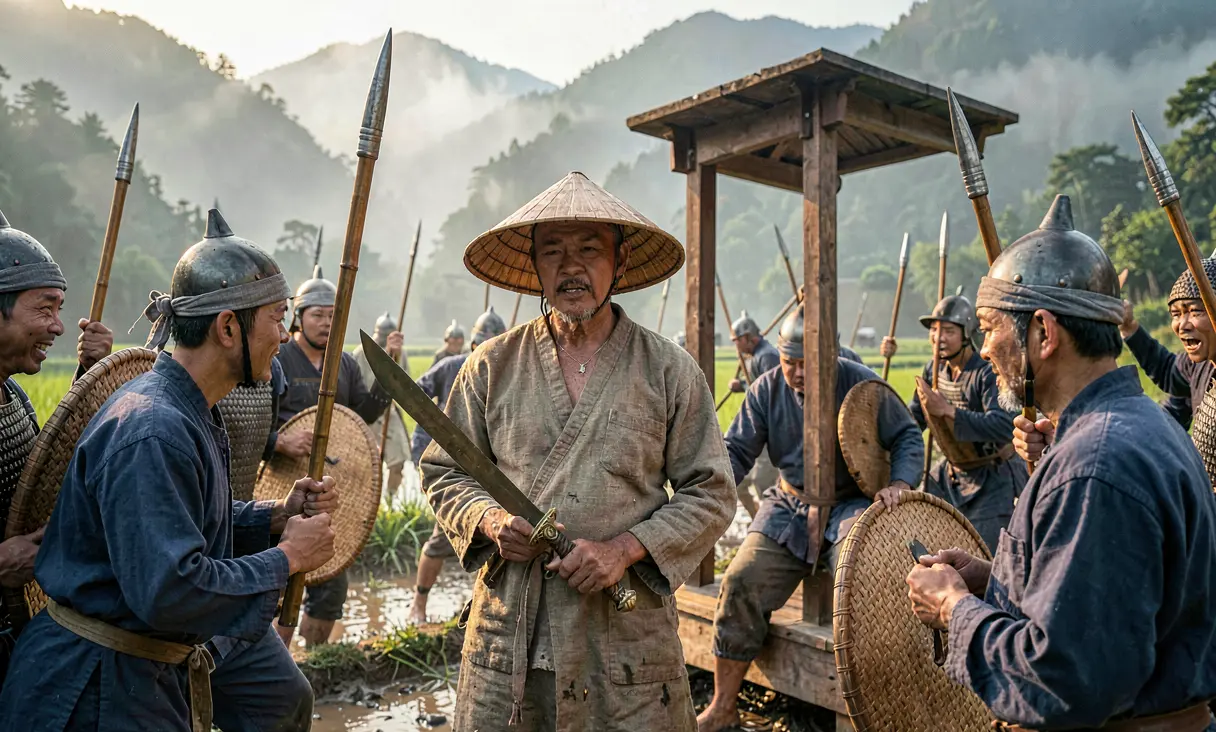
In early 1418, amidst this climate of oppression, Lê Lợi, a wealthy landowner and former official from the district of Lương Giang in Thanh Hóa province, proclaimed his uprising. Gathering approximately two thousand loyalists in the remote, mountainous region of Lam Sơn, he declared himself 'Bình Định Vương' (Prince of Pacification). Unlike previous failed revolts that relied on fragmented noble factions, Lê Lợi's movement was characterized by a unified command structure and a clear ideological goal: the restoration of national sovereignty. He utilized the difficult terrain of Thanh Hóa to establish a fortified base, effectively turning the rugged landscape into a strategic asset against the numerically superior Ming garrisons.
Architects of Resistance
The success of the Lam Sơn Uprising was not solely due to Lê Lợi's charisma but relied heavily on his inner circle, most notably the brilliant strategist Nguyễn Trãi. A scholar and poet who had previously served the Hồ dynasty, Nguyễn Trãi provided the ideological framework for the rebellion, articulating a vision of 'righteous war' that resonated deeply with the peasantry. Other key figures included Lê Lai, a loyal general who famously impersonated Lê Lợi to draw fire during critical retreats, and the military commander Trịnh Khả. This coalition blended aristocratic leadership with peasant fervor, creating a hybrid force capable of both guerrilla tactics and conventional warfare when necessary.
A Decade of Attrition
The conflict evolved through distinct phases over ten years. Initially, the rebels faced devastating defeats, such as the loss of their base at Chí Linh in 1423, forcing them into a temporary truce with the Ming to regroup. However, by 1426, the tide had turned decisively. At the Battle of Tốt Động – Chúc Động, Lê Lợi's forces ambushed and decimated a massive Ming relief army led by Wang Tong, inflicting casualties that shattered Chinese morale. This victory opened the path to the capital, Thăng Long (modern Hanoi). The final confrontation occurred at the Siege of Đông Quan in 1427, where the Vietnamese forces trapped the remaining Ming troops, compelling them to negotiate a withdrawal rather than face annihilation.
Restoration and Reform
Following the expulsion of Ming forces in late 1427, Lê Lợi ascended the throne in 1428, founding the Later Lê Dynasty. He immediately moved to restore the administrative structures of the Trần dynasty while implementing Confucian reforms to stabilize the state. The new government conducted a comprehensive census, redistributed land to soldiers and peasants who had supported the war effort, and re-established the imperial examination system to recruit officials based on merit rather than lineage. These measures were designed not only to rebuild the economy but also to solidify the legitimacy of the new regime in the eyes of both the elite and the common people.
Enduring Legacy
The Lam Sơn Uprising stands as a defining moment in Southeast Asian history, marking the definitive end of Chinese direct rule over Vietnam and setting a precedent for national resistance that would endure for centuries. It demonstrated that a smaller, agrarian society could defeat a continental superpower through strategic patience, guerrilla warfare, and strong national unity. The legacy of Lê Lợi and Nguyễn Trãi is enshrined in Vietnamese culture as the epitome of patriotic virtue; their writings, particularly the 'Bình Ngô đại cáo' (Great Proclamation upon the Pacification of Wu), remain foundational texts for Vietnamese nationalism. The event reshaped the geopolitical balance of East Asia, ensuring Vietnam's continued independence until the modern era.
Le Loi's successful rebellion ended two centuries of Chinese domination attempts, re-establishing an independent Vietnamese state that lasted for centuries.
Where it happened
Lam Son, Thanh Hoa, Vietnam — see it on the interactive map →
Explore related history
 WarAlgerian War of Independence BeginsNovember 1, 1954 · Algiers, AlgeriaThe National Liberation Front launches coordinated attacks marking the start of the Algerian War against France.
 WarMau Mau Uprising Begins in KenyaOctober 20, 1952 · Nairobi, KenyaThe Kikuyu-led Mau Mau rebellion begins against British colonial rule and white settler land ownership.
 WarTurkish War of Independence BeginsMay 19, 1919 · Samsun, TurkeyMustafa Kemal Atatürk lands in Samsun to organize resistance against Allied occupation and the Ottoman Sultanate.
 ExplorationEnd of Zheng He's Voyages and Ming Isolationism1433 CE · East Africa / China CoastThe Ming Dynasty halts the great naval expeditions and restricts maritime trade.
 WarExpansion of the Solomonic Empire under Zara Yaqobc. 1434 CE · Lake Tana, EthiopiaEmperor Zara Yaqob launches military campaigns to consolidate the Solomonic dynasty and suppress heresy.
 ExplorationGreat Zimbabwe Dominates Gold Trade with Kilwac. 1400 CE · Great Zimbabwe, ZimbabweArchaeological evidence confirms extensive gold trade between Great Zimbabwe and Swahili coastal cities.
Discussion
Loading…