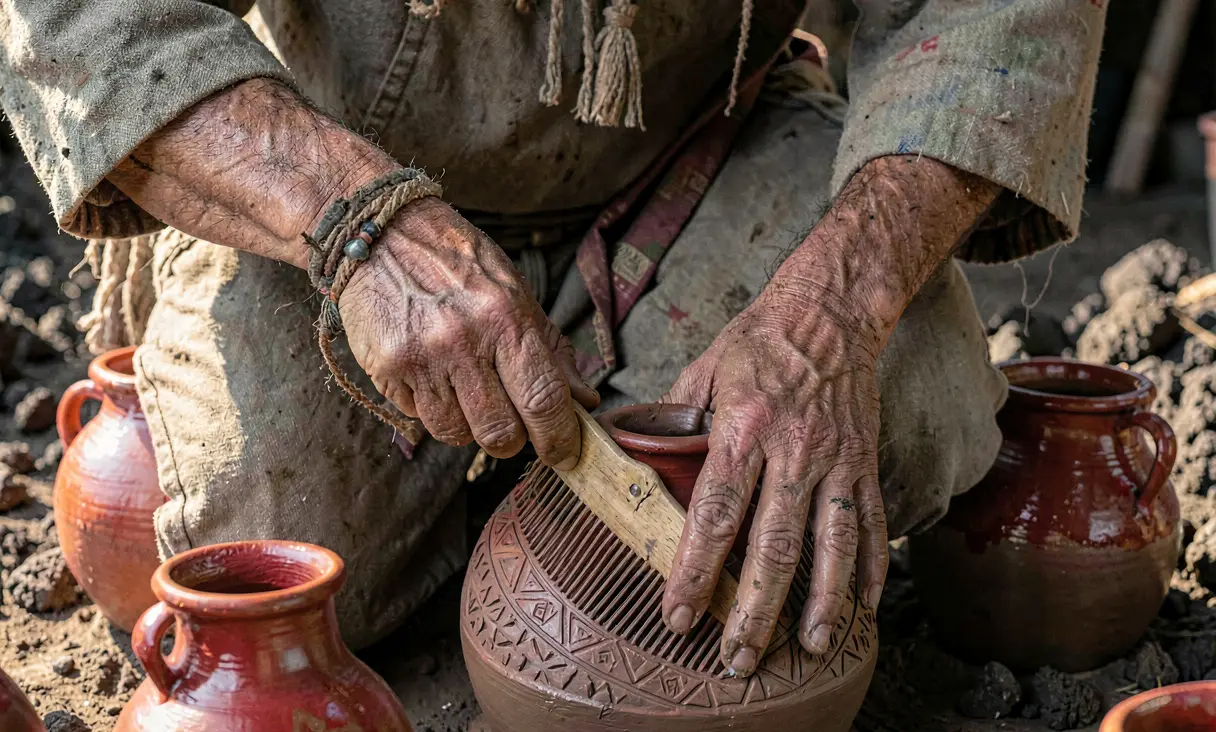
Establishment of Lapita Pottery Tradition
Around 1300 BCE, the Lapita people pioneered a unified ceramic tradition across the Pacific, using intricate dentate-stamped designs to bind distant island communities in a shared cultural and spiritu
The Maritime Horizon of the Austronesians
By the second millennium BCE, the Austronesian-speaking peoples had mastered the art of deep-sea voyaging, pushing beyond the familiar confines of Island Southeast Asia into the vast Pacific. Their expansion was not merely a migration but a systematic colonization strategy that relied on advanced outrigger canoes and sophisticated celestial navigation. As these seafarers reached the Bismarck Archipelago around 1500 BCE, they encountered an environment rich in volcanic clay and established trade networks with indigenous Papuan populations. This convergence created a unique cultural crucible where new technologies and social structures coalesced, setting the stage for one of the most significant artistic and technological developments in prehistoric Oceania.
The Emergence of Lapita Pottery
Around 1300 BCE, a distinct ceramic tradition emerged on New Britain and spread rapidly throughout the Bismarck Archipelago. Unlike previous pottery styles in the region, which were often simple and utilitarian, this new tradition was defined by its exquisite craftsmanship and complex decorative language. The hallmark of Lapita ware is the use of dentate stamps—tools with toothed edges made from shell or bone—to impress intricate geometric patterns onto wet clay before firing. These designs included concentric circles, chevrons, hatched triangles, and ladder-like motifs that covered the surfaces of bowls, jars, and dishes, transforming everyday vessels into objects of profound aesthetic and symbolic weight.
Techniques and Symbolic Imagery
The production of Lapita pottery required a high degree of specialization and communal knowledge. Potters utilized locally sourced clay mixed with temper materials like crushed shell or sand to prevent cracking during firing in open kilns. The decoration process was meticulous; artisans applied the dentate stamps in rhythmic sequences, creating bands of pattern that often wrapped around the vessel's body. Among the most striking motifs are the anthropomorphic faces found on some vessels from sites like Watom and Mussau. These stylized human figures, characterized by large eyes and distinct facial features, likely served as representations of ancestors or deities, suggesting a complex spiritual worldview where the boundary between the living and the dead was permeable.
Rapid Expansion Across the Pacific
The spread of Lapita culture was remarkably swift. Within a few centuries, the distinctive pottery style appeared in the Solomon Islands, Vanuatu, New Caledonia, Fiji, and eventually Samoa and Tonga, covering a distance of over 5,000 kilometers. This expansion followed established maritime routes that connected island groups through a shared 'cultural horizon.' While the core stylistic elements remained consistent, archaeologists have documented subtle regional variations in vessel shapes and motif density as communities adapted to local materials and social needs. In Fiji, for instance, the pottery became slightly coarser, while in Samoa, it retained a high degree of refinement, reflecting the diverse ecological and social contexts of these new settlements.
Societal Functions and Daily Life
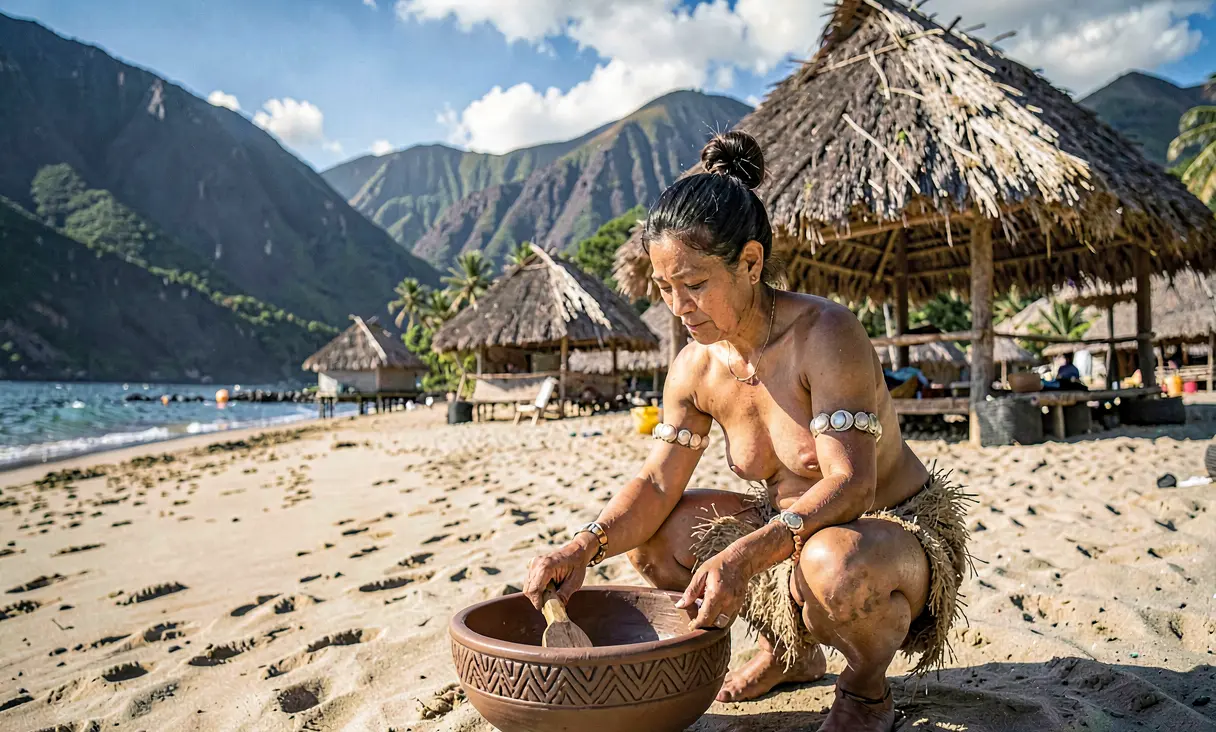
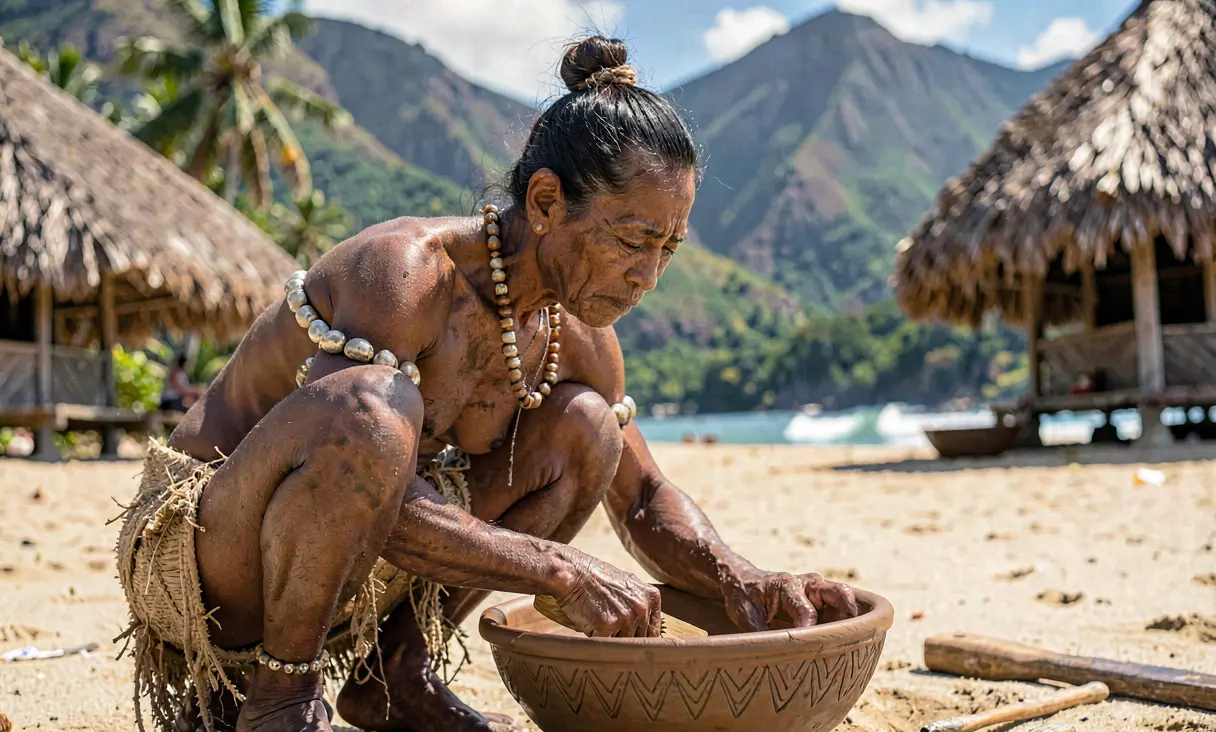
Lapita vessels were integral to the domestic and ceremonial life of these early Pacific societies. The pots served practical purposes such as cooking starchy root crops like taro and yam, storing surplus food, and preparing fermented beverages for communal feasts. However, their role extended far beyond utility; the presence of elaborately decorated pottery in burial sites and ritual contexts indicates that they were essential for maintaining social cohesion and expressing status. The act of creating and sharing these vessels likely reinforced kinship ties and facilitated trade networks, allowing distant communities to maintain a sense of shared identity despite the vast oceanic distances separating them.
Legacy and Cultural Transformation
By 500 BCE, the classic Lapita pottery tradition began to decline in many areas, giving way to simpler, undecorated ceramics as populations settled into more permanent agricultural societies. In West Polynesia, the tradition evolved into the distinct styles of the Polynesian cultures that would eventually populate the rest of the Pacific. Despite the disappearance of the dentate-stamped designs, the legacy of Lapita endures in the genetic makeup, languages, and social structures of modern Pacific Islanders. The rapid dispersal of this pottery style remains a testament to the extraordinary navigational skills and cultural resilience of the first settlers who turned the Pacific Ocean from a barrier into a connective highway.
Lapita pottery provides the most tangible evidence of the rapid expansion and cultural unity of early Polynesian ancestors.
Where it happened
New Britain, Papua New Guinea — see it on the interactive map →
Explore related history
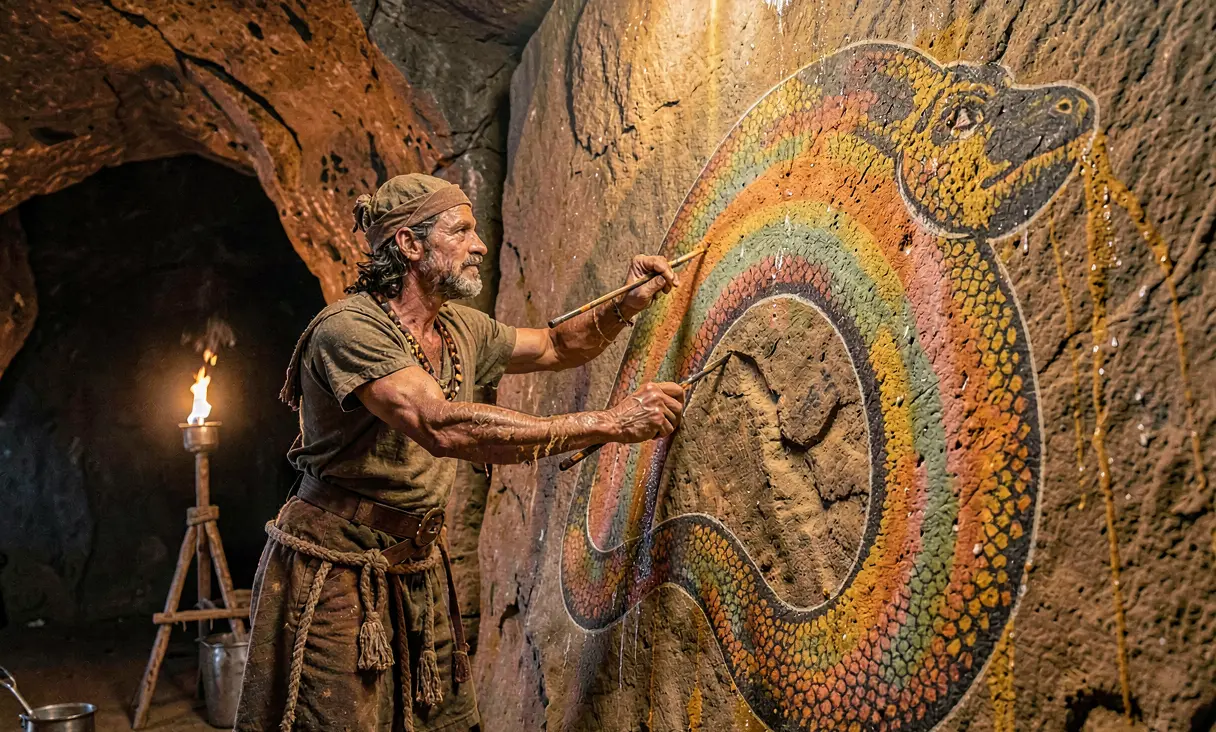 ArtPeak Period of Australian Aboriginal Rock Artc. 3000 BCE to 1500 CE · Kakadu National Park, AustraliaAboriginal artists create vast galleries of rock paintings depicting ancestral beings and hunting scenes.
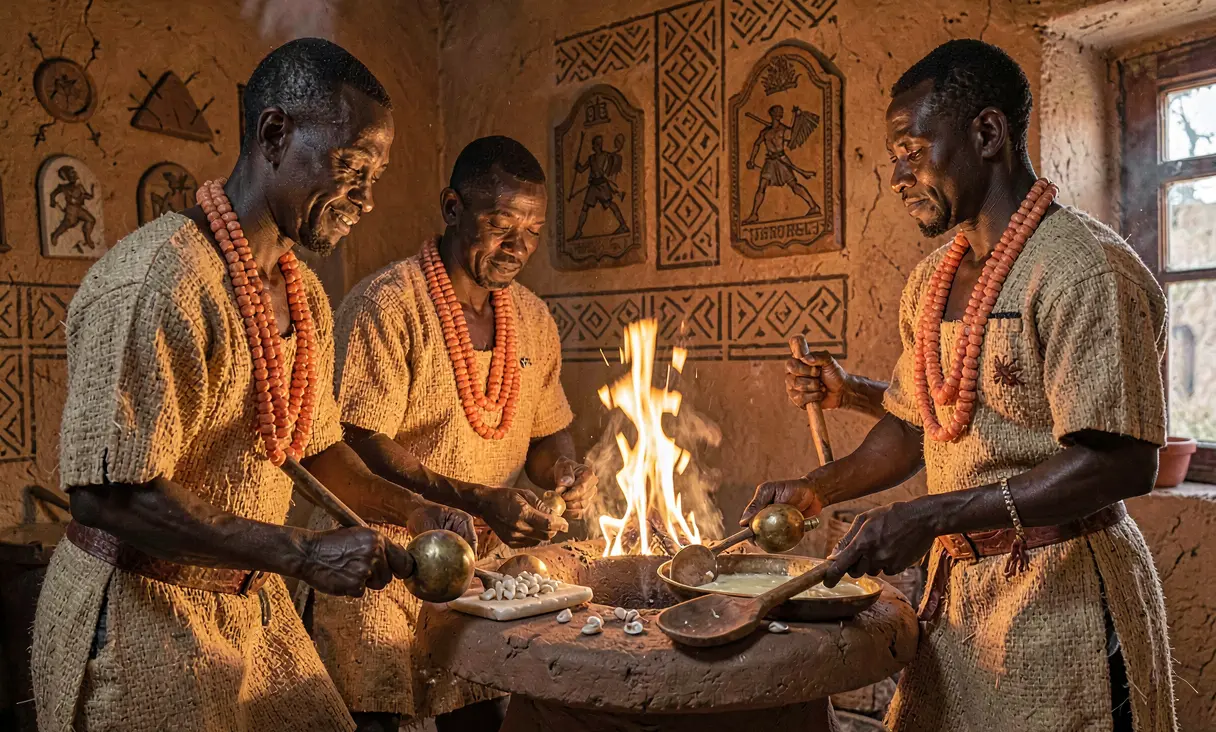 ArtCreation of the Benin Bronzes under Oba Ewuarec. 1450 CE · Benin City, NigeriaOba Ewuare commissions the famous bronze and ivory plaques documenting court life and military victories.
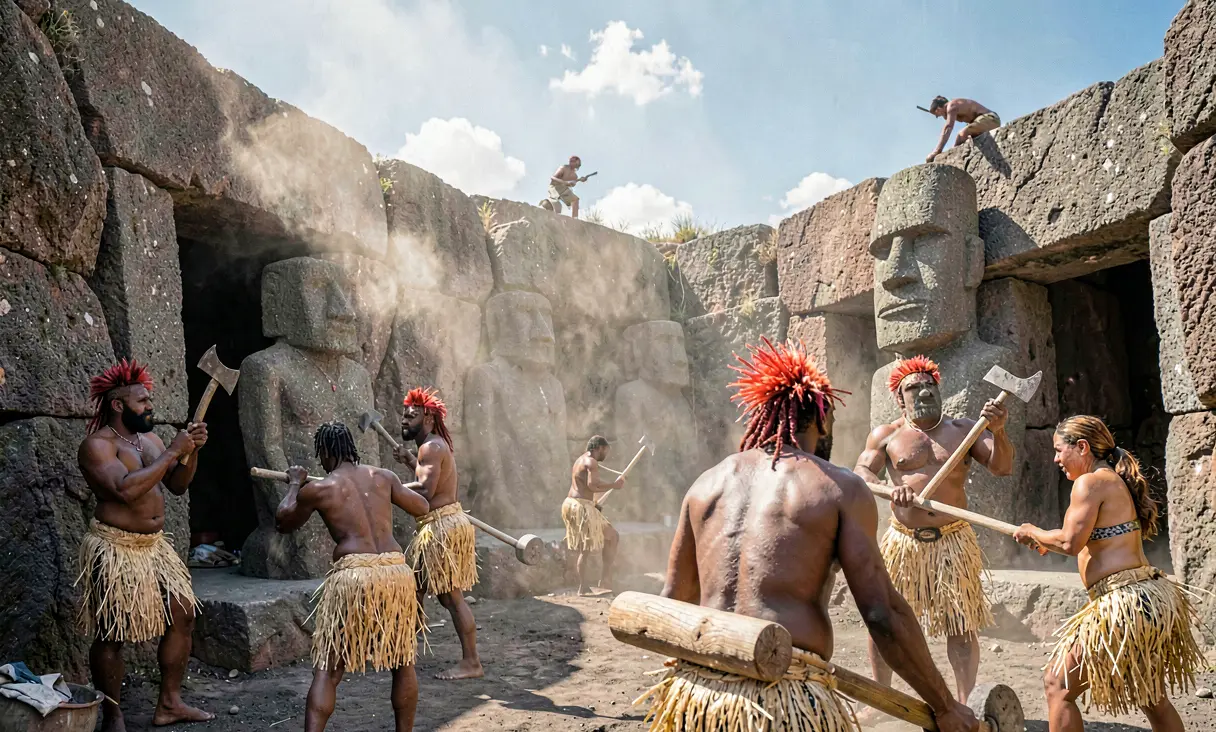 ArtMass Production of Moai Statues at Rano Rarakuc. 1400 CE · Rano Raraku Quarry, Rapa NuiThe peak period of moai carving begins at the Rano Raraku quarry under the direction of clan chiefs.
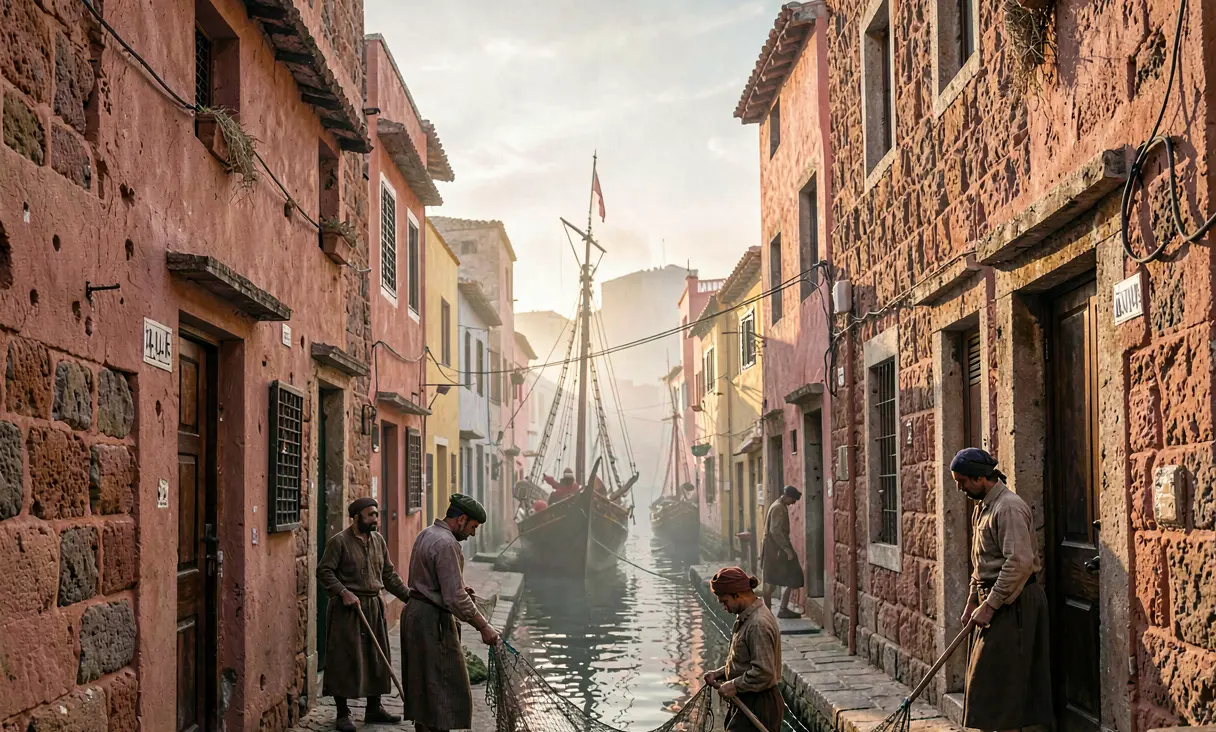 CivilizationFoundation of Lamu as a Swahili City-Statec. 1300 CE · Lamu, KenyaThe city of Lamu is founded as a major trading port connecting the African interior to the Indian Ocean.
 DisasterHunting and Extinction of the Moa in New Zealandc. 1300 to 1450 CE · South Island, New ZealandIntensive hunting by Māori leads to the rapid extinction of the giant flightless moa birds.
 PoliticsRaden Wijaya Founding of Majapahit Empire1293 CE · Trowulan, Java, IndonesiaRaden Wijaya defeats the Mongol invaders and establishes the Majapahit Empire in East Java.
Discussion
Loading…