
Lapita Expansion into the Bismarck Archipelago
Around 1500 BCE, skilled Lapita navigators colonized the Bismarck Archipelago with distinctive pottery and domesticated crops, creating the essential bridge for the human settlement of the entire Paci
The Austronesian Horizon
By the mid-second millennium BCE, the Austronesian-speaking peoples had completed a millennia-long migration from their presumed homeland in southern China and Taiwan, sweeping through Island Southeast Asia. By approximately 1500 BCE, these seafaring communities reached the Bismarck Archipelago, a strategic barrier of volcanic islands situated just east of New Guinea. This region, known as Near Oceania, had been inhabited by Papuan-speaking populations for tens of thousands of years. The arrival of the Lapita culture marked a profound demographic and technological rupture, introducing a new maritime technology and a distinct material culture to an already complex human landscape.
The Voyage Across the Bismarck Sea
The expansion into the Bismarck Archipelago was not merely coastal hopping but a deliberate leap across open ocean. Archaeological evidence suggests that Lapita navigators utilized large, double-hulled or outrigger canoes capable of carrying families, livestock, and essential crops. They successfully crossed the Vitiaz Strait and settled islands such as New Britain, New Ireland, and the smaller atolls like Watom and the D'Entrecasteaux Islands. This movement required sophisticated knowledge of celestial navigation, ocean currents, and wind patterns, allowing them to locate and colonize small, often uninhabited volcanic islands that were invisible from one another's shores.
Material Culture: The Dentate-Stamped Signature
The most enduring marker of this expansion is the distinctive Lapita pottery. Found at key sites such as Watom, New Hanover (Lihir), and the Bismarck Archipelago's coastal settlements, these vessels are characterized by intricate geometric patterns created using a dentate stamp—a comb-like tool with toothed edges. Unlike the utilitarian wares of earlier periods, Lapita pottery was often highly decorative, featuring complex motifs of concentric circles, triangles, and human faces. This ceramic tradition served as a unifying cultural identifier across hundreds of kilometers of ocean, signaling a shared identity among dispersed communities.
The Transported Landscape
The Lapita expansion was effectively a 'transported landscape' migration. The voyagers did not arrive empty-handed; they brought with them a complete agricultural package including taro, yam, breadfruit, and bananas, alongside domesticated animals such as pigs, chickens, and dogs. This introduction of tropical agriculture allowed for rapid population growth and the establishment of permanent, stratified settlements. The ability to sustain these introduced species in the volcanic soils of the Bismarck Archipelago was crucial, distinguishing them from the hunter-gatherer or horticulturalist lifestyles of the indigenous Papuan populations they encountered.
Social Complexity and Trade Networks
Settlements in the Bismarcks quickly evolved into complex social units. Excavations reveal evidence of long-distance trade networks, with obsidian from sources like Talasea on New Britain being transported hundreds of kilometers to other islands. This exchange indicates a high degree of social organization and inter-island communication. The Lapita society likely developed early forms of chiefdoms or ranked hierarchies, where control over resources and ritual knowledge conferred status. These networks were not merely economic but served as the arteries for cultural transmission, binding the scattered island communities into a cohesive cultural sphere.
The Bridge to Remote Oceania
The colonization of the Bismarck Archipelago was the critical final stage before the leap into Remote Oceania. Having mastered the open ocean crossings within the archipelago, Lapita groups pushed further eastward around 1200 BCE, eventually reaching Vanuatu, New Caledonia, Fiji, and beyond. The Bismarcks served as a staging ground where navigational skills were refined and populations grew sufficiently to support further expansion. Without this successful consolidation in the Bismarck Archipelago, the subsequent peopling of Polynesia and the vast Pacific would have been impossible.
Legacy of the First Oceanic Explorers
The legacy of the Lapita expansion into the Bismarcks is foundational to the history of the Pacific. It represents the first time humans successfully settled a region defined by deep-water barriers, setting the precedent for all subsequent Pacific exploration. The genetic and linguistic imprint of this migration remains visible today in the Austronesian languages spoken across Island Melanesia and Polynesia. Furthermore, the cultural synthesis between incoming Lapita peoples and indigenous Papuan populations created the unique demographic tapestry that characterizes modern Papua New Guinea and the surrounding islands.
This expansion laid the demographic and cultural foundations for all subsequent Polynesian societies across the vast Pacific Ocean.
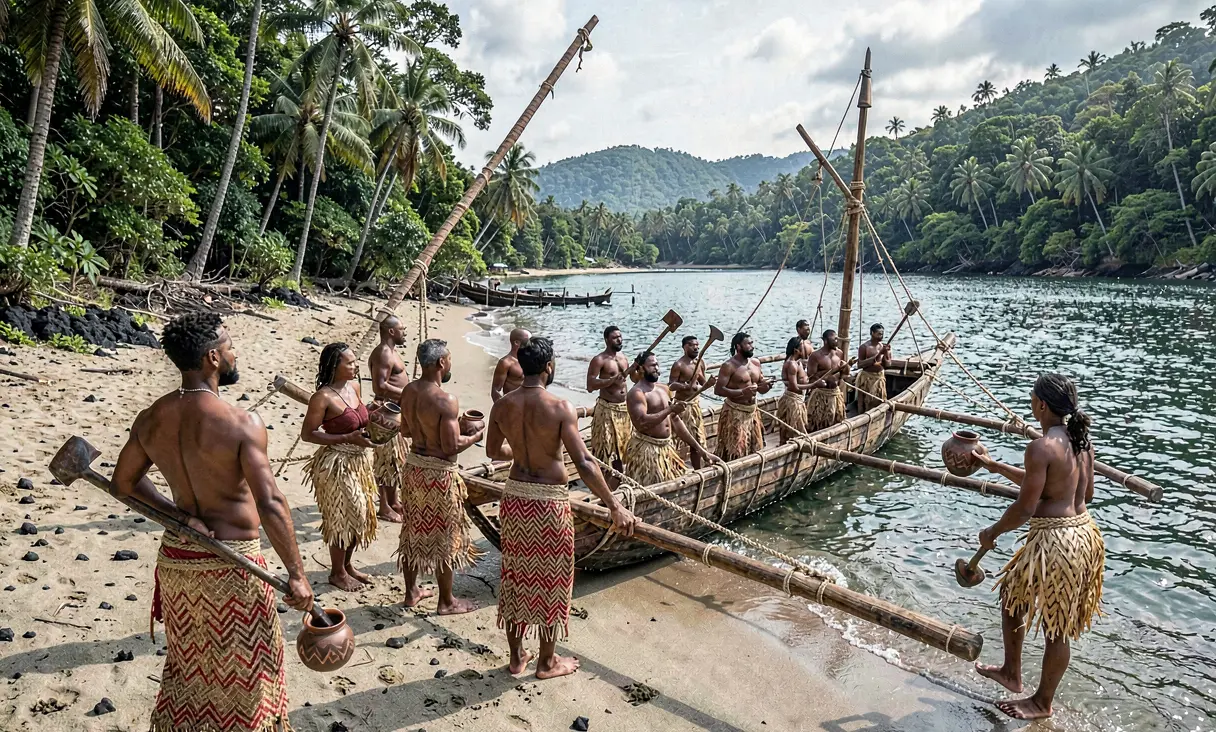

Where it happened
Bismarck Archipelago, Papua New Guinea — see it on the interactive map →
Explore related history
 ExplorationEnd of Zheng He's Voyages and Ming Isolationism1433 CE · East Africa / China CoastThe Ming Dynasty halts the great naval expeditions and restricts maritime trade.
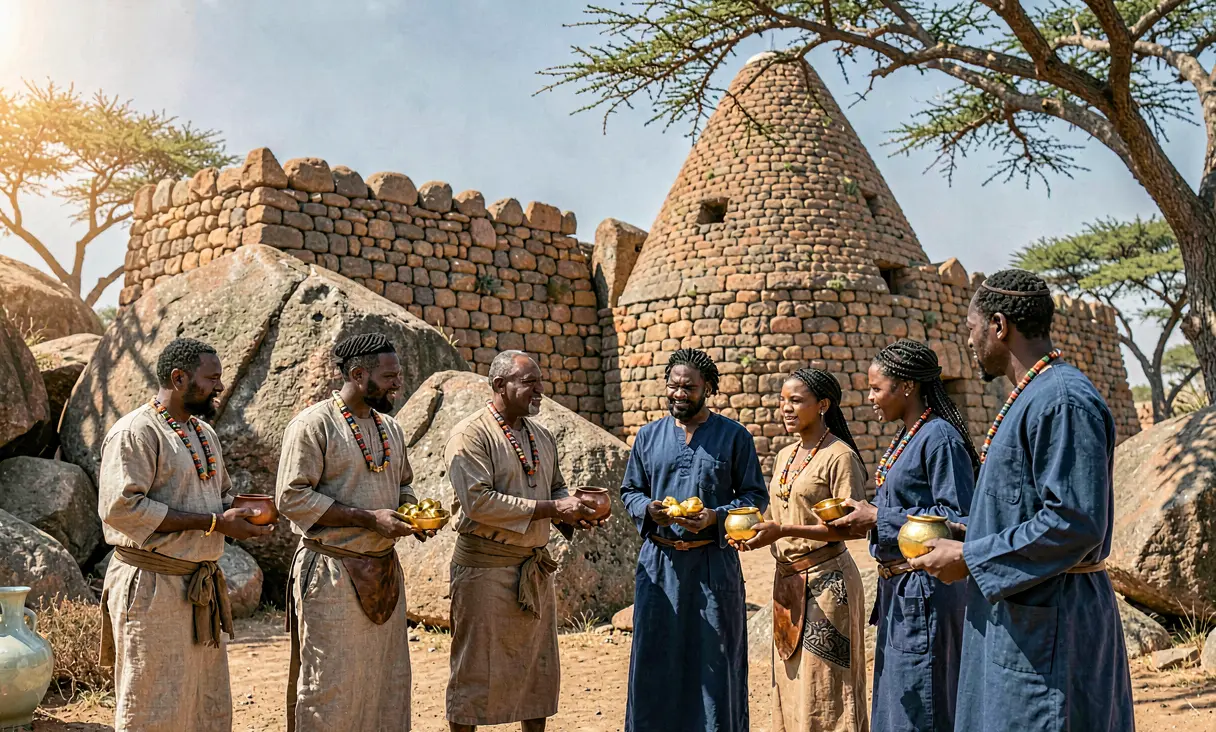 ExplorationGreat Zimbabwe Dominates Gold Trade with Kilwac. 1400 CE · Great Zimbabwe, ZimbabweArchaeological evidence confirms extensive gold trade between Great Zimbabwe and Swahili coastal cities.
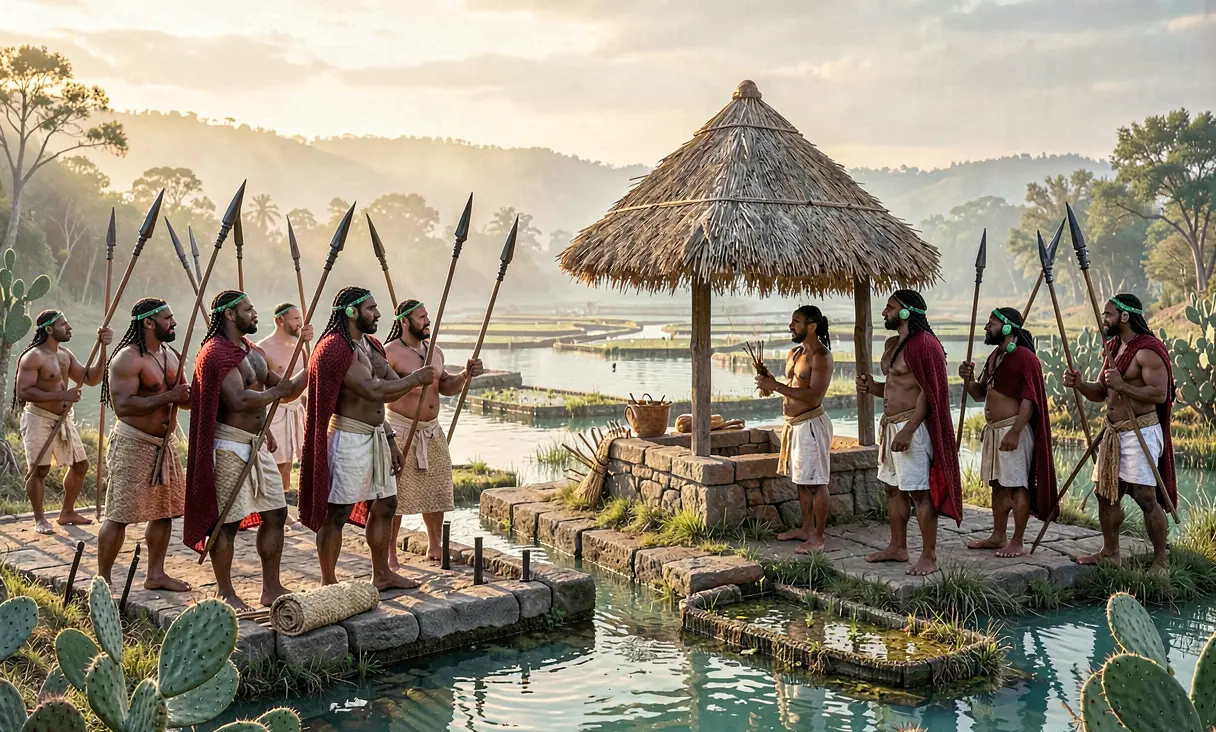 ExplorationFounding of Tenochtitlán on Lake Texcococ. 1325 CE · Lake Texcoco, Mexico City, MexicoThe Mexica establish their capital on an island in Lake Texcoco.
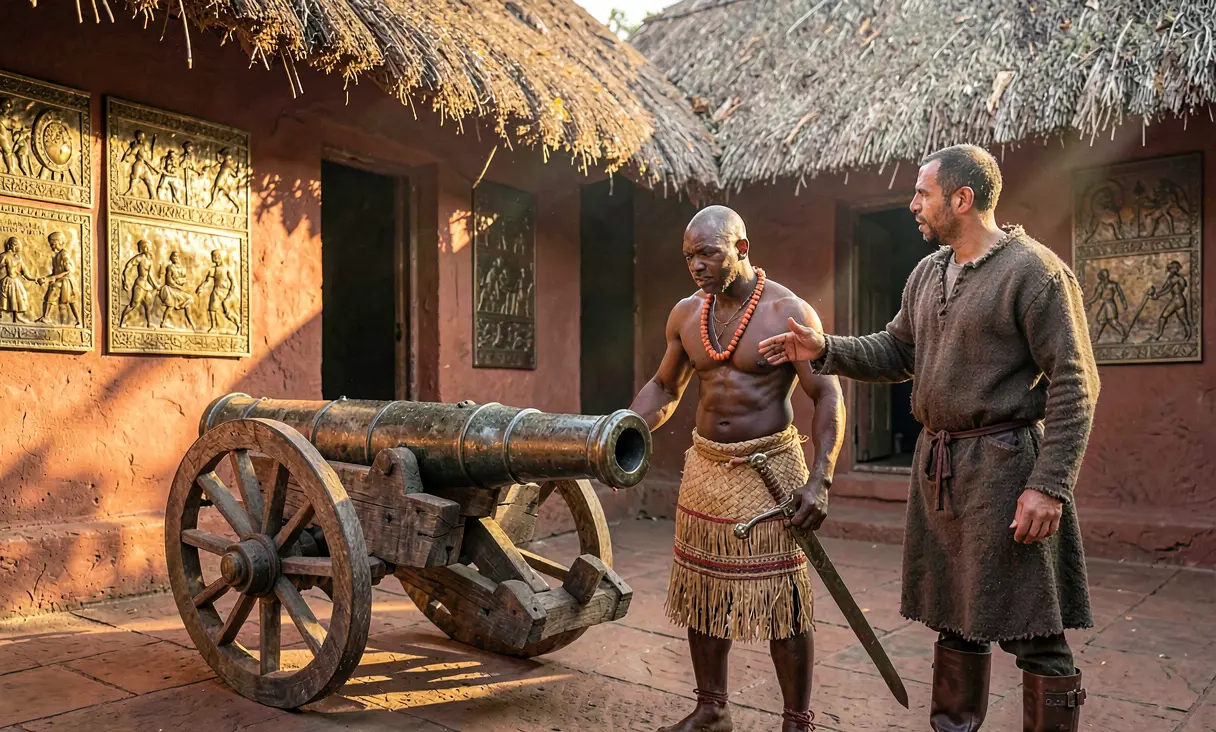 TechnologyBenin Acquires Cannon Technology from Portugalc. 1500 CE · Benin City, NigeriaThe Kingdom of Benin integrates Portuguese cannon technology into its military arsenals.
 PoliticsKingdom of Kongo Engages in Large-Scale Slave Tradec. 1500 CE · Mbanza Kongo, AngolaThe Kingdom of Kongo begins exporting significant numbers of captives to Portuguese traders in exchange for goods.
 TechnologyCompletion of the Qhapaq Ñan Road Networkc. 1500 CE · Andes Mountains (Various), Peru/ChileThe Inca finalize the vast road system connecting their empire.
Discussion
Loading…