Korean March First Movement
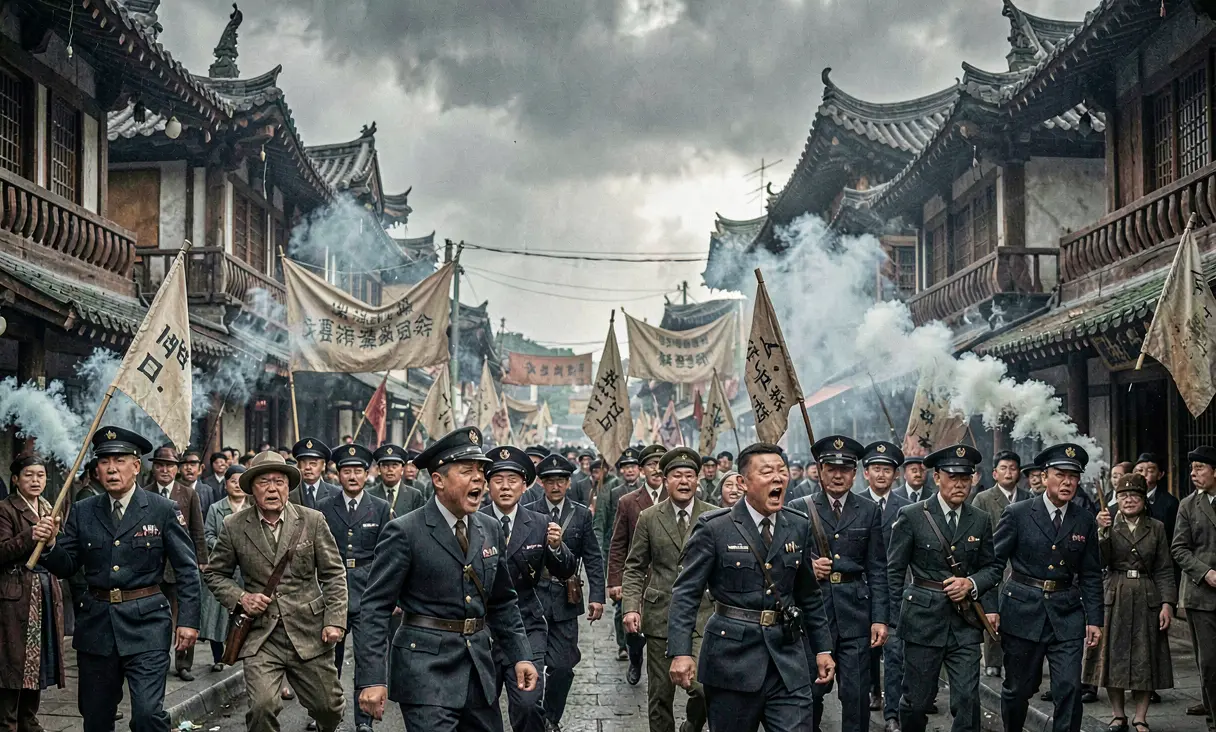
The March First Movement was a massive, non-violent uprising in 1919 where millions of Koreans protested Japanese rule, resulting in brutal massacres but ultimately establishing the Provisional Govern
Context of Colonial Oppression
By 1919, the Korean Peninsula had been under the direct colonial rule of the Empire of Japan for nearly a decade following the formal annexation of 1910. The Japanese administration, led by Governor-General Terauchi Masatake and later Saitō Makoto, implemented a ruthless policy of cultural erasure and economic exploitation known as the 'Military Government' era. Korean language was suppressed in schools, indigenous religious practices were restricted, and land reforms effectively dispossessed thousands of farmers to feed Japan's industrial machine. This systemic oppression created a volatile atmosphere of resentment that permeated every stratum of Korean society, from the rural peasantry to the urban intelligentsia.
The Spark of Resistance
The catalyst for the uprising was the death of Emperor Gojong on January 21, 1919. While officially attributed to illness, widespread rumors circulated that he had been poisoned by Japanese agents, a belief that ignited immediate public outrage during his funeral procession in Seoul. Simultaneously, global geopolitical shifts provided a glimmer of hope; U.S. President Woodrow Wilson's advocacy for self-determination and the Bolshevik Revolution in Russia inspired Korean activists to believe that international intervention was possible. Religious leaders from the three major faiths—Christianity, Chondogyo, and Buddhism—converged in Seoul to draft a unified declaration of independence.
The Declaration and Key Figures
On March 1, 1919, thirty-three prominent Korean representatives, known as the 'Signatories,' gathered at the Taehwagwan restaurant in Seoul. Among them were Choe Nam-seon, a leading intellectual of the New People's Association; Han Yong-un, a Buddhist monk; and Yi Gwang-su, a Christian scholar. They signed the Declaration of Independence, asserting Korea's sovereignty based on the inherent right of self-determination. The document was not merely a political statement but a moral appeal to the world community, explicitly rejecting Japanese rule as illegitimate. Following the signing, the group read the declaration aloud at Pagoda Park (Tapgol Park), where thousands had already gathered in anticipation.
The Unfolding of Mass Protests
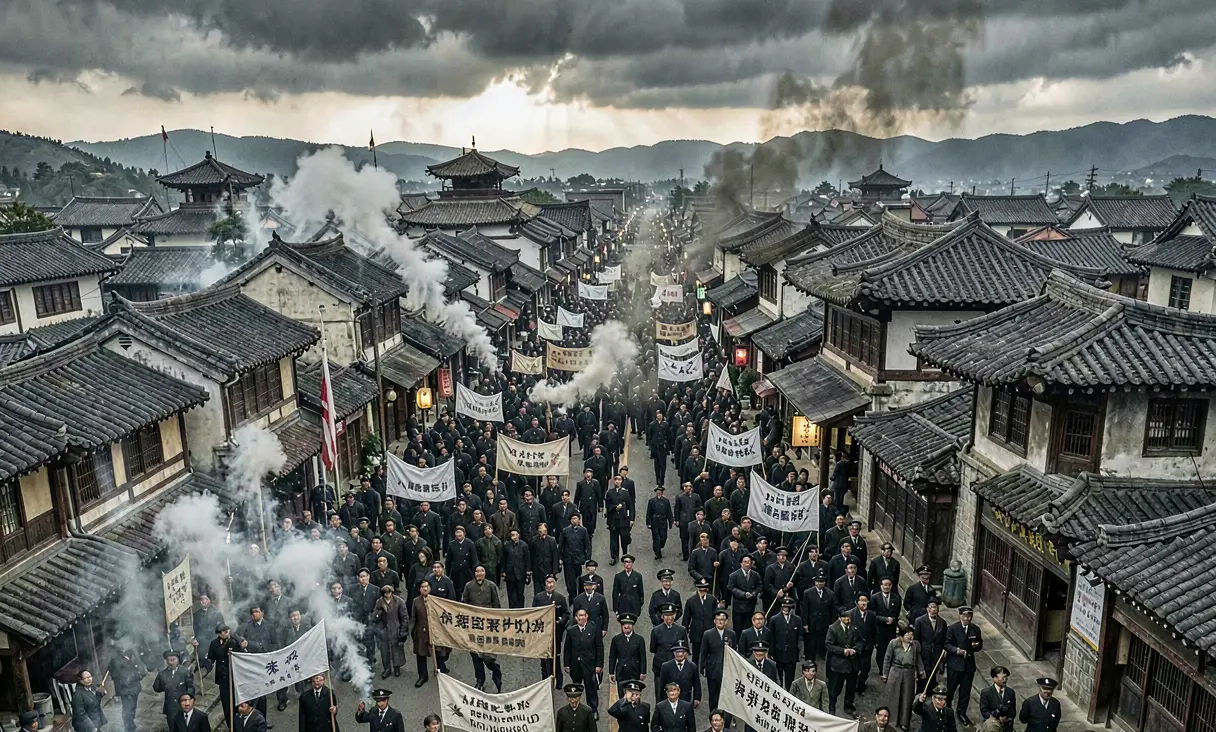
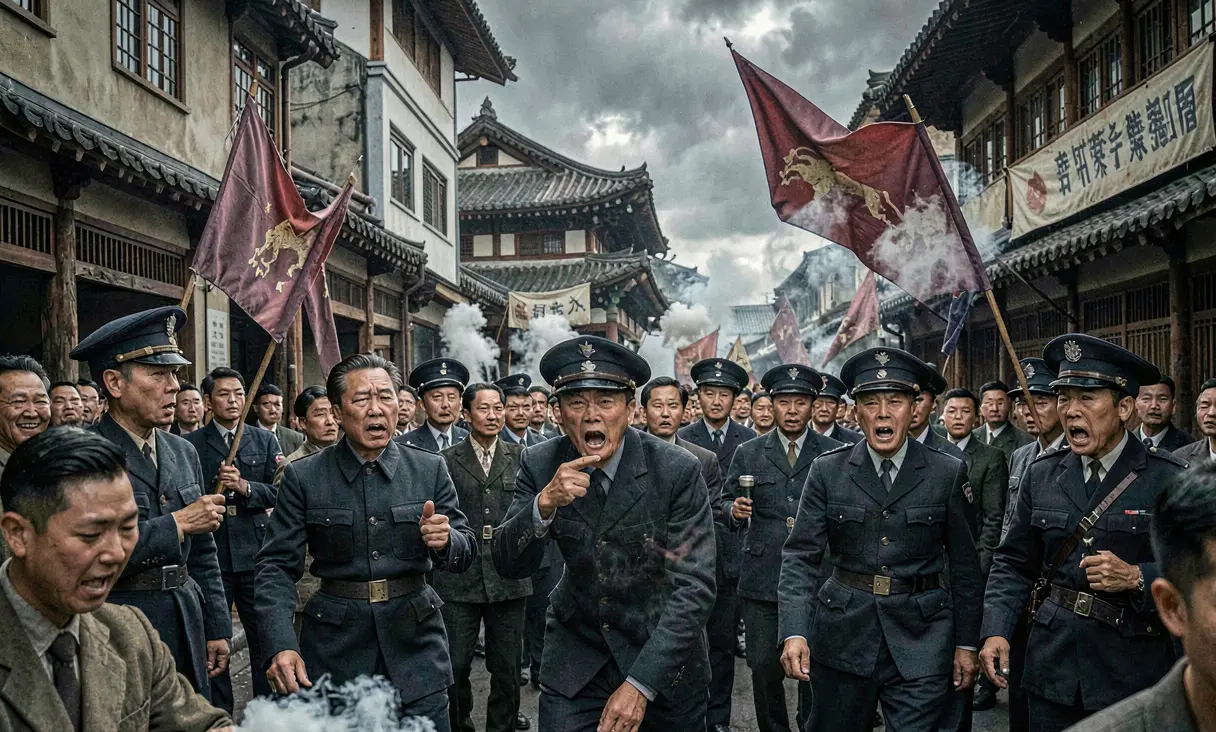
What began as a peaceful demonstration in Seoul rapidly metastasized into a nationwide uprising. Students, farmers, merchants, and laborers took to the streets across more than 200 counties, chanting 'Manse' (Ten Thousand Years) for Korean independence. The movement was remarkably non-violent; participants carried copies of the declaration and flags, engaging in civil disobedience rather than armed combat. Within weeks, an estimated two million Koreans—nearly ten percent of the total population—participated in over 1,500 separate demonstrations. The scale was unprecedented, transforming isolated grievances into a unified national movement that paralyzed Japanese administrative control in many regions.
Japanese Brutality and Repression
The Japanese colonial authorities responded with overwhelming and calculated violence. Police and military forces were ordered to suppress the protests by any means necessary, leading to massacres such as the Gwangmyeong incident where dozens were burned alive in a church. The Japanese employed scorched-earth tactics, burning villages that harbored protesters and executing suspected ringleaders without trial. Official Japanese records admitted to 7,509 deaths, while Korean historians estimate the toll exceeded 8,400, with over 16,000 injured and 47,000 arrested. The brutality was designed not only to crush the immediate uprising but to break the spirit of the nation through terror.
Aftermath and the Provisional Government
Although the March First Movement failed to secure immediate independence or force a Japanese withdrawal, it achieved significant diplomatic and organizational victories. The sheer scale of the protests shattered the myth of Korean passivity, forcing Japan to shift from military rule to a 'Cultural Policy' that offered limited concessions in education and press freedom. Crucially, the movement galvanized the diaspora; on April 11, 1919, Korean exiles established the Provisional Government of the Republic of Korea in Shanghai, with Syngman Rhee as its first president. This government served as a continuous symbol of legitimate Korean sovereignty throughout the colonial era.
Legacy and National Identity
The March First Movement remains the foundational pillar of modern Korean national identity and democratic consciousness. It demonstrated that a colonized people could assert their agency through non-violent resistance, influencing global decolonization movements in India and beyond. In South Korea, March 1 is celebrated annually as a public holiday, with reenactments and ceremonies honoring the 'Thirty-Six Martyrs' and the millions who participated. The movement's spirit of unity and sacrifice continues to inspire Korean political discourse, serving as a historical touchstone for the nation's journey from colonial subjugation to sovereign democracy.
The March First Movement was the largest anti-colonial protest in Asia at the time, inspiring global decolonization efforts and solidifying Korean resistance to Japan.
Where it happened
Seoul, Korea (under Japanese rule) — see it on the interactive map →
Explore related history
 PoliticsSargon of Akkad Establishes the First Empirec. 2334 BCE · Akkad (Location uncertain, near Baghdad, Iraq)Sargon unifies Sumerian city-states to create the world's first multi-ethnic empire.
 PoliticsPromulgation of the Code of Ur-Nammuc. 2100 BCE · Ur, Southern Mesopotamia (Iraq)The earliest known surviving law code is established in the Sumerian city of Ur.
 PoliticsNelson Mandela Elected President of South AfricaApril 27, 1994 · Cape Town, South AfricaSouth Africa holds its first democratic election, ending the apartheid regime and establishing a multiracial government.
 WarTurkish War of Independence BeginsMay 19, 1919 · Samsun, TurkeyMustafa Kemal Atatürk lands in Samsun to organize resistance against Allied occupation and the Ottoman Sultanate.
 PoliticsEgyptian Revolution of 1919March 8, 1919 · Cairo, EgyptMass protests erupt in Egypt demanding an end to British protectorate and full independence.
 WarEaster Rising in IrelandApril 24, 1916 · Dublin, IrelandIrish republicans launch an armed insurrection against British rule in Dublin during Easter Week.
Discussion
Loading…