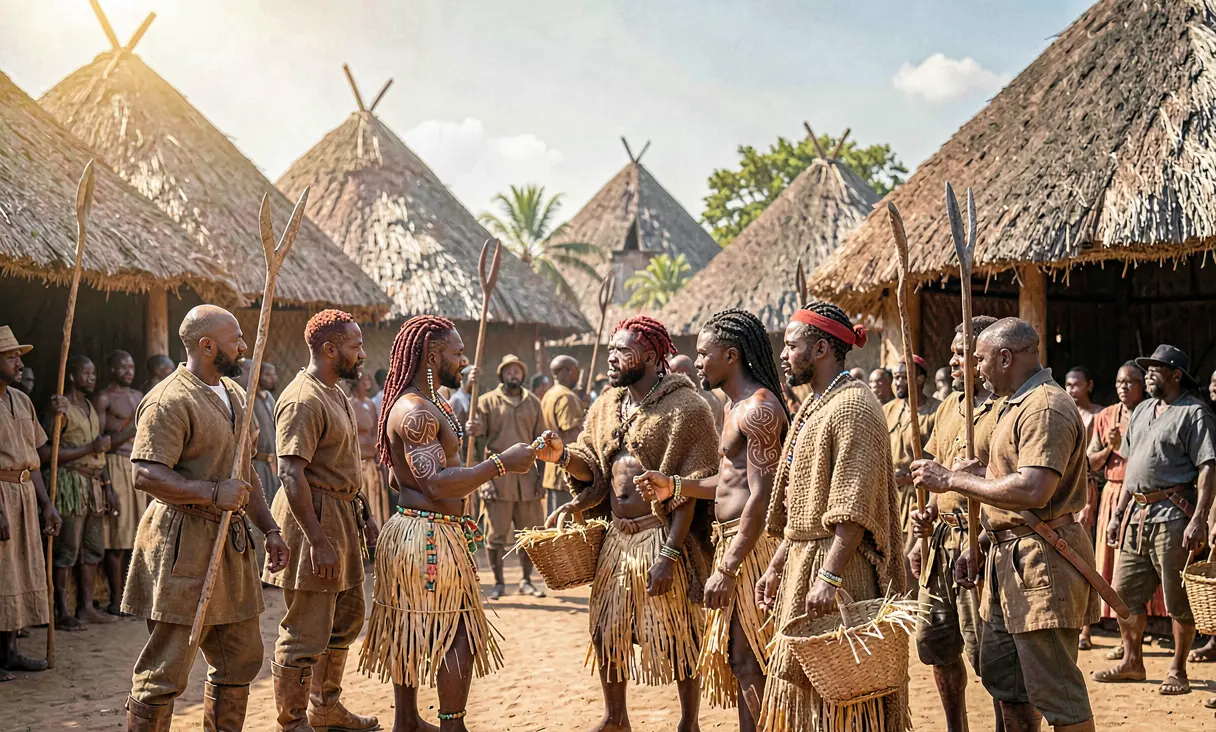
Kingdom of Kongo Engages in Large-Scale Slave Trade
Around 1500 CE, the Kingdom of Kongo's integration into the Atlantic slave trade transformed diplomatic exchanges into a destabilizing cycle of warfare, fundamentally altering Central African society
Background and Diplomatic Origins
By the turn of the 16th century, the Kingdom of Kongo, centered at its capital Mbanza Kongo (later known as São Salvador), had established itself as a sophisticated centralized state with a complex bureaucracy and a distinct Christian identity following King Nzinga a Nkuwu's baptism in 1491. The arrival of Portuguese explorers, led by Diogo Cão in the late 1480s, initially sparked an era of diplomatic exchange focused on religious instruction, technological transfer, and the acquisition of luxury goods. Early interactions were characterized by mutual curiosity; the Kongo elite were eager to adopt European Christianity and material culture, while the Portuguese sought a strategic foothold in Central Africa. However, beneath this veneer of cordiality lay a fundamental asymmetry: the Portuguese demand for labor to fuel their burgeoning Atlantic enterprises quickly eclipsed other forms of trade.
The Shift to Human Commerce
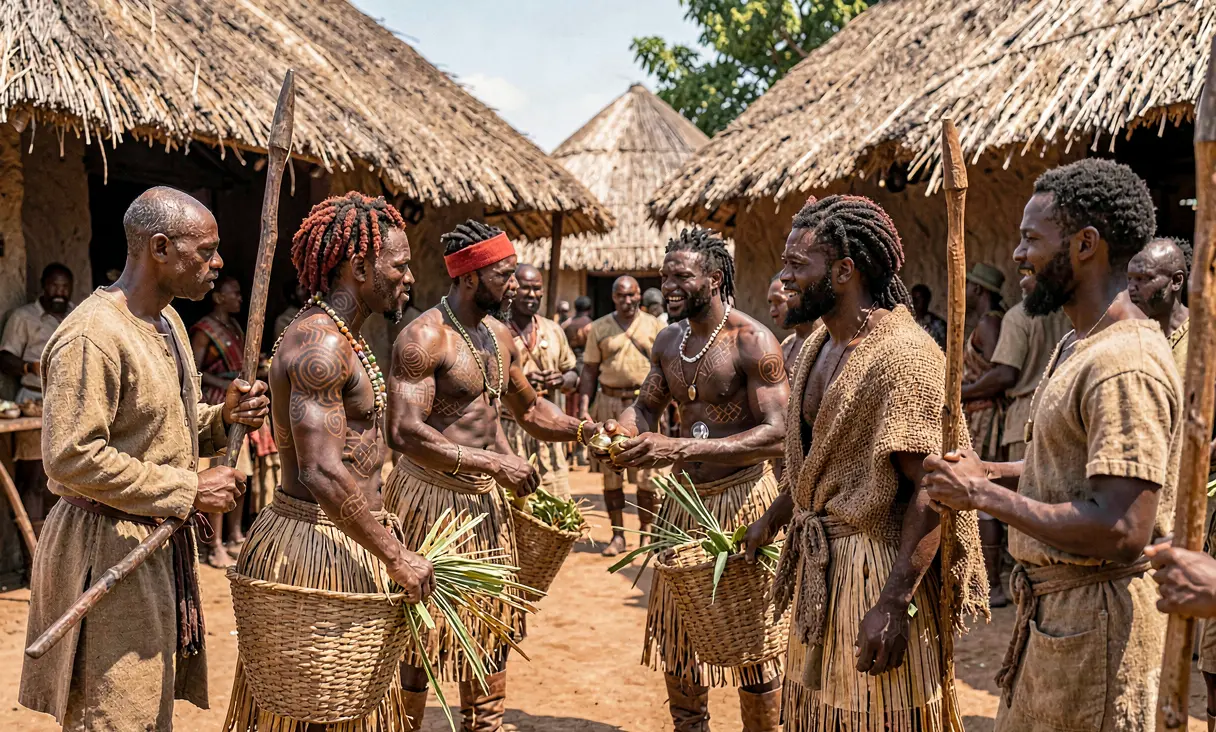
Around 1500 CE, the nature of Kongo-Portuguese relations underwent a catastrophic transformation as the exchange of captives for European manufactured goods became the dominant economic activity. Initially, the Kingdom's rulers viewed the export of prisoners of war and criminals as a diplomatic lever to secure alliances with Lisbon, trading human lives for cloth, copper bracelets, glass beads, and, crucially, firearms. This practice was not an invention of the Portuguese but rather an adaptation of existing Kongo judicial and military customs, where captives were traditionally integrated into the royal household or sold within regional networks. Yet, the scale and intensity demanded by European traders rapidly outstripped internal judicial processes, forcing a shift from capturing criminals to aggressive raiding for the sole purpose of export.
Key Figures: King Afonso I
The most prominent figure navigating this treacherous new landscape was Nzinga Mbemba, who ascended the throne in 1506 as King Afonso I. A devout Christian and a skilled diplomat, Afonso initially sought to regulate the burgeoning slave trade through royal decrees, insisting that only those legally condemned by Kongo courts could be sold. In his famous correspondence with King Manuel I of Portugal, dated October 18, 1526, Afonso pleaded for an end to the kidnapping of free citizens and the unrestricted flow of Portuguese traders who bypassed royal authority. He argued that the trade was destabilizing the kingdom, stating that 'our country is being depopulated' by Portuguese merchants who acted with impunity. Despite his moral authority and political acumen, Afonso found himself unable to halt a system that had become too deeply embedded in the economy and too lucrative for local elites to resist.
Mechanisms of Destabilization
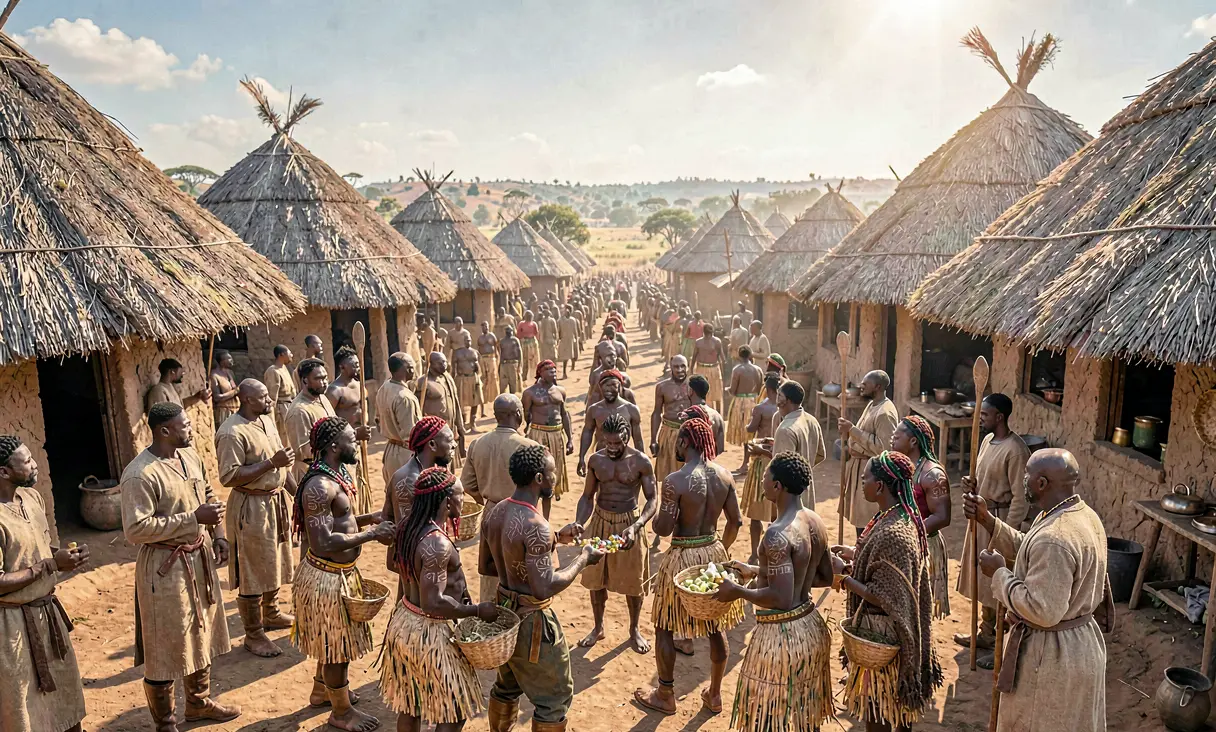
The introduction of firearms fundamentally altered the regional power dynamics of Central Africa, creating a vicious cycle of violence. As Portuguese traders supplied muskets and gunpowder to Kongo allies in exchange for captives, rival states and internal factions were forced to acquire similar weaponry to survive, leading to more frequent and deadlier wars. These conflicts were no longer fought primarily for territorial expansion or political dominance but specifically to generate a supply of human cargo for the Atlantic market. The traditional social fabric of the Kingdom began to fray; villages were raided indiscriminately, kinship ties were severed, and the authority of local governors was undermined by independent warlords who profited directly from the trade. Mbanza Kongo itself became a hub where the rhythm of daily life was dictated by the arrival of Portuguese caravans and the departure of slave ships.
Aftermath and Internal Fracture
By the mid-16th century, the consequences of this intensified trade were starkly evident. The Kingdom of Kongo, once a stable hegemon, began to suffer from severe demographic decline and political fragmentation. The constant demand for captives eroded the agricultural base of the kingdom, as labor was diverted from farming to raiding or taken away entirely. Internal dissent grew as provincial governors, empowered by their control over trade routes, challenged the central authority of the Manikongo. Although Afonso I managed to maintain his throne until his death around 1543, the structural damage inflicted during his reign and that of his successors created a vulnerability that would eventually lead to civil wars in the following centuries. The Kingdom was no longer merely a sovereign entity engaging in trade; it had become an integral, albeit exploited, component of the Atlantic slave economy.
Legacy and Historical Significance
The period beginning around 1500 CE marks a pivotal turning point not only for the Kingdom of Kongo but for the history of the African continent and the Americas. It represents one of the earliest instances where an indigenous African state voluntarily integrated into the global capitalist system, only to find its sovereignty compromised by the very mechanisms it sought to exploit. The transformation of Mbanza Kongo from a center of diplomatic exchange to a node in the transatlantic slave trade set a precedent for centuries of exploitation that would follow. The legacy of this era is a testament to the resilience of Kongo's political structures, which survived for two more centuries despite these pressures, but also serves as a somber reminder of how quickly economic incentives can dismantle social cohesion and alter the course of history.
Initiated a tragic transformation of African political economies towards dependence on the slave trade.
Where it happened
Mbanza Kongo, Angola — see it on the interactive map →
Explore related history
 PoliticsSargon of Akkad Establishes the First Empirec. 2334 BCE · Akkad (Location uncertain, near Baghdad, Iraq)Sargon unifies Sumerian city-states to create the world's first multi-ethnic empire.
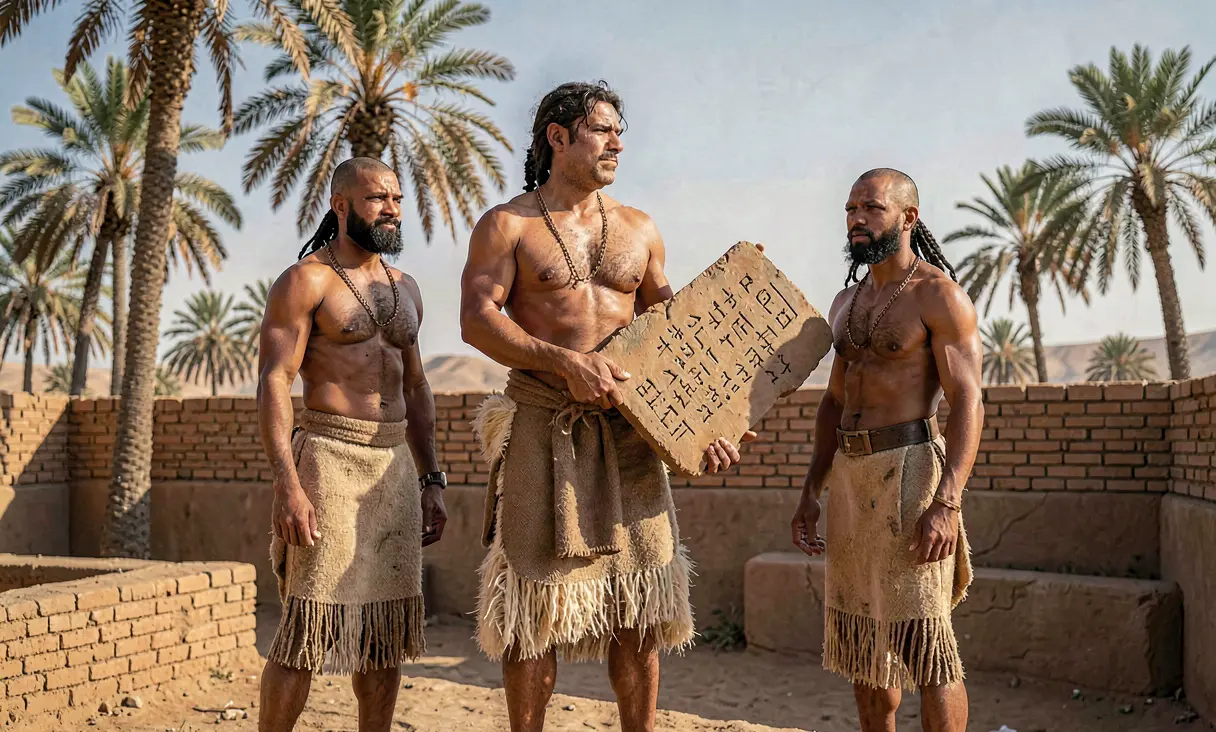 PoliticsPromulgation of the Code of Ur-Nammuc. 2100 BCE · Ur, Southern Mesopotamia (Iraq)The earliest known surviving law code is established in the Sumerian city of Ur.
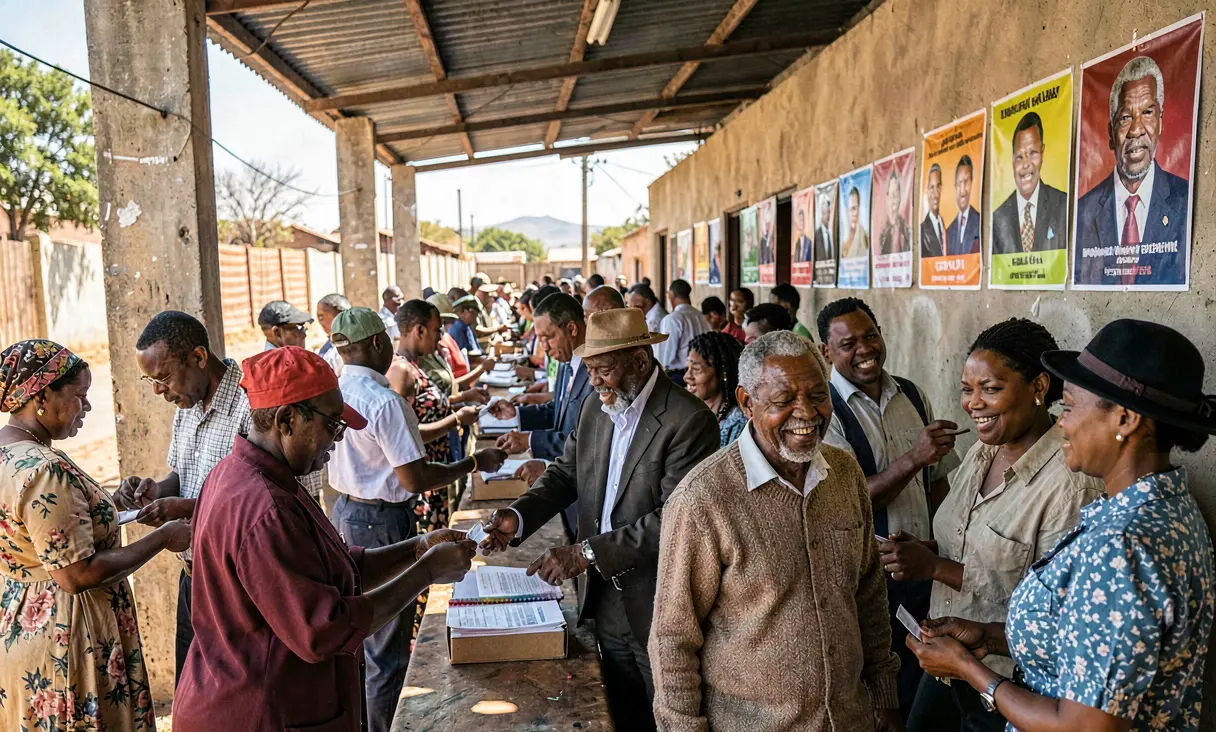 PoliticsNelson Mandela Elected President of South AfricaApril 27, 1994 · Cape Town, South AfricaSouth Africa holds its first democratic election, ending the apartheid regime and establishing a multiracial government.
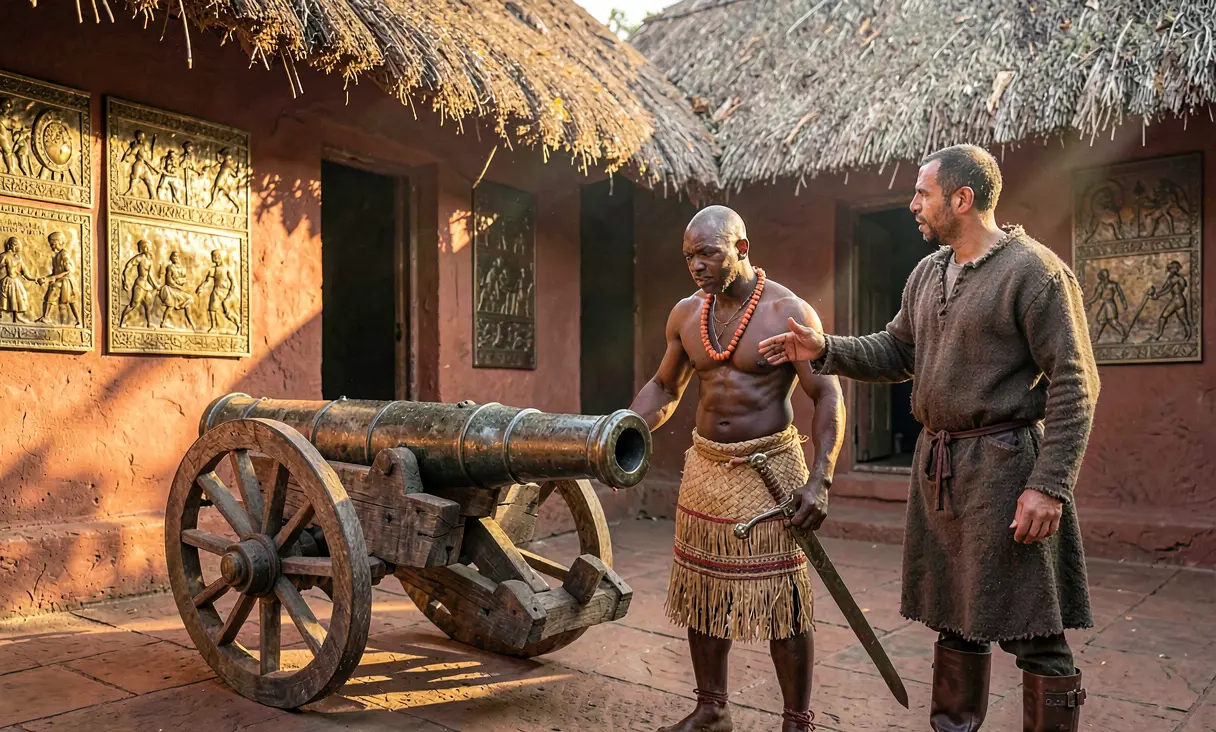 TechnologyBenin Acquires Cannon Technology from Portugalc. 1500 CE · Benin City, NigeriaThe Kingdom of Benin integrates Portuguese cannon technology into its military arsenals.
 TechnologyCompletion of the Qhapaq Ñan Road Networkc. 1500 CE · Andes Mountains (Various), Peru/ChileThe Inca finalize the vast road system connecting their empire.
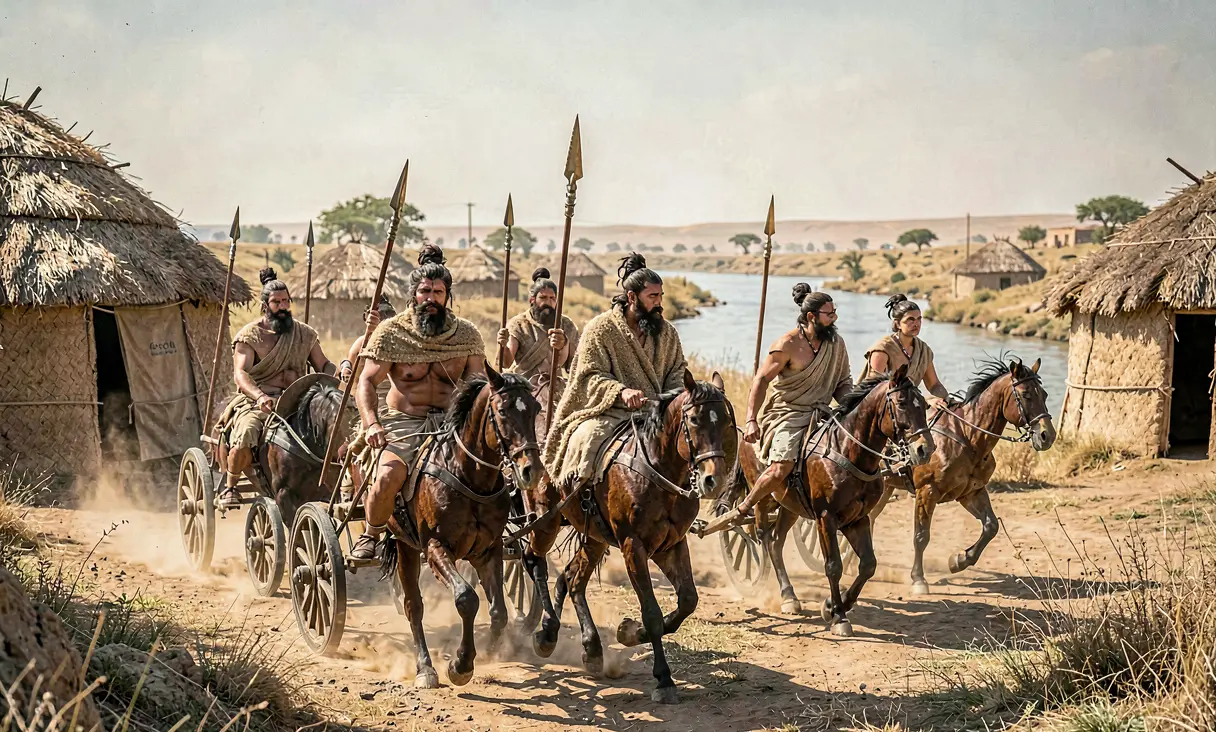 CivilizationArrival of Indo-Aryan Speakers in the Punjabc. 1500 BCE · Punjab Region (modern Pakistan/India)Indo-Aryan tribes migrate into the northwestern Indian subcontinent, introducing the Vedic Sanskrit language and horse culture.
Discussion
Loading…