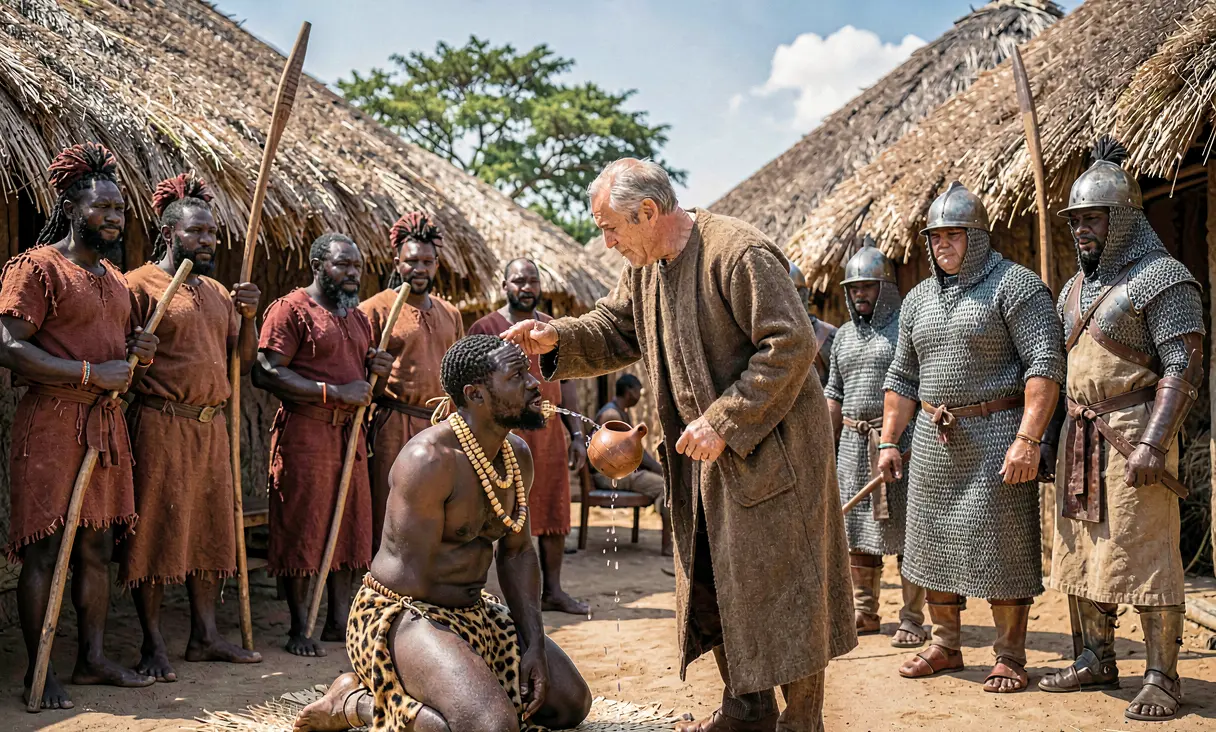
King Nzinga a Nkuwu Baptized as João I of Kongo
King Nzinga a Nkuwu's 1491 baptism as João I forged a pivotal political and religious alliance with Portugal, initiating centuries of syncretism and transforming Central Africa's geopolitical landscap
Diplomatic Foundations and Initial Contact
The Kingdom of Kongo, a centralized state in Central Africa with its capital at Mbanza Kongo (later known as São Salvador), had established diplomatic channels with the Portuguese Crown by 1483. King Nzinga a Nkuwu, ruling over a vast territory that spanned parts of modern-day Angola and the Democratic Republic of the Congo, recognized the strategic value of engaging with the maritime power emerging from Lisbon. The initial exchanges were not merely religious but deeply geopolitical; Kongo sought access to European metallurgy, textiles, and military technology, while Portugal coveted new trade routes and potential converts to expand Christendom's reach beyond Europe. By 1490, a Portuguese embassy led by Diogo Cão had returned with envoys from the Kongo court, setting the stage for a formal conversion that would reshape the political landscape of the Atlantic world.
The Baptismal Ceremony of 1491
In early 1491, a contingent of Franciscan missionaries and priests arrived in Mbanza Kongo to officiate the baptism of King Nzinga a Nkuwu. The ceremony was a grand spectacle designed to mirror European royal rites while accommodating local customs. The King, along with his queen, principal nobles, and thousands of subjects, received the sacrament of holy water. Upon his conversion, Nzinga a Nkuwu adopted the Christian name João I, signaling a profound alignment with Portugal. This event was not a mere spiritual awakening but a calculated political maneuver intended to solidify an alliance that would grant Kongo exclusive rights to trade goods and military support against rival states. The date marks the first instance of a sub-Saharan African monarch formally integrating into the European diplomatic and religious sphere.
Key Figures: João I and His Successors
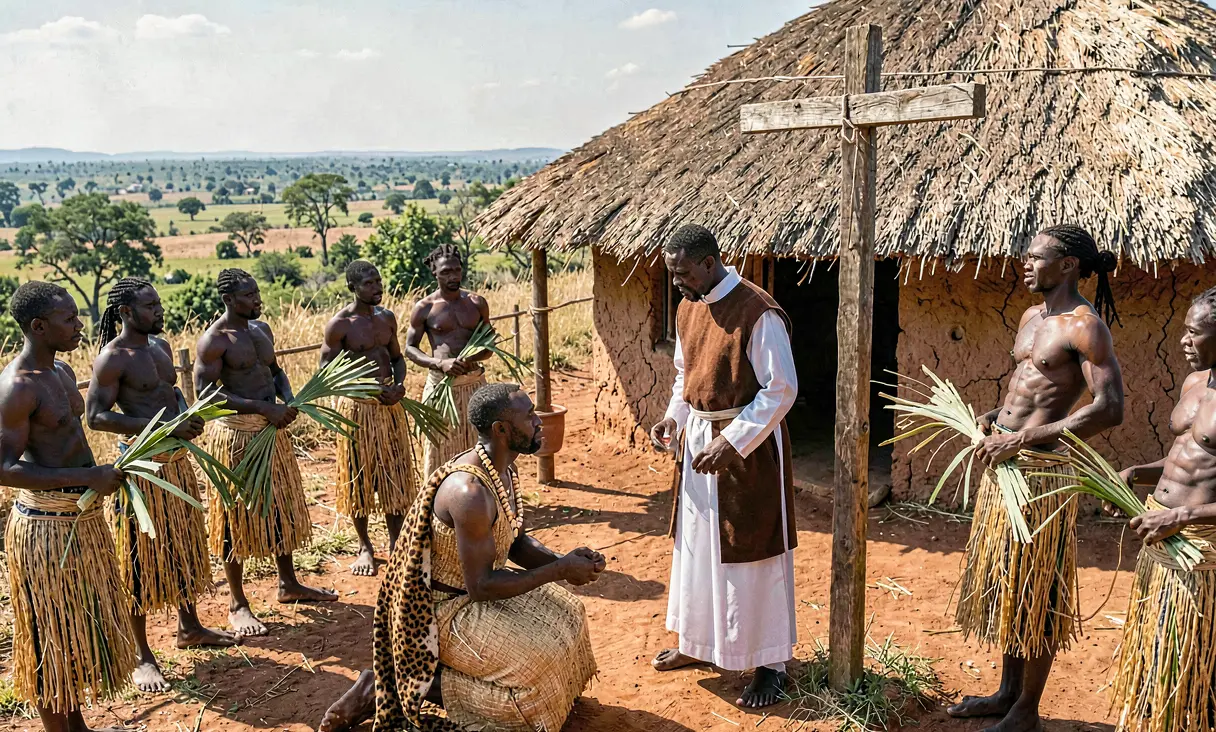
The central figure, King Nzinga a Nkuwu (João I), was a pragmatic ruler who navigated the complex interplay between traditional Kongo spirituality and the new Catholic faith. However, his commitment to Christianity proved tentative; he eventually reverted to traditional practices when Portuguese support failed to meet his expectations regarding military aid against internal rebellions. The true architect of Kongo's Christian identity emerged in his son, Afonso I (born Mvemba a Nzinga). Unlike his father, Afonso was a fervent believer who had been educated by Portuguese missionaries and viewed Christianity as the bedrock of state legitimacy. While João I initiated the conversion, it was Afonso who would later institutionalize the faith, ensuring its survival despite the King's own fluctuating allegiances.
Syncretism and Political Fractures
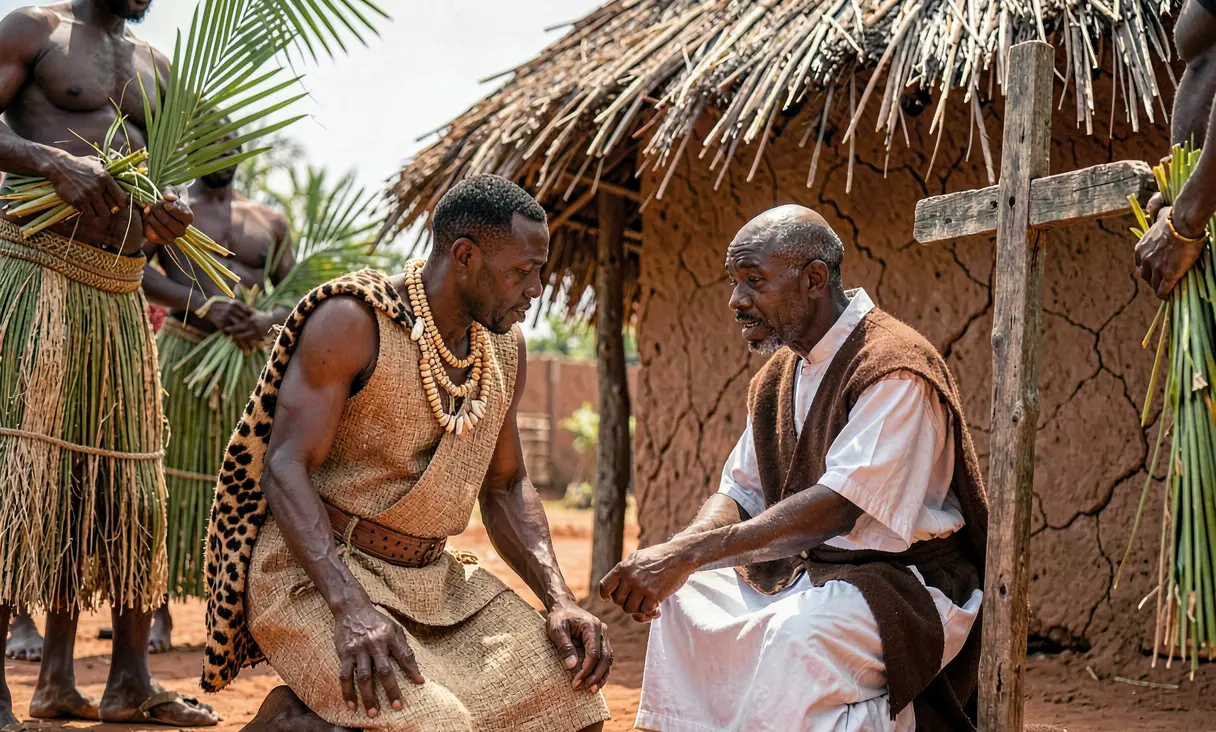
The immediate aftermath of the 1491 baptism revealed deep fissures within the Kongo court. The conversion created a binary division between the Christianized elite, who adopted European names, clothing, and customs, and the traditionalist factions who viewed the new religion as an erosion of ancestral authority. João I's eventual return to traditionalism in the late 1490s highlighted the fragility of the initial alliance. The kingdom became a battleground for ideological influence, where the Catholic Church struggled to displace indigenous beliefs. This tension did not result in the total abandonment of Christianity but rather fostered a unique religious syncretism, where Kongo spiritual concepts were reinterpreted through a Christian lens, creating a distinct Afro-Atlantic faith that would endure for centuries.
Long-Term Legacy and Regional Impact
The baptism of 1491 set in motion a chain of events that fundamentally altered the trajectory of Central African history. It established a precedent for diplomatic relations based on religious conversion, which Portugal would exploit to justify increasing involvement in Kongo's internal affairs. While initially intended as an equal partnership, this dynamic eventually facilitated the rise of the trans-Atlantic slave trade, as the demand for labor grew alongside the need for Portuguese military and economic support. The event also cemented Mbanza Kongo as a major Christian center in Africa, complete with cathedrals and schools, distinguishing it from other contemporary African states. Ultimately, the conversion of João I was the genesis of a complex cultural hybridity that defined the region's identity long after the Portuguese colonial era began.
Initiated a unique African-Christian synthesis that shaped Kongo's political and cultural identity for generations.
Where it happened
Mbanza Kongo, Angola — see it on the interactive map →
Explore related history
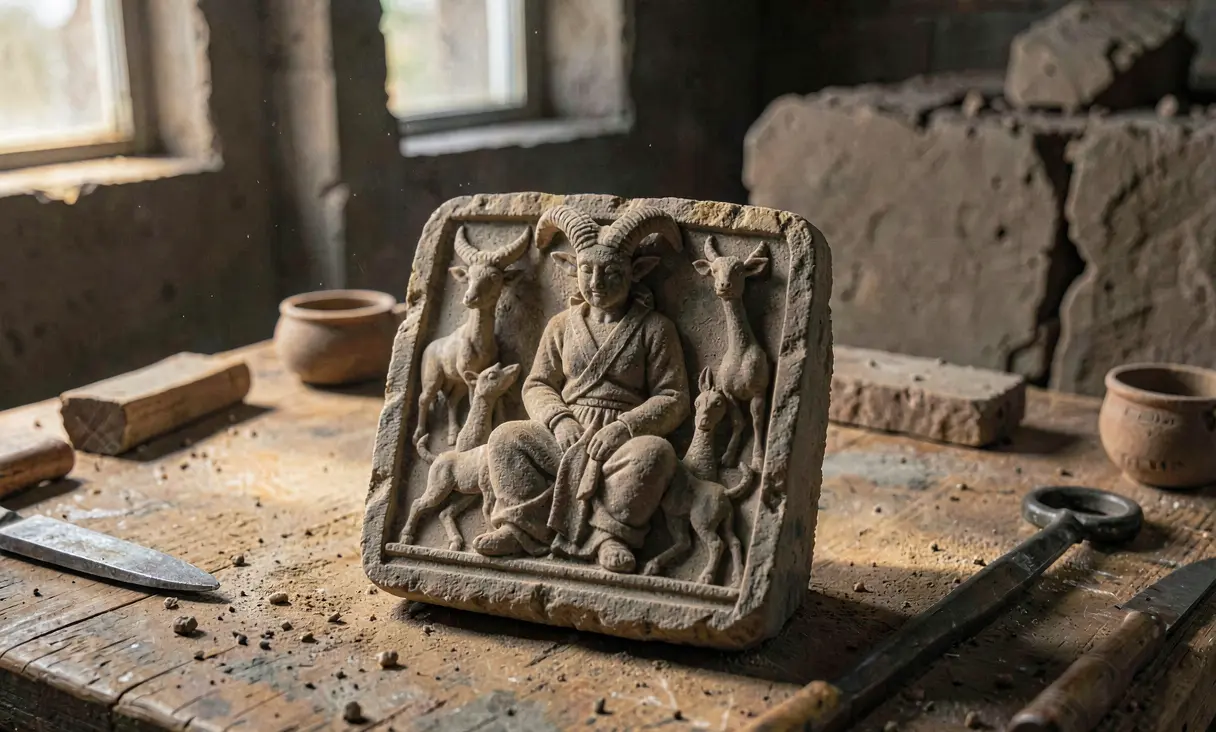 ReligionDiscovery of the Pashupati Sealc. 2500 BCE · Mohenjo-daro, Indus Valley (modern Pakistan)The Pashupati seal is carved, depicting a seated figure surrounded by animals, likely an early prototype of the Hindu god Shiva.
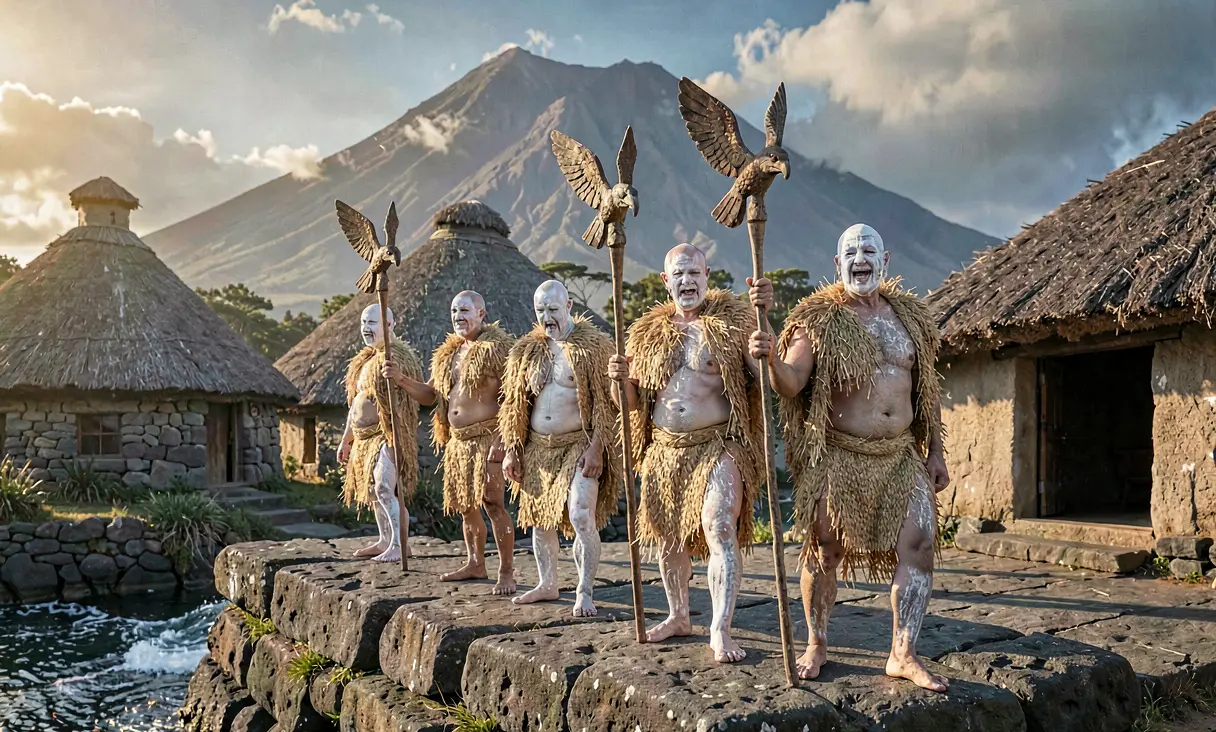 ReligionRise of the Birdman Cult on Rapa Nuic. 1600 CE · Orongo, Rapa NuiThe Birdman cult replaces moai worship as the central religious and political institution on Rapa Nui.
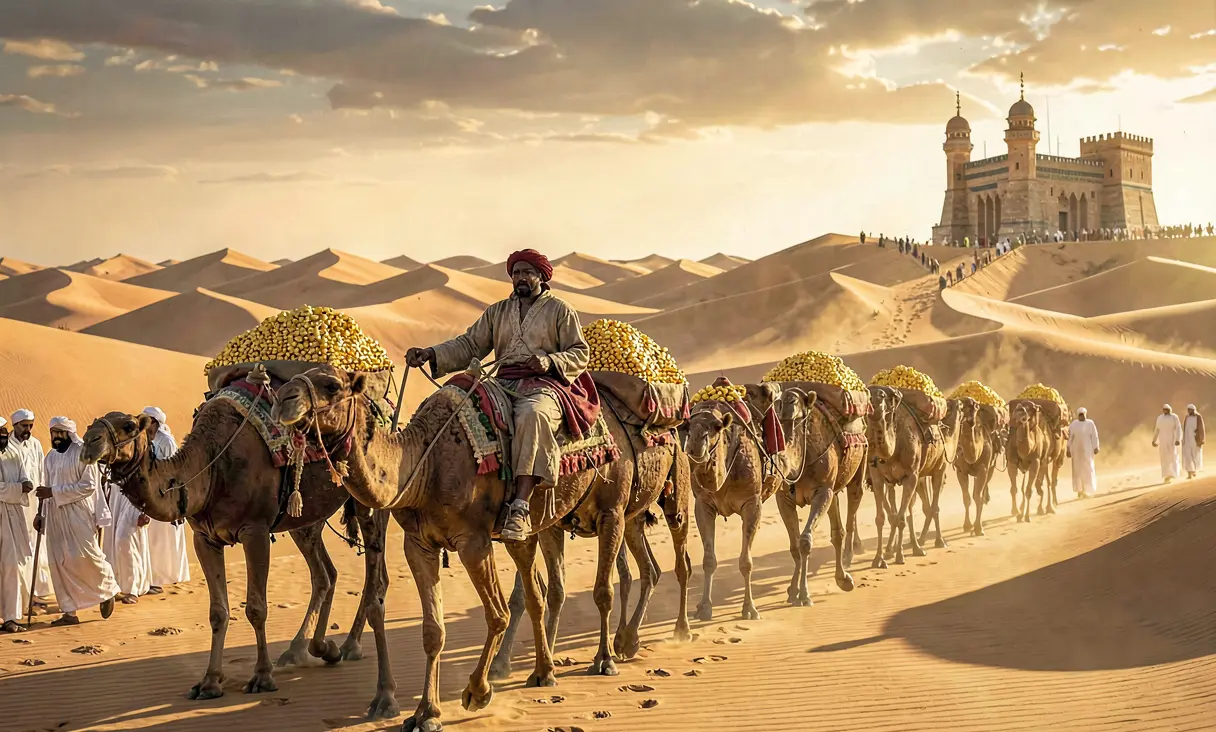 ReligionAskia Muhammad's Pilgrimage to Meccac. 1497 CE · Mecca (via Gao)Askia Muhammad undertakes a lavish pilgrimage to Mecca, strengthening ties with the Islamic world.
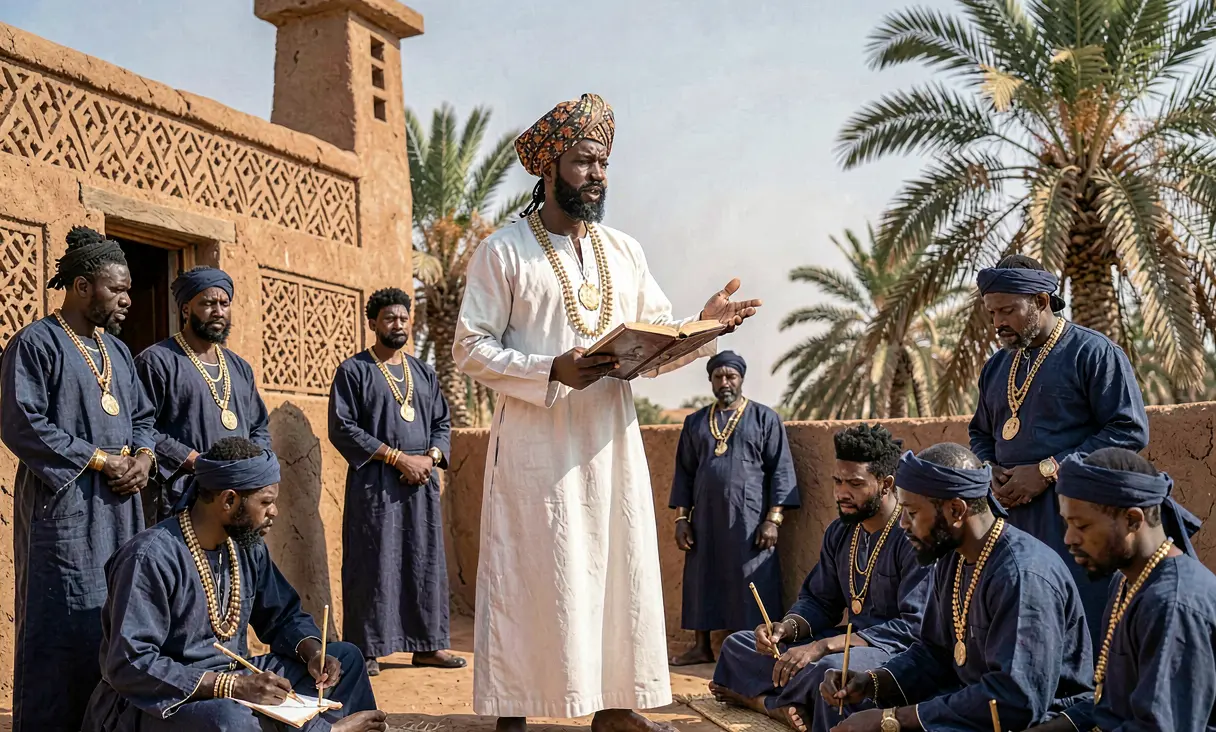 PoliticsAskia Muhammad Establishes Legal Reforms in Songhaic. 1493 CE · Gao, MaliAskia Muhammad I overthrows the Sunni dynasty and implements Islamic legal reforms across the Songhai Empire.
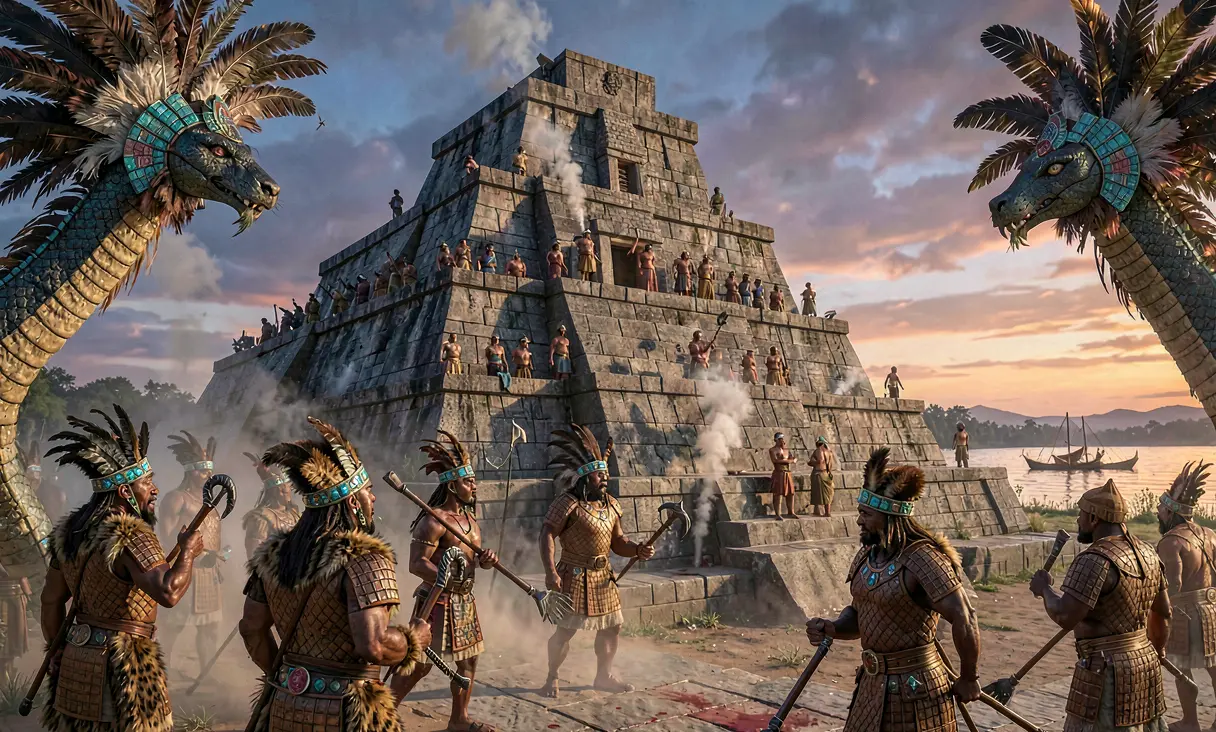 ReligionRededication of the Templo Mayor by Ahuitzotlc. 1487 CE · Tenochtitlan, Mexico City, MexicoSacrificial ceremonies attend the expansion of Tenochtitlan's main temple.
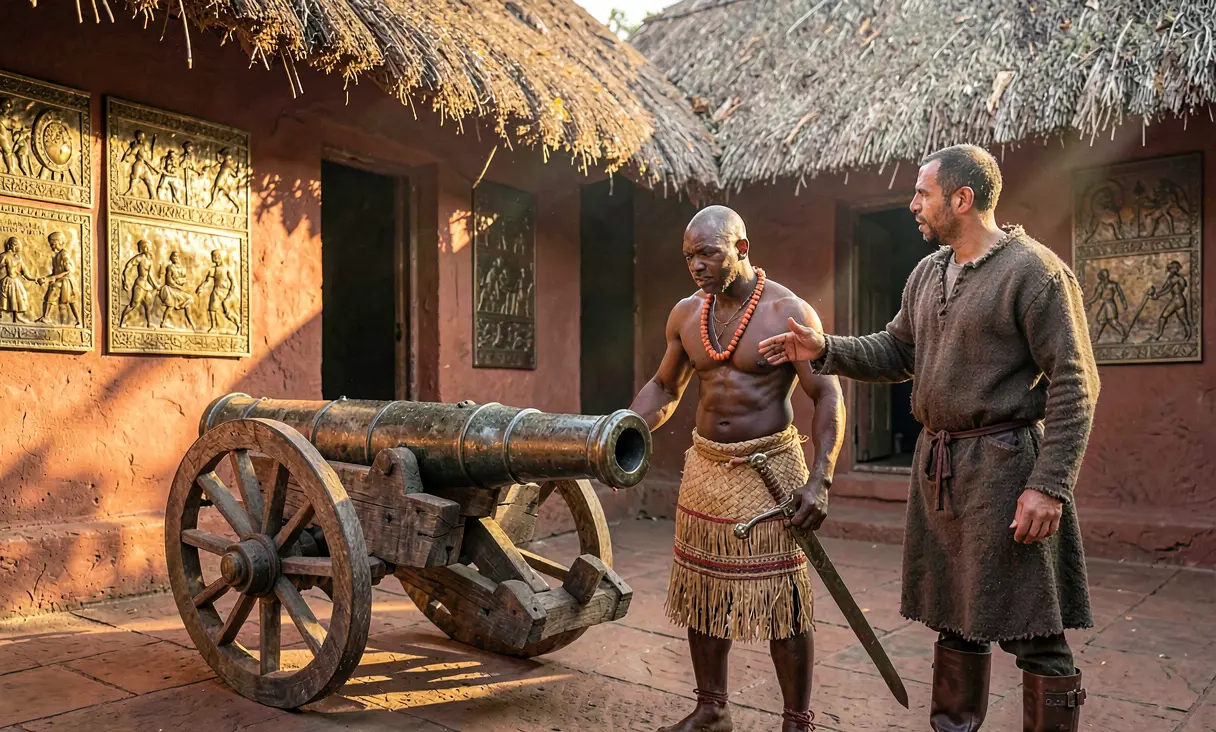 TechnologyBenin Acquires Cannon Technology from Portugalc. 1500 CE · Benin City, NigeriaThe Kingdom of Benin integrates Portuguese cannon technology into its military arsenals.
Discussion
Loading…