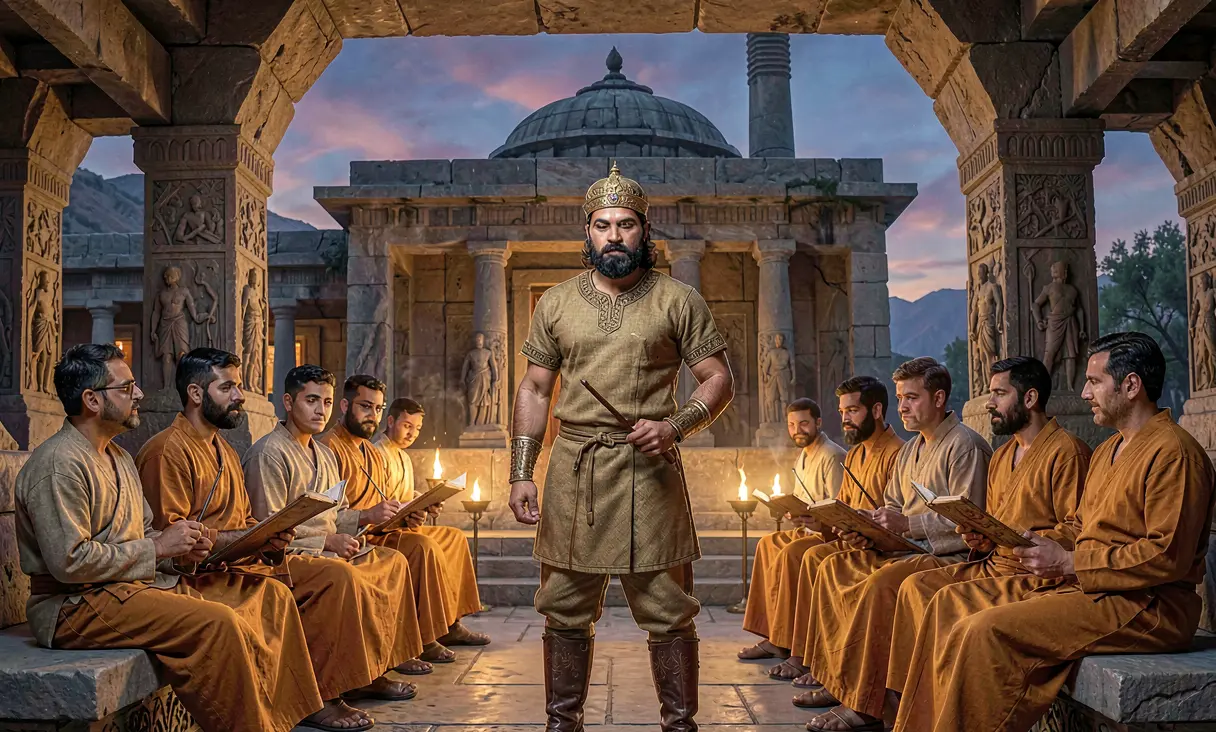
Kanishka I Convenes the Fourth Buddhist Council
Emperor Kanishka I's Fourth Buddhist Council codified Sarvastivada Abhidharma, legitimized Mahayana Buddhism, and sparked the anthropomorphic revolution in Gandhara art, reshaping Asian religious hist
The Kushan Ascendancy and Doctrinal Fragmentation
By the early 2nd century CE, the Kushan Empire under Emperor Kanishka I had consolidated power across a vast territory stretching from Central Asia to northern India. This geopolitical unification created a fertile ground for religious synthesis, yet the Buddhist sangha was fractured by intense doctrinal disputes. The Sarvastivada school, dominant in the northwest, faced internal schisms regarding the nature of existence and the interpretation of the Abhidharma. Simultaneously, nascent Mahayana ideas were gaining traction but lacked a unified institutional framework. Kanishka, seeking to stabilize his diverse empire through spiritual cohesion, recognized that resolving these theological contradictions was essential for imperial unity.
Convening the Fourth Council at Kundalavana
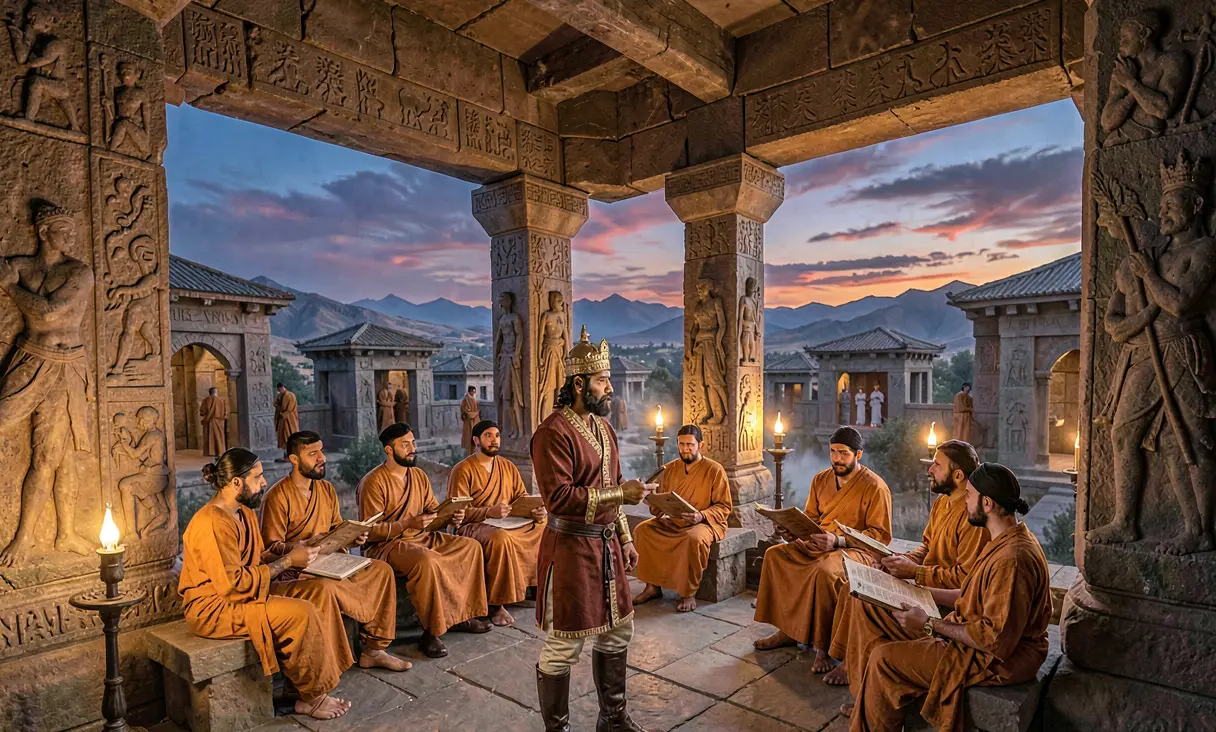
Around 100 CE, amidst the snow-capped peaks of Kashmir, Kanishka convened what is historically designated as the Fourth Buddhist Council. The assembly was held at the Kundalavana monastery, a site chosen for its seclusion and scholarly tradition. Unlike earlier councils focused primarily on reciting sutras to preserve orthodoxy, this gathering was explicitly tasked with systematizing Abhidharma literature and addressing the rising Mahayana movement. Kanishka provided immense material support, ensuring that hundreds of learned monks could participate without distraction from worldly affairs, creating an environment conducive to rigorous philosophical debate.
Vasumitra and the Scholarly Leadership
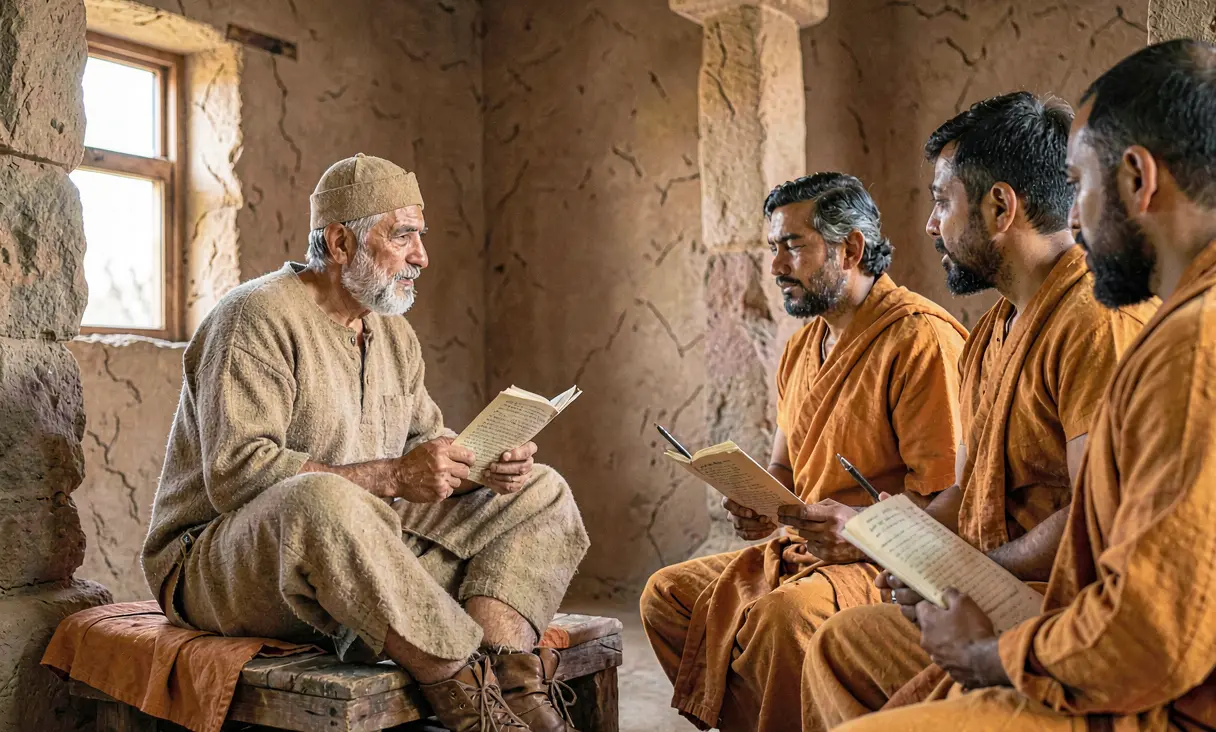
The intellectual engine of the council was Vasumitra, a preeminent Sarvastivada master who served as the president of the assembly. He was joined by the renowned scholar Asvaghosha, a poet and philosopher whose works would later bridge Indian and Chinese Buddhist thought, and Parsva, another key figure in the Sarvastivada tradition. These leaders were not merely theologians but polymaths capable of navigating the complex linguistic landscape of Sanskrit and Prakrit. Their collective authority allowed them to synthesize disparate views, ultimately producing a definitive commentary that would define the school's orthodoxy for centuries.
The Codification of the Mahavibhasa
The primary outcome of the council was the compilation of the *Mahavibhasa Shastra* (Great Commentary), a massive encyclopedic work that codified Sarvastivada Abhidharma philosophy. This text systematically addressed 10,000 questions regarding the nature of time, causality, and the existence of dharmas in the past, present, and future—a central tenet of the 'all exists' (*sarvam asti*) doctrine. Crucially, the council also legitimized Mahayana sutras as valid scripture alongside the traditional Tripitaka, effectively creating a dual canon that allowed for the coexistence of early Buddhist traditions and the emerging Bodhisattva ideal.
Architectural Patronage and the Kanishka Stupa
To commemorate the council's success, Kanishka commissioned the construction of a monumental stupa in Purusapura (modern-day Peshawar). Described by Chinese pilgrims like Faxian and Xuanzang centuries later, this structure reportedly stood over 400 feet tall, making it one of the tallest man-made structures of antiquity. The stupa was adorned with gold and silver, housing relics of the Buddha, and served as a physical manifestation of the empire's devotion. This architectural feat not only symbolized the triumph of Buddhist orthodoxy but also established Peshawar as a global center of pilgrimage and learning.
The Genesis of Gandhara Art
Kanishka's patronage catalyzed the emergence of the Gandhara school of art, a revolutionary synthesis of Greek, Persian, and Indian aesthetics. For the first time in Buddhist history, the Buddha was depicted in anthropomorphic form, drawing heavily on Hellenistic sculptural traditions to represent the enlightened being with realistic drapery and Apollo-like features. This iconographic shift transformed Buddhism from an aniconic tradition into a visually accessible faith, facilitating its spread along the Silk Road to China and beyond. The art produced during this period remains a testament to the cosmopolitan nature of Kanishka's court.
Enduring Legacy of the Fourth Council
The Fourth Buddhist Council under Kanishka I marked a definitive turning point in religious history, solidifying the Sarvastivada school and institutionalizing Mahayana Buddhism. The council's decisions influenced the trajectory of Asian spirituality for two millennia, shaping the monastic codes and philosophical frameworks of Tibet, China, and Japan. By bridging doctrinal divides and fostering artistic innovation, Kanishka ensured that Buddhism could adapt to new cultural contexts while maintaining its core identity. The event stands as a pivotal moment where religious schism was transformed into a structured pluralism that defined the spiritual landscape of Eurasia.
Kanishka's council institutionalized Mahayana Buddhism and facilitated its spread along the Silk Road to China and East Asia.
Where it happened
Kundalavana Monastery, Kashmir — see it on the interactive map →
Explore related history
 ReligionConstruction of the Temple of Kukulcán at Chichén Itzác. 800 CE · Chichén Itzá, MexicoThe iconic pyramid dedicated to the feathered serpent god is built during the Puuc-Toltec fusion period.
 ReligionBuddha Attains Enlightenmentc. 528 BCE · Bodh Gaya, IndiaSiddhartha Gautama achieves nirvana under the Bodhi tree founding Buddhism.
 ReligionConstruction of Kalasasaya Temple at Tiwanakuc. 500 CE · Tiwanaku, BoliviaThe Kalasasaya temple is built with monolithic stones for solar observance.
 ReligionSpread of Buddhism along the Silk Road to Chinac. 100 CE · Kashgar, China (Gateway)Buddhist monks and merchants transmit the religion from India to China via Central Asian trade routes.
 TechnologyRefinement of Papermaking by Cai Lun in Han China105 CE · Chang'an, ChinaCai Lun standardizes paper production using bark, hemp, rags, and fishing nets.
 DisasterEruption of Mount VesuviusAugust 24, 79 CE · Pompeii, ItalyVolcano destroys Roman cities preserving them in ash for modern discovery.
Discussion
Loading…