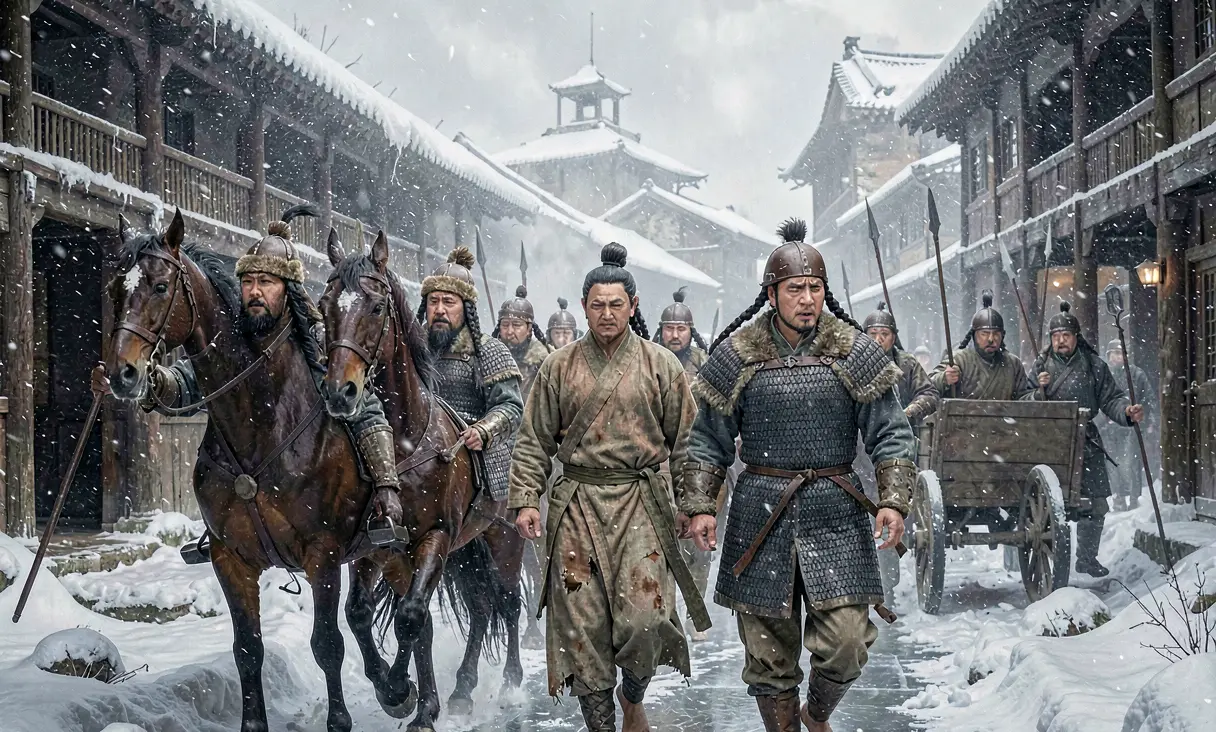
Jingkang Incident and Fall of Northern Song
The 1127 Jingkang Incident saw Jurchen Jin forces sack Kaifeng, capturing two emperors and ending Northern Song rule, forcing a dynastic retreat south that permanently shifted China's geopolitical foc
The Fractured Alliance
By the early 12th century, the Song Dynasty, despite its cultural zenith and economic prosperity, faced a critical strategic vulnerability in the north. The Liao Dynasty, long the dominant power on the steppe bordering China, had grown complacent. In 1115, the Jurchen tribes, formerly vassals of the Liao under the leadership of Aguda, united to form the Jin Dynasty. Recognizing a shared enemy, the Song court, specifically Emperor Huizong and his chief minister Cai Jing, entered into the 'Maritime Alliance' with the Jin in 1120. The agreement stipulated that the two powers would jointly attack the Liao, dividing its territory between them upon victory. However, the campaign exposed the Song's military decay; while the Jurchens swiftly dismantled the Liao, Song forces struggled to capture even minor strongholds, relying heavily on Jin assistance. This failure not only humiliated the Song but also revealed their defensive frailty to their new northern neighbors.
The Siege of Kaifeng
Following the collapse of the Liao in 1125, the Jin turned their gaze southward. Citing Song violations of the treaty and the harboring of a Liao prince as casus belli, the Jin army launched a devastating two-pronged invasion in late 1125. The northern and eastern armies converged on the capital, Kaifeng (Dongjing). In early 1126, the first siege ended with a humiliating peace treaty that demanded massive indemnities and territorial concessions. Yet, internal political turmoil in Kaifeng led to the dismissal of capable defenders and the recall of treacherous advisors, prompting the Jin to resume hostilities later that year. By December 1126, the second siege began in earnest. The city's defenses crumbled under the relentless assault of Jurchen cavalry and siege engines. Emperor Qinzong, who had succeeded his abdicated father Huizong during the crisis, made desperate attempts to negotiate, offering gold, silver, and even members of the imperial clan, but the Jin demands grew increasingly insatiable.
The Jingkang Catastrophe
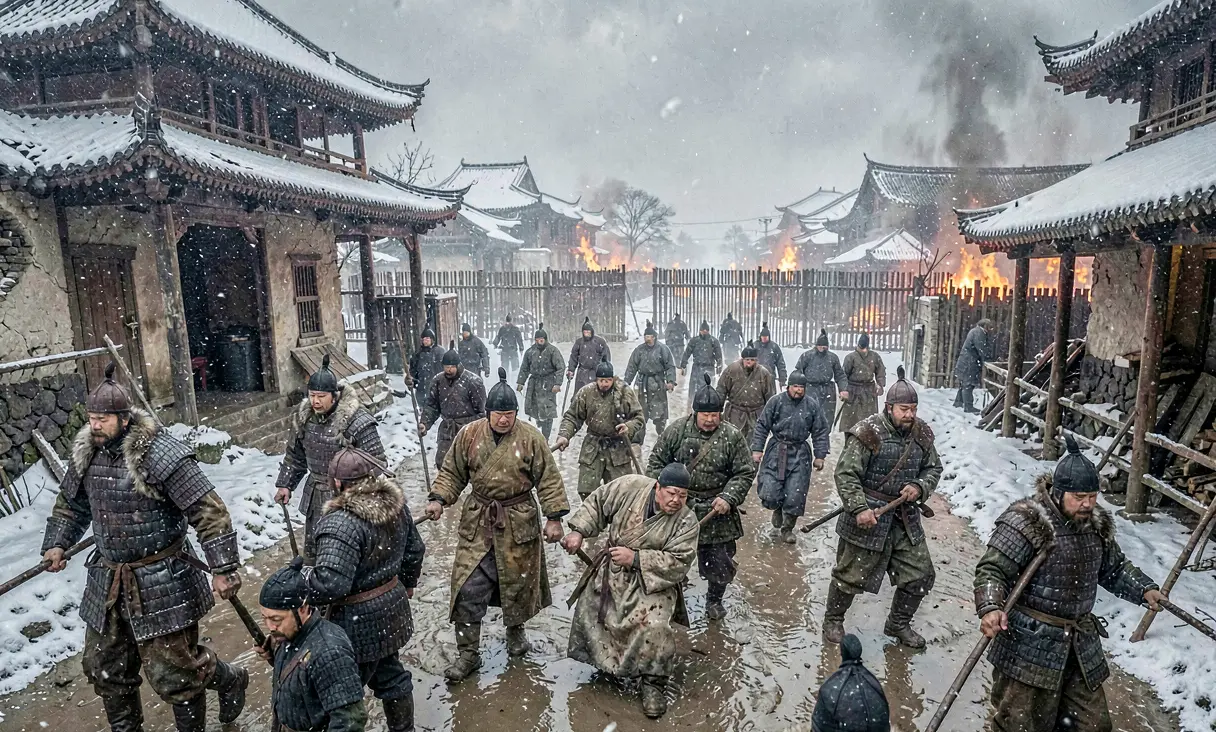
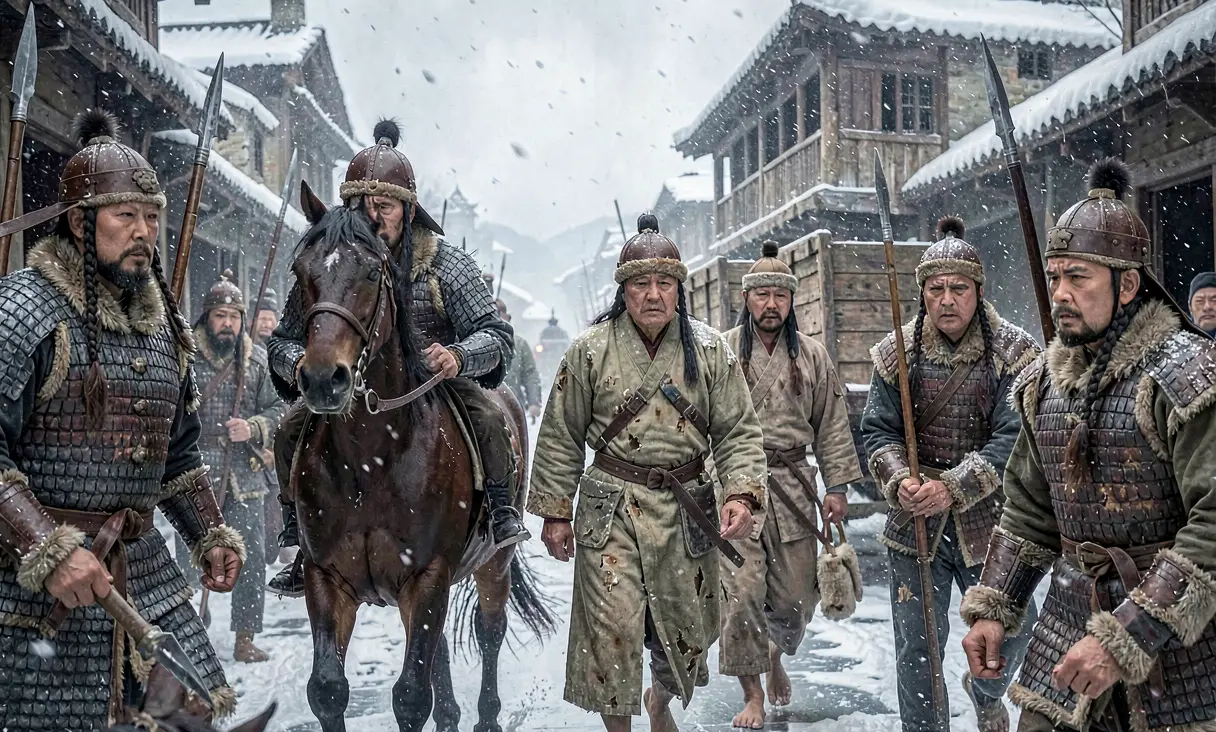
In April 1127, the Jin forces breached the final lines of defense. The event that followed is recorded in Chinese history as the Jingkang Incident, named after the era title of Emperor Qinzong at the time. In a systematic dismantling of the imperial house, the Jurchens captured Emperor Huizong (who had briefly resumed the throne), his son Emperor Qinzong, and virtually the entire extended imperial family, including hundreds of concubines, princes, and princesses. The looting was comprehensive; the invaders stripped the palace of its treasures, archives, and ritual bronzes. Crucially, they also deported thousands of skilled artisans, scholars, physicians, and government officials to their capital in Shangjing (modern-day Harbin). This mass abduction effectively decapitated the Northern Song administration and cultural elite, leaving the north in chaos.
The Flight South
Amidst the collapse of the central authority, one prince escaped the dragnet: Zhao Gou, the Prince of Kang. While his father and brother were marched north into captivity, Zhao Gou managed to flee Kaifeng before the city's final fall. He traveled through Henan and Shaanxi provinces, rallying loyalist troops and local militias who refused to submit to Jin rule. In May 1127, shortly after the capture of his family, he ascended the throne in Yingtian (modern-day Shangqiu), declaring himself Emperor Gaozong and establishing the Southern Song Dynasty. By late 1129, facing continued Jin pressure, he moved the capital further south to Lin'an (modern-day Hangzhou). This strategic retreat marked a permanent shift in China's political center of gravity from the Yellow River valley to the Yangtze Delta.
Geopolitical and Cultural Transformation
The fall of Northern Song fundamentally altered the geopolitical map of East Asia. The Jin Dynasty established control over northern China, creating a prolonged period of division between the Jurchen north and the Han Chinese south that would last for nearly a century until the rise of the Mongols. For the Southern Song, this necessitated a radical reorientation of national strategy. Abandoning the traditional reliance on heavy cavalry and open-field battles against steppe nomads, the dynasty invested heavily in naval power, riverine defense systems, and maritime trade. The loss of the northern horse-breeding regions forced military innovation, leading to advanced gunpowder weaponry and a formidable navy that would eventually check Jin expansion at the Huai River.
Legacy of Humiliation
The Jingkang Incident left an indelible scar on the Chinese collective psyche. The capture of two emperors by 'barbarian' forces was viewed as a supreme national humiliation, often cited in later centuries as a cautionary tale against military weakness and diplomatic naivety. The event catalyzed a surge in patriotic sentiment and military romanticism, epitomized by the legendary general Yue Fei, whose campaigns to reclaim the north became a symbol of resistance, even though he was eventually executed on political grounds. Culturally, the diaspora of northern elites into the south accelerated the economic and cultural development of the Jiangnan region, transforming it into China's new heartland while preserving the Confucian traditions that defined the Song golden age.
The sack of Kaifeng ended the Northern Song, forcing a permanent southward migration of Chinese political and cultural centers that lasted centuries.
Where it happened
Kaifeng, China — see it on the interactive map →
Explore related history
 WarAlgerian War of Independence BeginsNovember 1, 1954 · Algiers, AlgeriaThe National Liberation Front launches coordinated attacks marking the start of the Algerian War against France.
 WarMau Mau Uprising Begins in KenyaOctober 20, 1952 · Nairobi, KenyaThe Kikuyu-led Mau Mau rebellion begins against British colonial rule and white settler land ownership.
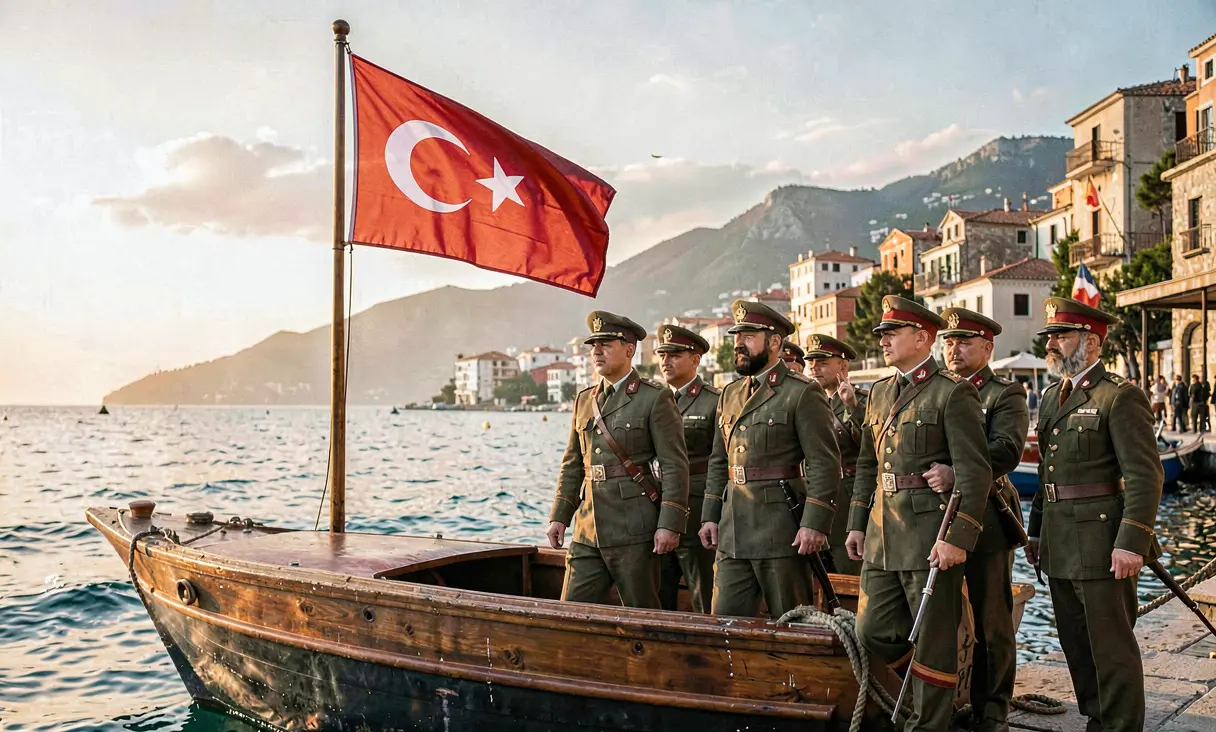 WarTurkish War of Independence BeginsMay 19, 1919 · Samsun, TurkeyMustafa Kemal Atatürk lands in Samsun to organize resistance against Allied occupation and the Ottoman Sultanate.
 ReligionConsecration of Angkor Watc. 1150 CE · Angkor Wat, CambodiaKing Suryavarman II dedicates the massive temple complex to Vishnu, marking a shift from Hinduism.
 ReligionJayavarman VII Adopts Mahayana Buddhismc. 1180 CE · Angkor Thom, CambodiaKing Jayavarman VII converts to Mahayana Buddhism and builds the Bayon temple complex.
 ReligionZoroaster Preaches Dualistic Monotheismc. 1200 BCE · Greater Khorasan, Iran/Afghanistan border regionThe prophet Zoroaster establishes a dualistic faith emphasizing the cosmic struggle between good and evil in ancient Persia.
Discussion
Loading…