Urbanization of Harappa and Mohenjo-daro
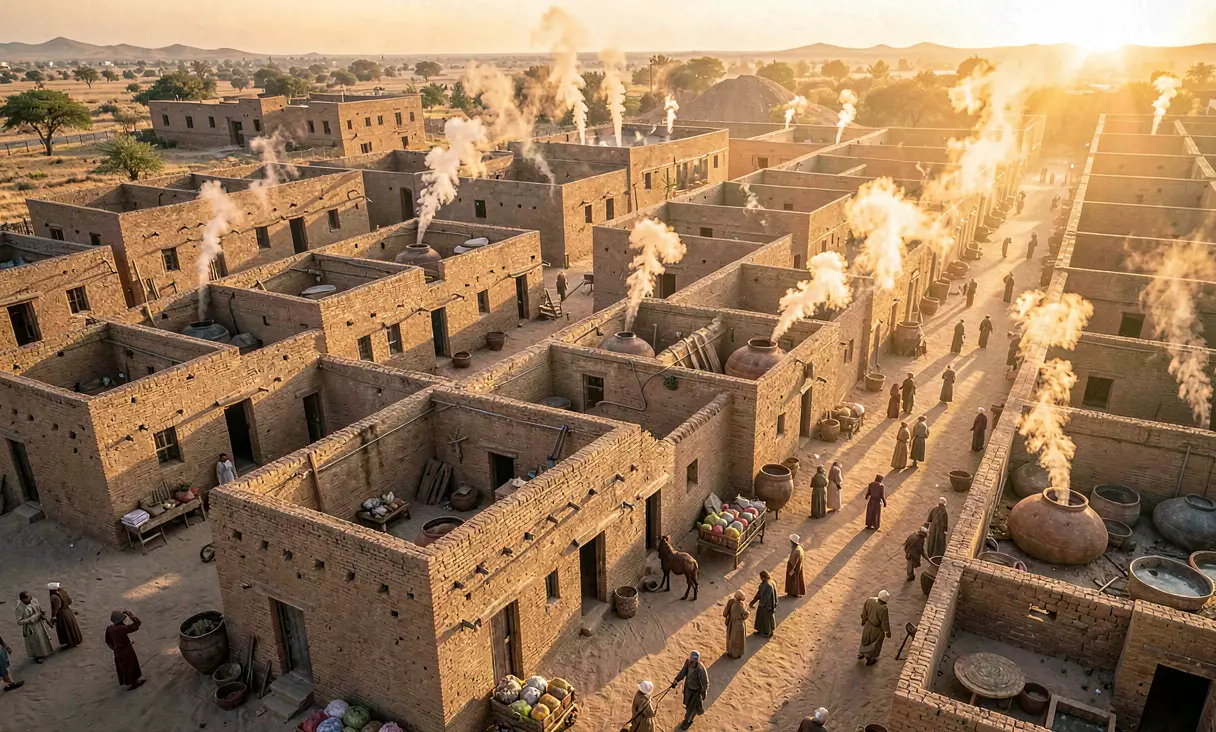
Around 2600 BCE, Harappa and Mohenjo-daro pioneered a unique, egalitarian urban model featuring advanced sanitation and grid planning without evidence of monarchical rule.
The Dawn of the Mature Harappan Phase
Around 2600 BCE, the Indus Valley Civilization transitioned from its Early Harappan roots into a period of unprecedented urban consolidation known as the Mature Harappan phase. This era marked the simultaneous emergence of two colossal metropolises: Mohenjo-daro in Sindh and Harappa in Punjab, both situated along the now-arid banks of the Indus River system. Unlike the gradual evolution seen in Mesopotamia or Egypt, this urbanization occurred with startling speed and uniformity across a region spanning over one million square kilometers. The scale of construction was immense, with Mohenjo-daro alone covering approximately 250 hectares and supporting an estimated population of 40,000 to 50,000 inhabitants at its zenith.
Engineering Mastery and Urban Planning
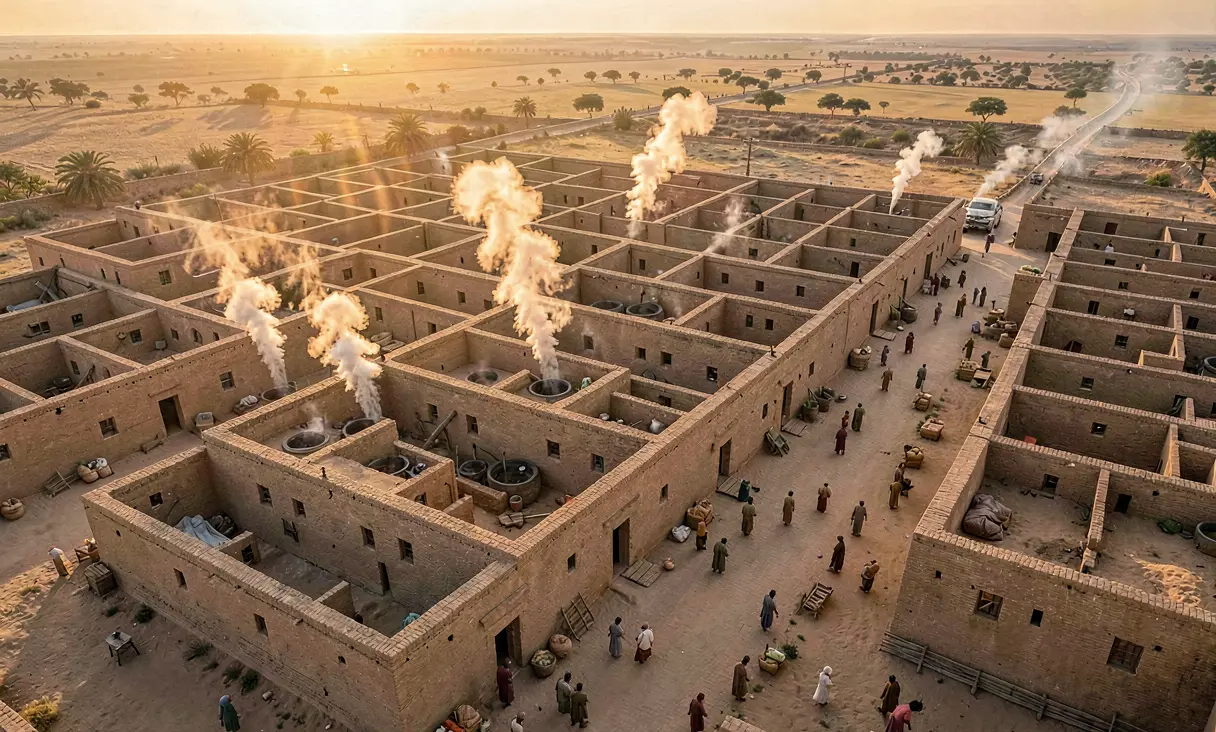
The defining characteristic of these cities was their rigorous adherence to a standardized grid system, a feat of urban planning that would not be rivaled in Europe for millennia. Streets ran strictly north-south and east-west, intersecting at right angles to create uniform city blocks. The construction utilized baked bricks of a remarkably consistent ratio of 1:2:4 (thickness:width:length), ensuring structural integrity across vast distances. Beneath the surface lay an advanced hydraulic infrastructure; nearly every house possessed a private bathing area connected to a covered drainage system that utilized inspection holes for maintenance, channeling wastewater away from residential zones into massive street sewers.
The Enigma of Political Authority
Despite their grandeur, Harappa and Mohenjo-daro present a profound archaeological mystery: the conspicuous absence of monumental palaces, temples, or royal tombs. Unlike contemporary Egypt's pyramids or Mesopotamia's ziggurats, no single ruler is depicted in art, nor are there inscriptions naming kings. This suggests a unique socio-political structure, possibly an oligarchy or a corporate governance model where power was distributed among merchant guilds, craft specialists, and local councils rather than concentrated in a divine monarchy. The Great Bath at Mohenjo-daro stands as the most significant public structure, likely serving as a site for ritual purification, indicating that religious authority may have been communal or ceremonial rather than autocratic.
Economic Integration and Craft Specialization
The urban explosion was fueled by a highly specialized economy. Excavations reveal distinct quarters dedicated to specific crafts, including bead-making factories utilizing carnelian and steatite, bronze metallurgy workshops, and extensive seal-carving studios. These cities functioned as central nodes in a vast trade network that extended from the copper mines of Oman to the lapis lazuli sources of Afghanistan. Standardized weights, following a binary and decimal system, facilitated commerce across the region, while thousands of steatite seals bearing undeciphered script suggest a sophisticated bureaucracy managing inventory and long-distance exchange without the need for a centralized royal command.
Social Stratification and Daily Life
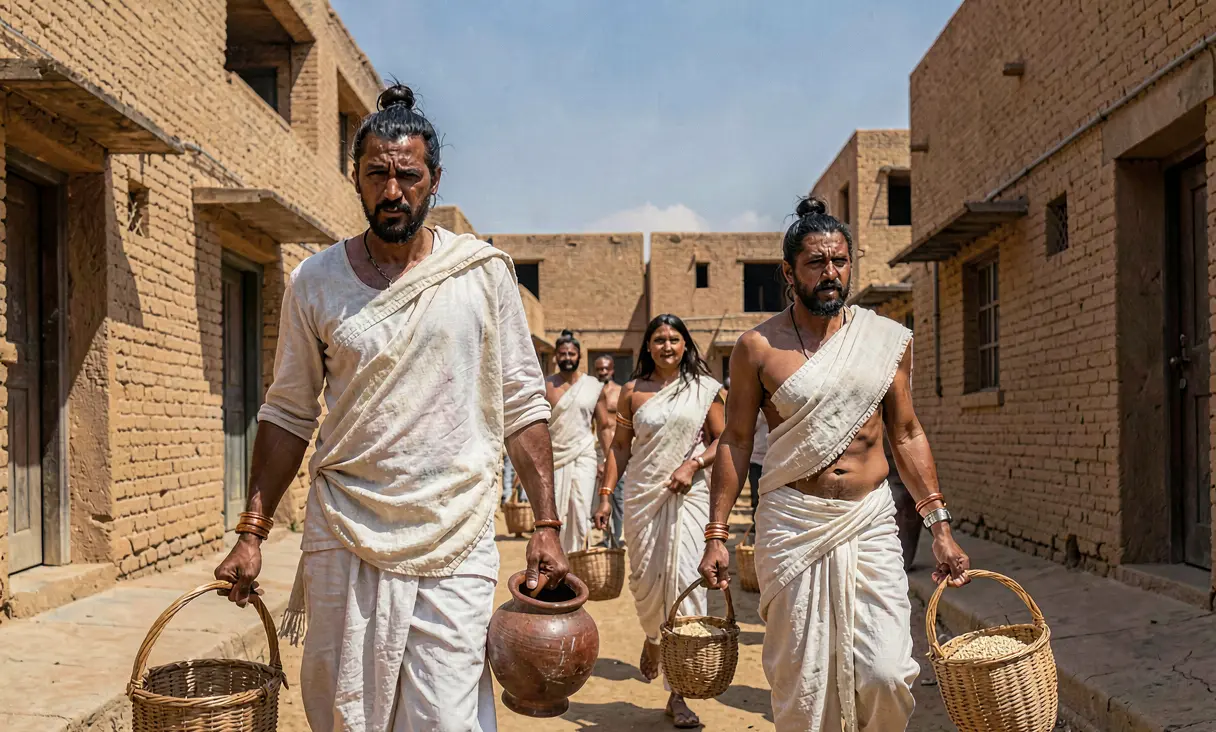
Life in these cities reflected a complex social hierarchy, though it differed significantly from the rigid class structures of neighboring civilizations. While the Great House at Mohenjo-daro suggests elite residences with private wells and courtyards, the standardization of housing implies a degree of social egalitarianism rare for the Bronze Age. Most citizens lived in two-story brick houses centered around internal courtyards, equipped with sanitation facilities that were unmatched in the ancient world until Roman times. The lack of fortification walls in many phases suggests a period of relative internal stability and confidence in regional security.
Legacy and Historical Significance
The urbanization of Harappa and Mohenjo-daro represents one of the three primary cradles of civilization, standing alongside Mesopotamia and Egypt. However, its legacy is distinct for its emphasis on civic order over martial conquest or divine kingship. The sudden collapse of this urban system around 1900 BCE remains a subject of intense debate, attributed to climatic shifts in the monsoon patterns and the drying of the Saraswati River rather than invasion. Nevertheless, the technological innovations in sanitation, urban zoning, and standardized weights established a template for human settlement that influenced the subsequent cultural landscape of South Asia.
This event marks the emergence of one of the world's earliest urban civilizations, establishing a cultural and technological baseline for the Indian subcontinent.
Where it happened
Harappa and Mohenjo-daro, Indus Valley (modern Pakistan) — see it on the interactive map →
Explore related history
 CivilizationEmergence of Norte Chico Urban Centersc. 3000 BCE · Caral-Supe Valley, PeruThe Norte Chico civilization establishes the oldest known cities in the Americas.
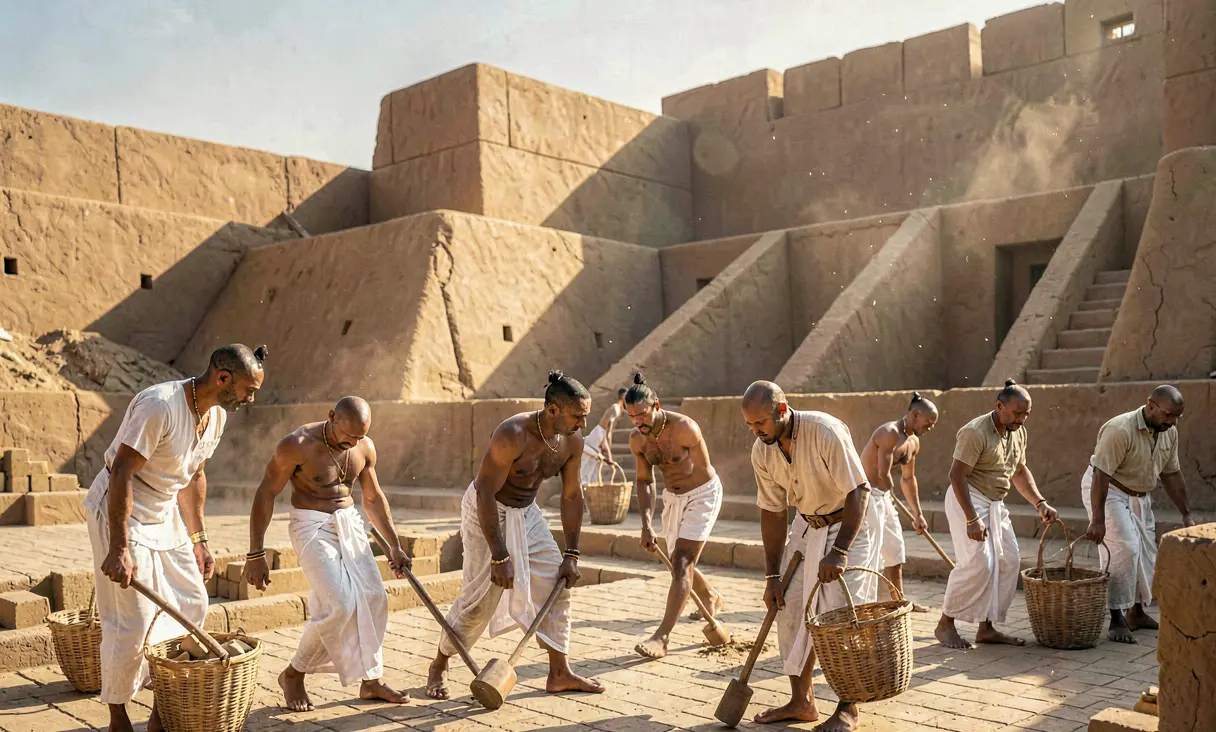 CivilizationUrban Planning of Mohenjo-daroc. 2600 BCE · Mohenjo-daro, PakistanThe Indus Valley Civilization constructs Mohenjo-daro with advanced grid systems and the world's first known urban sanitation.
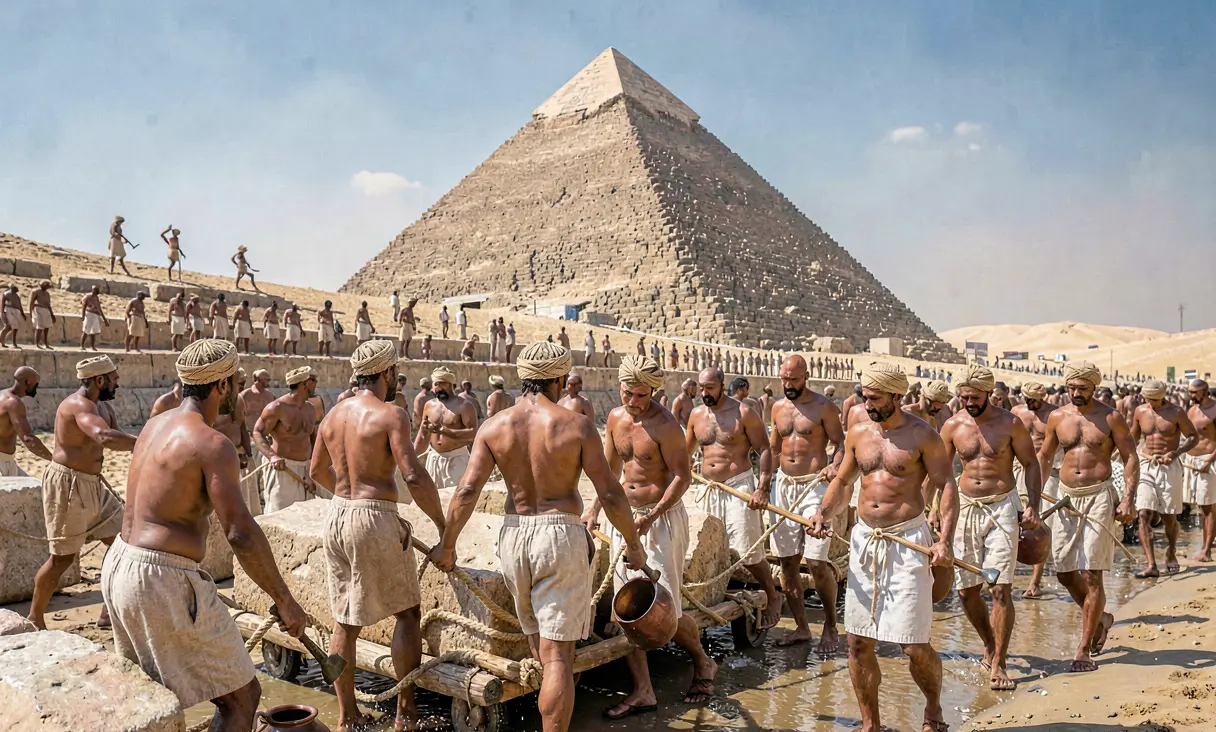 CivilizationGreat Pyramid of Giza Builtc. 2560 BCE · Giza, EgyptPharaoh Khufu commissions the largest ancient monument using millions of limestone blocks and advanced engineering.
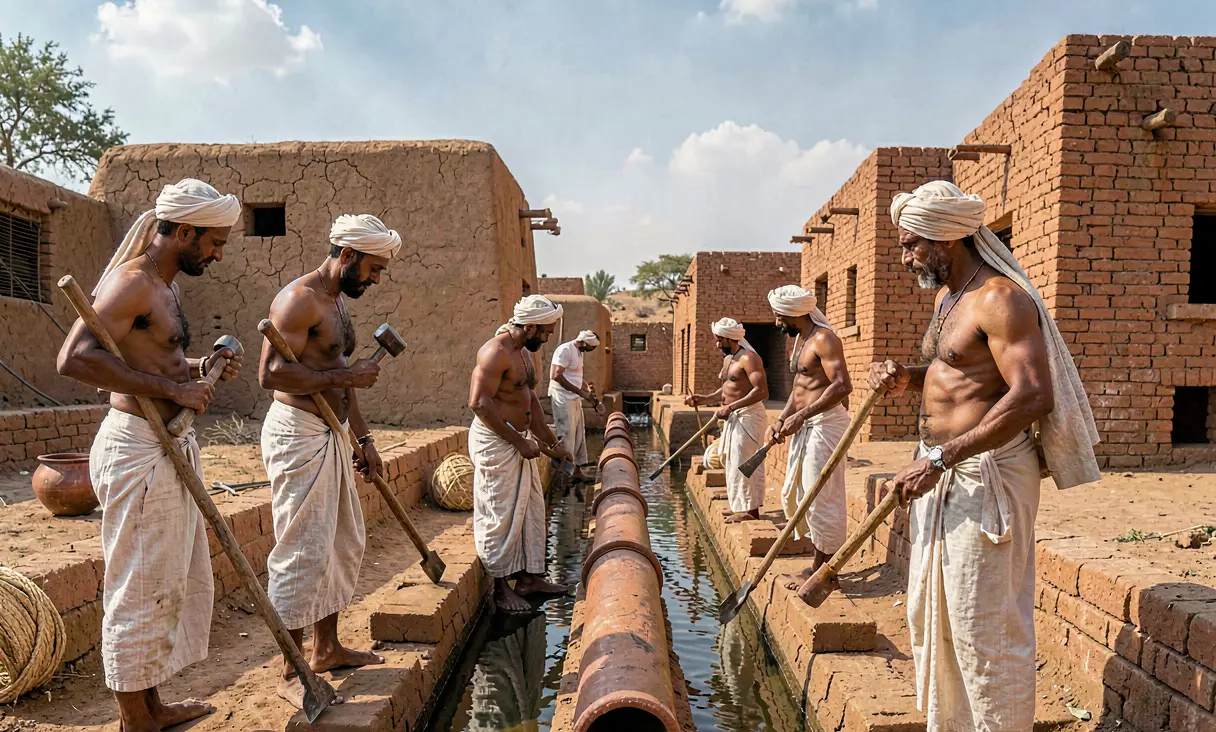 TechnologyAdvanced Irrigation Systems of the Indus Valley Civilizationc. 2600 BCE · Harappa, PakistanEngineers construct sophisticated canal networks and water reservoirs for urban agriculture.
 TechnologyIndustrialization of Sericulture in Ancient Chinac. 2600 BCE · Shaanxi Province, ChinaChinese artisans perfect the reeling and spinning of silk from silkworm cocoons.
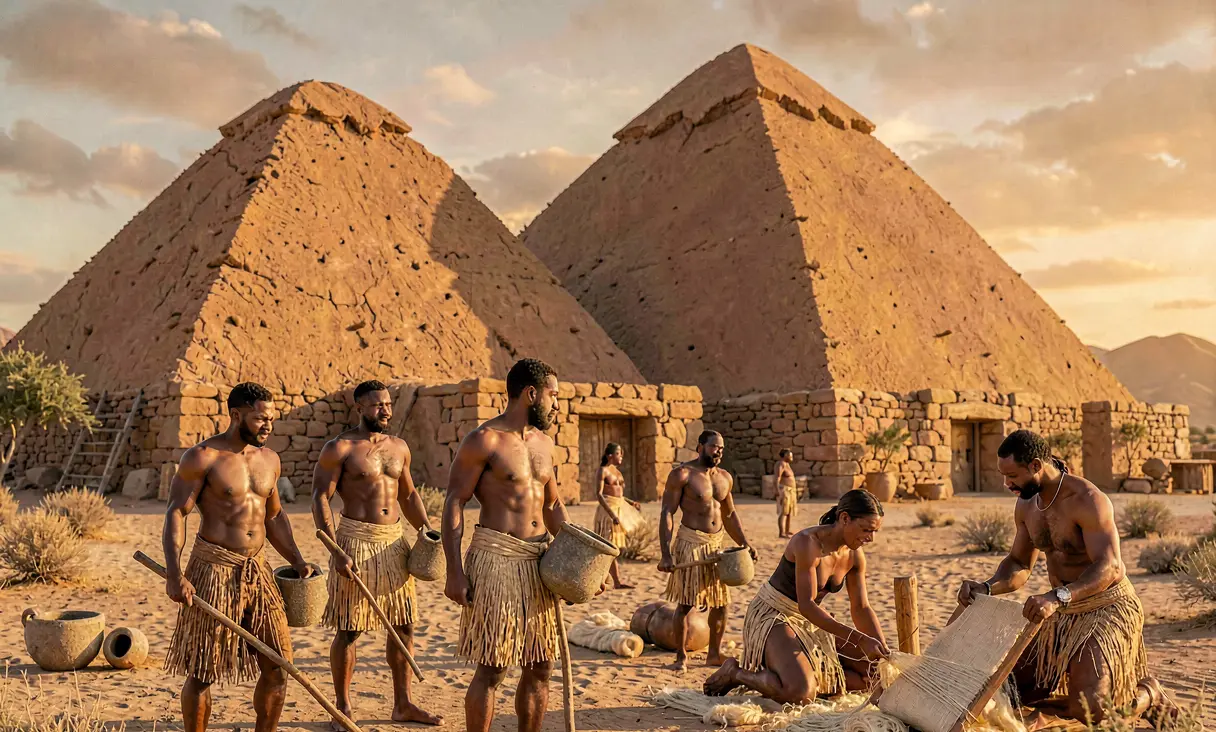
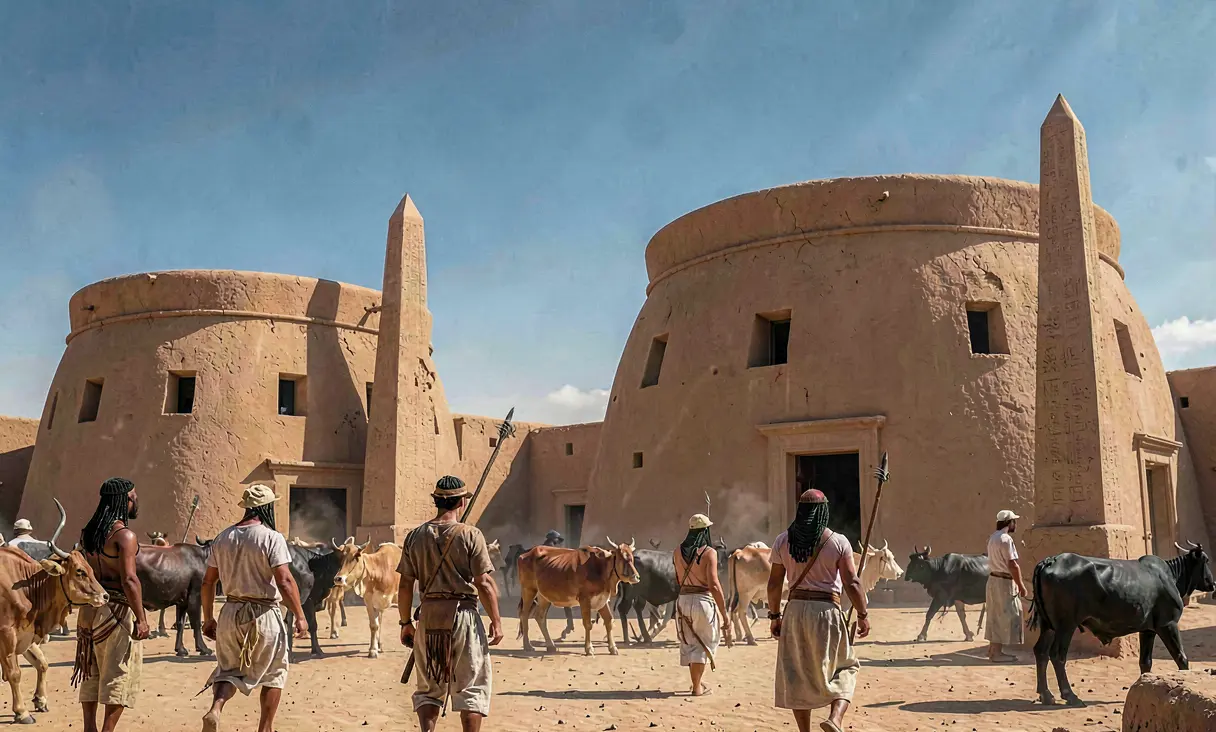 CivilizationRise of the Kingdom of Kush at Kermac. 2500 BCE · Kerma, SudanThe Kingdom of Kush emerges in Nubia as a powerful rival to Egypt with unique monumental architecture and trade networks.
Discussion
Loading…