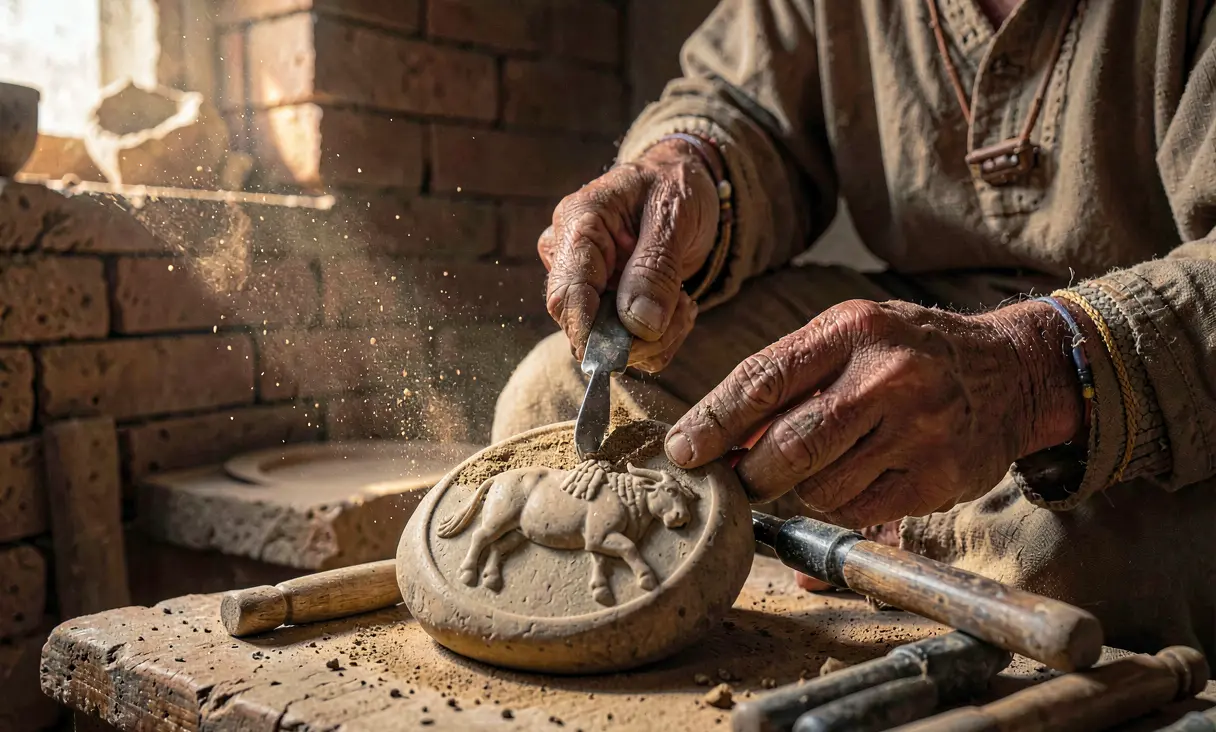
Production of Indus Valley Seals
Between 2500 and 1900 BCE, Harappan artisans crafted thousands of standardized steatite seals that served as the administrative backbone of a vast Bronze Age trade network spanning South Asia to Mesop
The Rise of the Mature Harappan Urban Phase
By approximately 2500 BCE, the Indus Valley Civilization had entered its Mature Harappan phase, characterized by unprecedented urbanization across a territory spanning over one million square kilometers. Cities such as Mohenjo-daro and Harappa emerged as sophisticated administrative hubs, featuring standardized brick ratios, complex drainage systems, and granaries that supported dense populations. Within this highly organized society, the need for a mechanism to regulate commerce, verify ownership, and assert authority became paramount, leading to the systematic production of steatite seals.
The Craftsmanship of the Seal Makers
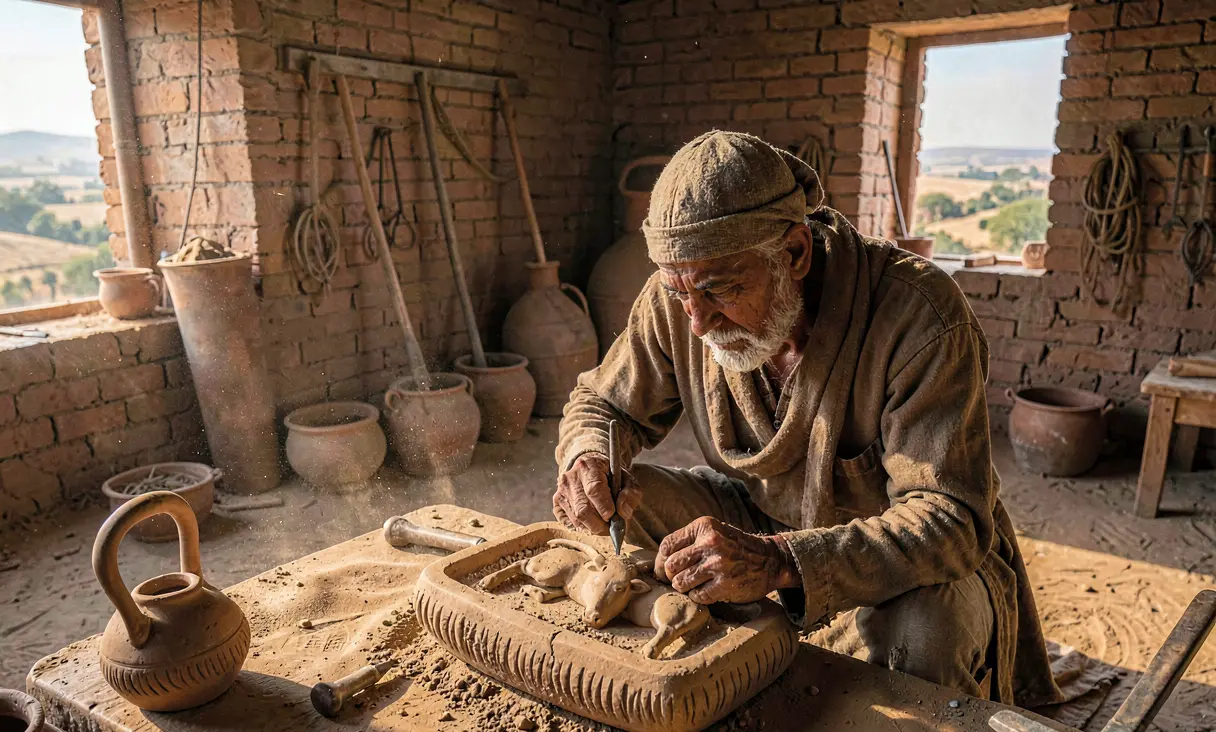
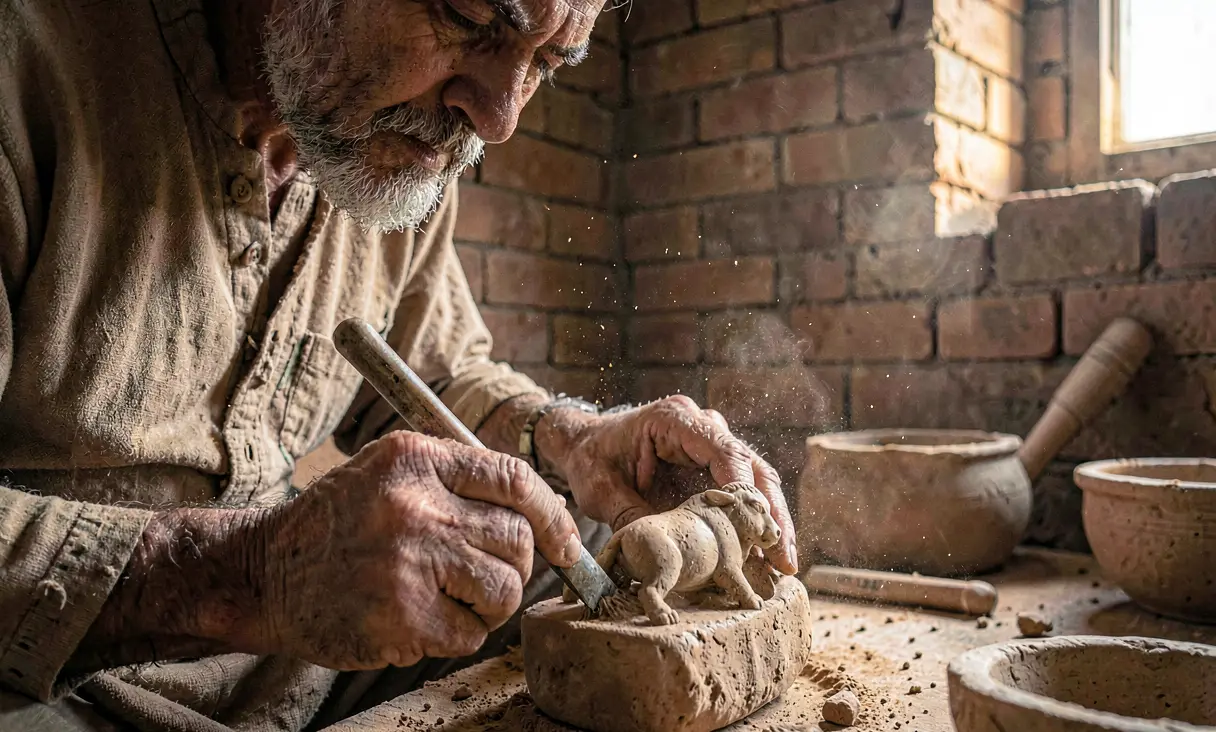
Artisans in Mohenjo-daro utilized soft steatite, a magnesium-rich mineral abundant in the region, which they shaped into small, square tablets typically measuring between 2 and 3 centimeters. The production process was meticulous: after carving the design with copper or chert tools while the stone was still soft, the artisans fired the seals to harden them into a durable white surface. This firing process not only strengthened the object but also created a smooth background that contrasted sharply with the incised black lines of the motifs and script, demonstrating a mastery of material science and aesthetic precision unmatched in contemporary Bronze Age societies.
Iconography and the Enigmatic Script
The most prevalent motif on these seals is the humped bull, often depicted standing before a ritual stand or feeding trough, symbolizing perhaps a totemic deity or an economic asset of immense value. Equally common is the enigmatic 'unicorn' creature, a mythical beast with a single horn and stylized body features that appears on roughly 80% of all known seals. Accompanying these images are rows of short inscriptions in the undeciphered Indus script; most texts contain fewer than five symbols, suggesting they functioned as names, titles, or administrative codes rather than lengthy narratives. The uniformity of these symbols across hundreds of miles indicates a shared cultural language and strict standardization.
The Function of Administrative Control
While the exact political structure of the Indus Valley remains debated due to the lack of deciphered texts, the seals provide compelling evidence of a centralized bureaucratic system. Found in workshop areas, storage rooms, and even on clay sealing tags used to close jars or doorways, these objects likely served as tools for trade authentication and inventory management. A merchant or official would press a seal into soft clay to create a negative impression, acting as a tamper-proof signature that verified the origin of goods or authorized their release from state-controlled granaries.
Widespread Distribution and Economic Reach
The distribution of these seals reveals the vast extent of the Harappan trade network. Over 2,500 seals have been excavated within the Indus Valley itself, yet examples have also surfaced in Mesopotamian sites such as Ur and Lagash, where they are often referred to by cuneiform texts as 'Meluhhan' goods. This presence in foreign lands suggests that Harappan merchants were active participants in long-distance maritime trade, exchanging cotton textiles, beads, and timber for lapis lazuli and metals. The seals acted as portable markers of identity and trust across these international commercial routes.
The Enduring Mystery of the Indus Script
Despite centuries of scholarly effort, the script accompanying these images remains undeciphered, leaving historians without a direct window into the political ideology or religious beliefs of the civilization. The absence of royal names, battle records, or dynastic lists on the seals has led some to argue that Harappan society was less hierarchical than its Mesopotamian contemporaries, perhaps governed by merchant guilds rather than kings. This silence in the written record contrasts sharply with the visual clarity and artistic sophistication of the iconography, creating a unique historical paradox.
Legacy of Standardization
The production of Indus Valley seals represents one of history's earliest and most extensive experiments in standardization. The consistency of weights, measures, and script across such a vast geographic area implies a level of social cohesion and administrative efficiency that would not be seen again until the Roman Empire or later imperial China. Although the civilization eventually declined around 1900 BCE, the legacy of these small stone tablets endures as a testament to the ingenuity of Bronze Age urbanism and the universal human drive to organize, trade, and leave a mark.
These seals provide the primary evidence for the sophisticated trade networks and administrative complexity of the Bronze Age Indus civilization.
Where it happened
Mohenjo-daro, Indus Valley (Modern Pakistan) — see it on the interactive map →
Explore related history
 CivilizationEmergence of Norte Chico Urban Centersc. 3000 BCE · Caral-Supe Valley, PeruThe Norte Chico civilization establishes the oldest known cities in the Americas.
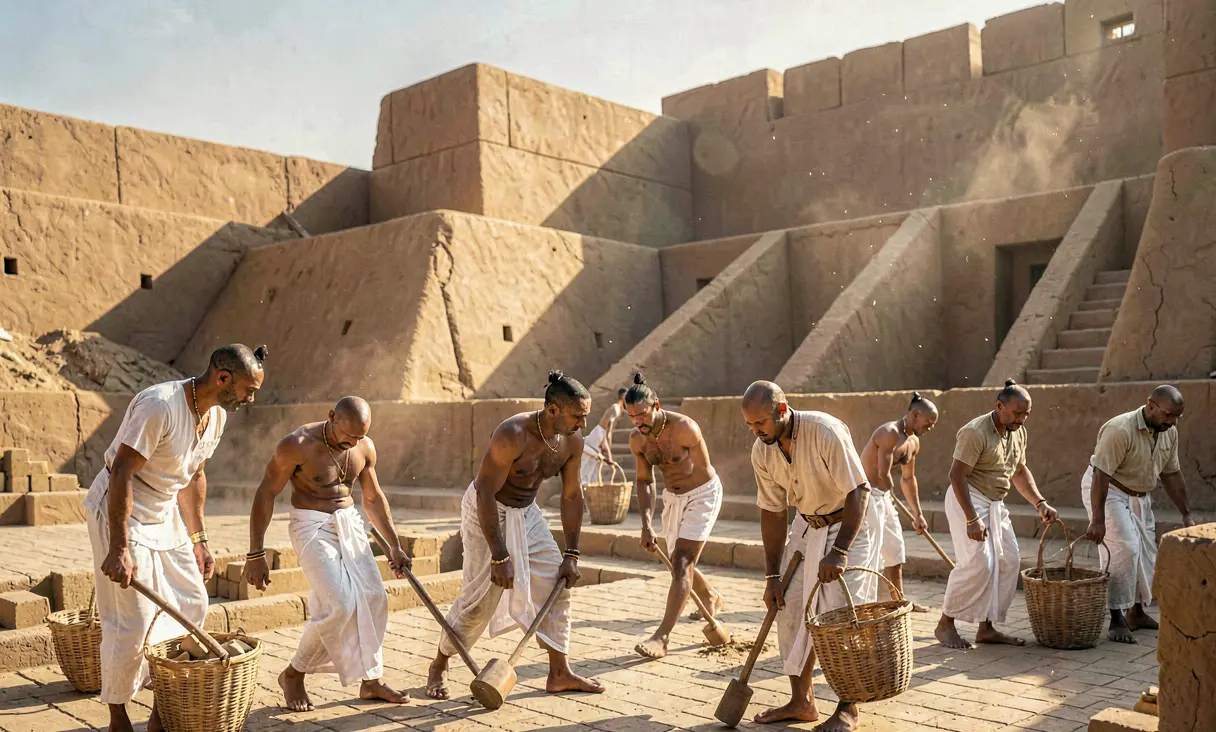 CivilizationUrban Planning of Mohenjo-daroc. 2600 BCE · Mohenjo-daro, PakistanThe Indus Valley Civilization constructs Mohenjo-daro with advanced grid systems and the world's first known urban sanitation.
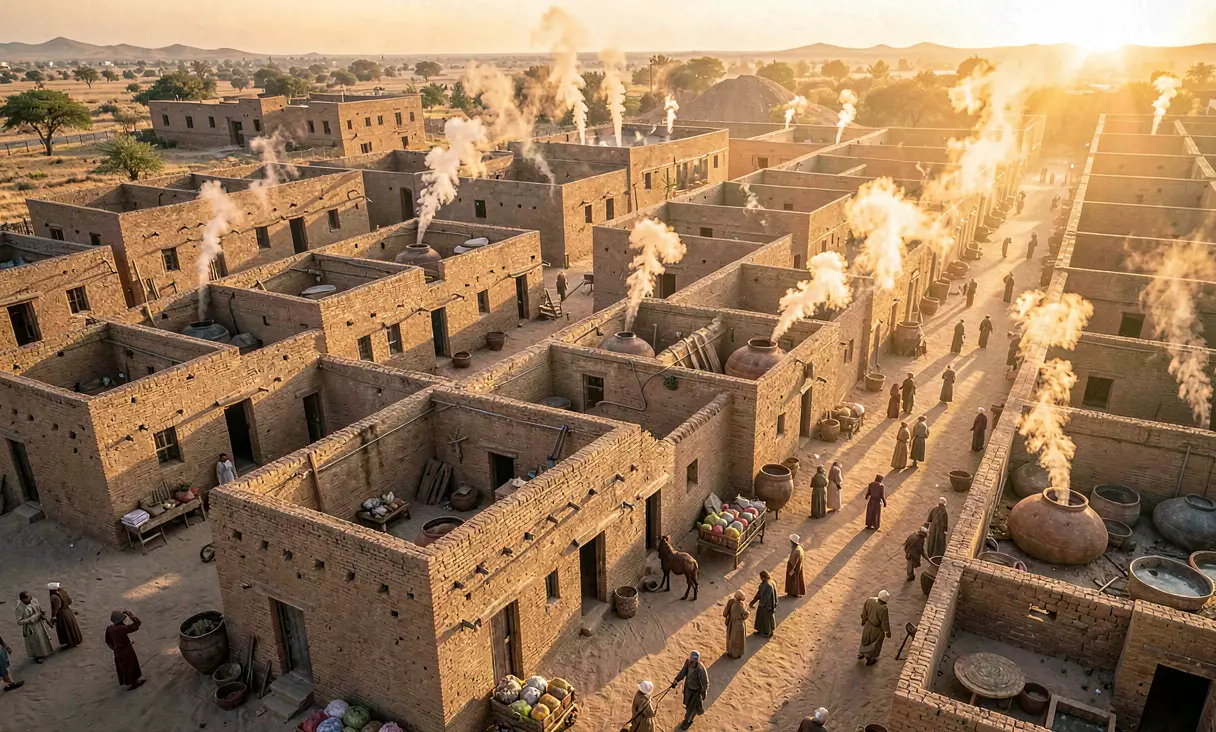 CivilizationUrbanization of Harappa and Mohenjo-daroc. 2600 BCE · Harappa and Mohenjo-daro, Indus Valley (modern Pakistan)The mature Harappan phase begins, establishing the first large-scale urban centers in South Asia with advanced grid planning.
 CivilizationRise of the Kingdom of Kush at Kermac. 2500 BCE · Kerma, SudanThe Kingdom of Kush emerges in Nubia as a powerful rival to Egypt with unique monumental architecture and trade networks.
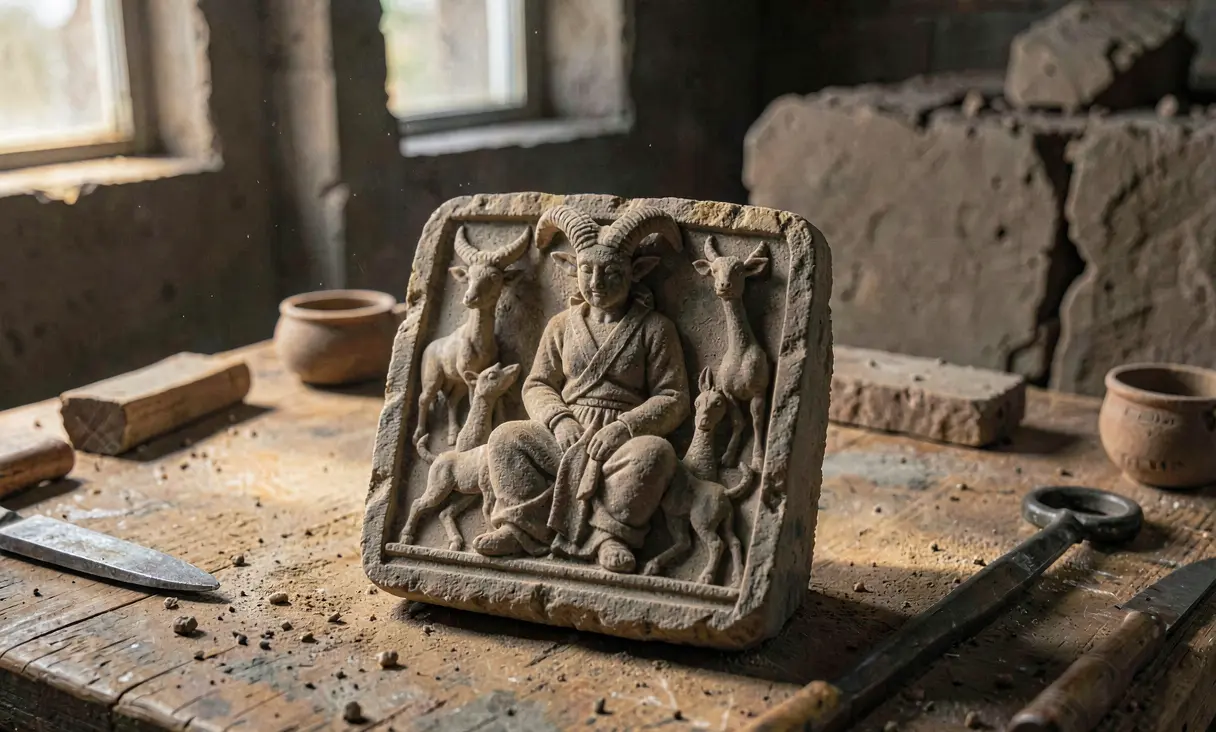 ReligionDiscovery of the Pashupati Sealc. 2500 BCE · Mohenjo-daro, Indus Valley (modern Pakistan)The Pashupati seal is carved, depicting a seated figure surrounded by animals, likely an early prototype of the Hindu god Shiva.
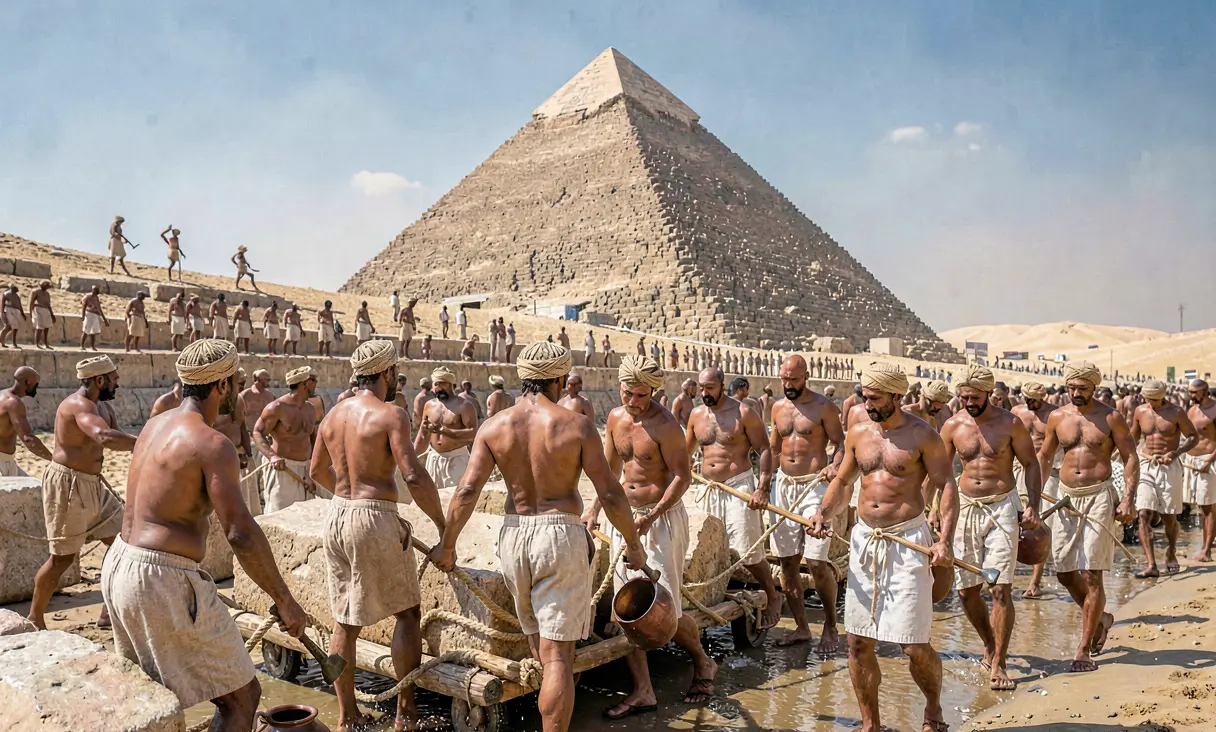 CivilizationGreat Pyramid of Giza Builtc. 2560 BCE · Giza, EgyptPharaoh Khufu commissions the largest ancient monument using millions of limestone blocks and advanced engineering.
Discussion
Loading…