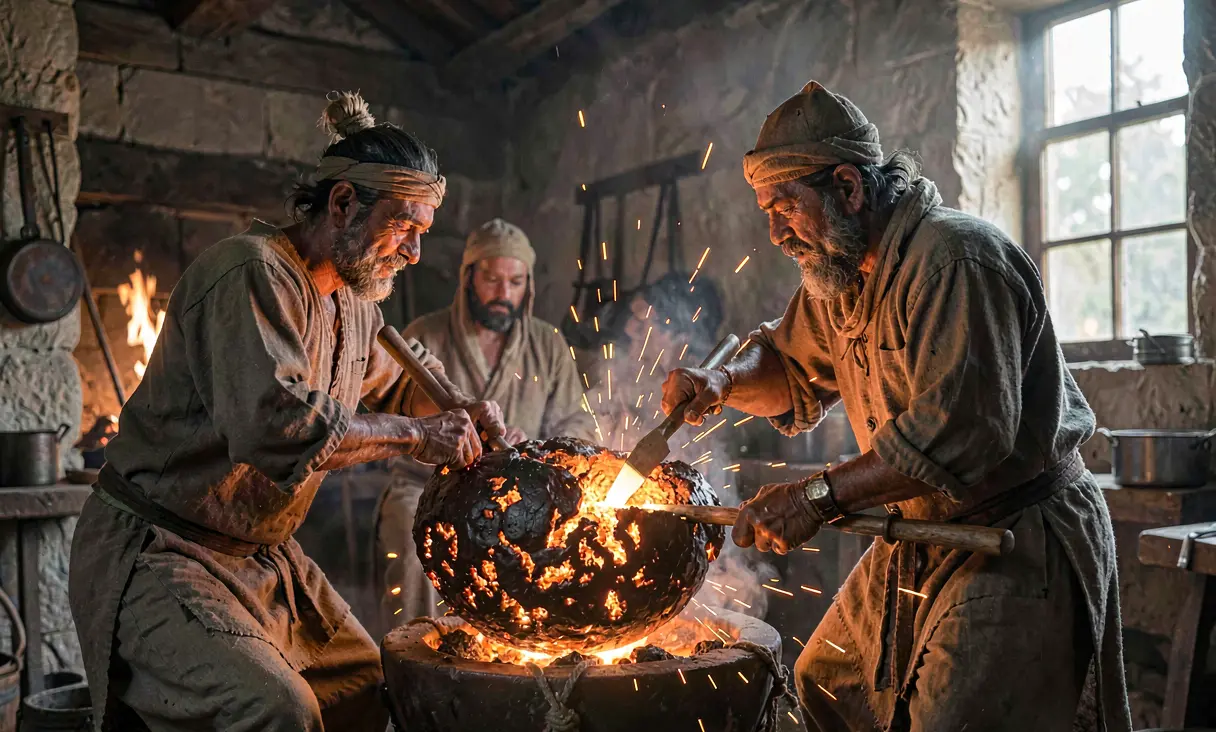
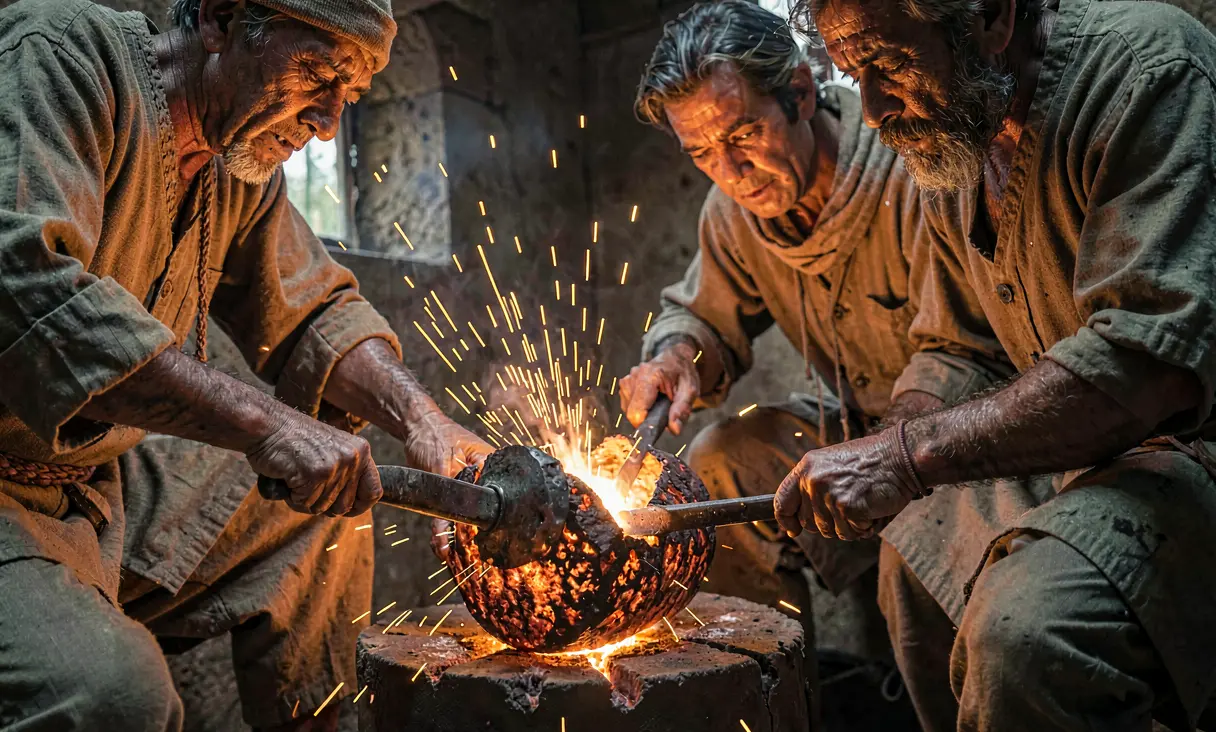
Casting of the High-Corrosion Resistant Iron Pillar at Delhi
Erected c. 400 CE under Chandragupta II, this seamless six-ton iron pillar defies corrosion through advanced phosphorus-rich metallurgy, standing as a timeless symbol of Gupta engineering prowess.
Context of the Gupta Golden Age
By the early 5th century CE, the Gupta Empire had consolidated much of northern India under a rule characterized by unprecedented political stability and cultural flourishing. This era, often termed India's 'Golden Age,' saw significant advancements in mathematics, astronomy, and the arts. It was within this milieu of intellectual and technical confidence that the imperial court sought to erect monuments demonstrating both divine favor and earthly power. The decision to cast a massive iron pillar at the site of the ancient city of Indraprastha (modern-day Delhi) was not merely an act of religious devotion but a bold declaration of metallurgical supremacy.
The Monumental Iron Pillar
Rising approximately 7.2 meters from its base, with a diameter tapering from roughly 40 cm at the bottom to 30 cm at the top, the Delhi Iron Pillar is a singular engineering marvel. Weighing an estimated 6,000 kilograms (over six tons), it was forged as a single seamless piece of wrought iron, a feat that defies conventional understanding of ancient smelting capabilities. The pillar bears a Sanskrit inscription in Brahmi script, dating to the reign of Chandragupta II (r. c. 375–415 CE), which praises his military conquests and devotion to Lord Vishnu. Unlike other iron structures of antiquity that succumbed rapidly to oxidation, this pillar has stood exposed to Delhi's humid monsoons and dry winters for nearly sixteen centuries with negligible corrosion.
Chandragupta II and the Imperial Vision
While the specific artisans remain anonymous, the patronage of Chandragupta II is central to the pillar's existence. Known as 'Vikramaditya,' he expanded the Gupta dominion from the Ganges basin to the Arabian Sea, fostering a cosmopolitan court where science and religion intertwined. The inscription on the pillar explicitly credits the king with establishing his fame across the earth, suggesting that the iron column served as a *dharma-stambha* (pillar of righteousness) intended to immortalize his rule. The choice of material—iron rather than the more common sandstone or granite used for Gupta monuments—was likely deliberate, symbolizing the unyielding strength and permanence of the emperor's authority.
The Metallurgical Enigma
Modern scientific analysis has revealed that the pillar is composed of 98% wrought iron, with a remarkably high phosphorus content (approximately 1%) and very low sulfur. This unique chemical profile was not accidental but the result of sophisticated smelting techniques using local hematite ores rich in phosphorus. During the forging process, the ancient smiths achieved a precise balance where the phosphorus reacted with iron oxides to form a protective passive layer of misawite (a hydrogen phosphate). This thin, adherent film prevents further oxidation, effectively 'self-healing' against rust even when scratched or exposed to moisture. The seamless nature of the pillar indicates that it was likely forged from multiple pieces welded together at high temperatures with such precision that no joints remain visible.
Aftermath and Historical Continuity
Following its erection, the pillar survived the collapse of the Gupta Empire in the 6th century CE and subsequent invasions by Turkic forces in the 12th century. It was originally located at a Vishnu temple complex but was later incorporated into the Qutb Minar complex built by Qutb-ud-din Aibak after the Delhi Sultanate conquest. Despite being moved or repurposed, its structural integrity remained intact. Historical records from the 14th century note that local legends attributed magical properties to the pillar, claiming it could not be toppled by human strength, a testament to its enduring physical presence in the cultural consciousness of the region.
Legacy and Scientific Significance
The Delhi Iron Pillar stands as an enduring testament to the sophistication of ancient Indian metallurgy, challenging modern assumptions about pre-industrial technological limits. For centuries, its resistance to rust puzzled scientists until the 20th century, when detailed spectroscopic analysis confirmed the role of phosphorus in creating a protective passivation layer—a phenomenon that modern corrosion engineers still study to develop rust-resistant alloys. The pillar remains a primary symbol of India's scientific heritage, illustrating how empirical knowledge and artisanal skill could produce artifacts that outlast empires, bridging the gap between ancient craftsmanship and contemporary materials science.
This pillar remains an enduring symbol of ancient Indian metallurgical mastery and corrosion-resistant engineering.

Where it happened
Delhi, India — see it on the interactive map →
Explore related history
 TechnologyGrand Canal of China Connects North and South610 CE · Luoyang to Hangzhou, ChinaEmperor Yang completes the massive waterway linking the Yellow and Yangtze rivers for transport and grain.
 TechnologyMeroitic Iron Smelting Industry Flourishesc. 500 BCE · Meroe, SudanMeroe develops a massive iron smelting industry using abundant fuel and advanced furnace technology.
 TechnologyConstruction of the Great Cloaca Maxima in Romec. 500 BCE · Rome, ItalyEarly Romans build the massive Cloaca Maxima sewer system to drain marshes and manage waste.
 literatureCompilation of the Kama Sutrac. 400 CE · India (likely Pataliputra)Vatsyayana compiles the treatise on love, desire, and social conduct.
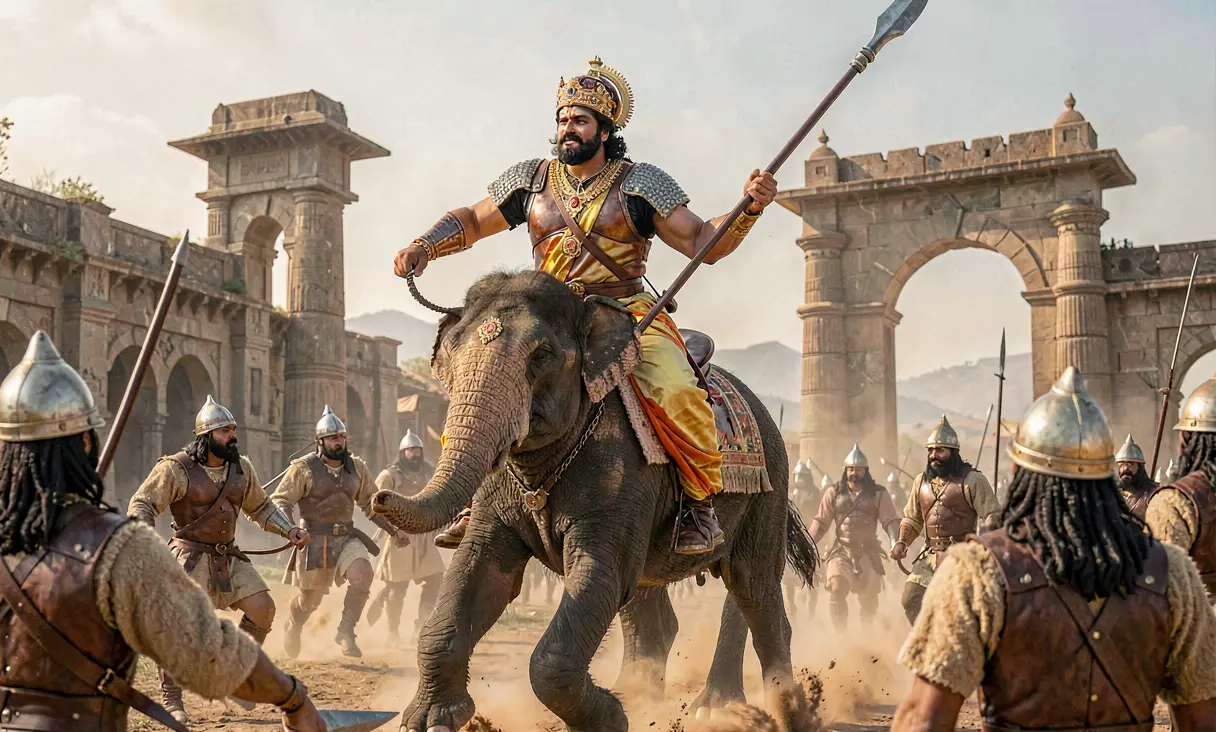 WarChandragupta II Defeats the Western Satrapsc. 409 CE · Malwa and Gujarat region, IndiaChandragupta II Vikramaditya defeats the Western Kshatrapas, annexing Gujarat and securing access to the lucrative Indian Ocean trade routes.
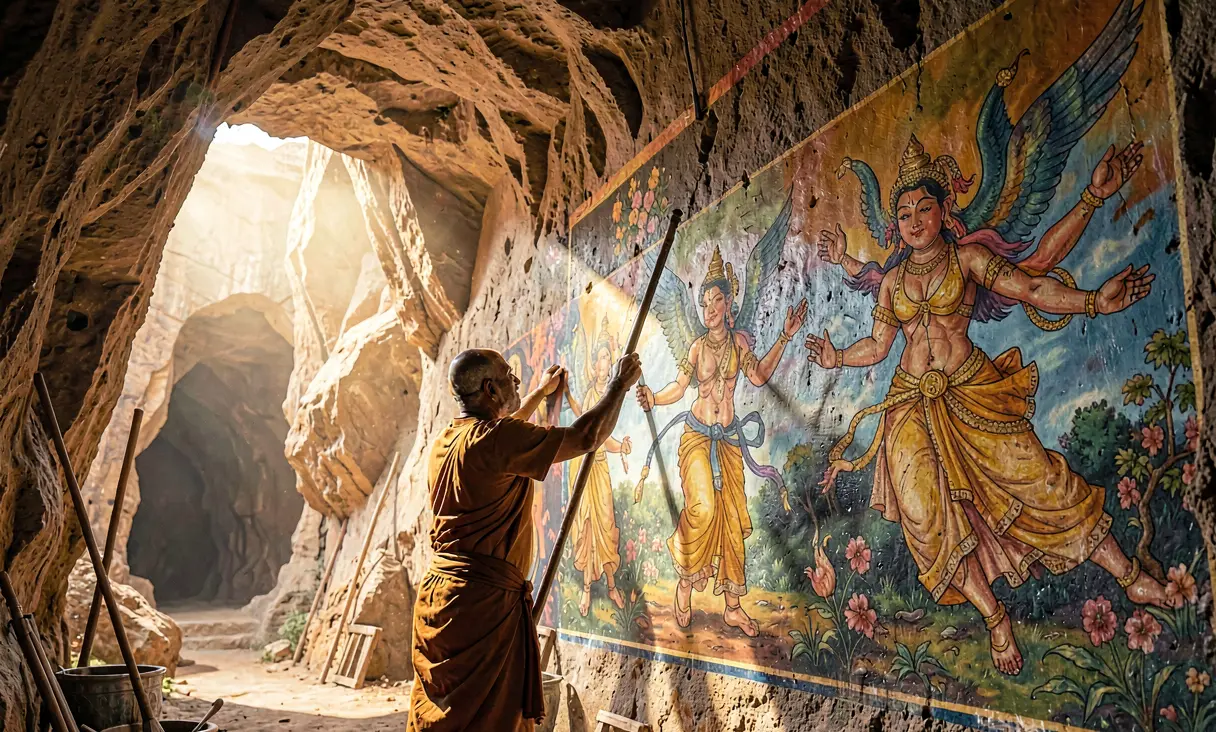 ArtCreation of Mogao Caves Muralsc. 366 CE - ongoing · Dunhuang, ChinaArtists begin painting Buddhist murals in the cave complex on the Silk Road.
Discussion
Loading…