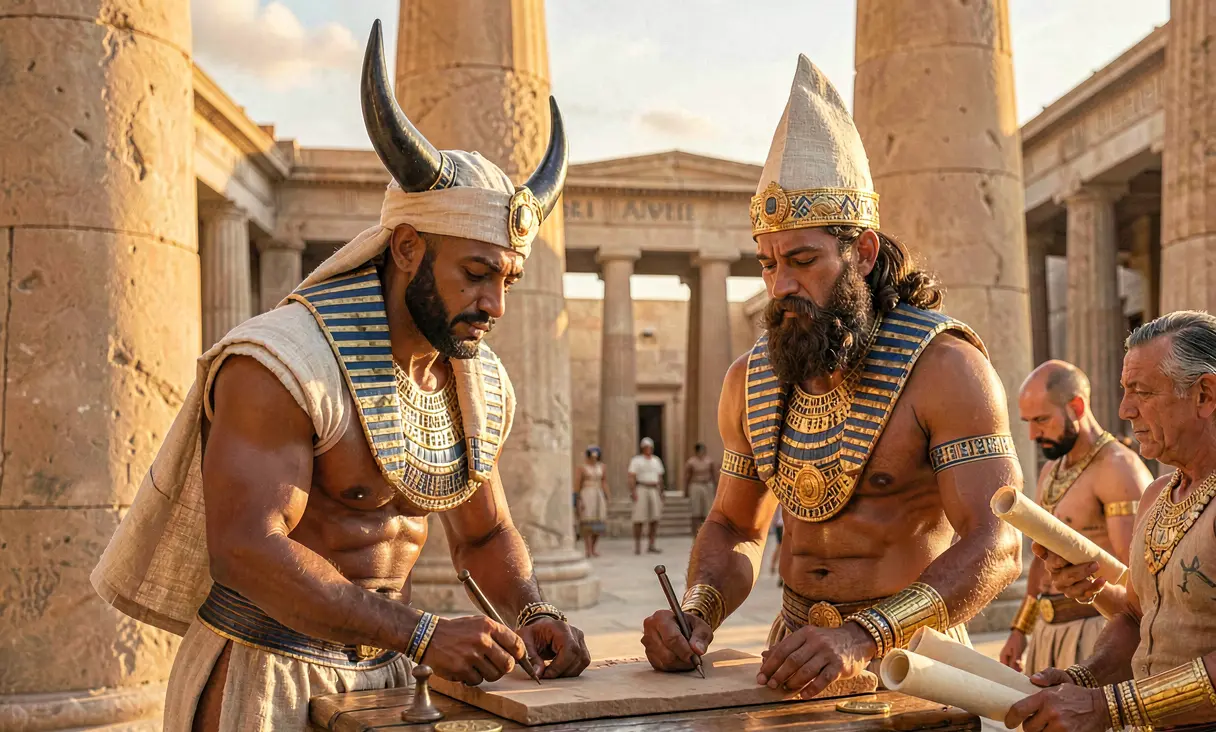
Signing of the Egyptian-Hittite Peace Treaty
Signed c. 1259 BCE by Ramses II and Hattusili III, this treaty ended centuries of war between Egypt and the Hittites, establishing the world's first recorded peace accord and mutual defense pact.
The Stalemate at Kadesh
By the early 13th century BCE, the Late Bronze Age was defined by the precarious balance of power between two imperial giants: Egypt under the Nineteenth Dynasty and the Hittite Empire in Anatolia. For decades, these superpowers had vied for dominance over Syria-Palestine, a region critical for trade routes and resources. The conflict reached its zenith in 1274 BCE at the Battle of Kadesh, where Pharaoh Ramses II claimed a miraculous victory against King Muwatalli II's forces. However, modern archaeological analysis suggests the engagement was likely a tactical draw that exhausted both armies without yielding decisive territorial gains. Following Muwatalli's death and the subsequent usurpation by his brother Hattusili III, the geopolitical landscape shifted, creating a window for diplomacy rather than continued attrition.
The Architects of Peace
The treaty was forged between two formidable leaders navigating internal and external crises. Ramses II, having ruled Egypt for nearly three decades, sought to secure his southern borders against Nubian threats while stabilizing the volatile Levant without further draining Egyptian coffers. On the other side stood Hattusili III, whose legitimacy as king was contested by supporters of the previous dynasty; he required international recognition to solidify his rule and prevent a coalition of enemies from exploiting his domestic weakness. Both monarchs recognized that perpetual warfare threatened the stability of their respective realms, making a formal cessation of hostilities not merely an option, but a necessity for survival.
The Diplomatic Exchange
Although the physical signing likely occurred via diplomatic envoys rather than a face-to-face meeting in Hattusa or Thebes around 1259 BCE, the agreement was monumental in its scope. The text, preserved on silver tablets at the Hittite capital of Hattusa and inscribed in Egyptian hieroglyphs on the walls of the Ramesseum and Karnak Temple, established a framework for 'good peace' and 'good brotherhood.' It explicitly declared that neither party would ever invade the other's territory again. Furthermore, it created a mutual defense pact: if either kingdom faced aggression from a third party, the other was obligated to provide military assistance or dispatch troops. This clause effectively transformed former enemies into allies against common threats.
Terms of Extradition and Justice
Beyond military alliances, the treaty introduced sophisticated legal protocols regarding refugees and political dissidents. Both rulers agreed to extradite fugitives fleeing their respective countries, with a crucial caveat protecting religious figures and high-ranking officials from persecution unless they were accused of specific crimes like treason or murder. This provision prevented the use of asylum as a tool for destabilizing the opposing government by harboring exiled princes or conspirators. The text also included a curse formula invoking the thousand gods of Hatti and Egypt to punish any signatory who violated the terms, elevating the treaty from a political accord to a sacred covenant under divine witness.
Consolidation and Stability
The immediate aftermath of the treaty saw a dramatic shift in the geopolitical climate of the Near East. Hostilities ceased, allowing Ramses II to redirect his focus toward monumental building projects that defined his reign, such as Abu Simbel, while Hattusili III could consolidate his power within Anatolia without fear of an Egyptian invasion. The peace facilitated a resurgence in long-distance trade, with gold from Egypt and timber from the Levant flowing more freely between the empires. This era of stability extended for nearly two centuries until the eventual collapse of the Bronze Age system, proving that diplomacy had successfully outlasted the military ambitions of the previous generation.
A Legacy of Ancient Diplomacy
The Egyptian-Hittite Peace Treaty stands as the earliest surviving example of a formal international peace agreement in human history. Its discovery in the 20th century, particularly the cuneiform tablet found at Bogazkoy (modern-day Turkey) and its hieroglyphic counterpart in Egypt, revolutionized the understanding of ancient Near Eastern relations. Today, a replica of the treaty hangs prominently in the United Nations Headquarters in New York, symbolizing the enduring ideal that even the most entrenched conflicts can be resolved through negotiation. It remains a testament to the sophistication of Bronze Age statecraft and the timeless necessity of dialogue over destruction.
It is the earliest surviving international peace treaty, demonstrating advanced diplomatic relations in the ancient world.
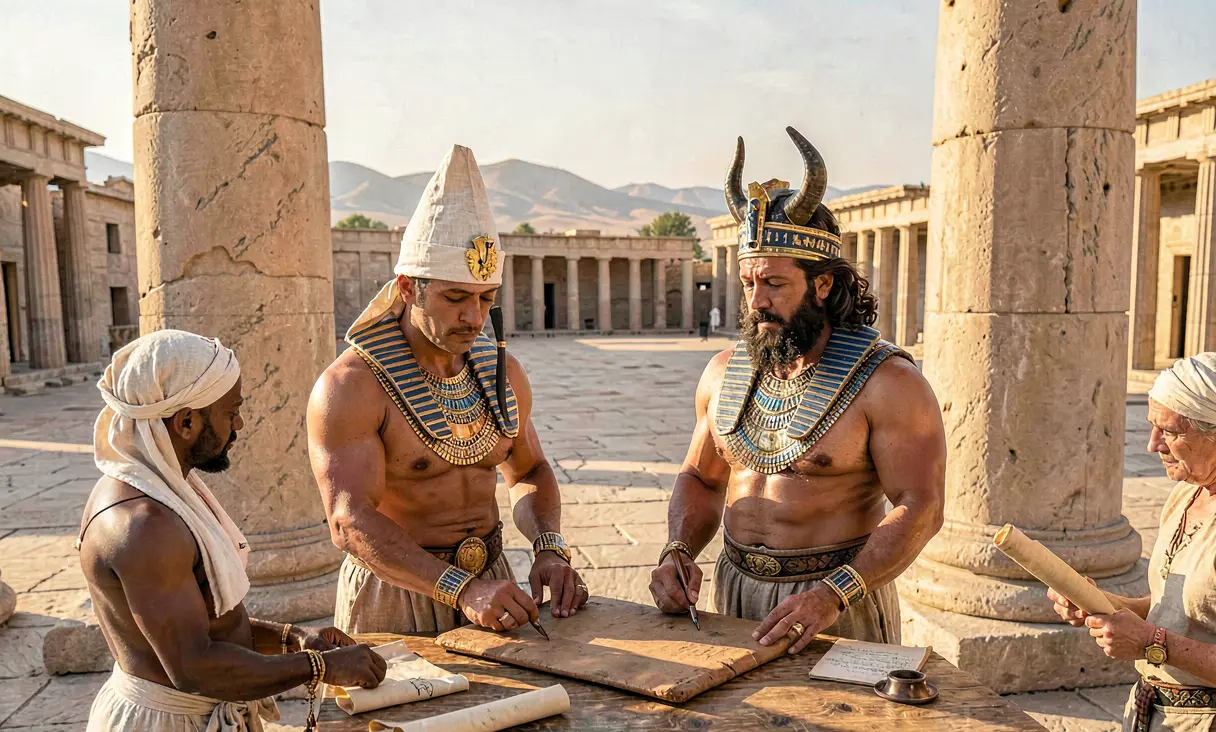
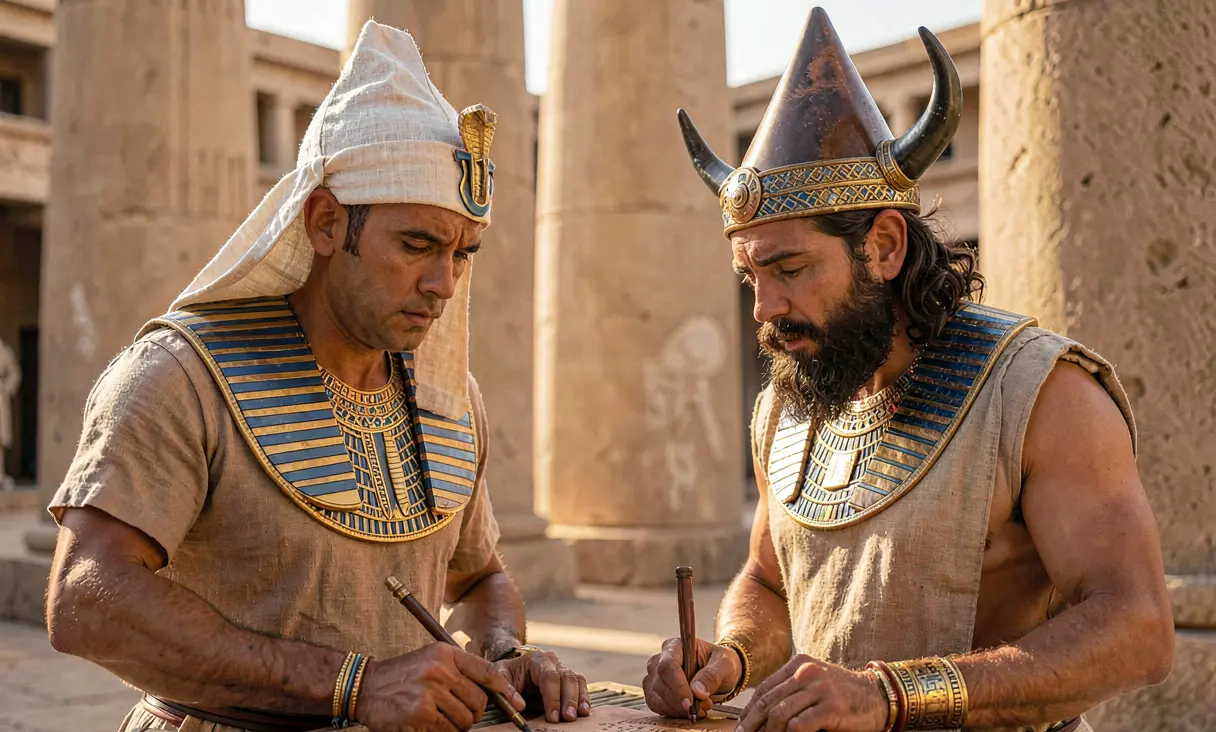
Where it happened
Hattusa (Bogazkoy), Turkey / Thebes, Egypt — see it on the interactive map →
Explore related history
 PoliticsSargon of Akkad Establishes the First Empirec. 2334 BCE · Akkad (Location uncertain, near Baghdad, Iraq)Sargon unifies Sumerian city-states to create the world's first multi-ethnic empire.
 PoliticsPromulgation of the Code of Ur-Nammuc. 2100 BCE · Ur, Southern Mesopotamia (Iraq)The earliest known surviving law code is established in the Sumerian city of Ur.
 PoliticsNelson Mandela Elected President of South AfricaApril 27, 1994 · Cape Town, South AfricaSouth Africa holds its first democratic election, ending the apartheid regime and establishing a multiracial government.
 ReligionCompletion of Tripitaka Koreana Woodblocks1251 CE · Haeinsa Temple, KoreaGoryeo completes the most complete Buddhist canon carved on woodblocks to repel Mongol invasion.
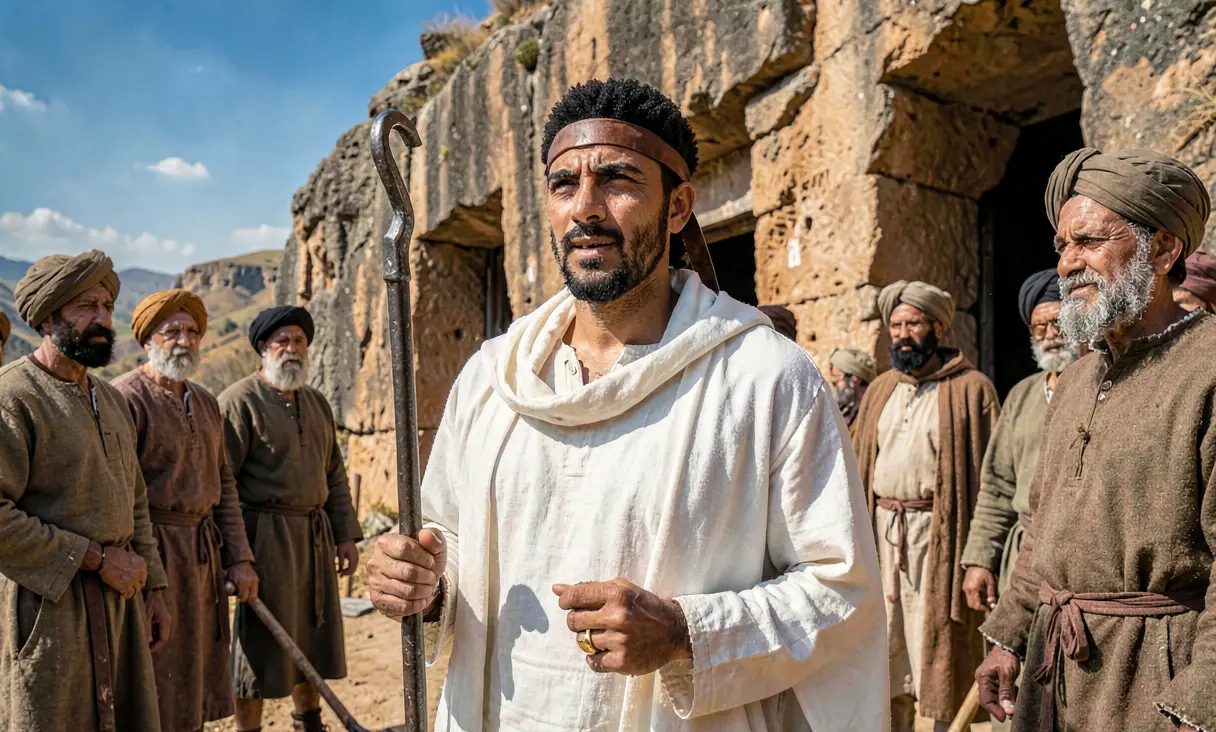 PoliticsSolomonic Restoration in Ethiopiac. 1270 CE · Lalibela, EthiopiaYekuno Amlak restores the Solomonic dynasty, claiming direct descent from King Solomon and the Queen of Sheba.
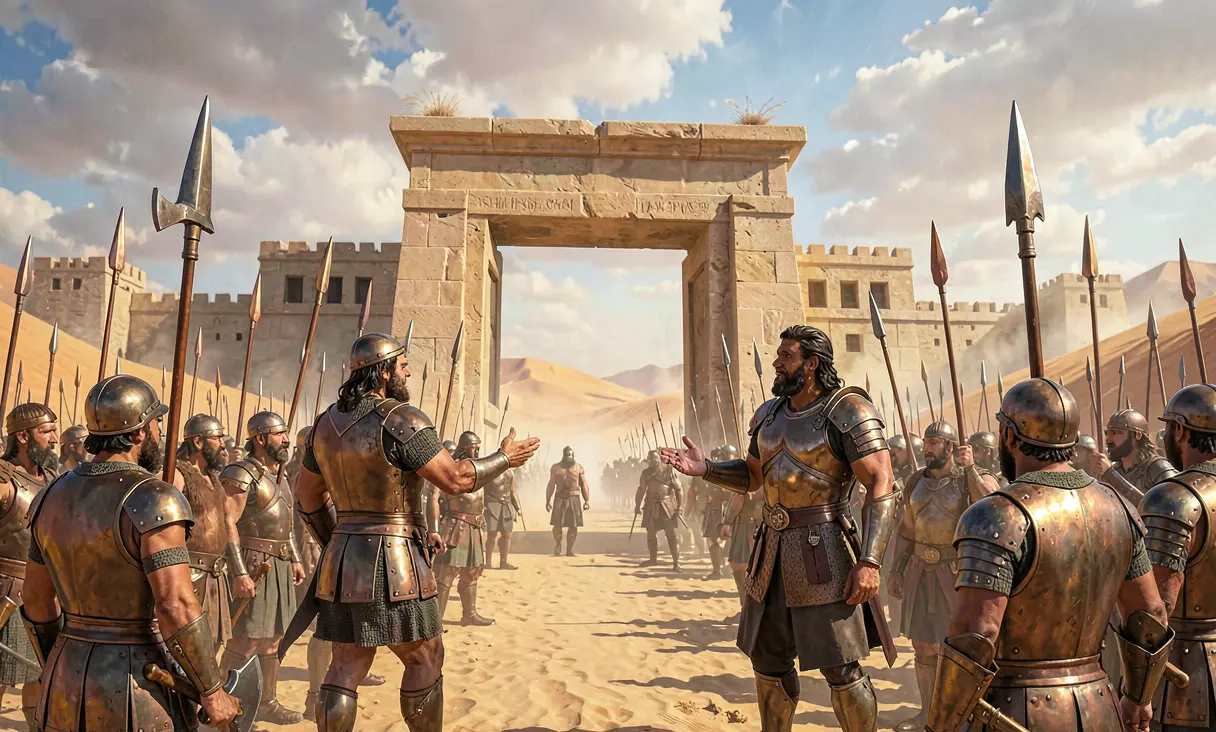
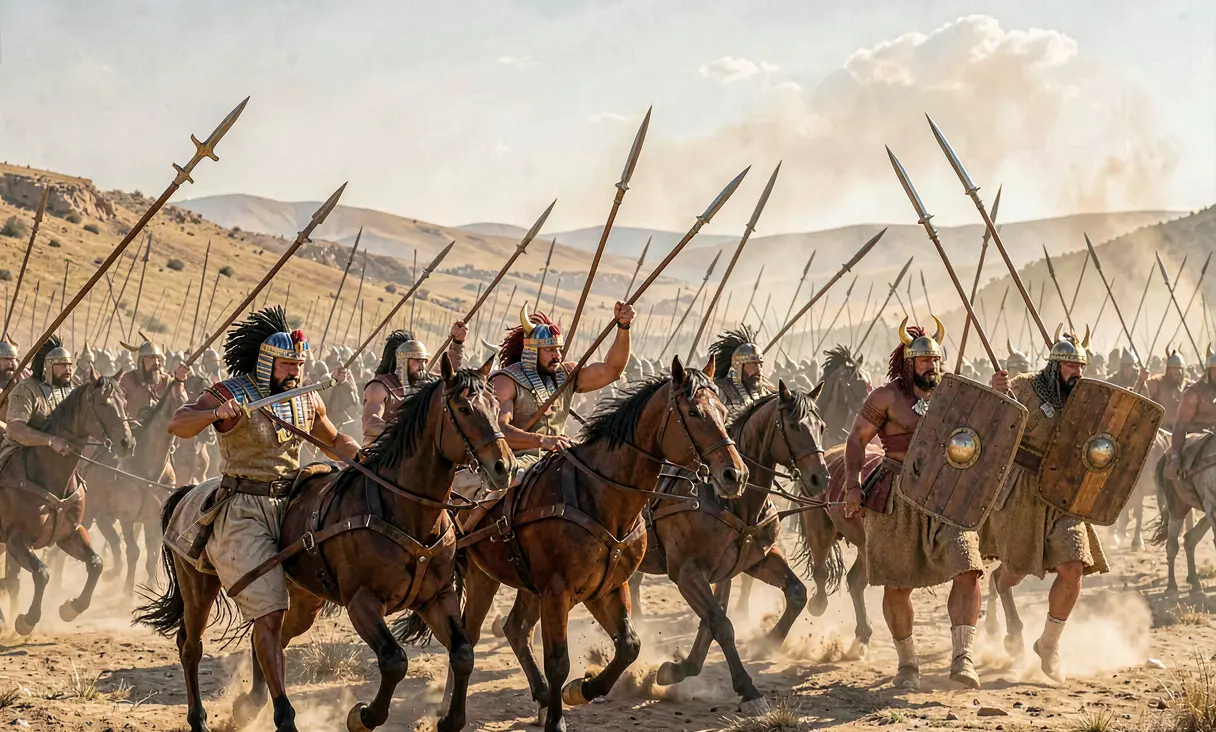 WarBattle of Kadeshc. 1274 BCE · Syria/Lebanon BorderEgypt and Hittites clash in the largest chariot battle of antiquity resulting in a peace treaty.
Discussion
Loading…