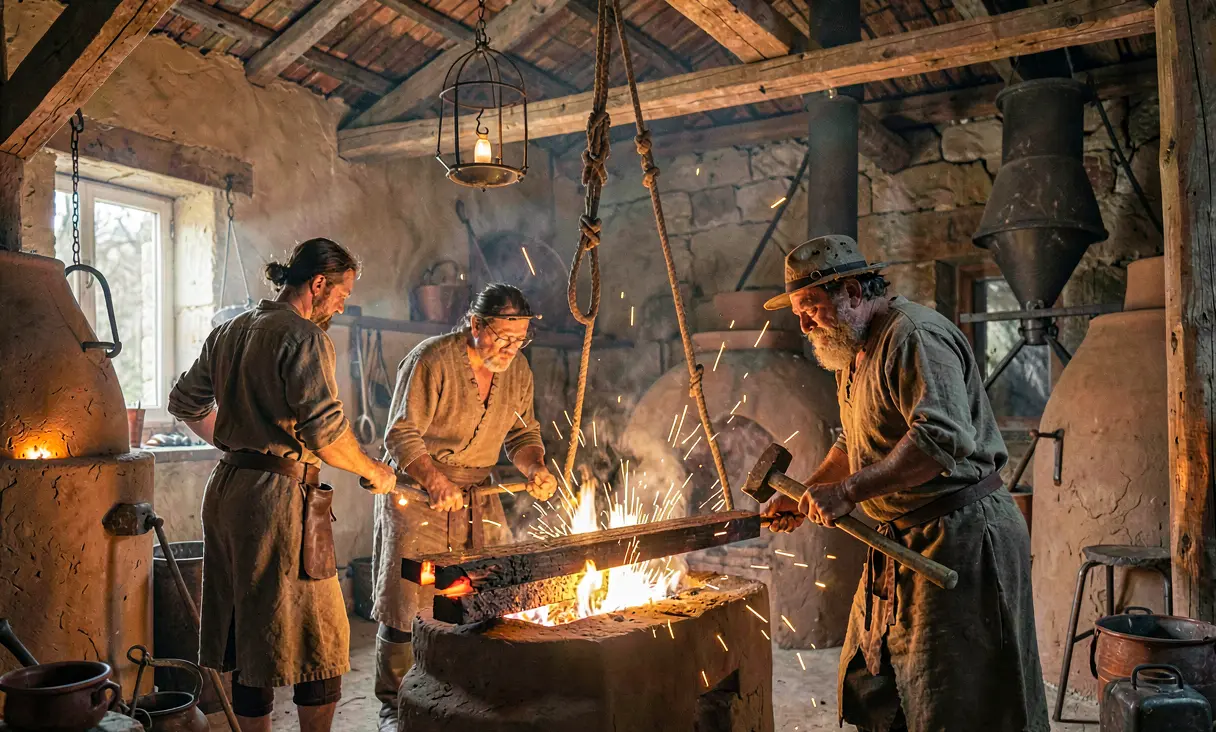
Hittite Mastery of Iron Smelting
The Hittites' secret mastery of iron smelting around 1400 BCE granted them a centuries-long military monopoly before their collapse disseminated the technology, ushering in the global Iron Age.
The Bronze Age Context and Metallurgical Limits
By the mid-second millennium BCE, the Near East was dominated by the 'Bronze Age,' a period defined by the alloying of copper with tin to produce durable tools and weapons. While iron ore was abundant throughout Anatolia, it remained largely a curiosity or a prestige material known as 'black gold' from meteoric sources, rather than a structural metal. The smelting of terrestrial iron required temperatures exceeding 1,500°C, far hotter than the typical bronze furnaces which operated around 1,200°C. Furthermore, early attempts often resulted in brittle cast iron or a spongy bloom that could not be easily worked. It was within this technological bottleneck that the Hittite civilization, centered at their capital Hattusa in central Anatolia, began to experiment with novel furnace designs and bellows systems capable of achieving the necessary thermal intensity.
The Breakthrough at Hattusa
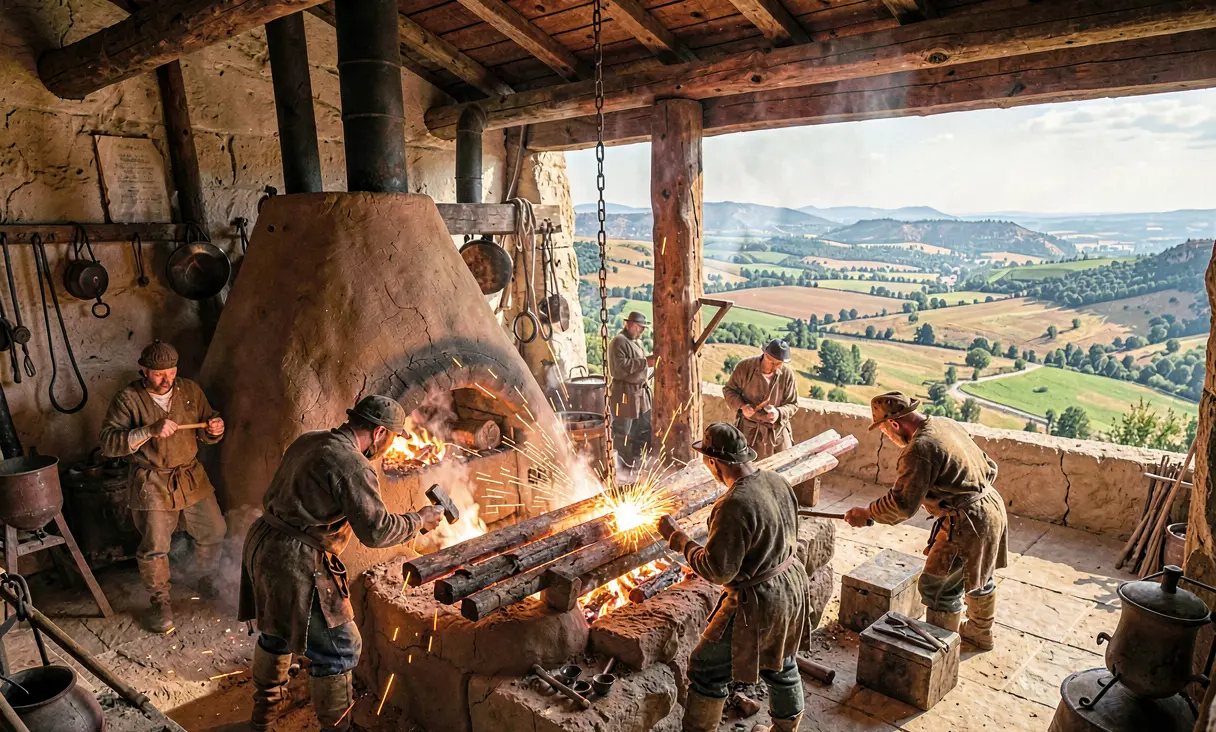
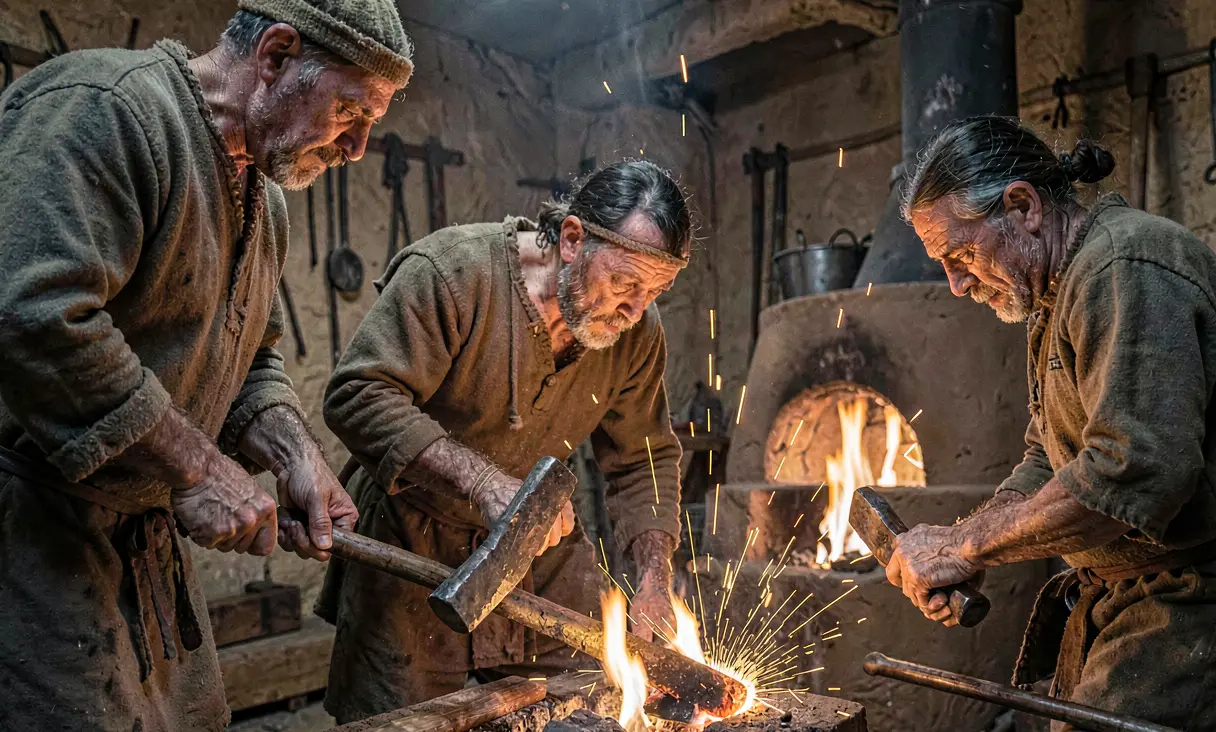
Circa 1400 BCE, during the reign of King Tudhaliya I or his immediate successors, Hittite metallurgists achieved a decisive mastery over iron smelting. Unlike their predecessors who merely worked meteoric iron, these artisans developed the ability to reduce hematite and magnetite ores into a malleable bloom through controlled reduction processes. The critical innovation lay not just in reaching high temperatures but in managing the carbon content within the metal. By carefully regulating the exposure of the hot iron to charcoal, Hittite smiths could produce low-carbon wrought iron or, with more advanced techniques, medium-carbon steel. This process transformed a brittle, unusable ore into a material that could be hammered into swords, spearheads, and agricultural implements that retained an edge far longer than their bronze counterparts.
State Control and the Iron Monopoly
Recognizing the strategic implications of this breakthrough, the Hittite monarchy treated iron smelting as a tightly guarded state secret. The production was centralized under royal supervision, with skilled artisans often working in restricted workshops within or near Hattusa. Diplomatic correspondence from the period, including letters preserved in the Amarna archives and later Hittite tablets, reveals that foreign kings, such as those of Egypt and Assyria, frequently requested iron weapons but were met with refusal or offered only small quantities at exorbitant prices. The Hittites effectively created a technological embargo, ensuring that their military superiority remained unchallenged for nearly two centuries. This monopoly allowed them to equip entire armies with superior weaponry while simultaneously boosting agricultural productivity through stronger plowshares.
Military Expansion and Imperial Reach
The deployment of iron weaponry was a primary catalyst for the Hittite Empire's expansion during the Late Bronze Age. At the Battle of Kadesh in 1274 BCE, fought against the Egyptian Pharaoh Ramesses II, Hittite chariotry wielded iron-tipped weapons that offered distinct advantages in durability and cutting power over bronze. While the battle ended in a stalemate, it demonstrated the potency of the Hittite military machine. Beyond the battlefield, the availability of robust iron tools facilitated extensive infrastructure projects, including the fortification of Hattusa's massive walls and the development of road networks that connected their vast territories from the Taurus Mountains to the Euphrates. This material advantage underpinned the empire's ability to project power across Anatolia and northern Syria.
The Collapse and the Dissemination of Knowledge
The Hittite monopoly on iron was abruptly shattered by the catastrophic collapse of the Late Bronze Age civilizations around 1200 BCE. As the empire disintegrated under pressure from the Sea Peoples, internal revolts, and systemic famine, the centralized control over production collapsed. Skilled smiths fled or were displaced, carrying their knowledge to neighboring regions such as Assyria, Phrygia, and eventually Greece. Within a few decades of Hattusa's fall in c. 1180 BCE, ironworking technology spread rapidly throughout the Mediterranean and Near East. The transition from a state-controlled secret to a widespread industry marked the definitive end of the Bronze Age and the beginning of the Iron Age, fundamentally altering the geopolitical landscape.
Legacy and Historical Significance
The Hittite mastery of iron smelting stands as one of the most pivotal technological transitions in human history. By unlocking the potential of the earth's most abundant metal, they inadvertently set in motion a chain reaction that democratized warfare and agriculture, leading to population growth and the rise of new powers like Assyria and Israel. The event serves as a profound example of how a single technological breakthrough can define an empire's zenith and precipitate its fall once the knowledge becomes ubiquitous. The shift from bronze to iron did not merely change the material of swords; it reshaped economic structures, military tactics, and the very trajectory of Western civilization, proving that the control of technology is as volatile as the metal itself.
This breakthrough initiated the transition from the Bronze Age to the Iron Age in the ancient world.
Where it happened
Hattusa, Central Anatolia (Turkey) — see it on the interactive map →
Explore related history
 TechnologyIndustrialization of Sericulture in Ancient Chinac. 2600 BCE · Shaanxi Province, ChinaChinese artisans perfect the reeling and spinning of silk from silkworm cocoons.
 TechnologyAdvanced Irrigation Systems of the Indus Valley Civilizationc. 2600 BCE · Harappa, PakistanEngineers construct sophisticated canal networks and water reservoirs for urban agriculture.
 TechnologyBenin Acquires Cannon Technology from Portugalc. 1500 CE · Benin City, NigeriaThe Kingdom of Benin integrates Portuguese cannon technology into its military arsenals.
 ExplorationGreat Zimbabwe Dominates Gold Trade with Kilwac. 1400 CE · Great Zimbabwe, ZimbabweArchaeological evidence confirms extensive gold trade between Great Zimbabwe and Swahili coastal cities.
 TechnologyExpansion of Chinampa Agriculture in the Valley of Mexicoc. 1400 CE · Lake Xochimilco, Mexico City, MexicoAztec engineers develop intensive floating gardens to feed a growing population.
 ArtMass Production of Moai Statues at Rano Rarakuc. 1400 CE · Rano Raraku Quarry, Rapa NuiThe peak period of moai carving begins at the Rano Raraku quarry under the direction of clan chiefs.
Discussion
Loading…