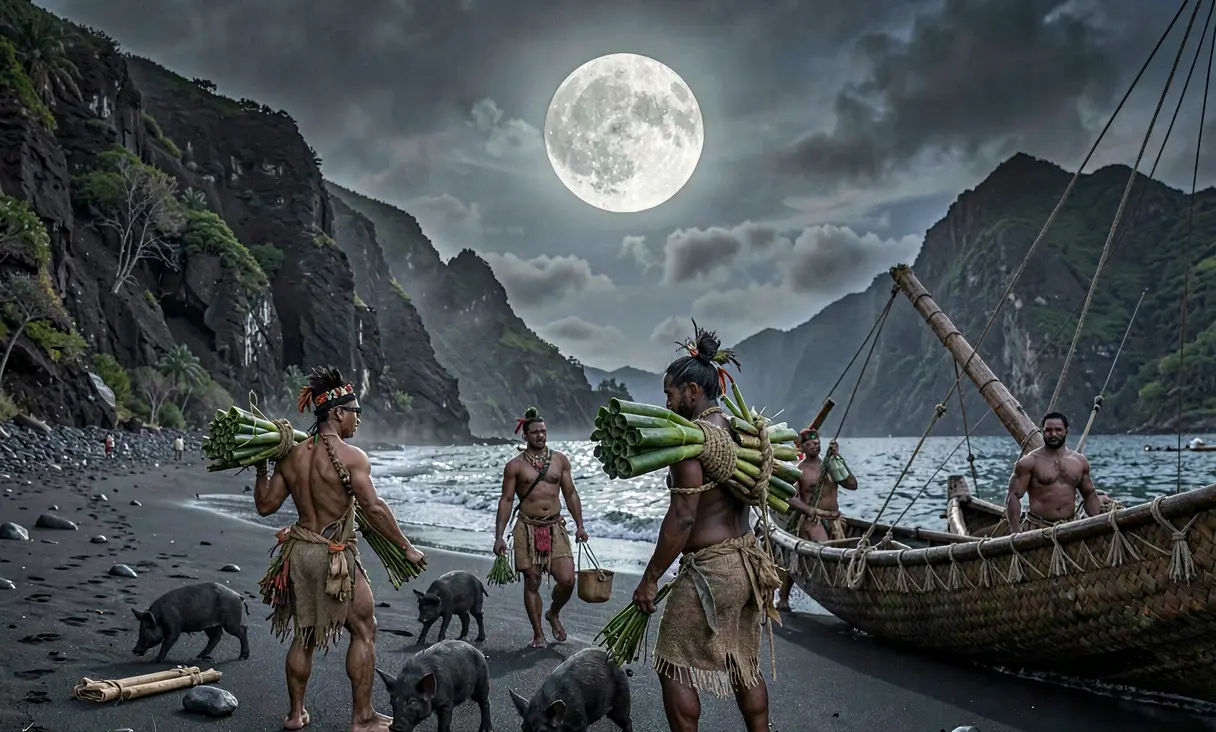
Settlement of the Hawaiian Islands
Polynesian navigators settled the remote Hawaiian Islands in two major waves between 400 CE and 1200 CE, creating a unique isolated civilization through masterful open-ocean voyaging.
Background and Context
The settlement of the Hawaiian Islands stands as one of the most remarkable feats of human exploration in history, representing the final major frontier colonized by Polynesian voyagers before European contact. Situated over 2,000 miles from the nearest inhabited landmasses, Hawaii was the last habitable archipelago on Earth to be discovered and settled by humans. The ancestors of these settlers originated from the broader Austronesian expansion, having already traversed vast stretches of the Pacific Ocean, establishing cultures in Fiji, Tonga, and Samoa before pushing further into the remote Eastern Pacific.
The First Wave: Marquesan Origins
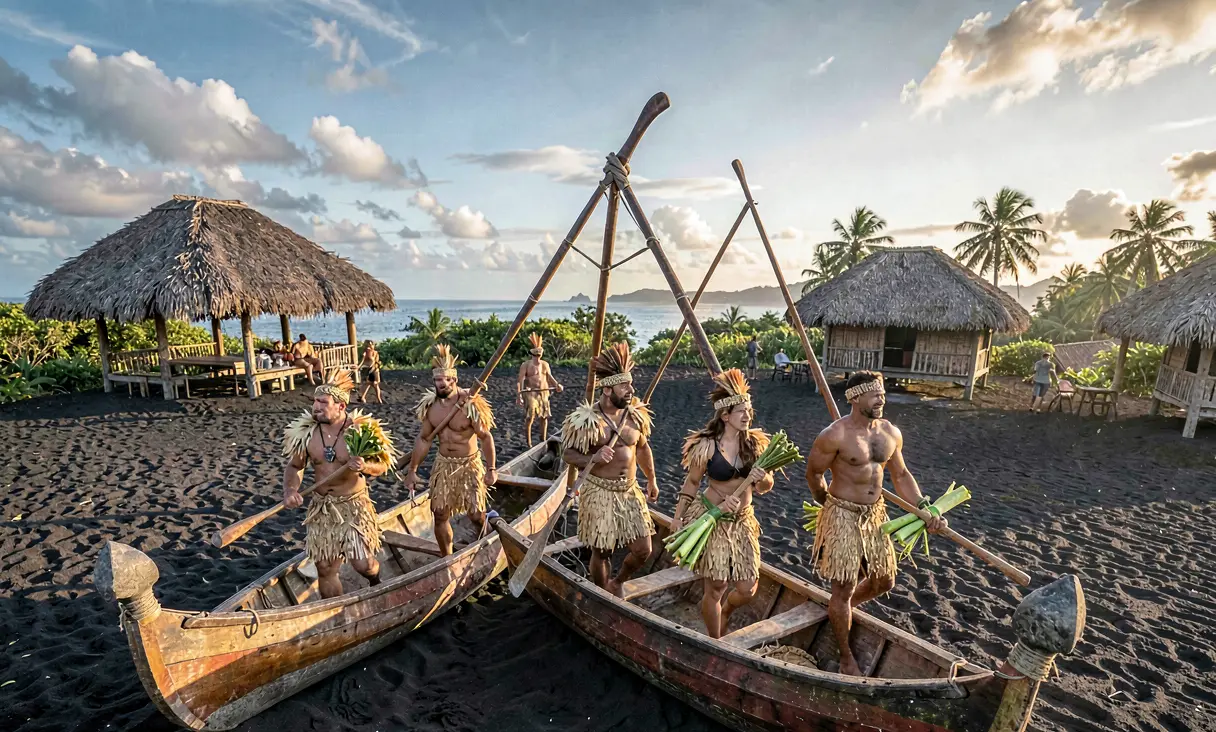
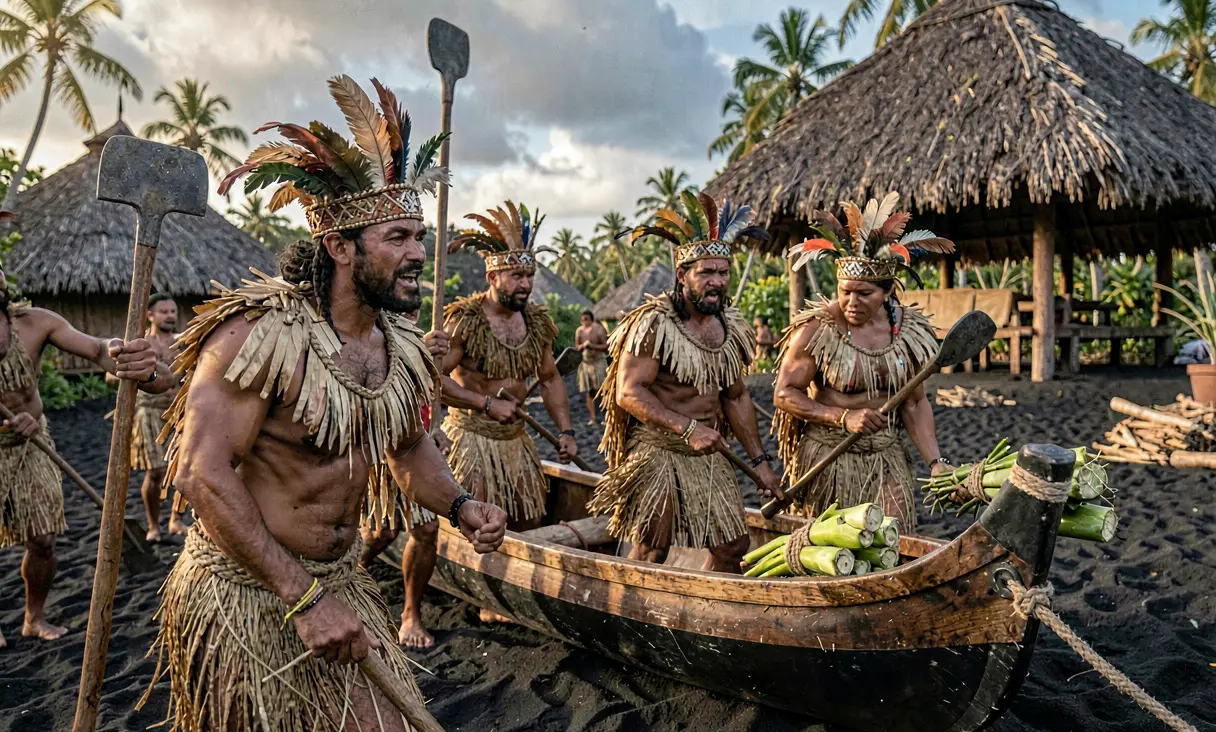
Archaeological evidence, including radiocarbon dating from sites such as Waiakea on the Big Island of Hawaii, suggests the initial colonization occurred between 300 and 600 CE, though some linguistic models propose an earlier arrival closer to 400 BCE. These early voyagers likely departed from the Marquesas Islands, navigating by the stars, ocean swells, and bird migrations in double-hulled canoes known as waʻa kaulua. They brought with them a complete biological package of Polynesian culture: taro (kalo), sweet potato (uala), breadfruit (ulu), coconut, and domesticated animals such as pigs, chickens, and dogs. This first wave established the foundational social structures and religious practices that would define early Hawaiian society.
The Second Wave: The Society Islands Connection
Around 1000 to 1200 CE, a second significant migration occurred, originating primarily from the Society Islands (modern-day Tahiti). This influx is evidenced by distinct changes in material culture, religious iconography, and oral traditions that reference the homeland of 'Havaiʻi' or 'Society Islands.' The arrival of these later voyagers introduced new social hierarchies, refined the kapu system (a complex code of laws and taboos), and brought the concept of the aliʻi nui (high chiefs) with divine lineage. This period marked a cultural renaissance that solidified the distinct Hawaiian identity, differentiating it from other Polynesian cultures while maintaining deep ancestral ties.
Navigational Mastery and Settlement Patterns
The success of these voyages relied on an sophisticated oral science of navigation known as ʻōlelo hōkū (star language). Navigators, or wayfinders, memorized the rising and setting points of over 200 stars to maintain course across the featureless ocean. They also read the color and texture of the water, the direction of swells reflected by distant landmasses, and the flight patterns of migratory birds like the ʻuaʻu (Hawaiian petrel). Upon arrival, settlers initially established communities along the fertile windward coasts where rainfall supported extensive loʻi (irrigated taro patches), eventually expanding into the leeward slopes as populations grew and agricultural techniques evolved.
Cultural Evolution and Isolation
Once the migration routes were lost or ceased, likely due to climatic shifts or political changes in the source islands, Hawaii entered a period of profound isolation lasting nearly four centuries. This separation allowed for rapid cultural evolution without external influence. The Hawaiian language diverged significantly from its Tahitian roots, developing unique phonological features. Religious practices centered on the worship of gods like Kāne, Kanaloa, and Pele became highly specialized, with massive heiau (temples) constructed to honor them. The social stratification intensified, creating a rigid class system where commoners (makaʻāinana) served the chiefs (aliʻi), who were believed to possess mana (spiritual power).
Legacy and Historical Significance
The settlement of Hawaii fundamentally altered the demographic and cultural map of the Pacific. It demonstrated the extraordinary capabilities of ancient maritime technology and human adaptability, proving that vast oceanic distances were not barriers but pathways for civilization. The resulting society, with its unique language, art, and ecological management systems like the ahupuaʻa land division, remains a vital subject of historical study. Today, the legacy of these voyagers is celebrated through the revival of traditional wayfinding, exemplified by the Hōkūleʻa voyages, which have successfully retraced the ancient routes to reconnect with ancestral homelands.
The settlement of Hawaii represents one of the final major chapters in the human colonization of Earth's habitable landmasses.
Where it happened
Hawaii (Big Island), USA — see it on the interactive map →
Explore related history
 ExplorationSettlement of Rapa Nui (Easter Island)c. 800 CE · Rapa Nui (Easter Island), ChilePolynesian navigators reach the remote Rapa Nui and establish a unique island society.
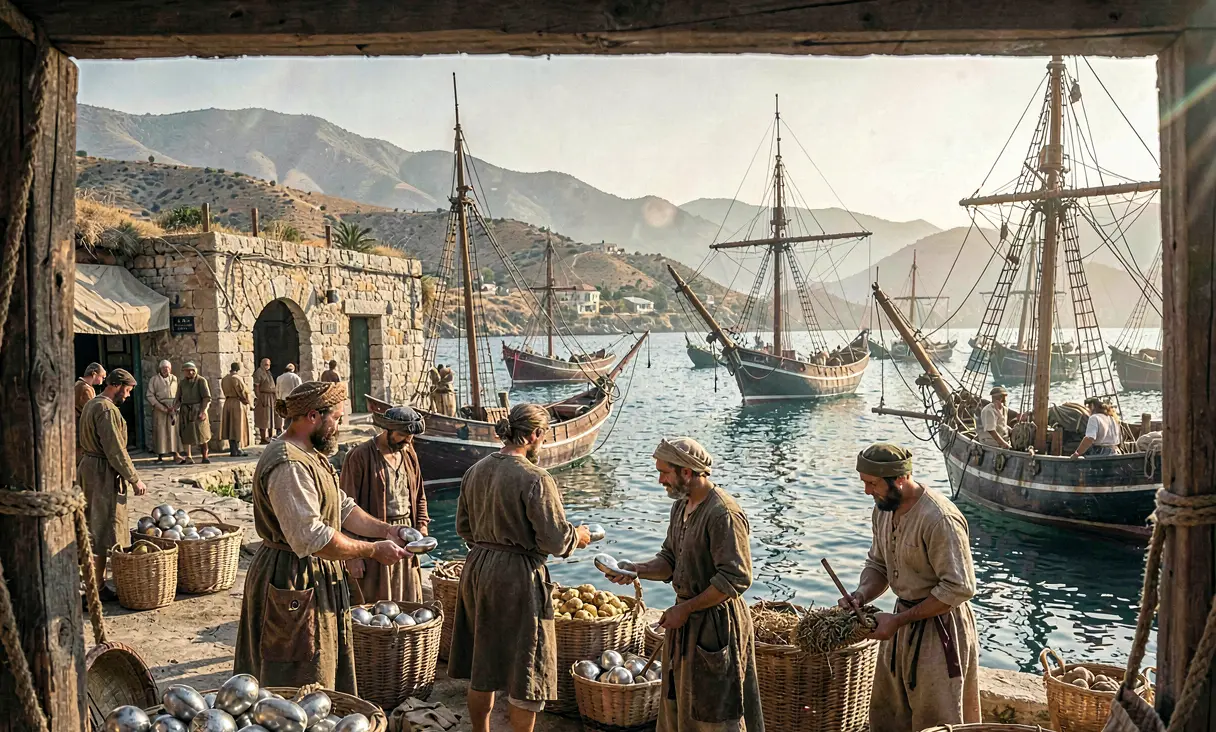 ExplorationEstablishment of Malaca (Malaga) by Phoeniciansc. 770 BCE · Malaga (Malaca), SpainPhoenician traders establish a major colony on the Iberian Peninsula for salt and metal trade.
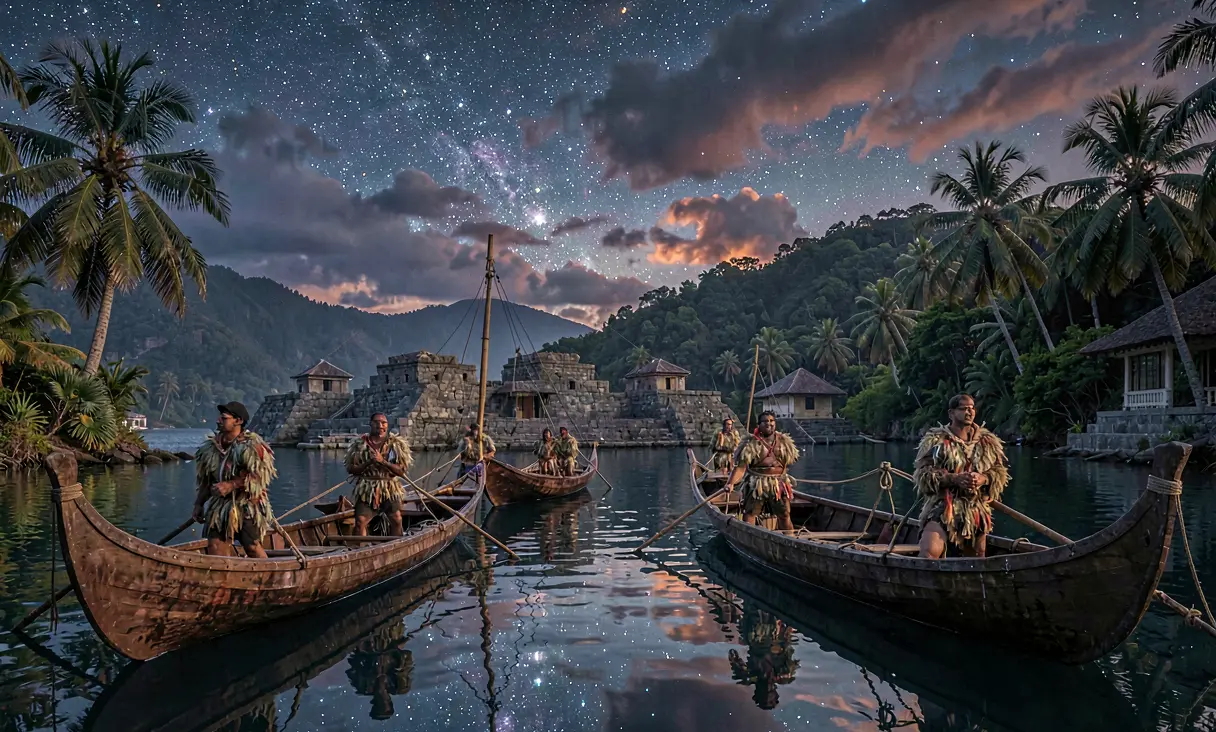 ExplorationPolynesian Expansion into the Society Islandsc. 300 BCE · Society Islands, French PolynesiaPolynesian voyagers colonize the Society Islands, establishing a central hub for further eastward expansion.
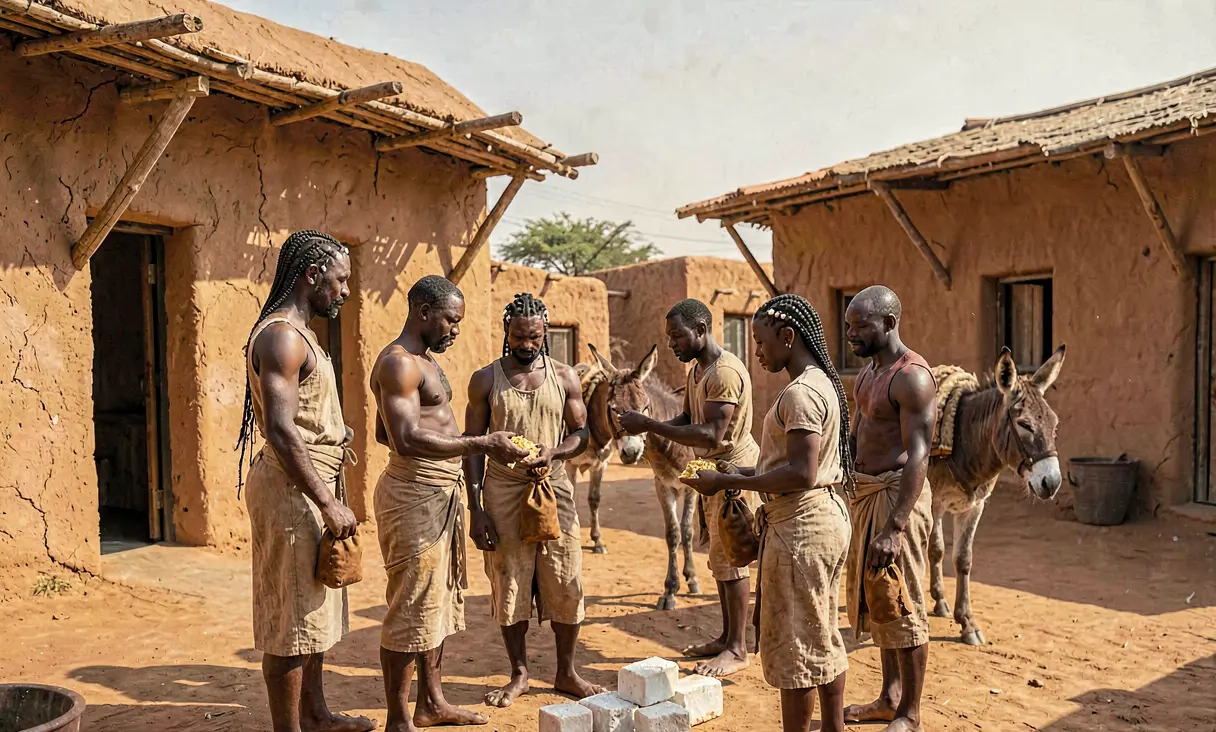 PoliticsRise of the Ghana Empire under Soninke Rulec. 400 BCE · Koumbi Saleh (Modern Mauritania)The Soninke people consolidate power to form the Ghana Empire, controlling trans-Saharan gold and salt trade.
 ReligionSt. Augustine Becomes Bishop of Hippo Regius395 CE · Hippo Regius (Annaba), AlgeriaAugustine of Hippo is consecrated bishop in North Africa, influencing Christian theology for centuries.
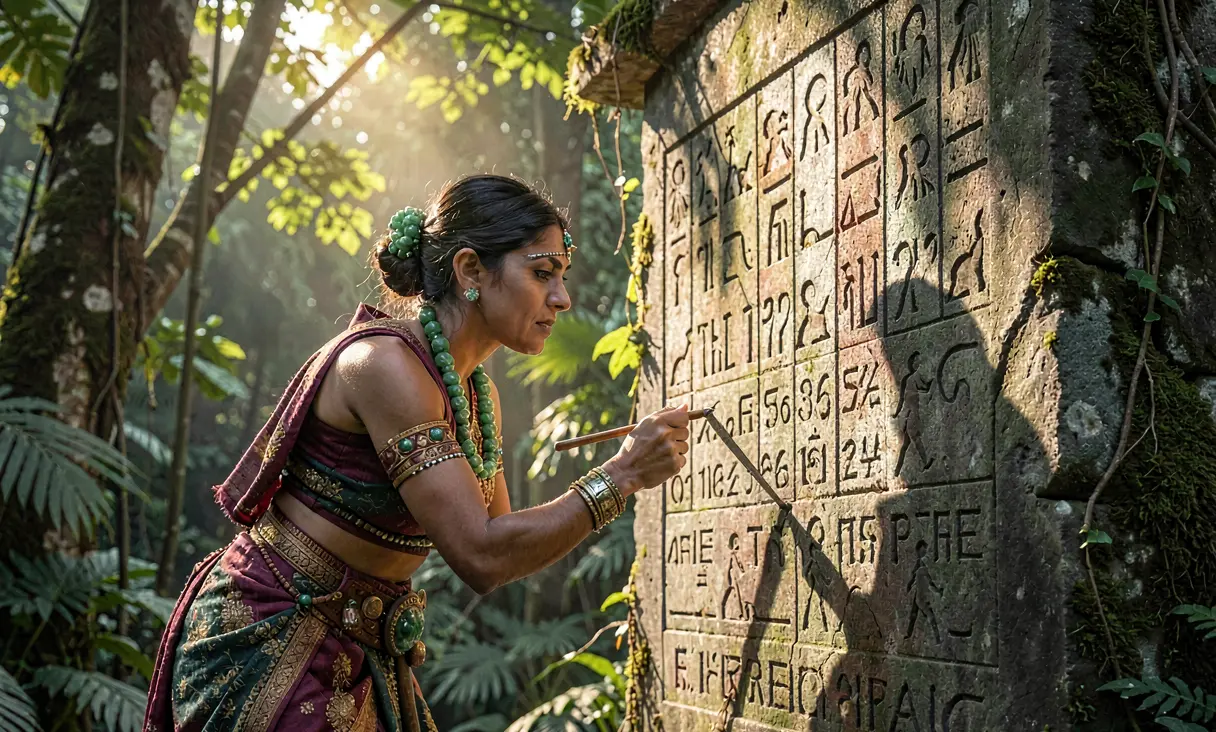 ScienceRefinement of the Maya Long Count Calendar Systemc. 361 BCE · Chiapa de Corzo, MexicoMaya scholars formalize the Long Count calendar for tracking deep historical time.
Discussion
Loading…