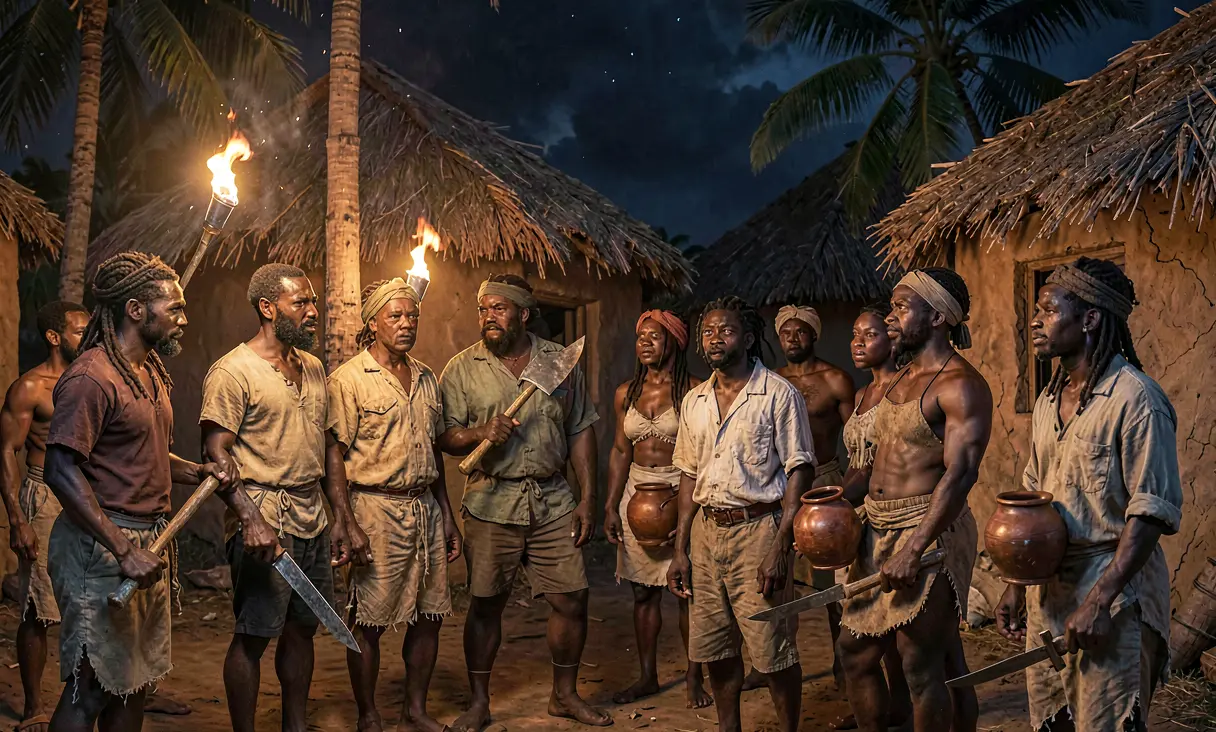
Haitian Revolution Begins
The 1791 uprising in Saint-Domingue ignited a decade-long war that birthed Haiti, the first black republic, permanently shattering Atlantic slave economies and redefining human liberty.
The Crucible of Saint-Domingue
By the late 18th century, Saint-Domingue stood as the most profitable colony in human history, often termed the 'Pearl of the Antilles.' Its economy was entirely predicated on a brutal system of chattel slavery that produced vast quantities of sugar, coffee, and indigo for European markets. The demographic balance was stark: approximately 500,000 enslaved Africans labored under conditions of extreme violence alongside roughly 40,000 white colonists (grands blancs and petits blancs) and a growing class of free people of color (gens de couleur libres). This society existed in a state of perpetual tension, exacerbated by the Enlightenment's philosophical contradictions regarding liberty and the radical political upheavals emanating from Paris following the 1789 Declaration of the Rights of Man and of the Citizen.
The Night of August 22
On the night of August 22, 1791, a coordinated insurrection erupted in the northern plains of Saint-Domingue, marking the beginning of the Haitian Revolution. Orchestrated by a secret society led by Boukman Dutty, a Vodou priest and maroon leader, thousands of enslaved people simultaneously attacked plantations across the region. The uprising was not a spontaneous riot but a disciplined military campaign; within days, rebels had destroyed over 100 sugar plantations and killed hundreds of white colonists. The scale of the violence shocked the colonial administration, which found its militia forces woefully inadequate to contain the rebellion that spread like wildfire through the fertile northern plains.
Rise of the Generals
While Boukman Dutty was killed in battle later that year, the revolution quickly coalesced around new military and political leaders who would define its trajectory. Toussaint Louverture, a former slave and skilled strategist, emerged as the preeminent figure, utilizing his knowledge of European warfare to organize the rebel forces into a disciplined army. Other key figures included Jean-Jacques Dessalines, known for his ferocity and eventual role as the first ruler of independent Haiti; Henri Christophe, who would later become king; and Alexandre Pétion, a leader representing the interests of free people of color. These leaders navigated complex alliances with Spain and Britain while fighting to secure abolition and independence.
A War for Three Flags
The conflict evolved into a multifaceted war involving not only the enslaved majority but also competing European powers. As the French National Assembly abolished slavery in 1794, the revolutionaries fought to defend this decree against British and Spanish invasions who sought to seize the colony or reinstate slavery. Toussaint Louverture's diplomatic acumen allowed him to shift alliances strategically, eventually expelling foreign forces and establishing de facto autonomy under a French flag by 1801. However, in 1802, Napoleon Bonaparte sent a massive expeditionary force to reassert control and restore the plantation economy, triggering a final, desperate phase of resistance led by Dessalines.
Birth of the First Black Republic
The French forces were decimated by yellow fever and fierce guerrilla tactics, culminating in the surrender of General Rochambeau on November 18, 1803. On January 1, 1804, Jean-Jacques Dessalines proclaimed the independence of Haiti, renaming the nation after its indigenous Taíno name, Ayiti. This event marked a singular moment in global history: the creation of the first independent black republic and the only state born from a successful slave revolt. The new nation immediately faced international isolation, as major powers feared the example of slave liberation would inspire uprisings within their own colonies.
Echoes Across the Atlantic
The Haitian Revolution sent seismic shockwaves through the Atlantic world, fundamentally altering the geopolitics of slavery and colonialism. It forced a reevaluation of racial hierarchies and inspired abolitionist movements while simultaneously provoking a reactionary tightening of slave codes in the United States, Brazil, and the Caribbean. Economically, it devastated the French sugar industry but also catalyzed the expansion of slavery elsewhere as planters sought to fill the void. The revolution remains the definitive proof that enslaved people could not only organize for their own liberation but could defeat the most powerful military empires of the era.
It resulted in the creation of the first independent black republic and the only state founded by a successful slave revolt.


Where it happened
Saint-Domingue (Haiti) — see it on the interactive map →
Explore related history
 PoliticsFounding of Fatehpur Sikric. 1571 CE · Fatehpur Sikri, Uttar Pradesh, IndiaAkbar establishes Fatehpur Sikri as the new capital of the Mughal Empire to honor his spiritual guide and centralize administration.
 PoliticsPeace of WestphaliaOctober 24, 1648 · Münster and Osnabrück, GermanyTreaties end the Thirty Years' War, establishing state sovereignty.
 PoliticsShivaji Maharaj Coronation and Maratha Empirec. 1674 CE · Raigad Fort (modern Maharashtra/India)Chhatrapati Shivaji is crowned as the sovereign ruler of the Marathas, establishing an independent Hindu kingdom against Mughal dominance.
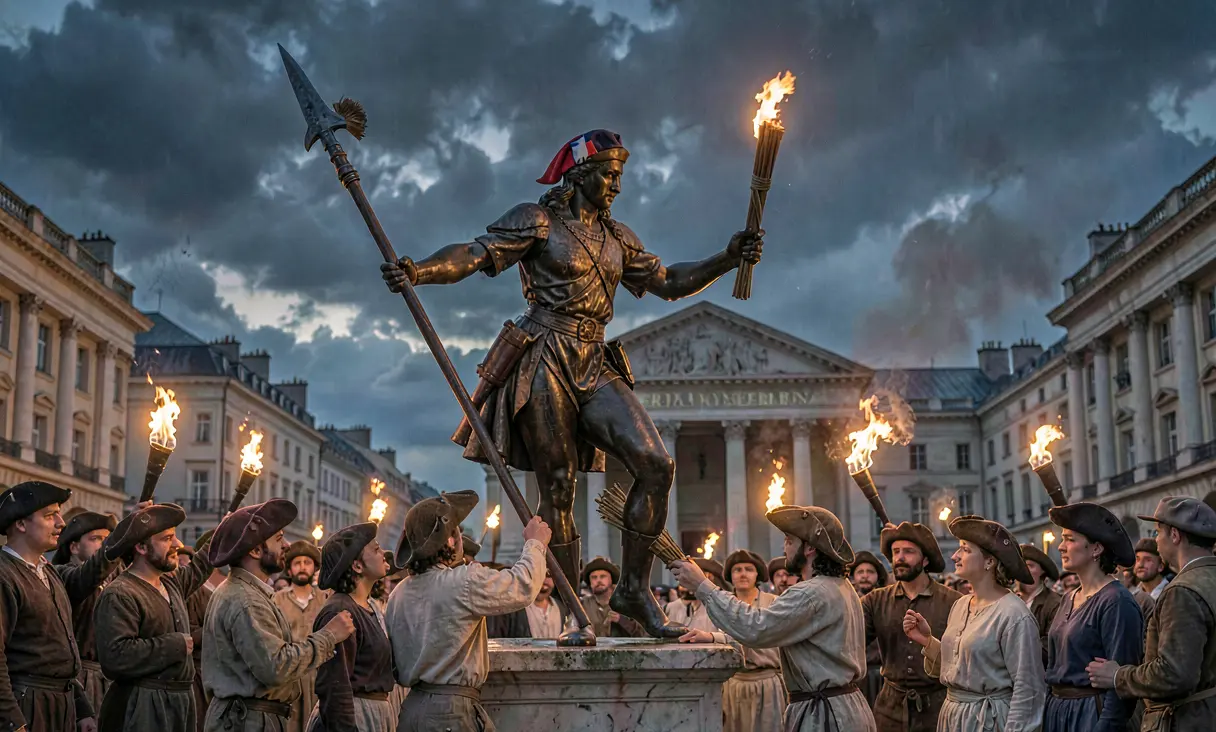 PoliticsAdoption of Marianne as French Symbolc. 1792 CE · Paris, FranceThe Republic adopts a female allegory representing Liberty and Reason.
 PoliticsStorming of the BastilleJuly 14, 1789 · Paris, FranceRevolutionaries storm the Bastille prison, symbolizing the start of the French Revolution.
 TechnologyExpansion of Transatlantic Cotton Tradec. 1793 CE · Savannah, Georgia, USAEli Whitney's cotton gin revolutionizes production and fuels global textile manufacturing.
Discussion
Loading…