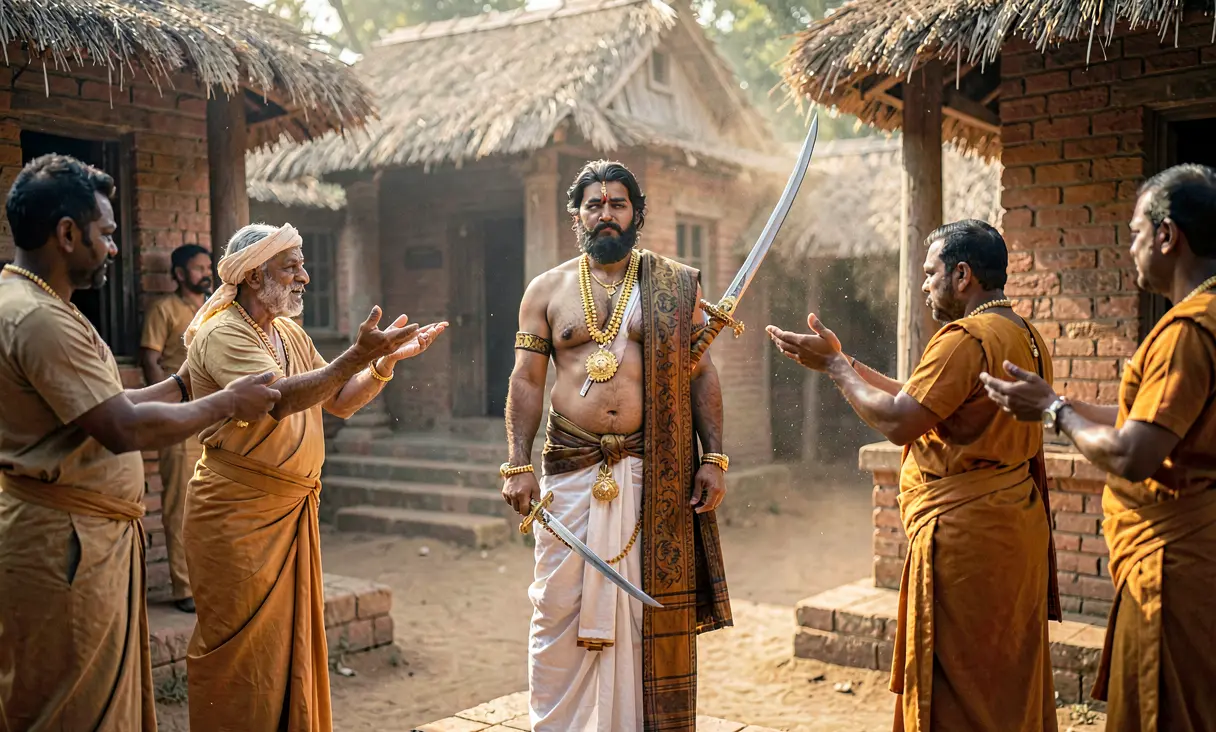
Founding of the Gupta Empire by Chandragupta I
In 320 CE, Chandragupta I's marriage to Licchavi princess Kumaradevi legitimized his rule as Maharajadhiraja, launching the Gupta Era and India's Golden Age of scientific and cultural brilliance.
The Fragmented Landscape of Early Fourth-Century India
By the early fourth century CE, the Indian subcontinent was a mosaic of competing regional powers following the decline of the Mauryan Empire and the subsequent fragmentation under the Shunga and Kanva dynasties. While the Kushans held sway over the northwest and the Satavahanas dominated the Deccan, the Gangetic plain remained politically fractured among numerous minor chieftains and republics known as mahajanapadas. In this volatile environment, a small but ambitious clan emerged from the region of Magadha. The Guptas, initially holding the title of Maharaja, controlled a modest territory centered around Prayaga (modern Allahabad) and Saketa. Their rise was not marked by immediate military conquests that reshaped borders overnight, but rather by a calculated ascent through diplomacy and strategic consolidation, setting the stage for a transformation that would redefine Indian civilization.
The Strategic Alliance with the Licchavis
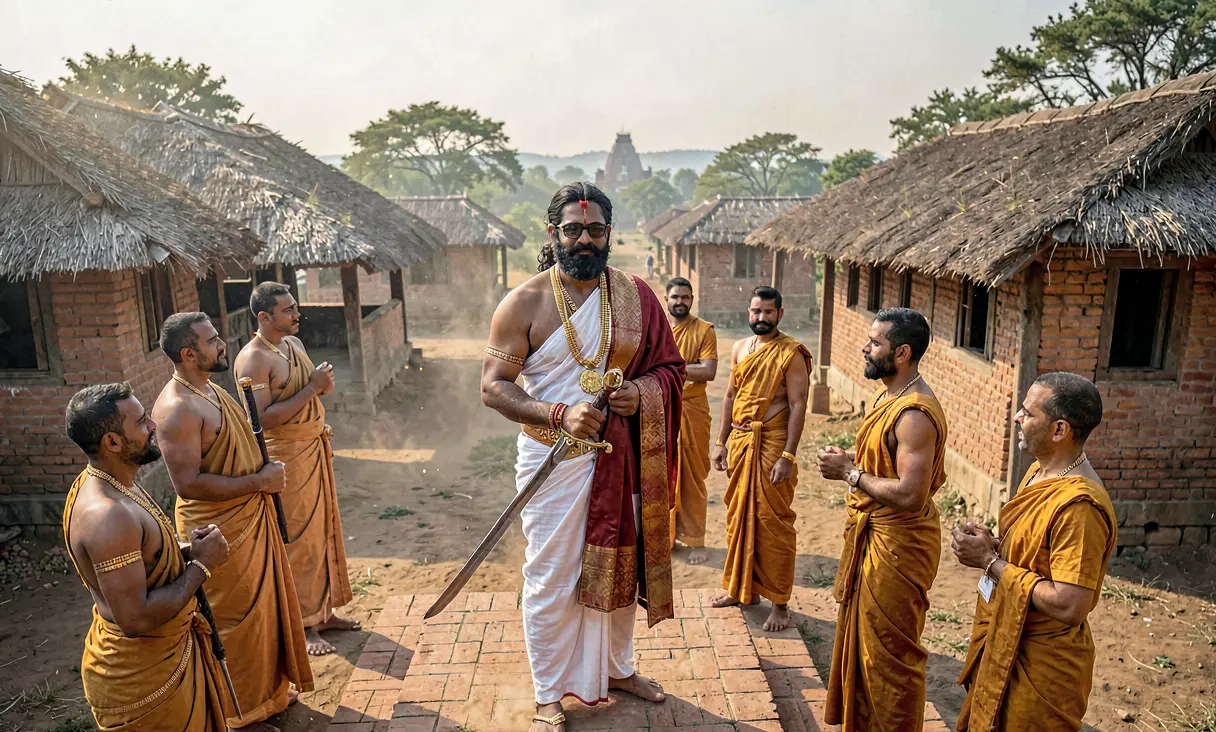
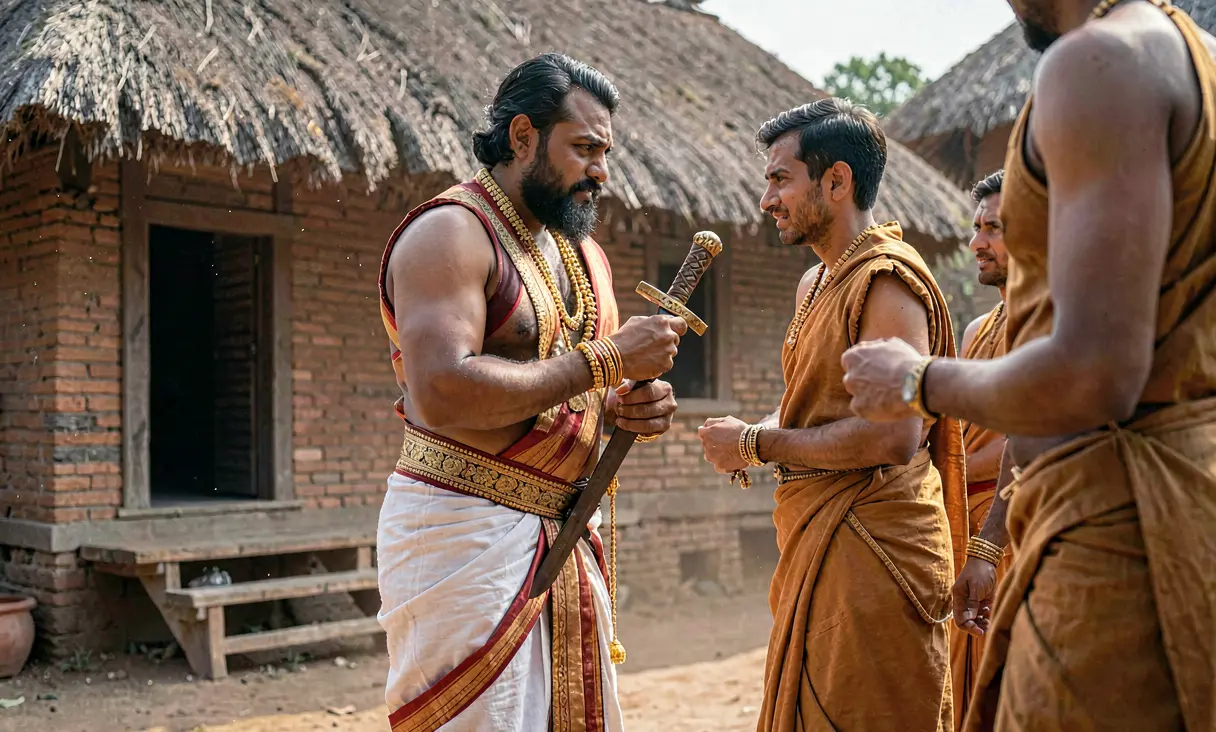
The pivotal moment in the founding of the Gupta Empire occurred around 320 CE, driven not by a singular battlefield victory but by a masterful matrimonial alliance. Chandragupta I, the first sovereign ruler to assume the grand imperial title of Maharajadhiraja (King of Kings), married Kumaradevi, a princess of the Licchavi clan. The Licchavis were a powerful and influential republican tribe based in Vaishali, renowned for their wealth, military prowess, and political sophistication. This union was far more than a dynastic marriage; it was a geopolitical merger that instantly legitimized Chandragupta's claim to imperial status. By absorbing the prestige and resources of the Licchavis, the Guptas transcended their regional limitations, effectively doubling their power base and gaining the necessary clout to challenge established authorities in the Gangetic valley.
Chandragupta I: The Architect of Imperial Authority
Chandragupta I stands as a figure of remarkable political acumen, distinguished by his ability to synthesize traditional Hindu kingship with pragmatic statecraft. Unlike the centralized, bureaucratic autocracy of Ashoka's Mauryan predecessors, Chandragupta adopted a model that balanced strong central authority with significant local autonomy. His inscriptions, most notably the Allahabad Pillar inscription later commissioned by his grandson Samudragupta, describe him as the founder of the Gupta era and the first to bear the title Maharajadhiraja. Historical evidence suggests he issued gold coins (dinars) depicting himself and Kumaradevi together, a numismatic innovation that symbolized their joint rule and the legitimacy derived from the Licchavi connection. His reign, though relatively short in duration compared to his successors, established the administrative and ideological framework upon which the empire would expand.
The Establishment of the Gupta Era
Following his assumption of the imperial title in c. 320 CE, Chandragupta I initiated a new chronological system known as the Gupta Era (Gupta Samvat). This calendar, which counted years from 319 or 320 CE depending on the specific calculation method used by later historians, served as the official regnal dating for the empire and facilitated administrative cohesion across vast territories. The adoption of this era was a profound political statement, signaling the beginning of a new epoch in Indian history. It marked the transition from the age of regional fragmentation to one of centralized imperial stability. This chronological marker allowed for precise record-keeping in land grants, inscriptions, and court chronicles, creating a unified historical narrative that would bind the diverse regions under Gupta suzerainty.
A Decentralized Imperial Model
The political structure established by Chandragupta I differed significantly from the rigid centralization of previous empires. The early Gupta administration operated as a loose confederation where local rulers, often former independent chiefs or kings of subordinate territories, retained their thrones and internal autonomy in exchange for acknowledging the suzerainty of the Maharajadhiraja. These vassal states were required to pay tribute, provide military support, and attend the imperial court, but they largely managed their own affairs. This flexible system allowed the Guptas to govern a vast and culturally diverse territory with limited administrative overhead, fostering a sense of stability that encouraged economic growth and cultural flourishing without the crushing weight of absolute central control.
Legacy: The Dawn of India's Golden Age
The founding of the Gupta Empire by Chandragupta I set in motion a period often celebrated as India's 'Golden Age.' Under the stability his dynasty established, subsequent rulers like Samudragupta and Chandragupta II expanded the empire to its zenith, creating an environment where science, mathematics, astronomy, and literature thrived. It was during this era that scholars like Aryabhata revolutionized mathematics with the concept of zero and the decimal system, while the great poet Kalidasa composed enduring Sanskrit classics such as 'Abhijnanashakuntalam.' The political stability and cultural patronage initiated by Chandragupta I allowed for a synthesis of Hindu, Buddhist, and Jain traditions that defined Indian culture for centuries. His strategic vision transformed a regional kingdom into an imperial power whose influence extended across South Asia and left an indelible mark on world history.
The founding of the Gupta Empire inaugurated a golden age of Indian culture, science, and art that defined classical civilization in South Asia.
Where it happened
Pataliputra (modern Patna/India) — see it on the interactive map →
Explore related history
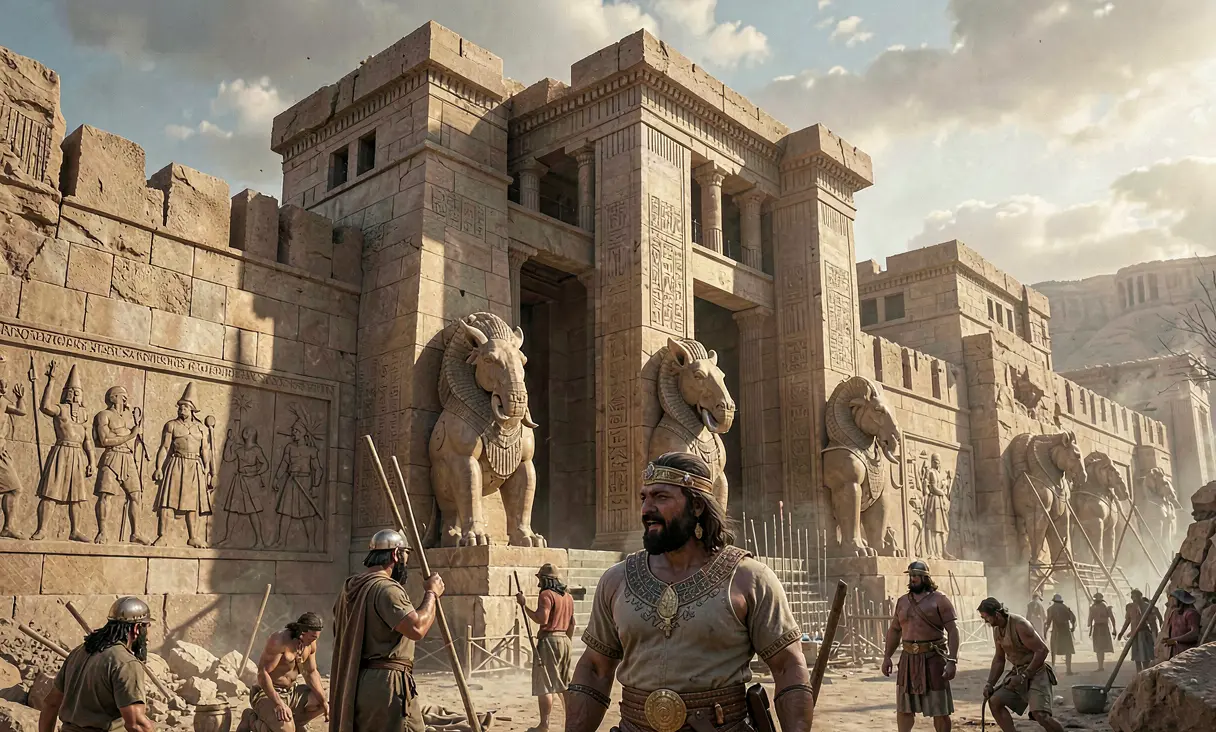 PoliticsFounding of Dur-Sharrukin by Sargon IIc. 717 BCE · Khorsabad (Dur-Sharrukin), IraqSargon II builds a new capital city to project Assyrian power and administrative control.
 PoliticsReign of Emperor Taizong and the Zhenguan Era626 CE · Chang'an, ChinaLi Shimin ascends the throne after the Xuanwu Gate Incident, ushering in a golden age of governance.
 PoliticsRise of the Sixteen Mahajanapadasc. 600 BCE · Gangetic Plain (modern Uttar Pradesh/India)Sixteen great kingdoms and republics emerge across the Gangetic plain, marking the transition from tribal chiefdoms to state-level societies.
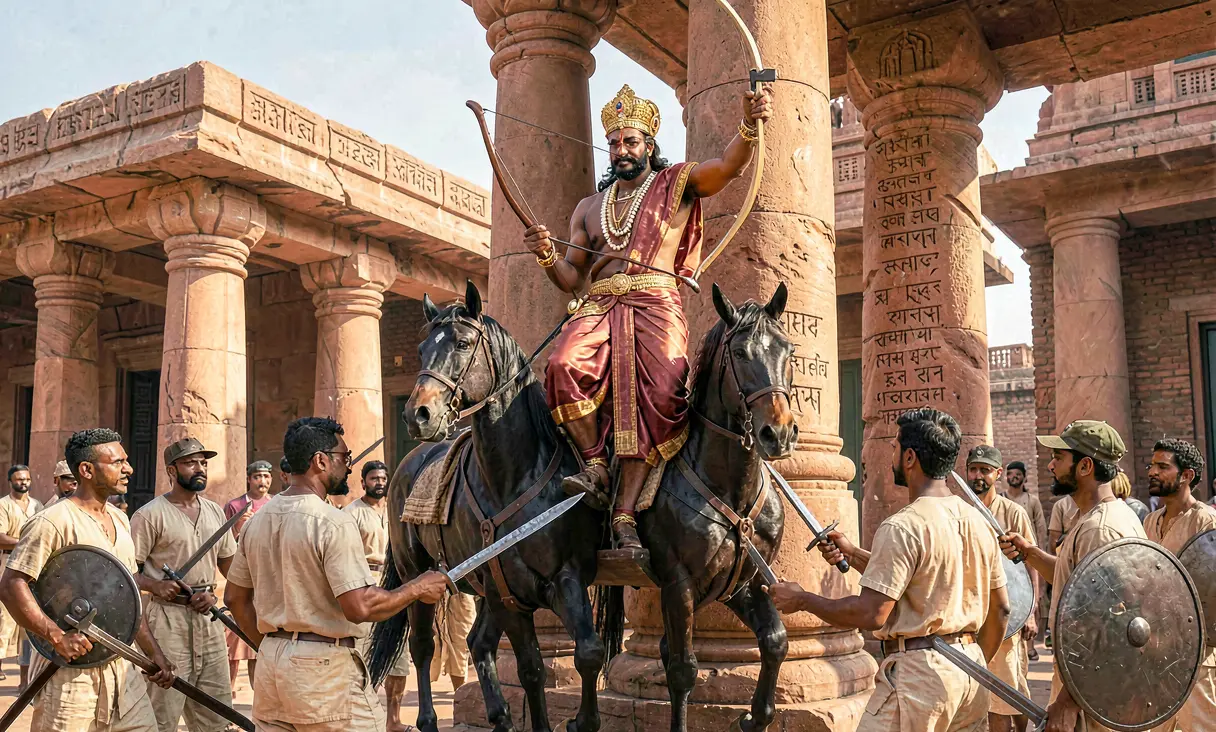 WarSamudragupta's Southern Campaigns and Allahabad Pillarc. 350 CE · Allahabad (modern Uttar Pradesh/India)Emperor Samudragupta conquers northern and southern India, recording his victories on the Allahabad Pillar.
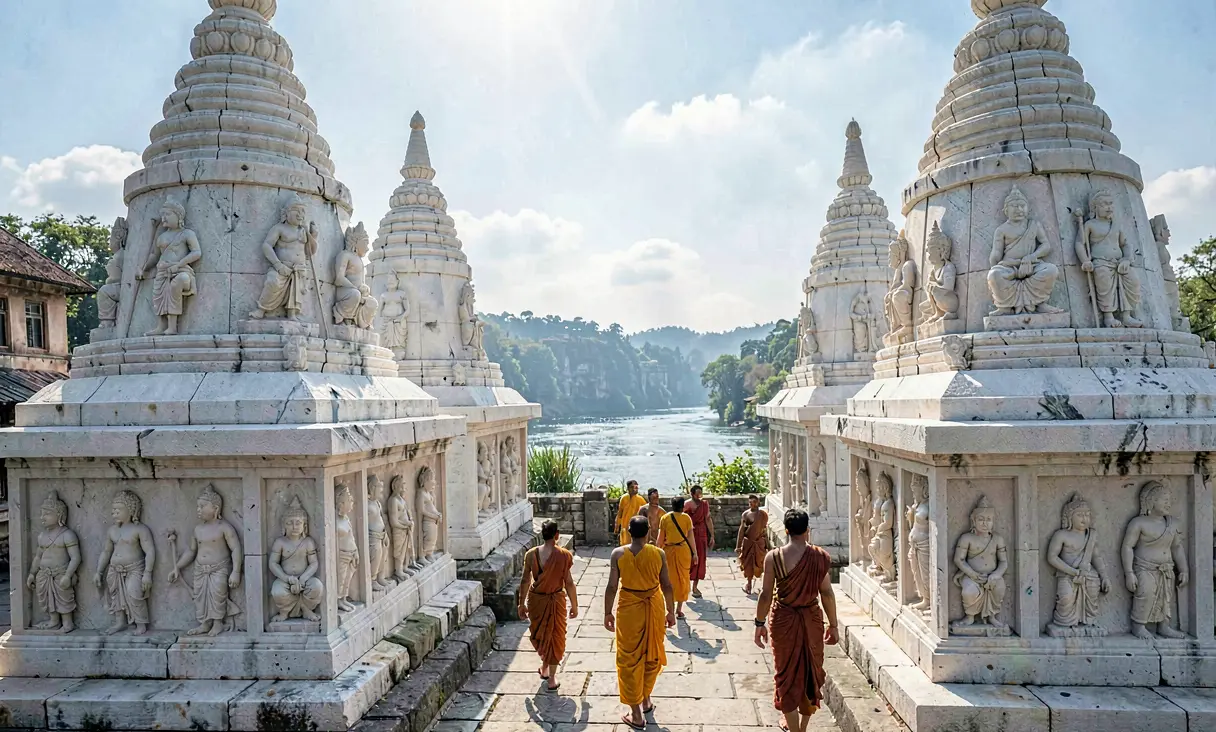 ArtCompletion of Great Stupas at Nagarjunakondac. 275 CE · Nagarjunakonda, Andhra Pradesh, IndiaThe Ikshvaku dynasty completes massive stone stupas and monasteries at Nagarjunakonda, showcasing the pinnacle of Deccan Buddhist art.
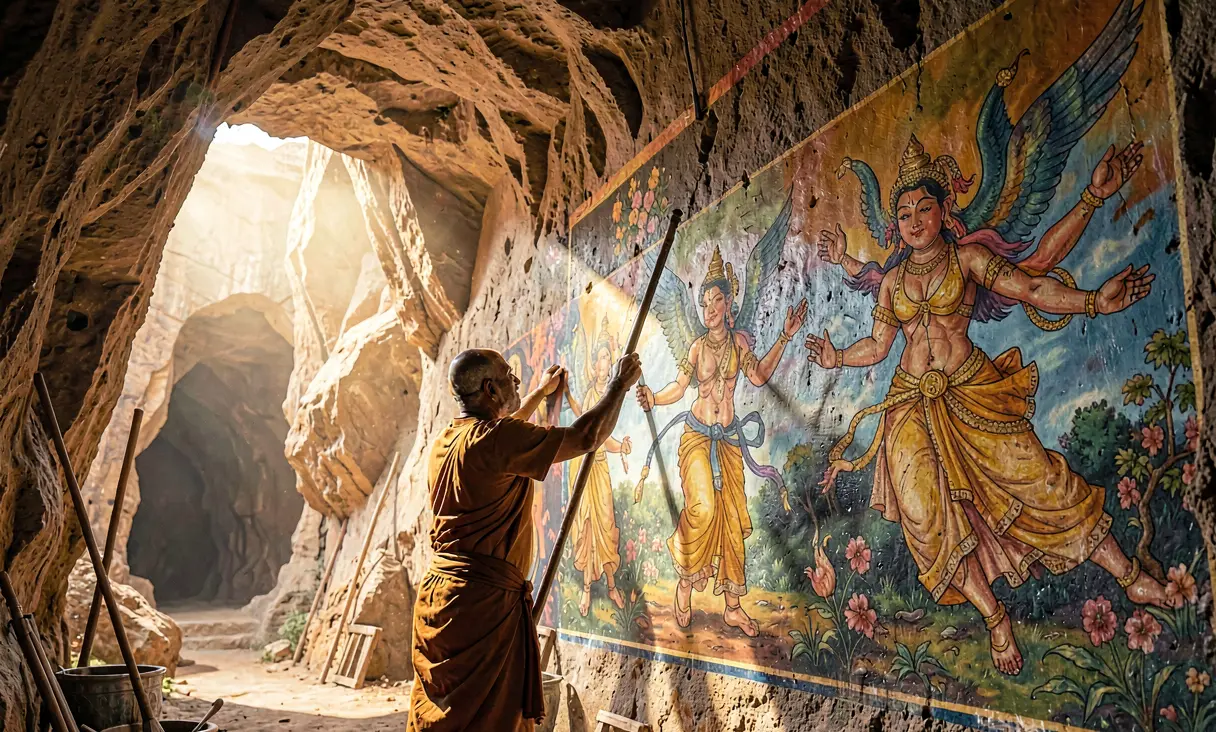 ArtCreation of Mogao Caves Muralsc. 366 CE - ongoing · Dunhuang, ChinaArtists begin painting Buddhist murals in the cave complex on the Silk Road.
Discussion
Loading…