Rise of Black-Figure Vase Painting
Around 700 BCE, Athenian potters perfected a revolutionary three-stage firing technique that used incised black silhouettes to bring Greek mythology and human drama to life on ceramic vessels.
The Geometric Dawn and the Orientalizing Shift
By the late 8th century BCE, Athenian pottery was dominated by the Geometric style, characterized by rigorous linear patterns, meanders, and abstract motifs that covered every available surface of the vessel. While masterfully executed, these designs offered limited capacity for narrative complexity or human representation beyond stylized stick figures. As trade networks expanded across the Mediterranean in the 7th century BCE, Greek artisans encountered the sophisticated artistic traditions of the Near East and Egypt. This cultural cross-pollination sparked the Orientalizing period, introducing floral motifs, exotic animals, and a growing desire to depict mythological scenes with greater realism. It was within this crucible of artistic evolution that Attic potters began experimenting with new firing techniques to break free from the constraints of linear abstraction.
The Alchemical Innovation: Black-Figure Technique
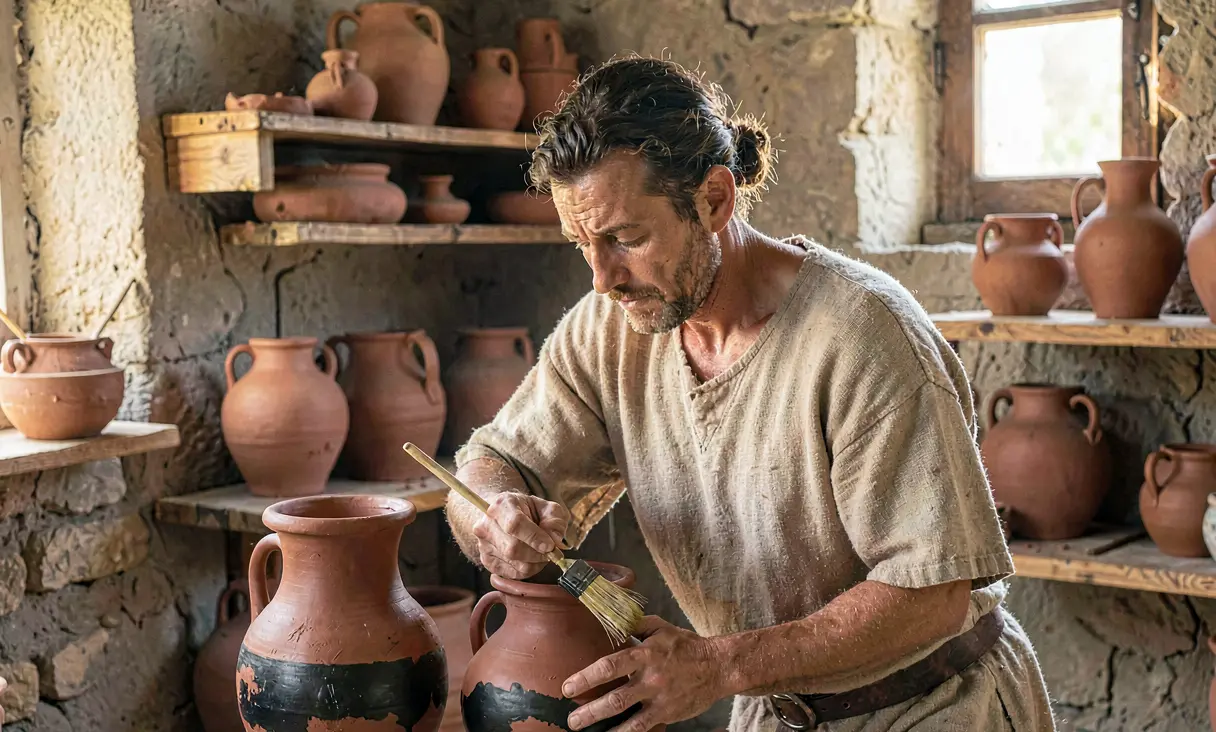
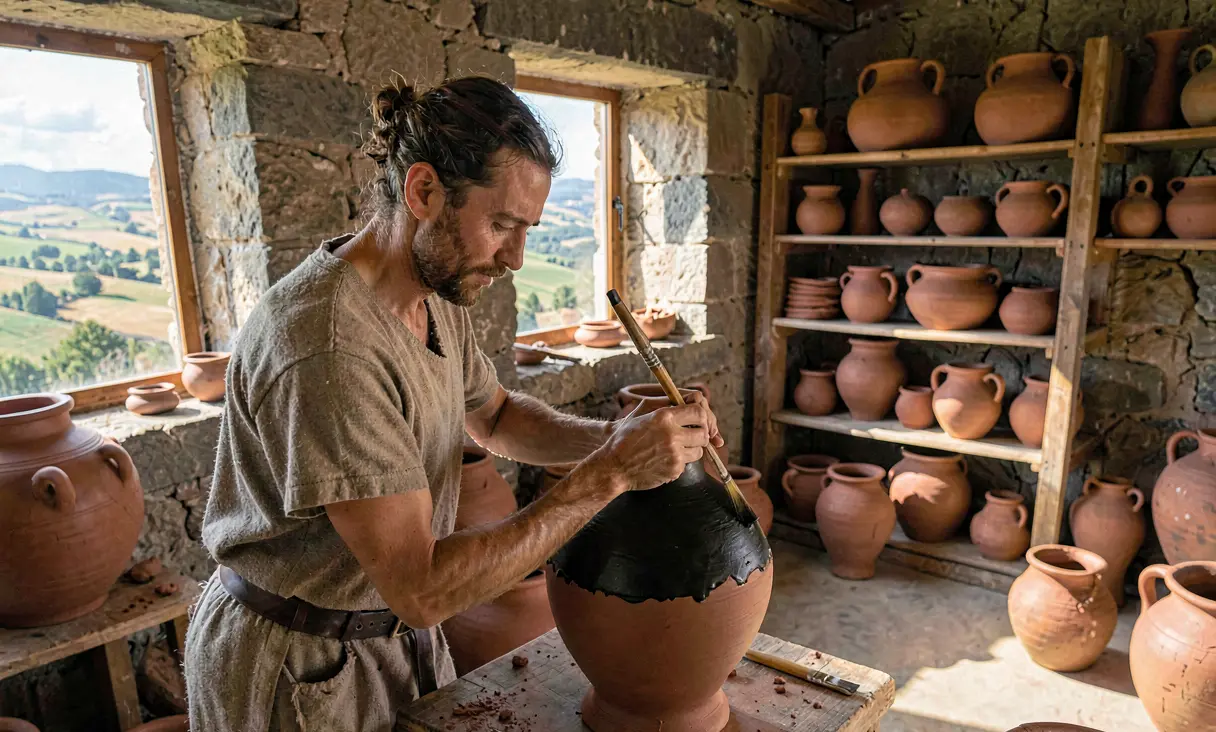
Around 700 BCE, likely originating in Corinth before being perfected in Athens, a revolutionary ceramic technique emerged that would define Greek art for two centuries. The black-figure method relied on a sophisticated three-stage firing process involving oxidation and reduction phases. Potters applied a refined slip—a liquid mixture of clay and water—to the vessel's surface; this slip turned a glossy black during the reduction phase when oxygen was excluded from the kiln, while the unslipped clay retained its natural reddish-orange hue. The true genius lay in the finishing stage: artists used sharp tools to incise fine lines into the dried black silhouettes, revealing the red clay beneath to define musculature, facial features, and drapery folds. This allowed for a level of detail previously unattainable in ceramic art.
Exekias: The Master of Narrative Depth
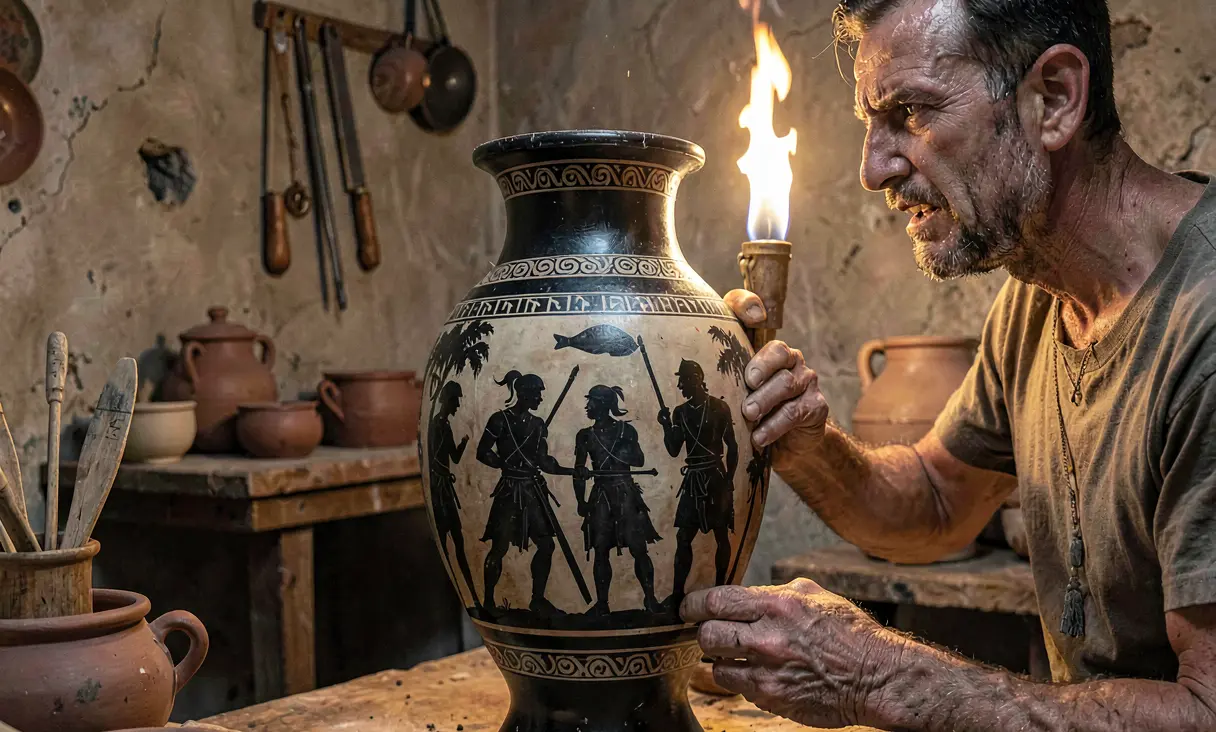
While the technique evolved over generations, no artist embodies the zenith of black-figure painting more than Exekias, active in Athens during the mid-6th century BCE (c. 540–530 BCE). Unlike his contemporaries who often crowded vessels with repetitive scenes, Exekias mastered the art of psychological intensity and compositional balance. His famous amphora depicting Achilles and Ajax playing a dice game demonstrates this mastery; the figures are rendered in powerful, muscular silhouettes, their gazes locked in an intense moment of respite from the Trojan War. Through delicate incision, he conveyed the tension of the impending battle within the stillness of the scene, transforming a simple vessel into a profound meditation on fate and heroism.
From Workshop to Pan-Hellenic Export
The production of black-figure pottery was centered in the Kerameikos district of Athens, where workshops operated with increasing specialization. Potters shaped the vessels on the wheel, while painters executed the designs, often signing their work—a practice that elevated the status of the artist from anonymous craftsman to recognized creator. The durability and aesthetic appeal of these vases made them a primary export commodity throughout the Mediterranean. Archaeological evidence shows black-figure ware reaching as far as Etruria in Italy, Southern France, and the Black Sea region. These vessels served not only as functional containers for wine and oil but also as canvases that disseminated Athenian mythology and cultural values across the Greek world.
The Transition to Red-Figure Supremacy
Despite its dominance, the black-figure style faced inherent limitations; the incised lines could not achieve the fluidity of a brushstroke, making complex poses and foreshortening difficult. By approximately 530 BCE, Athenian artisans invented the red-figure technique, which reversed the color scheme: figures remained the natural red of the clay against a black background, with details painted using a fine brush rather than incised. This allowed for unprecedented anatomical accuracy and dynamic movement. While black-figure production did not cease immediately, it gradually receded from the forefront of high art, surviving primarily in specific contexts like Panathenaic prize amphorae well into the 4th century BCE.
Enduring Legacy of the Silhouette
The rise of black-figure vase painting represents a pivotal moment in the history of visual storytelling, bridging the gap between abstract decoration and figurative realism. It established the iconographic vocabulary of Greek mythology that would influence Western art for millennia. The thousands of surviving vases provide modern historians with an unparalleled record of ancient social life, religious rituals, and military equipment. Although superseded technically by red-figure, the black-figure style remains a testament to the ingenuity of Athenian craftsmen who turned fired clay into a durable medium for preserving the epic narratives of their civilization.
Black-figure pottery became the dominant artistic medium for recording Greek mythological narratives and daily life.
Where it happened
Athens, Greece — see it on the interactive map →
Explore related history
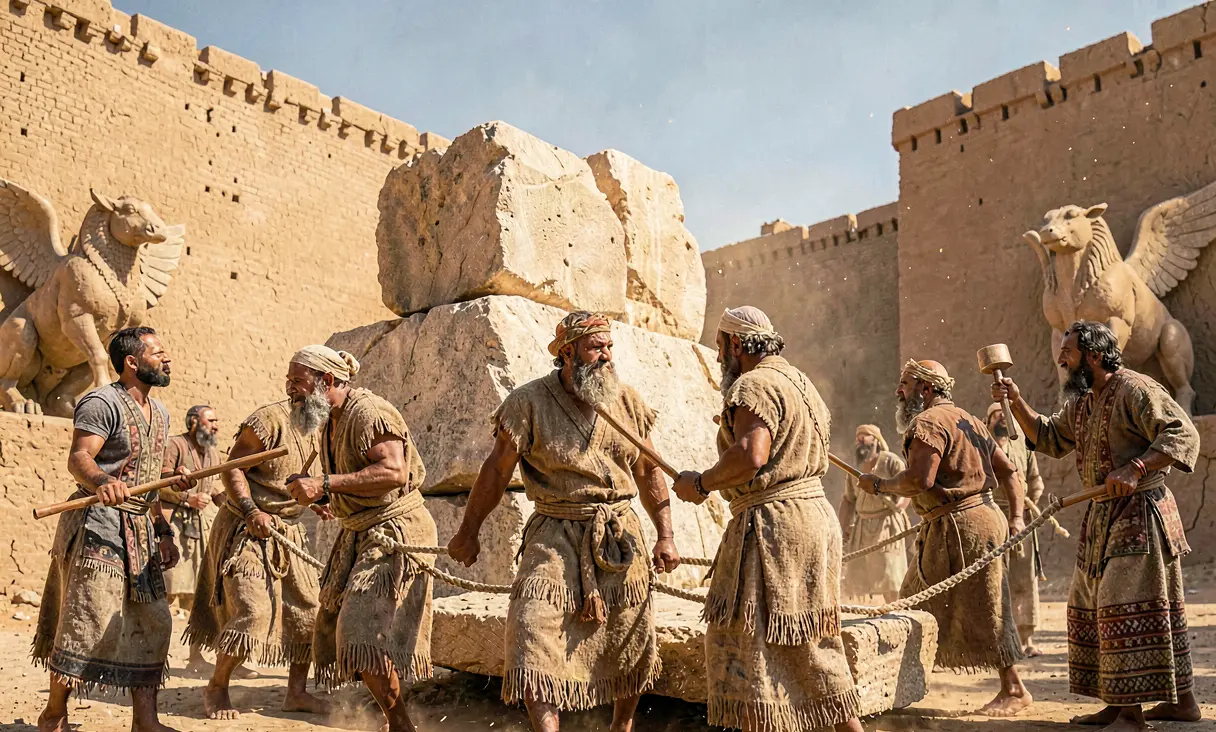 ArtConstruction of Sennacherib's Palace at Ninevehc. 705 BCE · Nineveh (Mosul), IraqSennacherib expands Nineveh into a magnificent capital filled with art and libraries.
 ArtConstruction of the Hanging Gardens of Babylonc. 605 BCE · Babylon, Mesopotamia (Iraq)Nebuchadnezzar II builds the legendary Hanging Gardens for his Median wife.
 ArtBurial of Qin Shi Huang's Terracotta Armyc. 210 BCE · Xi'an, ChinaEmperor Qin Shi Huang is buried with a massive army of life-sized terracotta soldiers to guard him in the afterlife.
 WarAssyrian Siege and Sack of Lachishc. 701 BCE · Lachish (Tell ed-Duweir), IsraelSennacherib's Assyrian army brutally conquers the fortified Judean city of Lachish.
 PoliticsFounding of Dur-Sharrukin by Sargon IIc. 717 BCE · Khorsabad (Dur-Sharrukin), IraqSargon II builds a new capital city to project Assyrian power and administrative control.
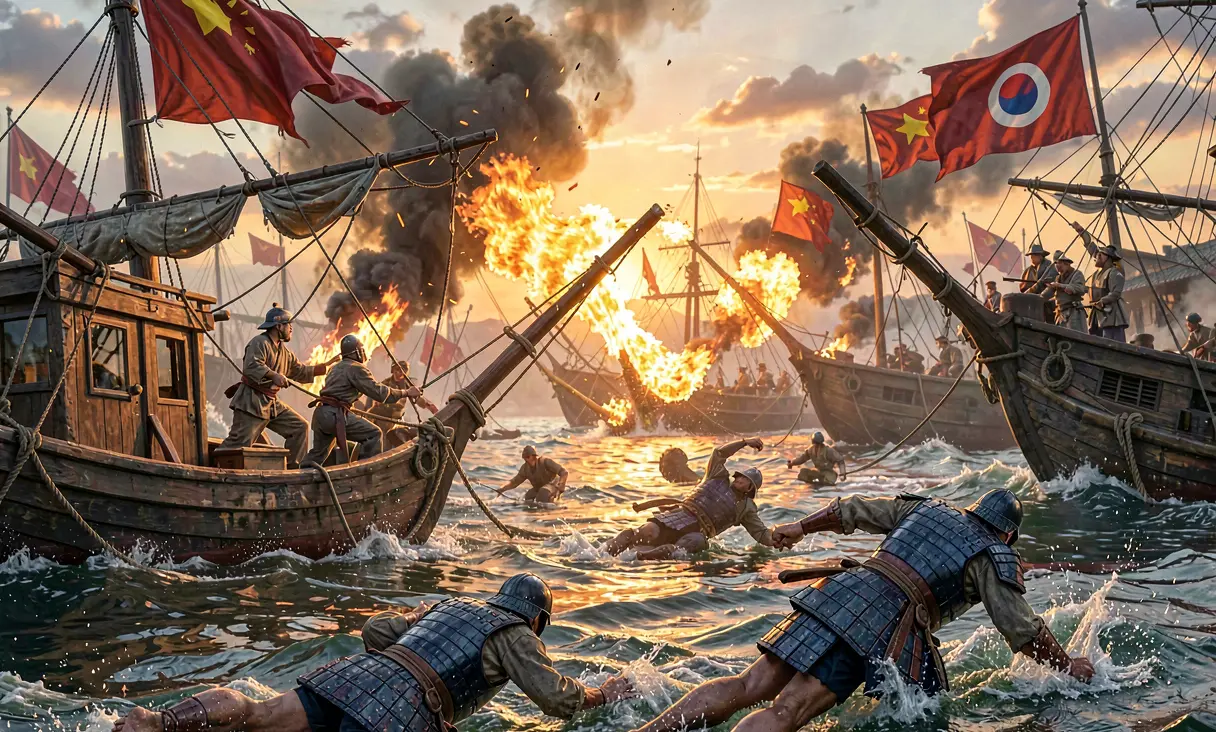 WarBattle of Baekgang: Silla-Tang Victory over Japan663 CE · Geum River Mouth, KoreaSilla and Tang China destroy the Japanese fleet, ending Baekje restoration efforts.
Discussion
Loading…