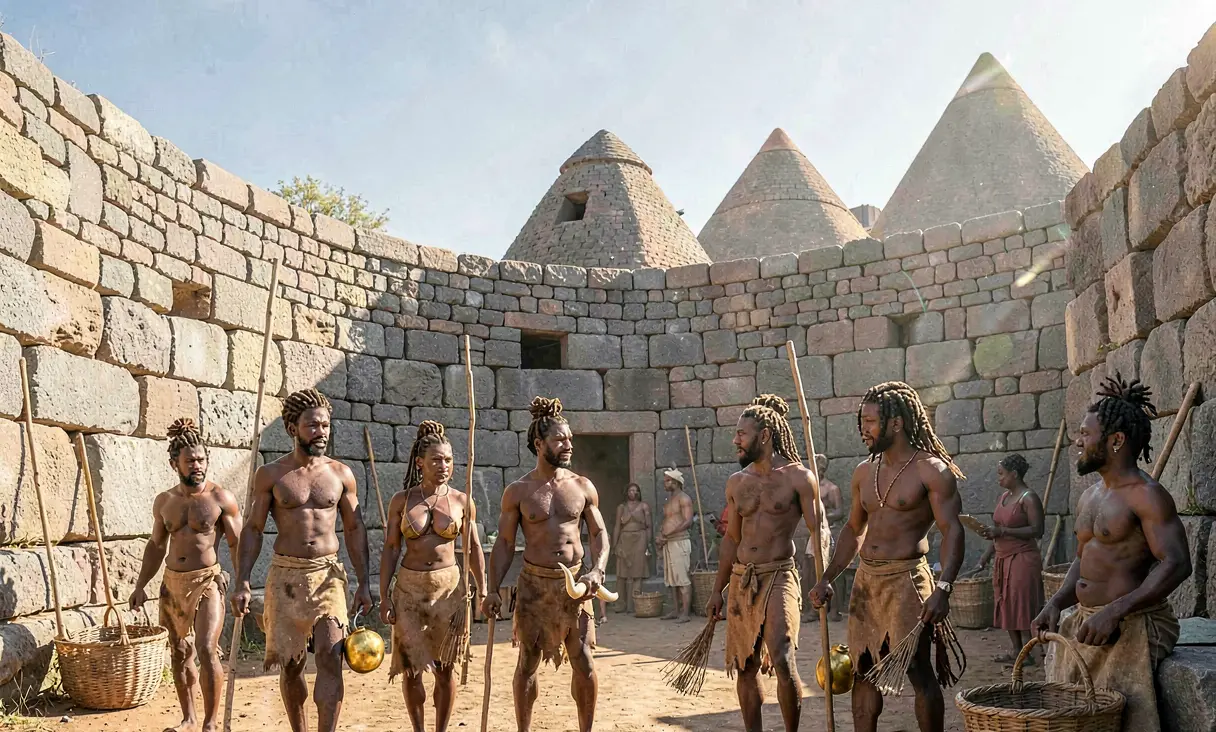
Construction and Peak of Great Zimbabwe
Great Zimbabwe stands as Africa's largest pre-colonial stone city, proving the existence of a wealthy Shona empire that dominated Indian Ocean trade networks by 1200 CE.
Rise of the Shona Civilization
Emerging from the fertile plateau of southern Africa, the Shona people established a sophisticated society that would redefine pre-colonial urbanism. By the 11th century, the region known as Zimbabwe had transitioned from scattered pastoral settlements to a centralized polity capable of mobilizing vast labor forces. This transformation was driven by the convergence of agricultural surplus, cattle herding, and the strategic control of mineral resources, particularly gold. The political center shifted from the earlier Leopard's Kopje culture to the site that would become Great Zimbabwe, situated at a critical juncture between the interior highlands and the Indian Ocean trade networks.
Architectural Mastery: The Stone Cities
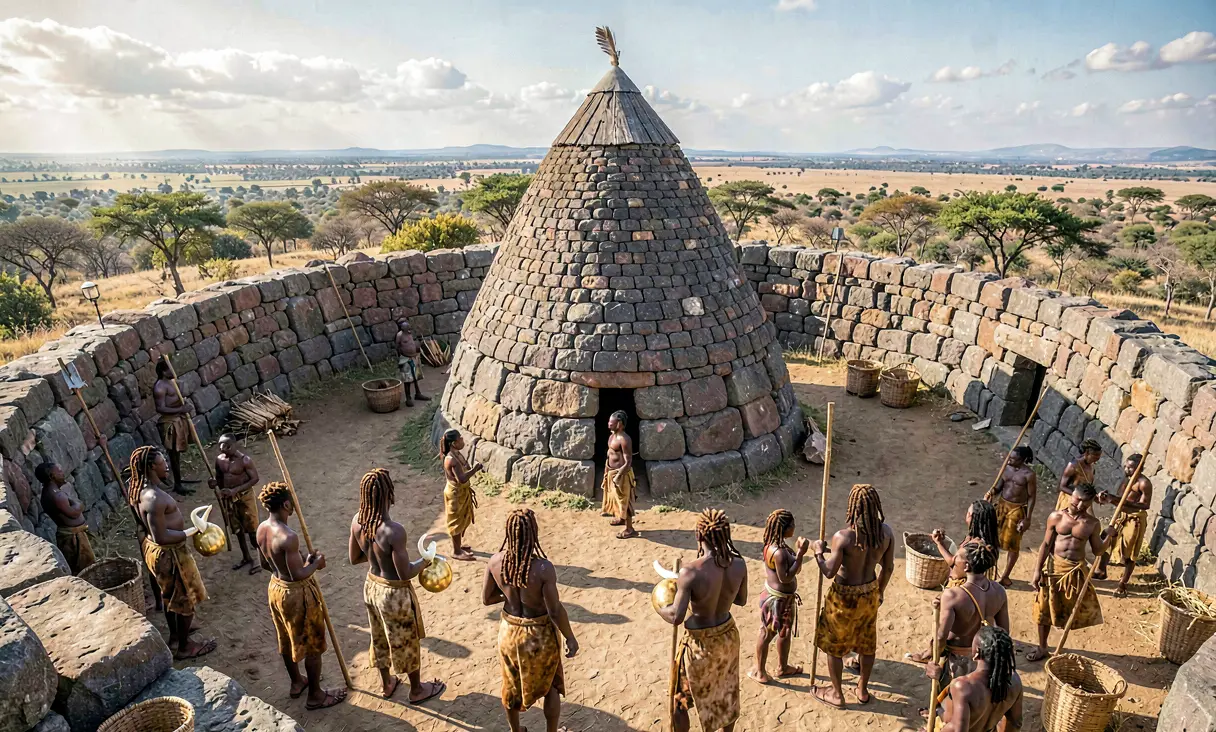
Around 1200 CE, Great Zimbabwe reached its zenith as an architectural marvel constructed entirely of granite blocks without mortar. The site comprises three distinct areas: the Hill Complex, likely a religious or royal residence; the Valley Complex for the general populace; and the monumental Great Enclosure. This latter structure features walls rising up to 11 meters high, enclosing a conical tower that stands as a unique symbol of Shona authority. The precision of the dry-stone masonry, utilizing carefully shaped blocks fitted so tightly that no blade could pass between them, demonstrates an advanced understanding of engineering and structural integrity unmatched in sub-Saharan Africa at the time.
The Munhumutapa Empire and Trade Networks
At its peak, Great Zimbabwe served as the capital of the Munhumutapa Empire, a vast political entity ruled by a divine king known as the Mwene Mutapa. The city's wealth was derived not from agriculture alone but from its dominance over the gold and ivory trade routes connecting the interior to the Swahili coast cities like Kilwa Kisiwani and Sofala. Archaeological excavations have uncovered a treasure trove of foreign artifacts, including Chinese porcelain from the Song and Yuan dynasties, Persian glass beads, and Indian cotton textiles. These items confirm that Great Zimbabwe was a pivotal node in a global economic network, linking the African interior to the markets of Asia and the Middle East.
Societal Structure and Demographics
Estimates suggest that at its height between 1200 and 1450 CE, Great Zimbabwe supported a population of approximately 18,000 inhabitants, making it one of the largest cities in Africa south of the Sahara. The social hierarchy was rigidly stratified, with the ruling elite residing within the stone walls while commoners lived in mud-brick huts in the surrounding valley. The city functioned as a major religious and economic hub where cattle played a central role in both wealth accumulation and ritual sacrifice. The concentration of population required complex resource management systems to sustain water supplies and food production, reflecting a highly organized administrative apparatus.
Decline and Abandonment
The decline of Great Zimbabwe began in the mid-15th century, precipitated by a combination of environmental stress and shifting geopolitical dynamics. Overgrazing and deforestation likely degraded the local environment, reducing the land's capacity to support such a dense population. Simultaneously, trade routes shifted northward toward the Zambezi Valley, diminishing the city's economic centrality. By 1450 CE, the site was largely abandoned as the political center moved to Khami and later to the Mutapa state further north. The stone structures were left to slowly crumble into the bush, their origins obscured by centuries of colonial myth-making that denied African agency in their construction.
Enduring Legacy and Historical Reclamation
The rediscovery of Great Zimbabwe in the late 19th century sparked intense controversy, with European colonizers initially attributing the ruins to foreign builders like the Phoenicians or Arabs. It was not until rigorous archaeological work by Gertrude Caton-Thompson in the 1920s that the indigenous Shona origin was definitively proven. Today, Great Zimbabwe stands as a UNESCO World Heritage site and the namesake of the modern nation of Zimbabwe, serving as a powerful symbol of African civilization, sovereignty, and cultural continuity. The conical tower remains an iconic national emblem, featured on the flag and currency, representing a reclamation of history that had been suppressed for centuries.
Demonstrates sophisticated indigenous African urban planning and complex international trade networks independent of external colonization.

Where it happened
Great Zimbabwe, Zimbabwe — see it on the interactive map →
Explore related history
 CivilizationEmergence of Norte Chico Urban Centersc. 3000 BCE · Caral-Supe Valley, PeruThe Norte Chico civilization establishes the oldest known cities in the Americas.
 CivilizationUrban Planning of Mohenjo-daroc. 2600 BCE · Mohenjo-daro, PakistanThe Indus Valley Civilization constructs Mohenjo-daro with advanced grid systems and the world's first known urban sanitation.
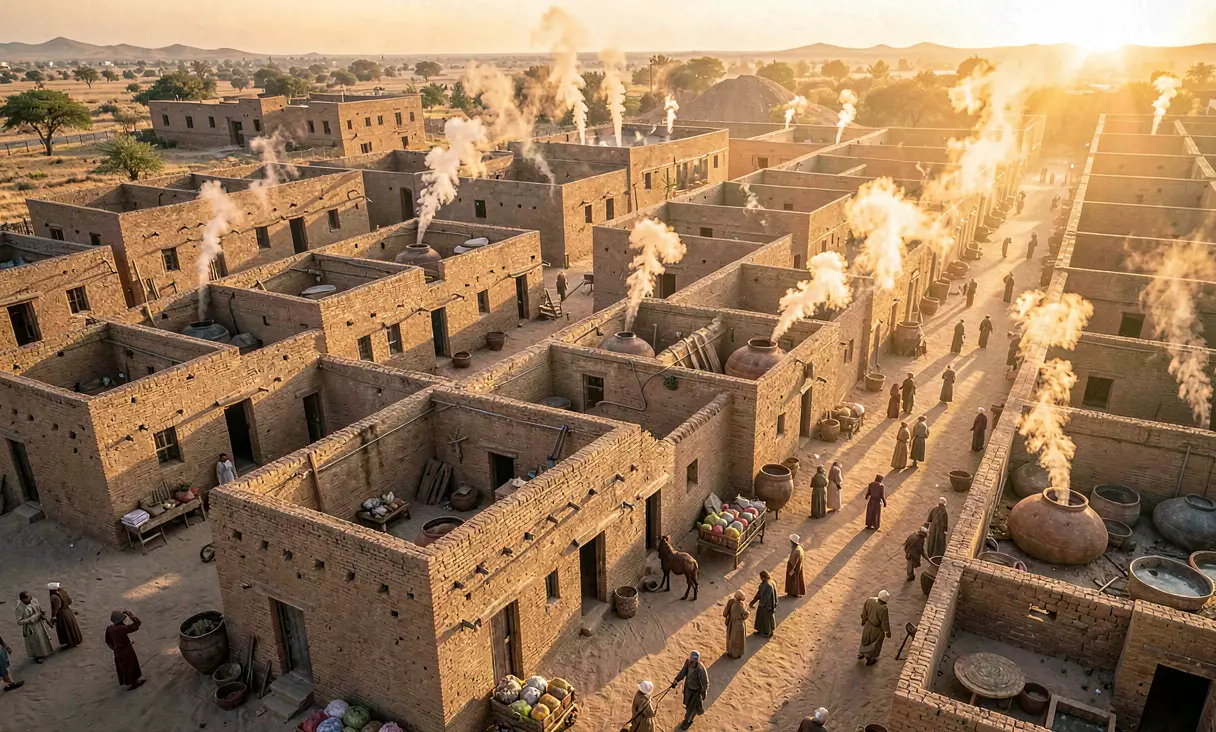 CivilizationUrbanization of Harappa and Mohenjo-daroc. 2600 BCE · Harappa and Mohenjo-daro, Indus Valley (modern Pakistan)The mature Harappan phase begins, establishing the first large-scale urban centers in South Asia with advanced grid planning.
 ReligionZoroaster Preaches Dualistic Monotheismc. 1200 BCE · Greater Khorasan, Iran/Afghanistan border regionThe prophet Zoroaster establishes a dualistic faith emphasizing the cosmic struggle between good and evil in ancient Persia.
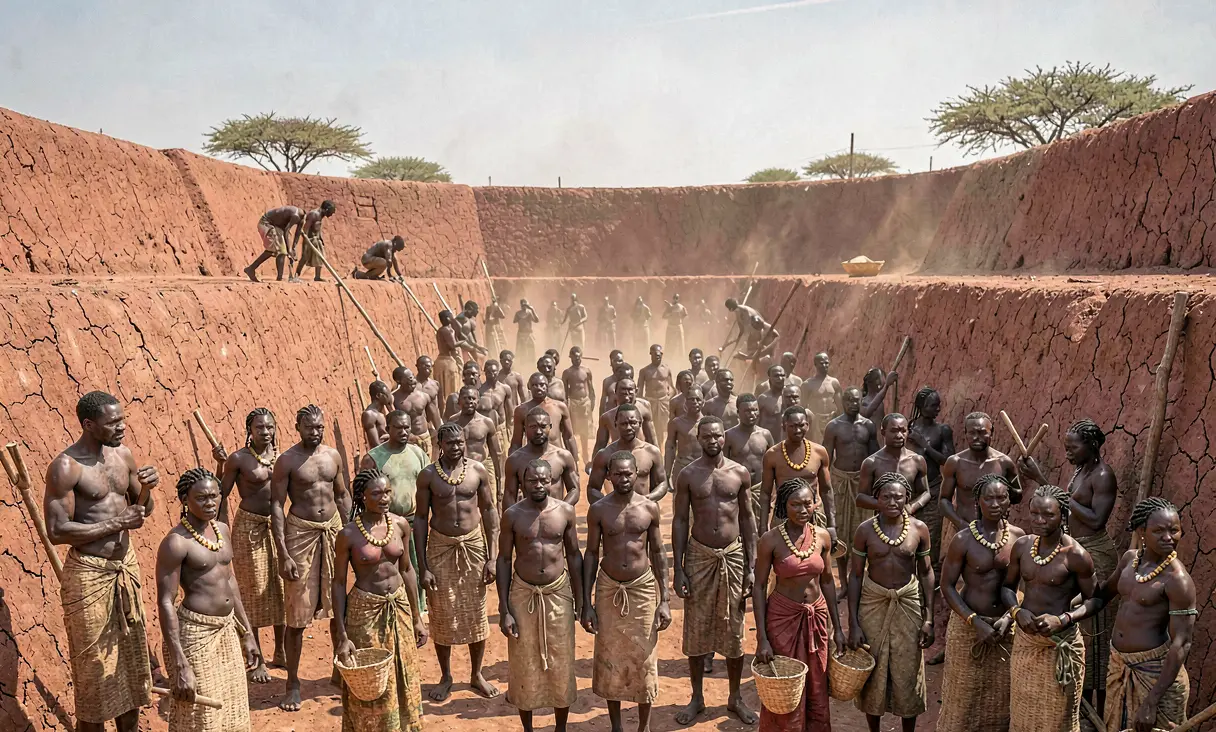 TechnologyConstruction of the Benin Walls Beginsc. 1200 CE · Benin City, NigeriaMassive earthwork fortifications begin to encircle Benin City, creating one of the world's largest pre-modern structures.
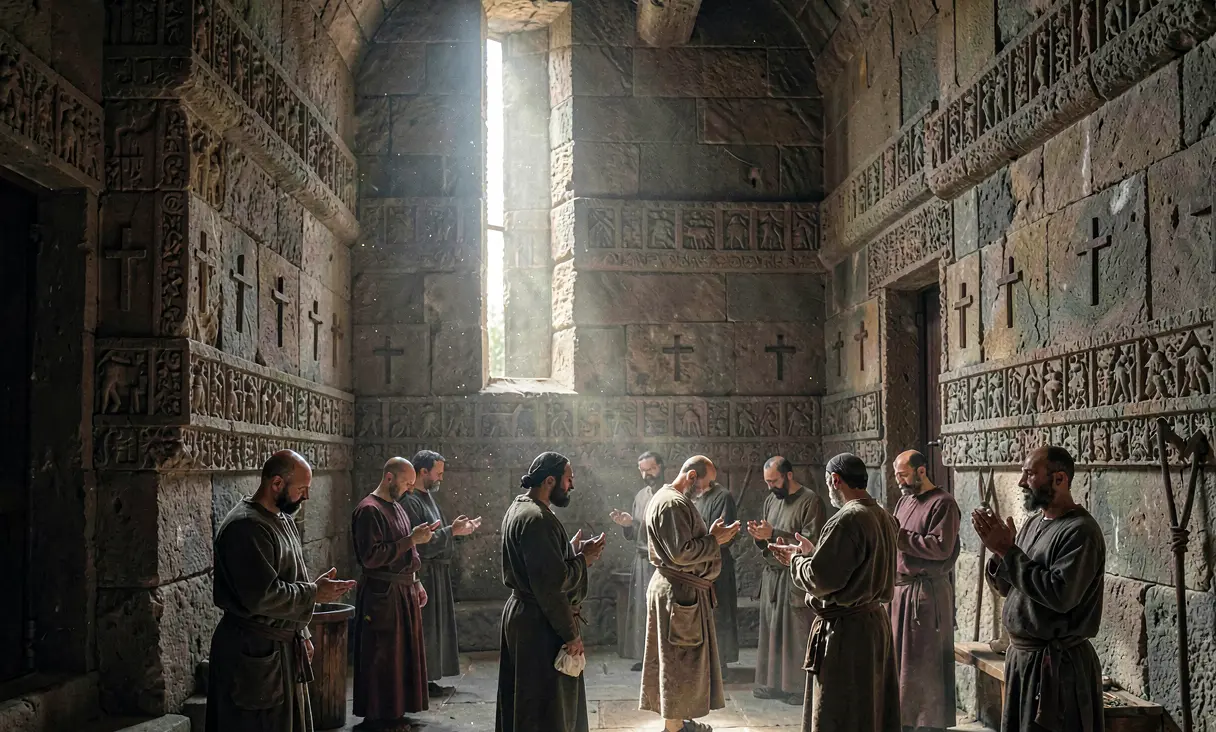 ArtRock-Hewn Churches of Lalibela Completedc. 1200 CE · Lalibela, EthiopiaKing Lalibela commissions the construction of monolithic rock-hewn churches as a 'New Jerusalem'.
Discussion
Loading…