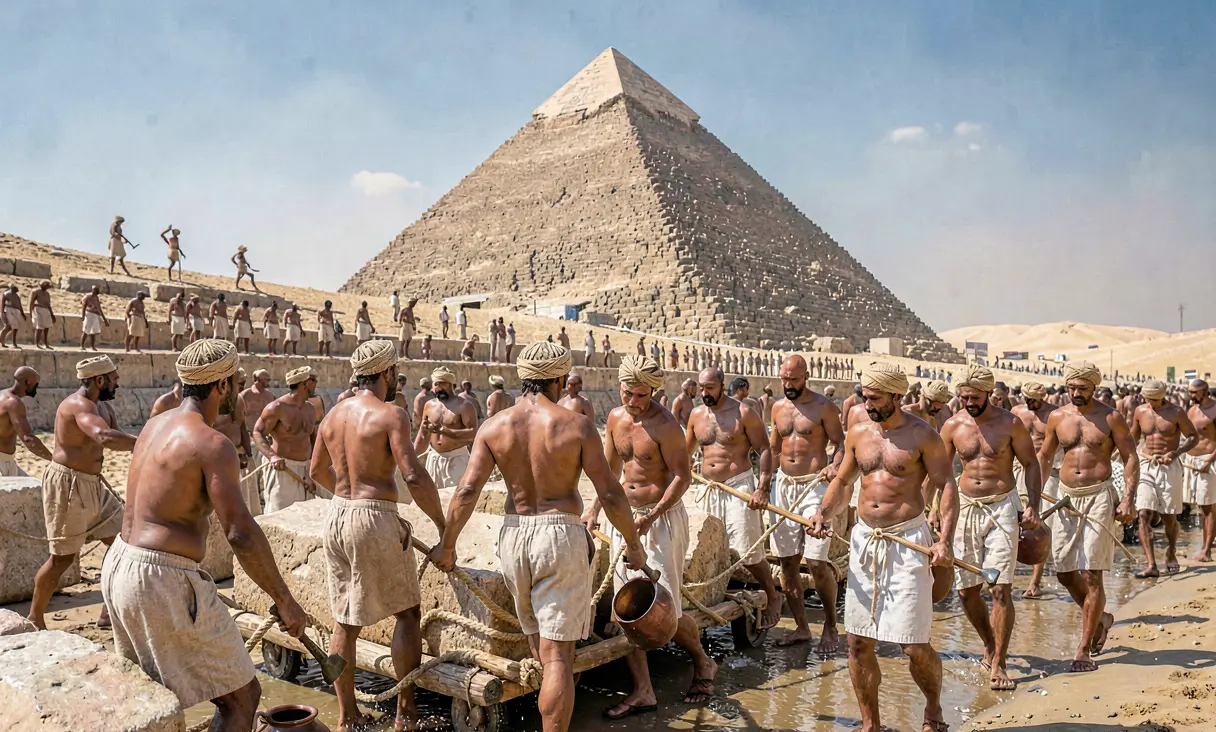
Great Pyramid of Giza Built
Built c. 2560 BCE for Khufu, this engineering marvel unified thousands of workers to create the world's oldest surviving wonder, defining the peak of Old Kingdom power.
Context of the Old Kingdom
By the mid-26th century BCE, Ancient Egypt had consolidated into a highly centralized state under the Fourth Dynasty. This era, often termed the 'Age of Pyramids,' represented the zenith of royal authority and administrative capability. The pharaoh was not merely a political ruler but a living god, whose ability to command vast resources reflected his divine status. In this climate of absolute monarchy, monumental architecture became the primary medium for expressing cosmic order (ma'at) and securing the king's eternal existence.
The Commissioning of Khufu
Around 2560 BCE, Pharaoh Khufu, the second ruler of the Fourth Dynasty, initiated the construction of his funerary complex on the Giza plateau. Unlike earlier mastaba tombs or the step pyramid of Djoser at Saqqara, Khufu demanded a true pyramid—a geometric perfection intended to serve as a ramp for the king's soul to ascend to the stars. The project required unprecedented engineering precision; the Great Pyramid was designed with a base covering approximately 13 acres and an original height of 146.6 meters (481 feet), making it the tallest man-made structure in history for over 3,800 years.
Engineering and Labor Logistics
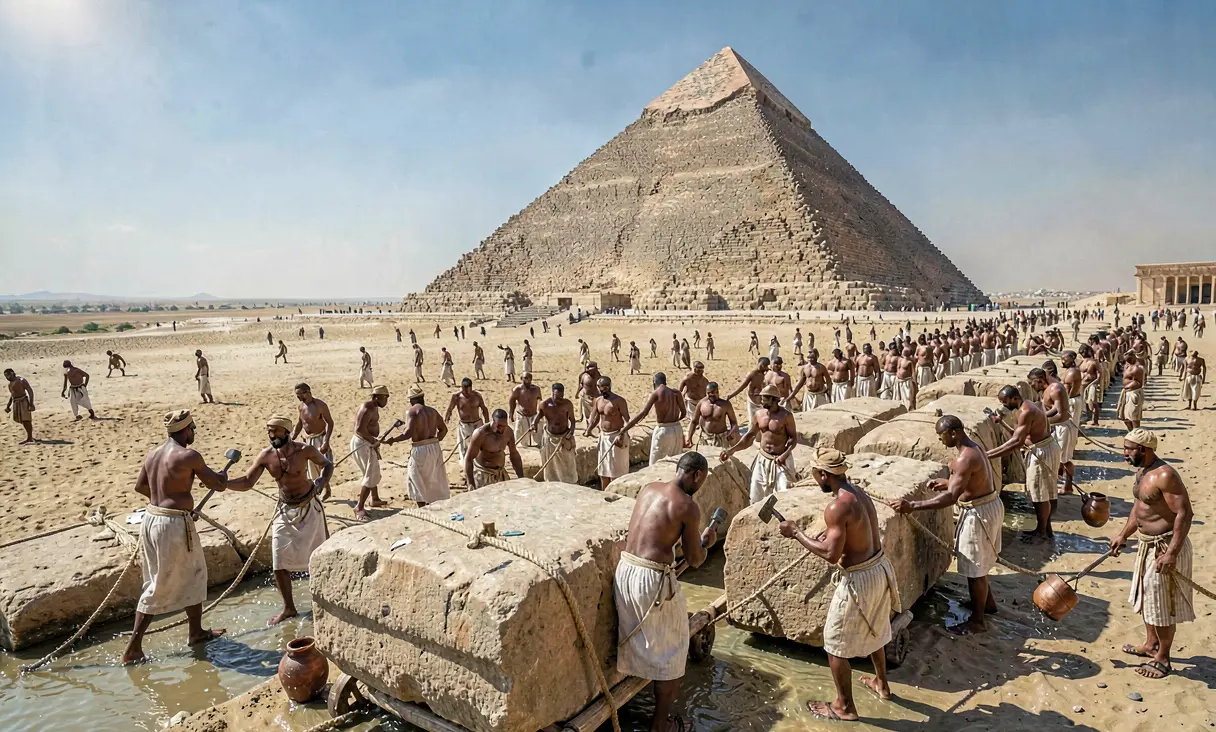
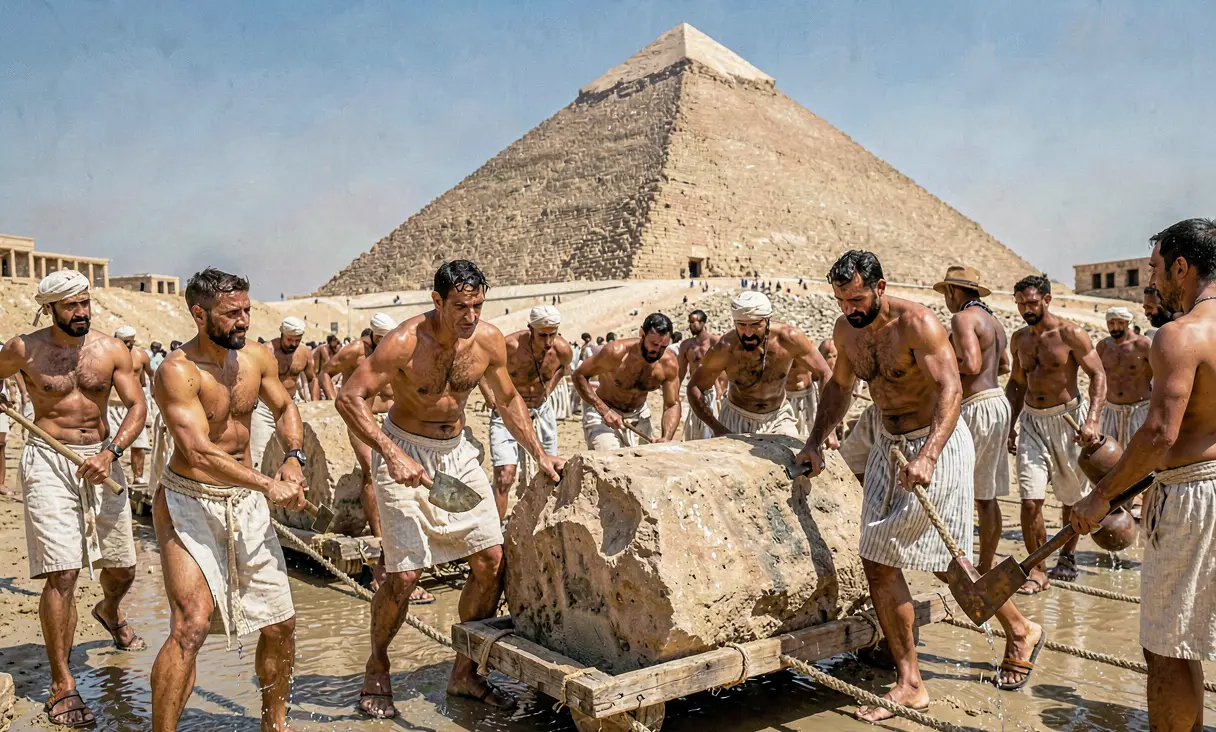
Contrary to later Greek myths of slave labor, archaeological evidence from worker villages at Giza indicates a workforce of skilled artisans and conscripted farmers working in rotating shifts. Estimates suggest 20,000 to 30,000 laborers were employed over a period of roughly twenty years. These workers utilized copper chisels, stone hammers, and wooden sledges to move an estimated 2.3 million limestone and granite blocks, some weighing up to 80 tons. The alignment with the cardinal points is accurate to within three-sixtieths of a degree, achieved through sophisticated astronomical observation.
The Construction Process
The construction relied on complex ramp systems—likely straight or zigzagging earthen ramps—to haul stones from quarries on the Nile and local plateaus. Internal chambers were carved with precision, including the Grand Gallery and the King's Chamber, which houses a sarcophagus of red Aswan granite. The outer casing was originally clad in highly polished white Tura limestone, giving the structure a blindingly bright appearance that shimmered under the desert sun. This logistical feat required a centralized bureaucracy capable of feeding, housing, and organizing thousands of workers while managing supply chains across the Nile Valley.
Completion and Royal Ascension
Upon Khufu's death, likely around 2540 BCE, the pyramid was completed and sealed. It functioned as a resurrection machine within a larger mortuary complex that included temples, causeways, and smaller satellite pyramids for his queens. The structure was designed to protect the king's mummy and grave goods from tomb robbers while facilitating his transformation into an akh (effective spirit). Although the interior has been looted since antiquity, the sheer scale of the monument ensured that Khufu's name and divine status remained indelibly etched in human memory.
Legacy and Enduring Symbolism
The Great Pyramid stands as the sole surviving member of the Seven Wonders of the Ancient World, a testament to the organizational genius of the Old Kingdom. It symbolizes the peak of centralized power in early civilization, demonstrating that human societies could mobilize resources on a massive scale long before the invention of modern machinery. Today, it remains a global icon of ancient engineering and a primary source for understanding the religious and political complexities of Pharaonic Egypt.
It stands as an enduring testament to ancient Egyptian engineering and political organization.
Where it happened
Giza, Egypt — see it on the interactive map →
Explore related history
 CivilizationEmergence of Norte Chico Urban Centersc. 3000 BCE · Caral-Supe Valley, PeruThe Norte Chico civilization establishes the oldest known cities in the Americas.
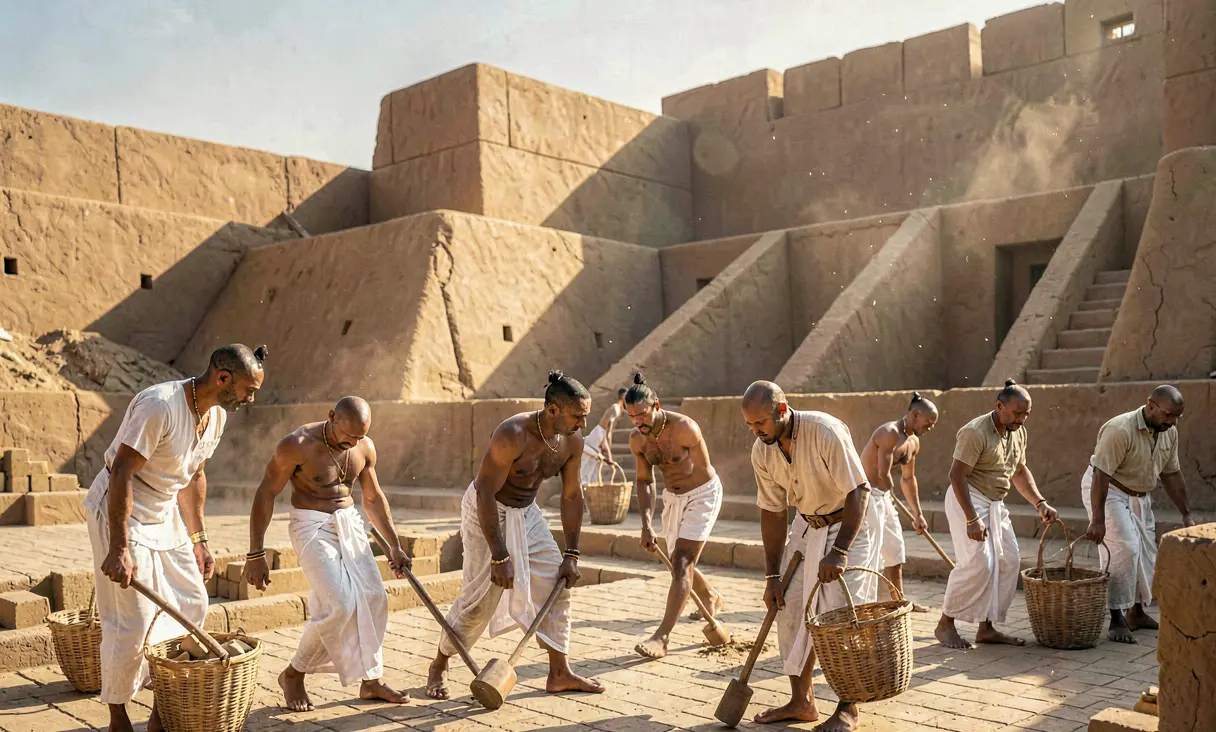 CivilizationUrban Planning of Mohenjo-daroc. 2600 BCE · Mohenjo-daro, PakistanThe Indus Valley Civilization constructs Mohenjo-daro with advanced grid systems and the world's first known urban sanitation.
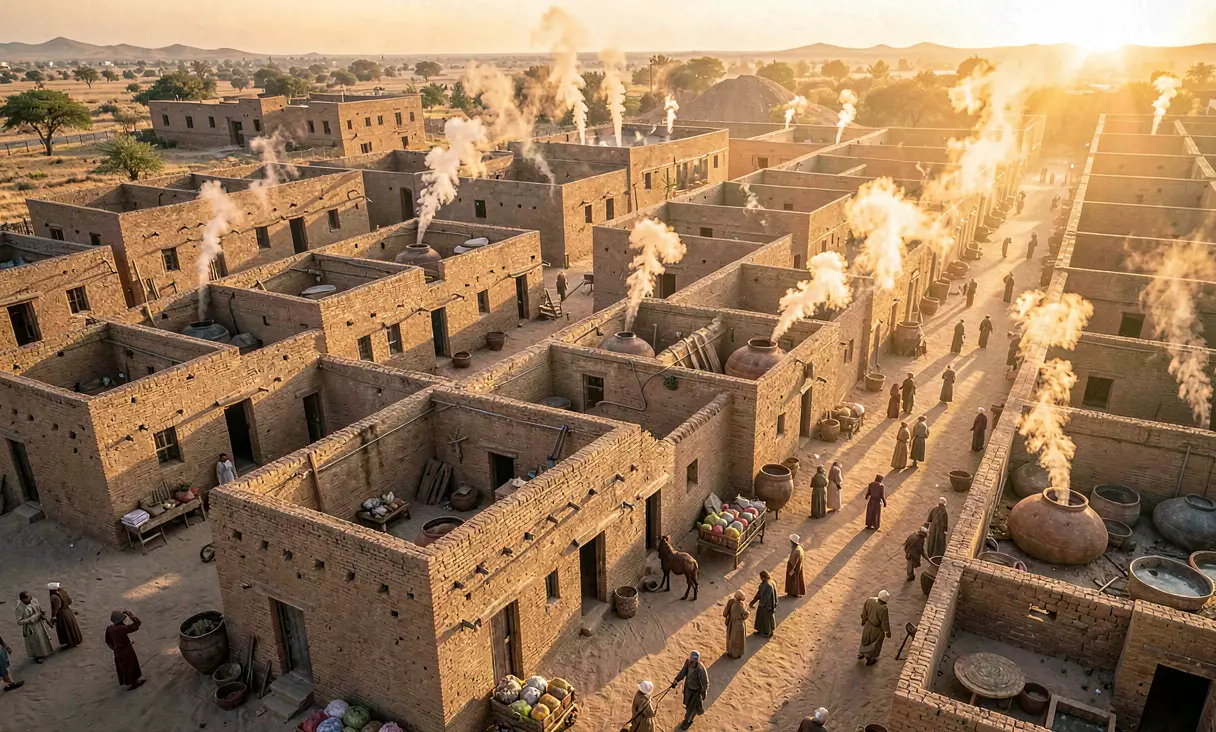 CivilizationUrbanization of Harappa and Mohenjo-daroc. 2600 BCE · Harappa and Mohenjo-daro, Indus Valley (modern Pakistan)The mature Harappan phase begins, establishing the first large-scale urban centers in South Asia with advanced grid planning.
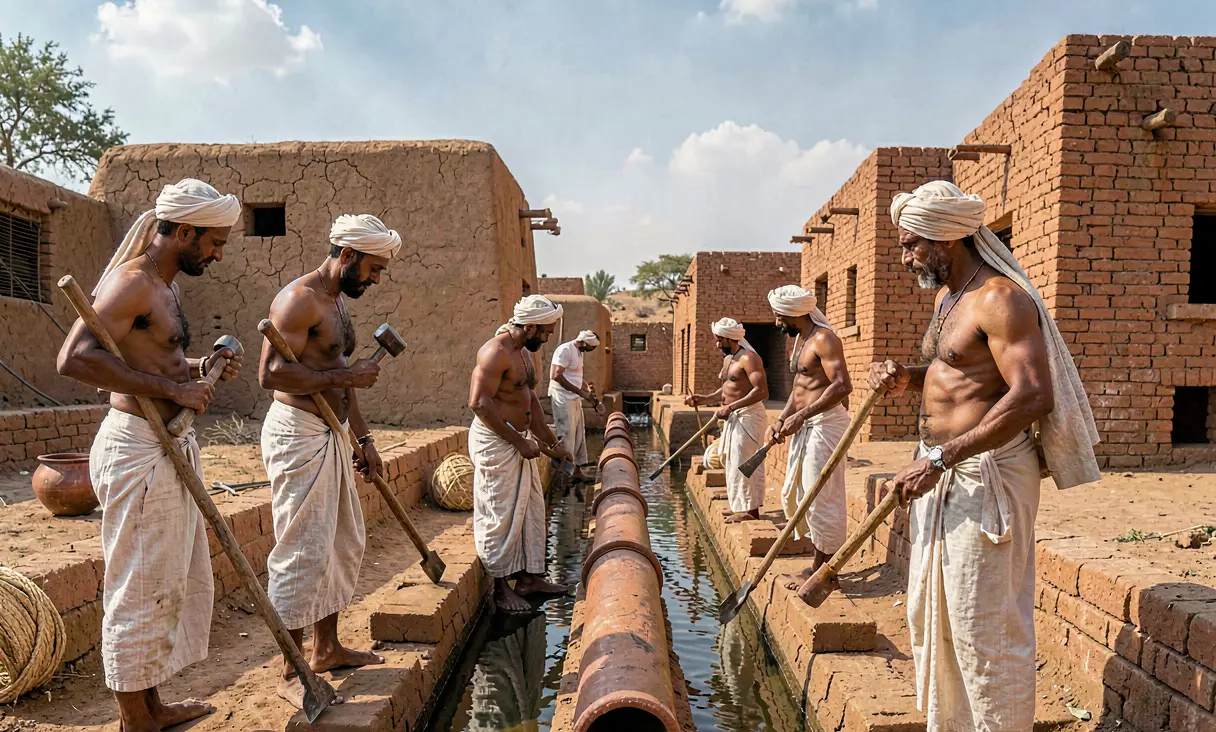 TechnologyAdvanced Irrigation Systems of the Indus Valley Civilizationc. 2600 BCE · Harappa, PakistanEngineers construct sophisticated canal networks and water reservoirs for urban agriculture.
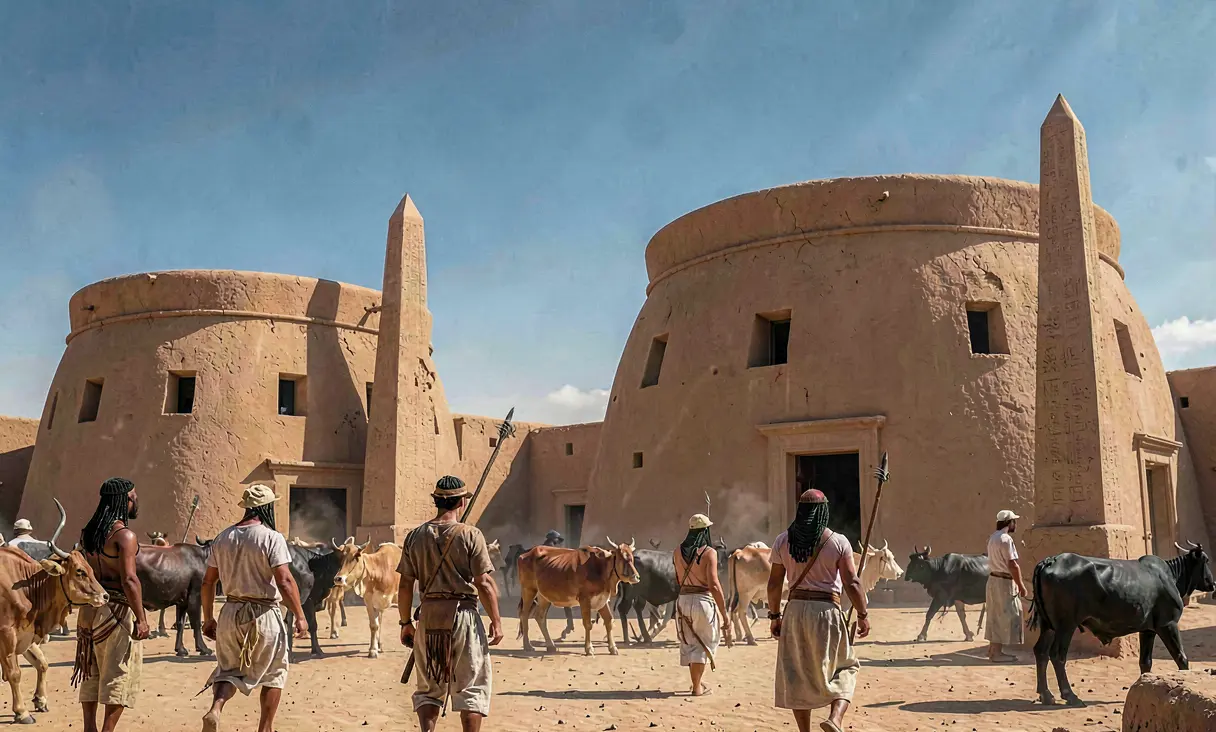 CivilizationRise of the Kingdom of Kush at Kermac. 2500 BCE · Kerma, SudanThe Kingdom of Kush emerges in Nubia as a powerful rival to Egypt with unique monumental architecture and trade networks.
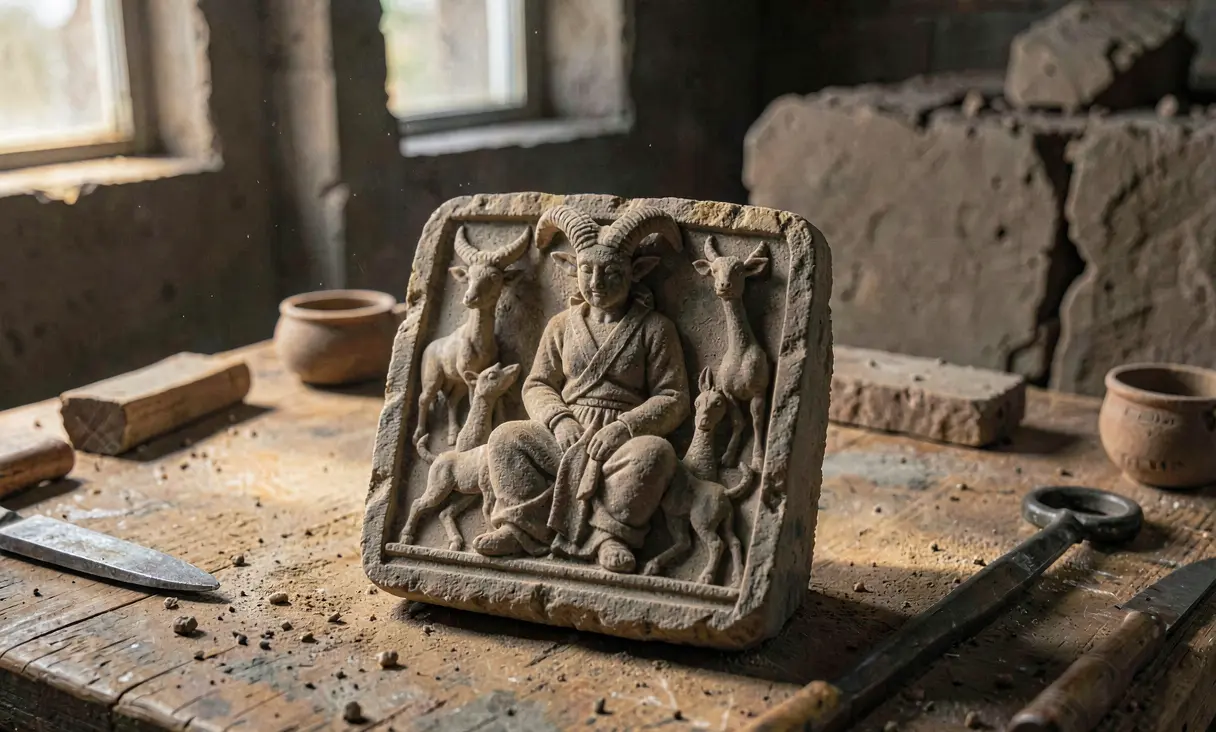 ReligionDiscovery of the Pashupati Sealc. 2500 BCE · Mohenjo-daro, Indus Valley (modern Pakistan)The Pashupati seal is carved, depicting a seated figure surrounded by animals, likely an early prototype of the Hindu god Shiva.
Discussion
Loading…