Great Famine of India (1876-1878)
Driven by El Niño drought and British laissez-faire policies, this famine killed six million Indians, exposing colonial brutality and igniting the Indian nationalist movement.
The Meteorological Catalyst
In the late summer of 1876, a catastrophic failure of the southwest monsoon struck the Deccan Plateau and Madras Presidency, marking the onset of one of the deadliest famines in human history. This meteorological disaster was not an isolated anomaly but part of a global El Niño-Southern Oscillation event that simultaneously caused droughts from Brazil to China. By November 1876, rainfall had ceased entirely across vast swathes of southern India, causing crops to wither and water sources to evaporate. The region, heavily dependent on rain-fed agriculture, faced an immediate collapse in food production, setting the stage for a humanitarian catastrophe that would soon engulf millions.
Colonial Policy and Laissez-Faire Economics
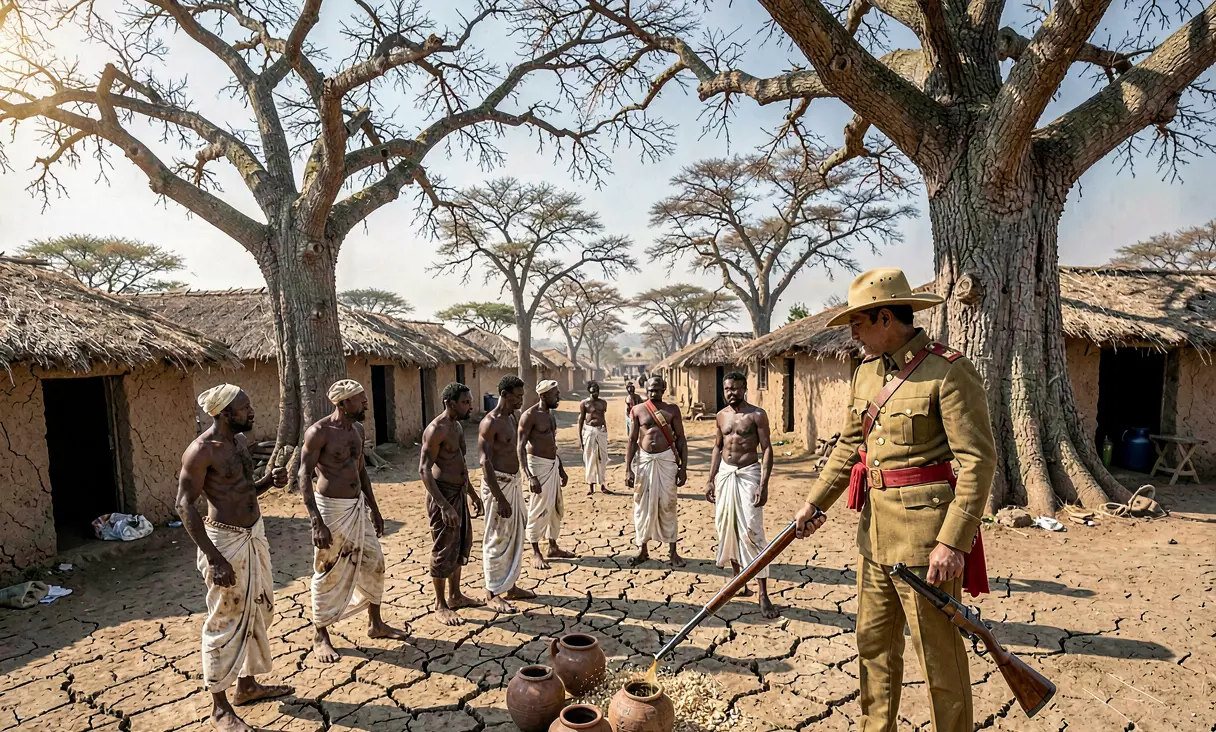
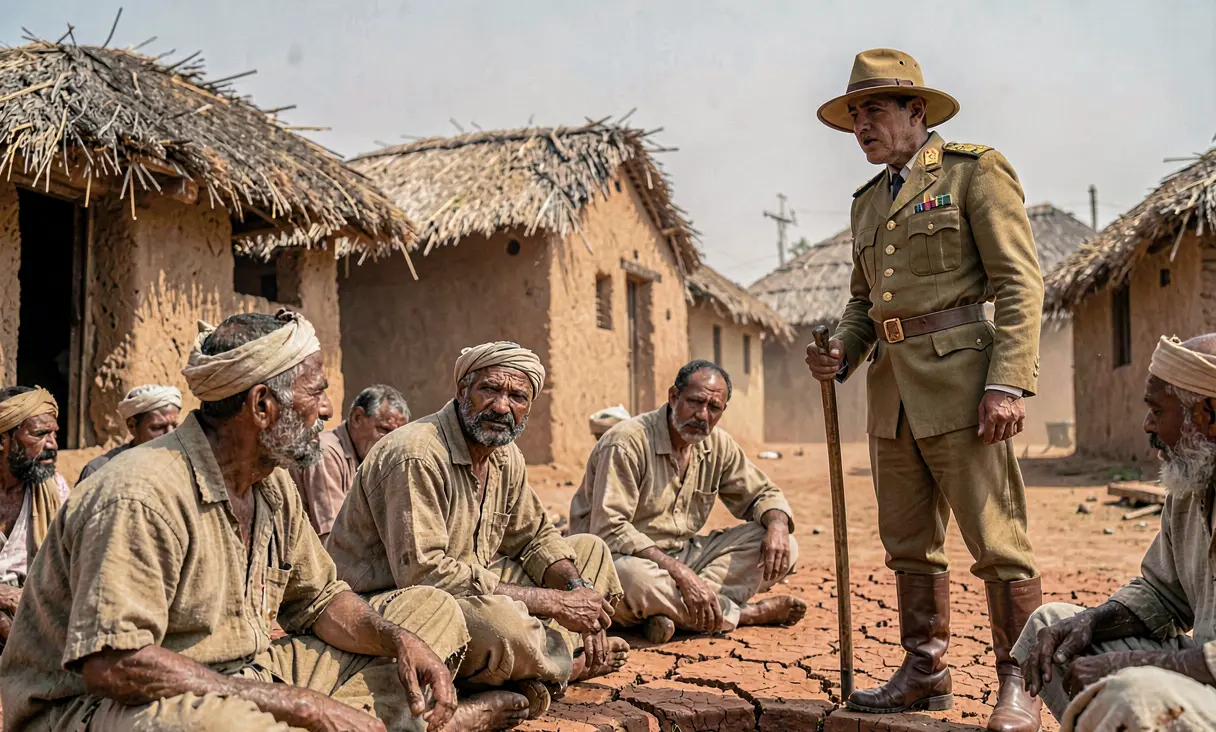
While the drought was natural, the scale of the death toll was profoundly exacerbated by British colonial administration. Adhering rigidly to laissez-faire economic principles, the Viceroy, Lord Lytton, and his subordinates refused to halt grain exports from India to Britain or neighboring regions, arguing that market forces should dictate distribution. Despite early warnings from local officials like Sir Richard Temple in Madras, the central government maintained that free trade would ensure food reached those who could pay for it. This ideological rigidity meant that while millions starved, Indian grain continued to flow out of ports like Bombay and Karachi, fueling British markets during a period of domestic plenty.
The Mechanics of Starvation
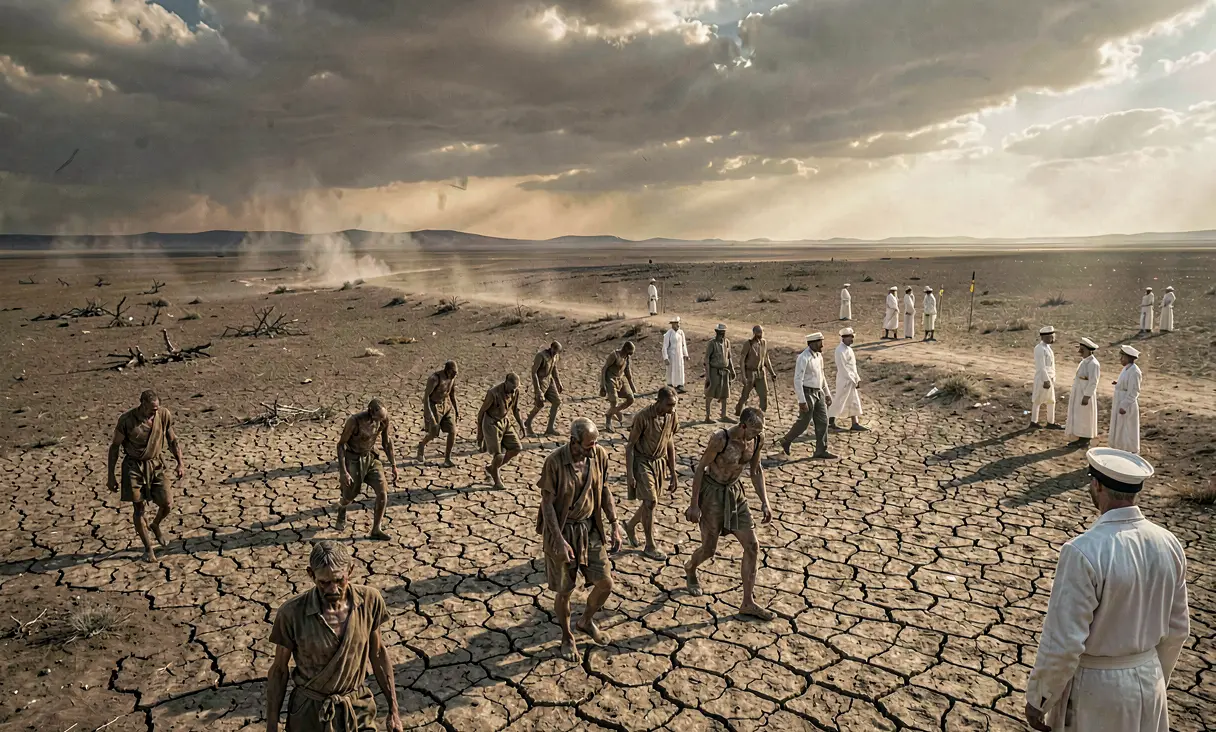
As the famine deepened through 1877, the human cost became visible in the horrific scenes across the Carnatic and Mysore regions. The government eventually established relief camps, but under Temple's strict administration, rations were reduced to a bare minimum—often just one pound of rice per day—and labor was mandatory for recipients. This 'Temple Wage' system forced emaciated survivors to perform grueling physical work to earn their meager sustenance, leading to further exhaustion and death. The camps became known as 'death camps' by the local population, where disease ran rampant among the weakened populace, turning survival into a statistical impossibility for many.
The Human Toll and Demographic Collapse
By the time the rains returned in late 1878, the devastation was absolute. Historical estimates place the death toll at approximately 6 million people, with some modern demographic studies suggesting figures as high as 10 million when accounting for excess mortality in surrounding areas. Entire villages were depopulated, leaving behind only skeletal remains and abandoned homesteads. The famine disproportionately affected the peasantry and lower castes, who lacked the financial reserves to purchase food at inflated market prices. In the Madras Presidency alone, mortality rates reached staggering proportions, fundamentally altering the demographic landscape of southern India for generations.
Political Awakening and Nationalist Sentiment
The Great Famine served as a crucible for Indian nationalism, exposing the moral bankruptcy of colonial rule to both Indians and the British public. Figures like Dadabhai Naoroji began articulating the 'drain theory,' arguing that British economic policies were systematically extracting wealth from India, leaving it vulnerable to such disasters. The silence of the British press regarding the famine's severity, contrasted with the vivid accounts provided by Indian intellectuals and missionaries, eroded the myth of benevolent colonial stewardship. This period saw the first organized political demands for self-governance and accountability, laying the intellectual groundwork for the Indian National Congress, founded in 1885.
Legacy and Historical Reckoning
The legacy of the Great Famine of 1876-1878 extends far beyond its immediate death toll; it stands as a defining moment in the history of colonialism and humanitarian crisis. It forced a reevaluation of British imperial policy, eventually leading to the establishment of the Famine Commission of 1880, which recommended better relief measures and irrigation projects, though often too late for many victims. The event remains a potent symbol of the intersection between environmental disaster and political negligence, illustrating how economic dogma can transform a natural drought into a man-made genocide. It continues to inform contemporary debates on food security, colonial responsibility, and the ethics of governance.
It highlighted the deadly consequences of colonial economic policies during natural disasters and fueled Indian nationalism.
Where it happened
Southern India — see it on the interactive map →
Explore related history
 DisasterWall Street Crash and Great DepressionOctober 29, 1929 · New York City, USAStock market crash triggers the worst global economic depression in history.
 ArtCreation of The Starry NightJune 1889 · Saint-Rémy-de-Provence, FranceVincent van Gogh paints his most famous masterpiece from an asylum window.
 SciencePublication of Origin of SpeciesNovember 24, 1859 CE · London, EnglandCharles Darwin proposes natural selection as the mechanism for evolution of life.
 WarSecond Boer War BeginsOctober 11, 1899 · Pretoria, South AfricaBritish Empire fights Boer republics, introducing concentration camps.
Discussion
Loading…