
Construction of Gobekli Tepe
Built by hunter-gatherers before agriculture, this 9500 BCE Anatolian sanctuary proves organized religion drove the creation of civilization, not settled farming.
A Paradigm Shift in Prehistory
In the rolling hills of southeastern Anatolia, near modern-day Şanlıurfa, Turkey, a discovery has fundamentally upended the traditional timeline of human civilization. For decades, the prevailing historical narrative held that agriculture was the prerequisite for complex society: humans settled down to farm, which allowed for population growth, social stratification, and eventually the construction of monumental religious sites. Göbekli Tepe, constructed beginning around 9500 BCE during the Pre-Pottery Neolithic A period, shatters this linear progression. This site demonstrates that organized religion and the ability to mobilize massive labor forces existed among hunter-gatherers long before the domestication of plants or animals, suggesting that spiritual necessity may have driven the transition to agriculture rather than the reverse.
The Landscape of the Urfa Region
The site is situated on a mountain ridge in the Germuş mountains, overlooking the Harran plain. Before its excavation began in 1995 under the direction of German archaeologist Klaus Schmidt, the location was known locally as 'Göbekli Tepe' (Potbelly Hill) and was dismissed by farmers as an ancient cemetery or a natural formation. The geological context is crucial; the area was rich in wild cereals like einkorn wheat and barley, providing a fertile backdrop for the hunter-gatherer groups who would eventually settle there. Unlike later Neolithic sites such as Çatalhöyük, which show clear signs of domestic habitation, Göbekli Tepe lacks evidence of permanent dwellings, hearths, or storage facilities, reinforcing its identity as a purely ceremonial center.
Engineering the First Monument
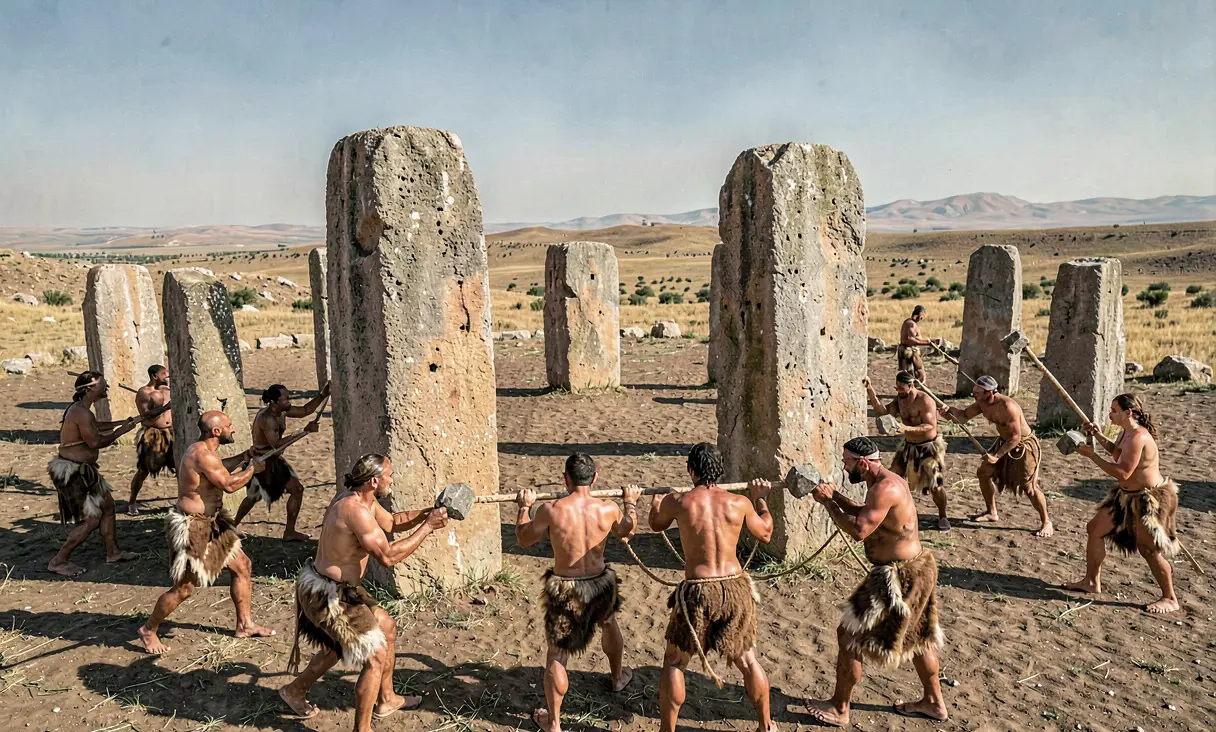
The construction of Göbekli Tepe represents an unprecedented feat of engineering for the Paleolithic era. The builders quarried massive T-shaped limestone pillars directly from local bedrock, some weighing up to 20 tons and standing as high as 5.5 meters. These pillars were arranged in circular enclosures, with two central monoliths surrounded by a ring of smaller stones, all connected by low walls made of dry-stone masonry. The precision required to carve these pillars is staggering; they feature intricate bas-relief sculptures of foxes, snakes, cranes, wild boars, and spiders, executed with tools likely made of flint and obsidian. The sheer volume of stone moved suggests a coordinated workforce numbering in the hundreds, organized by a social hierarchy capable of planning and executing projects over generations.
Ritual Life Before the Plow
Archaeological evidence indicates that the site was not inhabited but visited for ritualistic purposes. Excavations have uncovered vast quantities of animal bones, primarily from wild species like gazelle and aurochs, suggesting large-scale communal feasting rather than daily subsistence. The lack of domesticated plant remains until later phases confirms that the builders were still reliant on hunting and gathering. The iconography is deeply symbolic; the T-shaped pillars are widely interpreted as stylized anthropomorphic figures, possibly representing ancestors or deities, with the arms and hands carved in low relief at the waist level. This suggests a complex cosmology where the community gathered to honor the spiritual realm, perhaps seeking to control the forces of nature that would eventually lead them to domesticate their food sources.
Abandonment and Burial
Around 8000 BCE, after more than a millennium of use, the site was deliberately dismantled and buried. The pillars were carefully covered with earth and debris, preserving them in an almost pristine state for nearly ten thousand years. This intentional burial remains one of archaeology's most intriguing mysteries; it may have been a ritual act to seal the sacred space or a response to shifting social dynamics as Neolithic villages began to emerge elsewhere. By the time the site was rediscovered in the late 20th century, it stood as a silent testament to a forgotten era, its purpose obscured by millennia of sediment until Schmidt and his team uncovered the first circle of pillars.
Legacy: Rewriting Human History
The significance of Göbekli Tepe extends far beyond its physical grandeur; it has rewritten the textbook definition of human development. It proves that the capacity for complex social organization and monumental architecture predates agriculture, challenging the notion that settled life was the sole catalyst for civilization. The site implies that the drive to worship and create shared myths was a primary engine for human cooperation, potentially necessitating the agricultural surplus required to feed such large gatherings. As the oldest known megalithic structure in the world, predating Stonehenge by roughly 6,000 years and the Egyptian pyramids by nearly 7,000, Göbekli Tepe stands as the dawn of human spirituality and the first great experiment in urbanization.
It proves complex religious organization and monumental architecture emerged prior to agricultural settlement.

Where it happened
Sanliurfa, Turkey — see it on the interactive map →
Explore related history
 PrehistoryFirst Human Settlement of Australiac. 65,000 BCE · Central AustraliaFirst humans arrive in Sahul via sea crossings, marking the earliest migration out of Africa into Oceania.
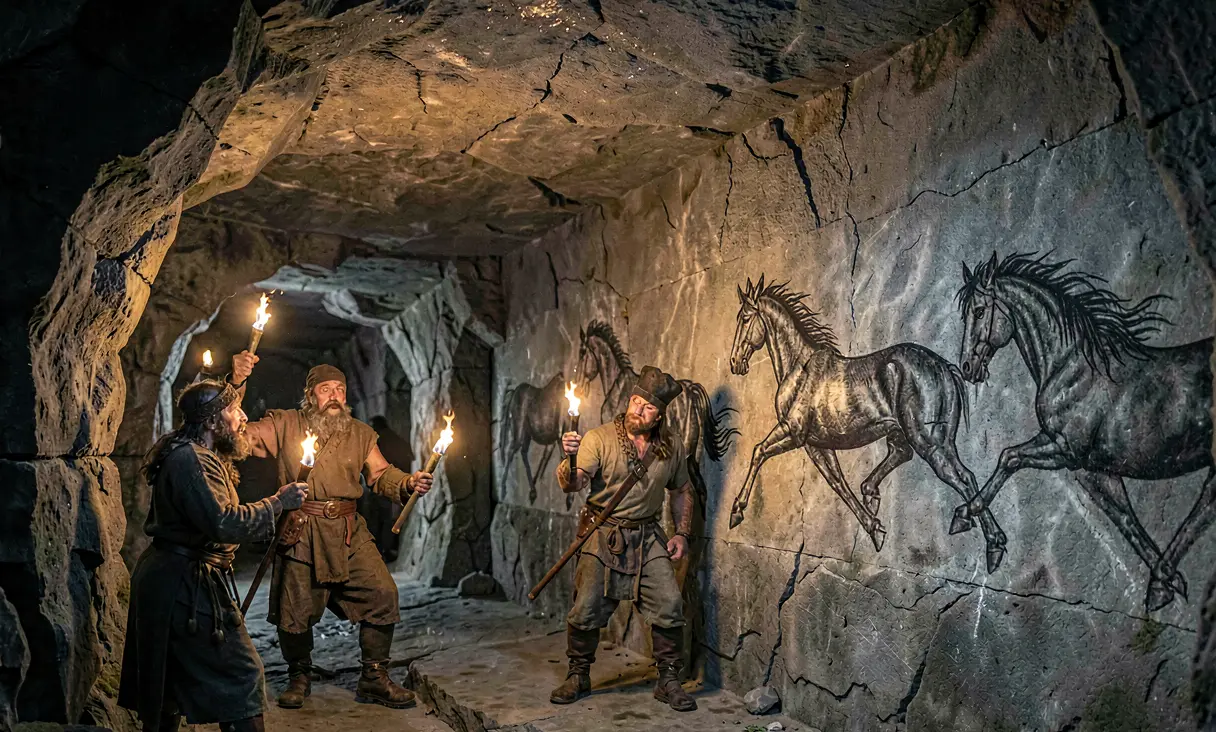 PrehistoryCreation of Chauvet Cave Paintingsc. 30,000 BCE · Vallon-Pont-d'Arc, FranceEarly humans create sophisticated animal paintings in deep limestone caves.
 PrehistoryLascaux Cave Paintings Createdc. 17,000 BCE · Dordogne, FranceUpper Paleolithic artists create stunning animal frescoes deep inside limestone caves using natural pigments.
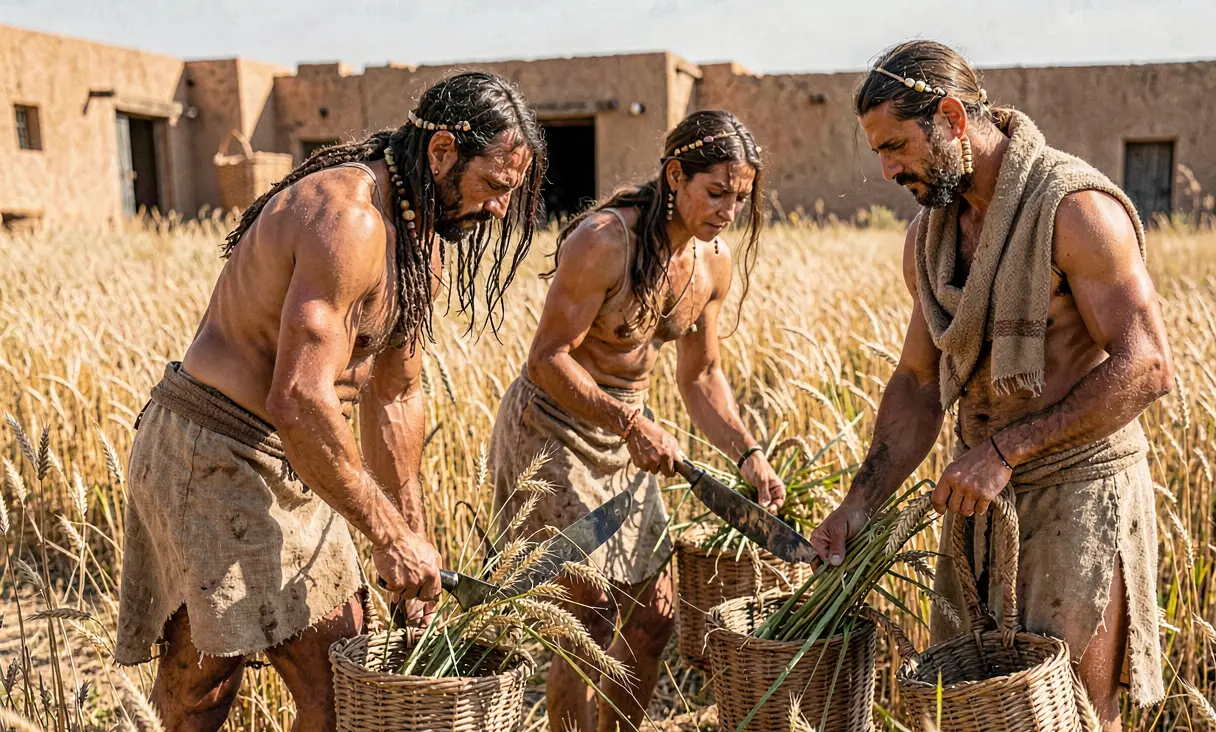 PrehistoryDomestication of Wheatc. 9500 BCE · Fertile Crescent, Syria/IraqWild grasses are cultivated for food in the Fertile Crescent, sparking the Neolithic Revolution.
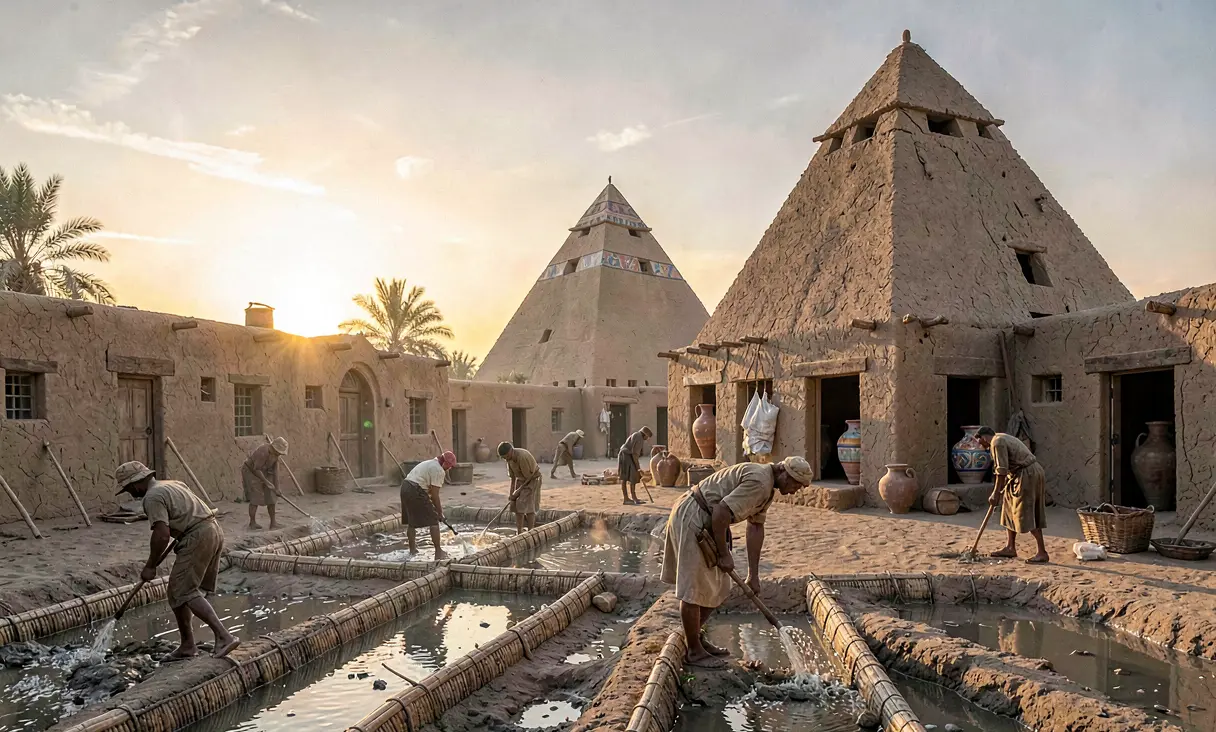 CivilizationEmergence of Ubaid Culture in Southern Mesopotamiac. 6500 BCE · Tell al-Ubaid, Southern Mesopotamia (Iraq)The Ubaid culture establishes the first widespread agricultural settlement pattern in southern Iraq.
 CivilizationDomestication of Rice in the Yangtze Valleyc. 4000 BCE · Yangtze River Valley, ChinaRice cultivation begins in the Yangtze River valley, transforming East Asian agriculture and supporting massive population growth.
Discussion
Loading…