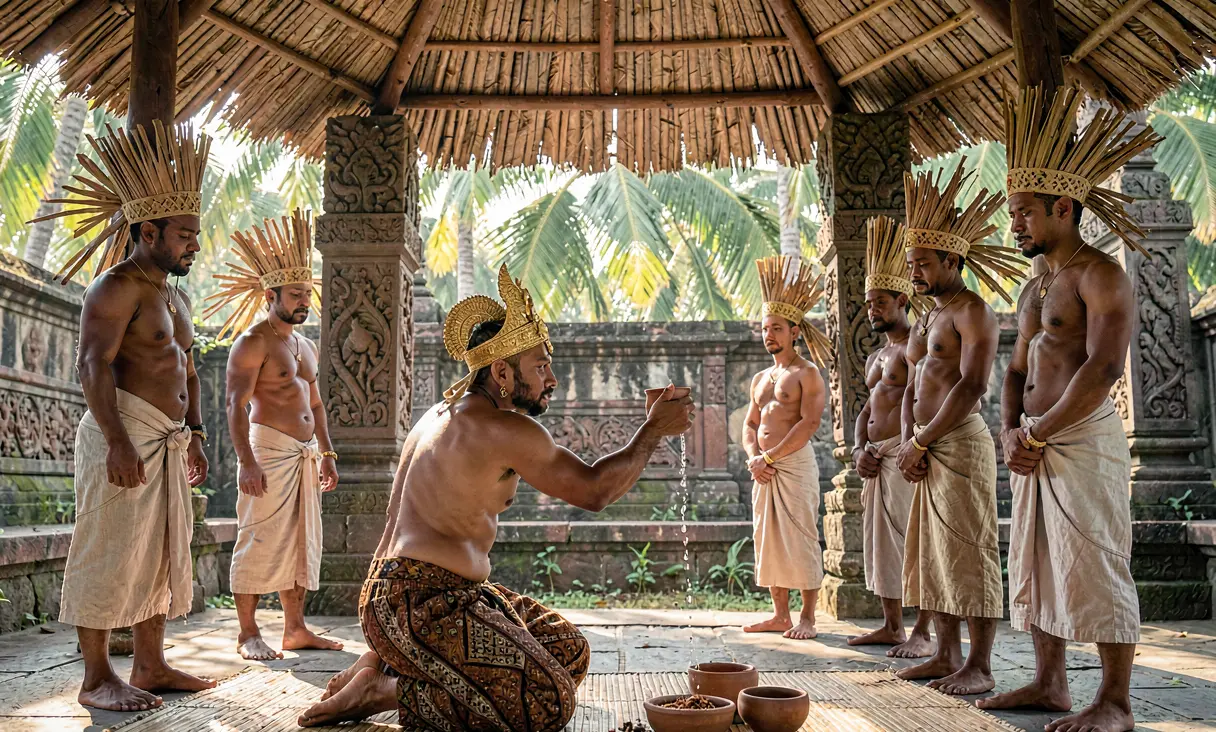
Gajah Mada's Palapa Oath
In 1336, Prime Minister Gajah Mada vowed to abstain from spices until unifying the Indonesian archipelago, forging a maritime empire that defined Southeast Asian geopolitics for centuries.
Context of the Rising Sun
By the early 14th century, the kingdom of Majapahit had emerged from the ashes of the Singhasari dynasty as a formidable power in eastern Java. Founded by Raden Wijaya in 1293 following the repulsion of Kublai Khan's Mongol invasion, the state faced a precarious geopolitical landscape. The archipelago was fragmented into competing maritime polities, from the Srivijayan remnants in Sumatra to the independent city-states of the Malay Peninsula and the spice-rich Moluccas. In 1334, under the reign of King Tribhuwana Tunggadewi, a pivotal appointment reshaped the kingdom's destiny: Gajah Mada was elevated to the position of Mahapatih, or Grand Prime Minister. His rise coincided with a period where Majapahit sought to transition from a dominant Javanese realm into a hegemonic thalassocracy capable of controlling the lucrative spice trade routes that linked China and India.
The Palapa Oath
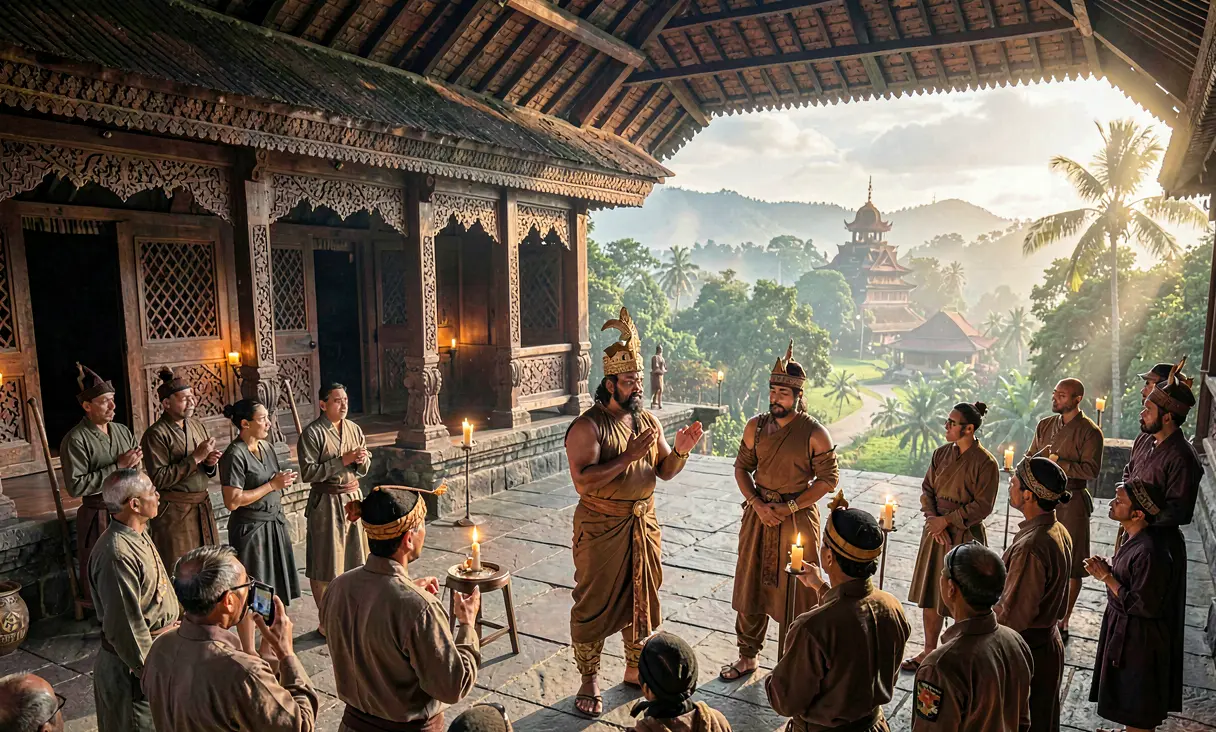
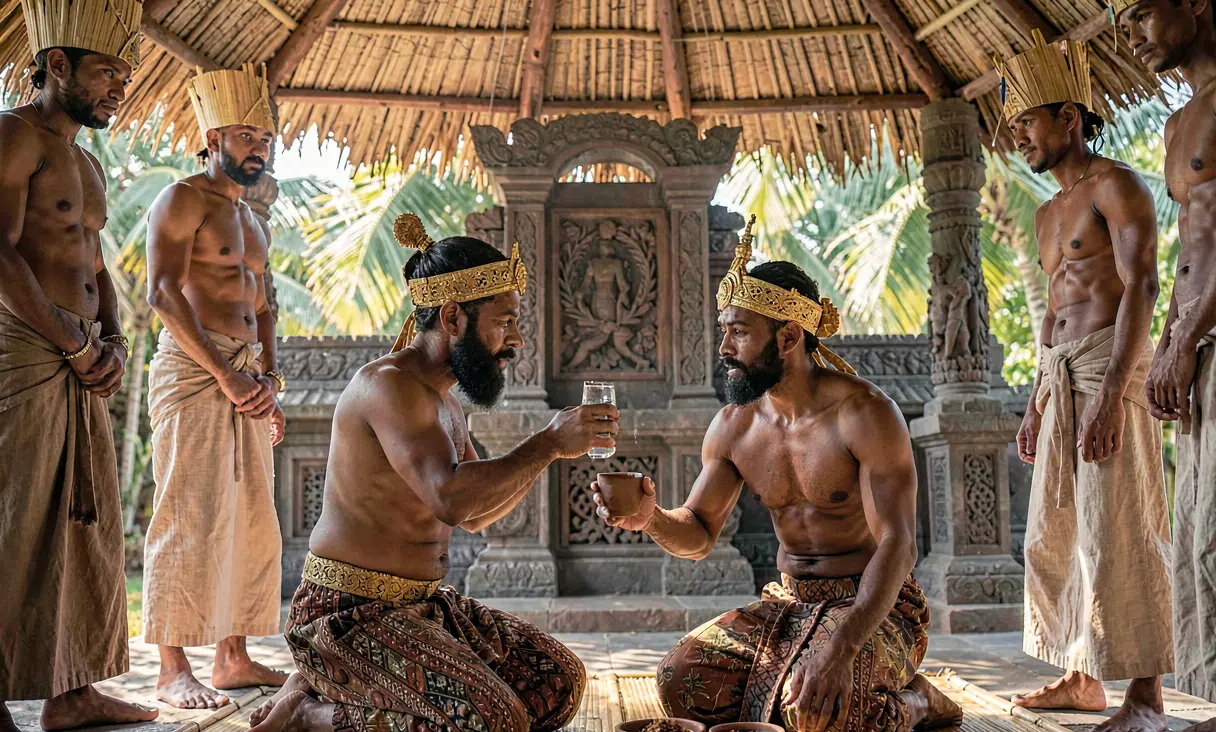
In 1336, during a grand court assembly at the capital Trowulan, Gajah Mada delivered a declaration that would echo through centuries of Southeast Asian history. Upon his formal confirmation as Mahapatih, he swore the 'Sumpah Palapa' or Palapa Oath. In this solemn vow, Gajah Mada pledged to abstain from all worldly pleasures and spices—specifically listing items such as salak fruit, galingga (a type of ginger), and various condiments known collectively as 'palapa'—until he had successfully subdued the entire archipelago under Majapahit's sovereignty. This was not merely a statement of personal asceticism but a strategic manifesto; it signaled an uncompromising commitment to total unification, rejecting the comfort of the status quo in favor of a radical expansionist policy.
The Architect of Empire
Gajah Mada was no ordinary administrator; he was a military genius and a shrewd diplomat who rose from the ranks of the royal guard to become the de facto ruler of Majapahit. While King Hayam Wuruk, who ascended the throne in 1350, provided the royal legitimacy and ceremonial authority, it was Gajah Mada who orchestrated the state's machinery of war and diplomacy. His leadership style combined ruthless pragmatism with sophisticated statecraft. He understood that direct military conquest was often costly and unsustainable; instead, he utilized a hybrid approach of naval blockades, strategic marriages, and the co-opting of local rulers into the Majapahit tributary system. His ability to navigate the complex web of Javanese court politics allowed him to maintain power for decades, effectively governing the empire while the monarch held the throne.
Campaigns of Unification
The decades following the oath witnessed a relentless series of campaigns that tested the limits of Majapahit's naval reach. Gajah Mada first consolidated power in Java, quelling rebellions and subduing rival kingdoms like Sunda and Bali, the latter conquered in 1343 after a brutal campaign. By the mid-14th century, his gaze turned outward. The 'Nusantara' campaign targeted the outer islands, including Sumatra (Palembang and Jambi), Borneo (Banjarmasin), Sulawesi, and the Moluccas. Through a combination of overwhelming naval force and diplomatic pressure, Gajah Mada brought these regions into the Majapahit sphere. The famous 'Nagarakretagama' epic poem, composed in 1365 by the court poet Prapanca, lists over ten territories across the archipelago that were under Majapahit's influence, illustrating the vast scope of his vision realized.
The Thalassocratic Peak
By the time Gajah Mada retired in 1364 at the advanced age of over eighty, he had effectively transformed Majapahit into a maritime empire that rivaled any contemporary power in Southeast Asia. The state controlled the critical choke points of the Malacca and Sunda Straits, dominating the trade of cloves, nutmeg, and pepper. This economic hegemony allowed Majapahit to accumulate immense wealth, funding a sophisticated bureaucracy, magnificent temple architecture, and a powerful standing navy. The political geography of the region was fundamentally altered; for the first time in history, a single administration claimed suzerainty over such a vast and diverse collection of islands, creating a precedent for future nation-states in the region.
Legacy and Historical Significance
The death of Gajah Mada in 1364 marked the beginning of Majapahit's gradual decline, as the empire struggled to maintain its cohesion without his iron will. However, the legacy of the Palapa Oath endures as a foundational myth of Indonesian nationalism. In the modern era, Gajah Mada is revered as the father of Indonesian unity, with his oath cited by independence leaders like Sukarno and Hatta as a historical justification for the concept of 'Nusantara'—a unified archipelagic state. The event remains a potent symbol of political ambition and national cohesion, illustrating how a single individual's vision can reshape the destiny of an entire region.
Gajah Mada's oath catalyzed the expansion of Majapahit into a vast maritime empire, unifying diverse cultures under a single political framework.
Where it happened
Trowulan, Java, Indonesia — see it on the interactive map →
Explore related history
 PoliticsSargon of Akkad Establishes the First Empirec. 2334 BCE · Akkad (Location uncertain, near Baghdad, Iraq)Sargon unifies Sumerian city-states to create the world's first multi-ethnic empire.
 PoliticsPromulgation of the Code of Ur-Nammuc. 2100 BCE · Ur, Southern Mesopotamia (Iraq)The earliest known surviving law code is established in the Sumerian city of Ur.
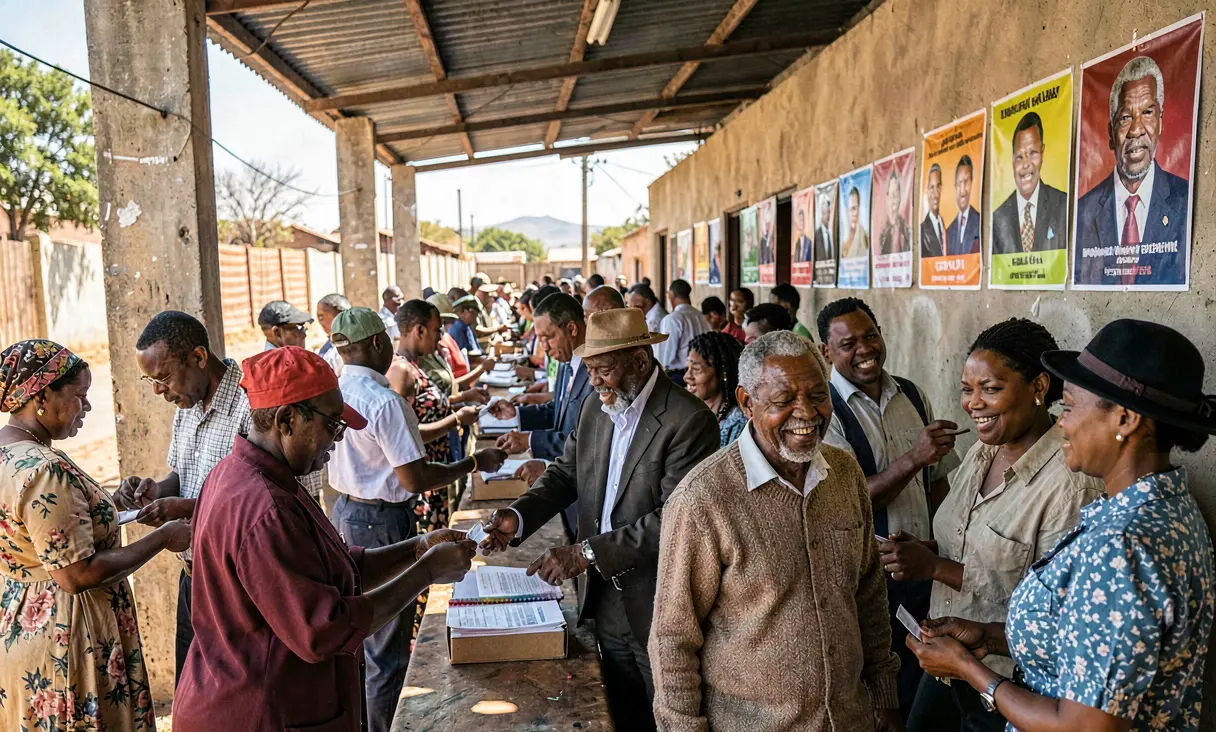 PoliticsNelson Mandela Elected President of South AfricaApril 27, 1994 · Cape Town, South AfricaSouth Africa holds its first democratic election, ending the apartheid regime and establishing a multiracial government.
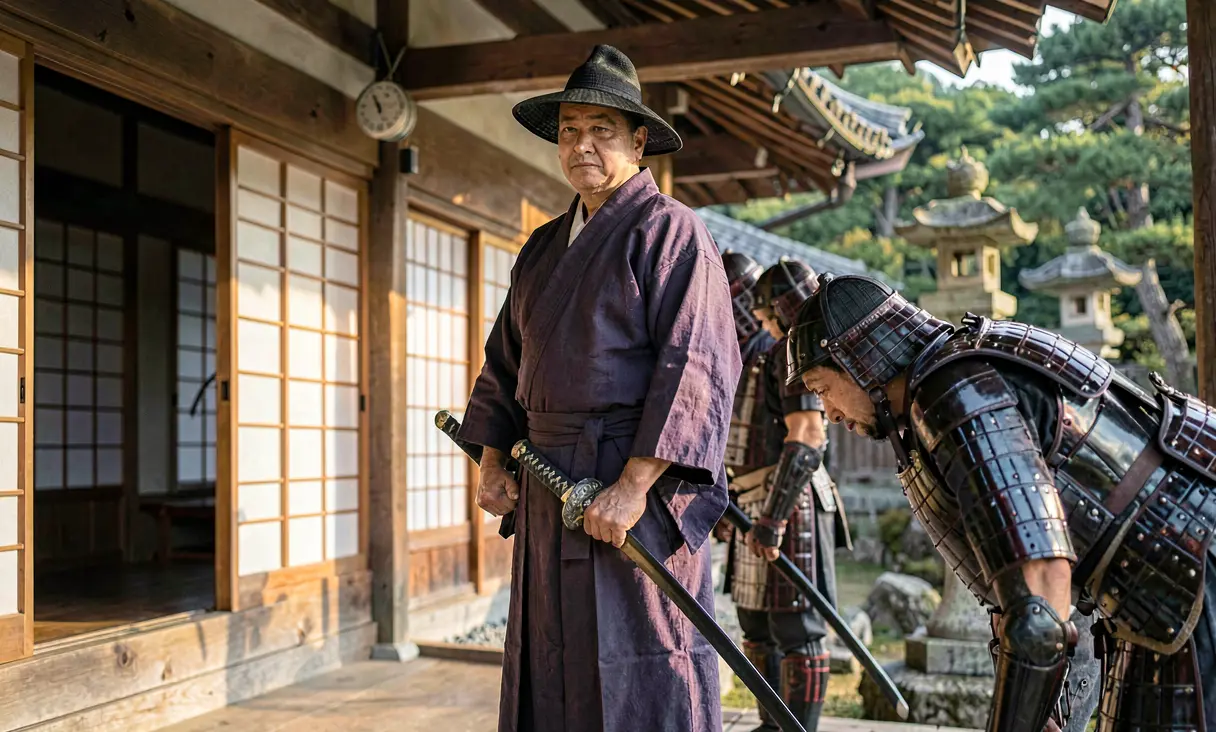 PoliticsAshikaga Takauji Establishes Muromachi Shogunate1336 CE · Kyoto, JapanAshikaga Takauji installs a new shogunate in Kyoto, beginning the Nanbokucho period.
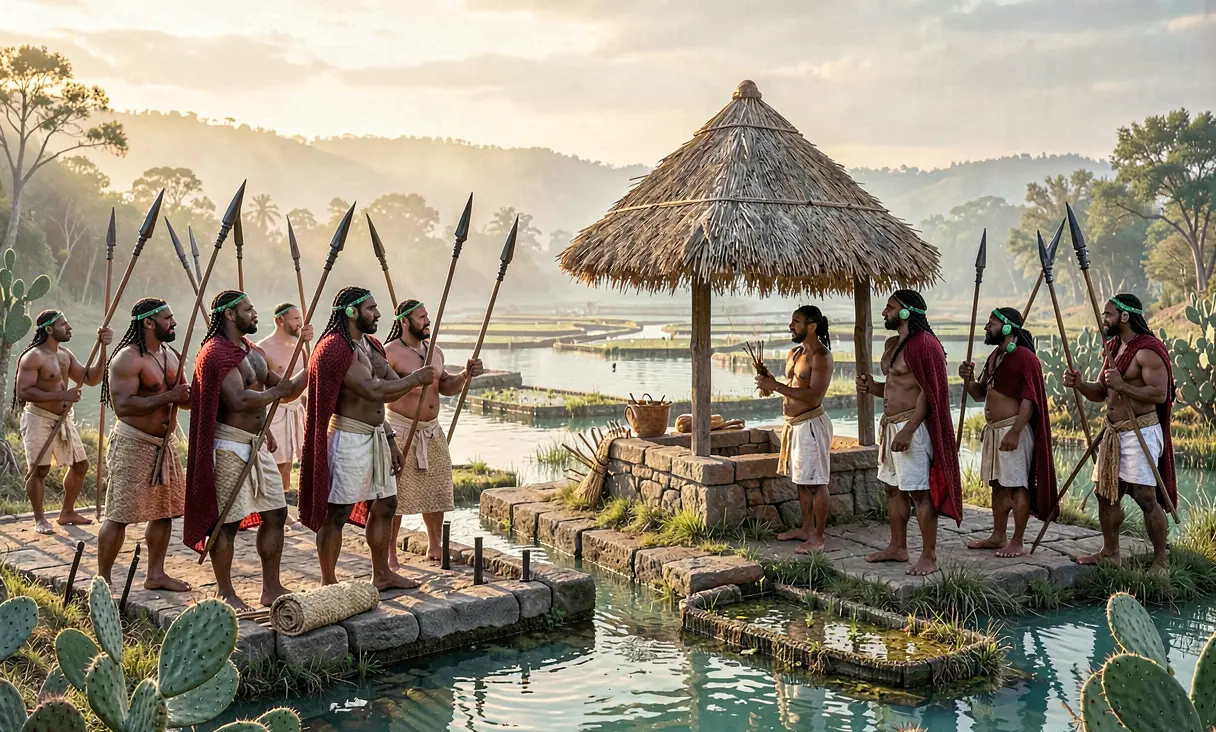 ExplorationFounding of Tenochtitlán on Lake Texcococ. 1325 CE · Lake Texcoco, Mexico City, MexicoThe Mexica establish their capital on an island in Lake Texcoco.
 ReligionCoronation Ceremony at Great Zimbabwec. 1350 CE · Great Zimbabwe, ZimbabweThe Munhumutapa king is crowned in a grand ritual linking spiritual authority with the stone enclosures.
Discussion
Loading…