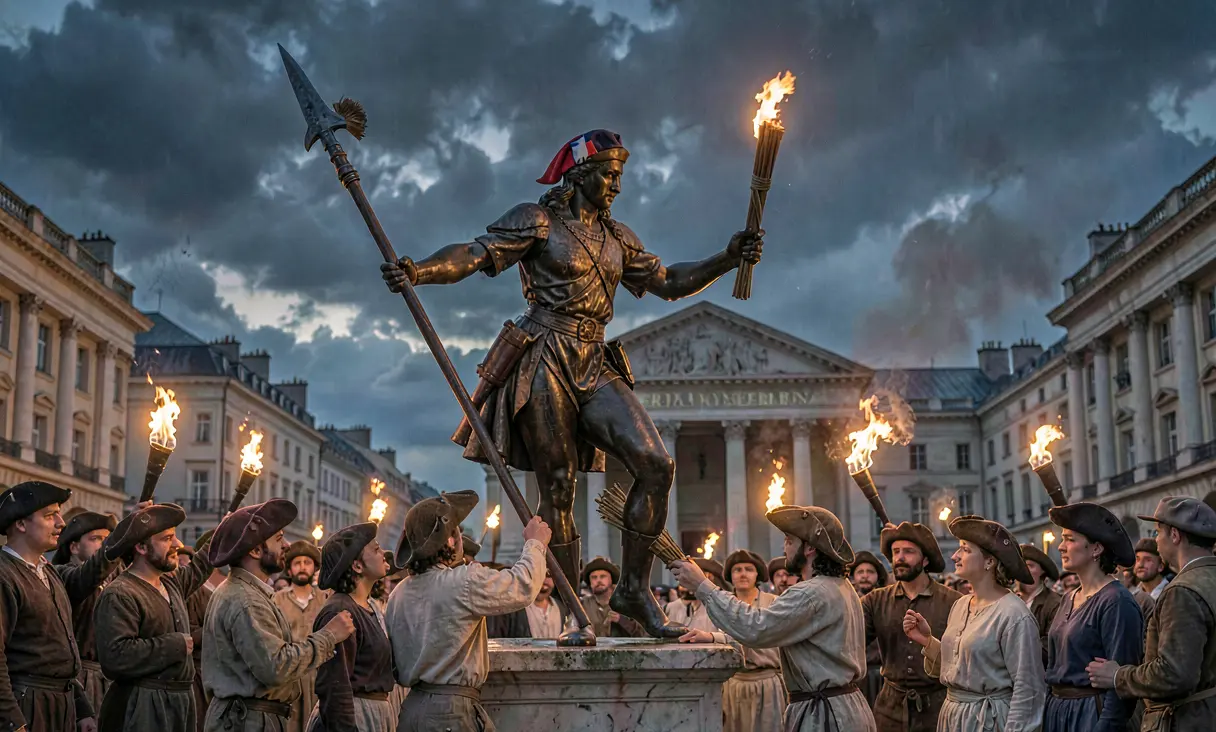
Adoption of Marianne as French Symbol
Emerging from the chaos of 1792, Marianne became the enduring face of the French Republic, uniting a fractured nation under the banner of liberty through her iconic Phrygian cap.
The Vacuum of Monarchy
By the summer of 1792, the fabric of the French state had been irreparably torn. The Flight to Varennes in June had shattered the illusion of a constitutional monarchy, and on August 10, revolutionary insurgents stormed the Tuileries Palace, effectively ending the reign of Louis XVI. In this chaotic interregnum, the new National Convention faced an existential challenge: how to define a nation that no longer recognized a king as its head. The abstract concepts of 'Liberty,' 'Equality,' and 'Fraternity' required a tangible vessel to communicate with a populace largely illiterate in political theory. The revolution needed a face that was neither royal nor aristocratic, but distinctly of the people.
The Birth of Marianne
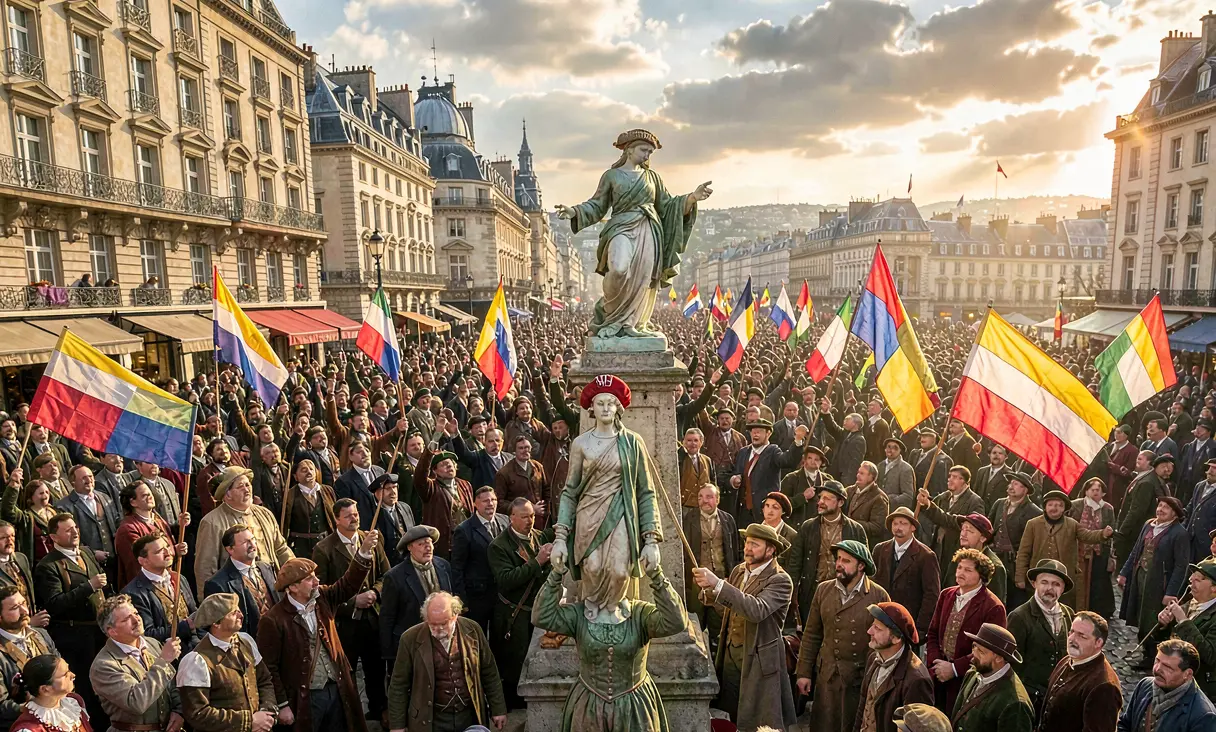
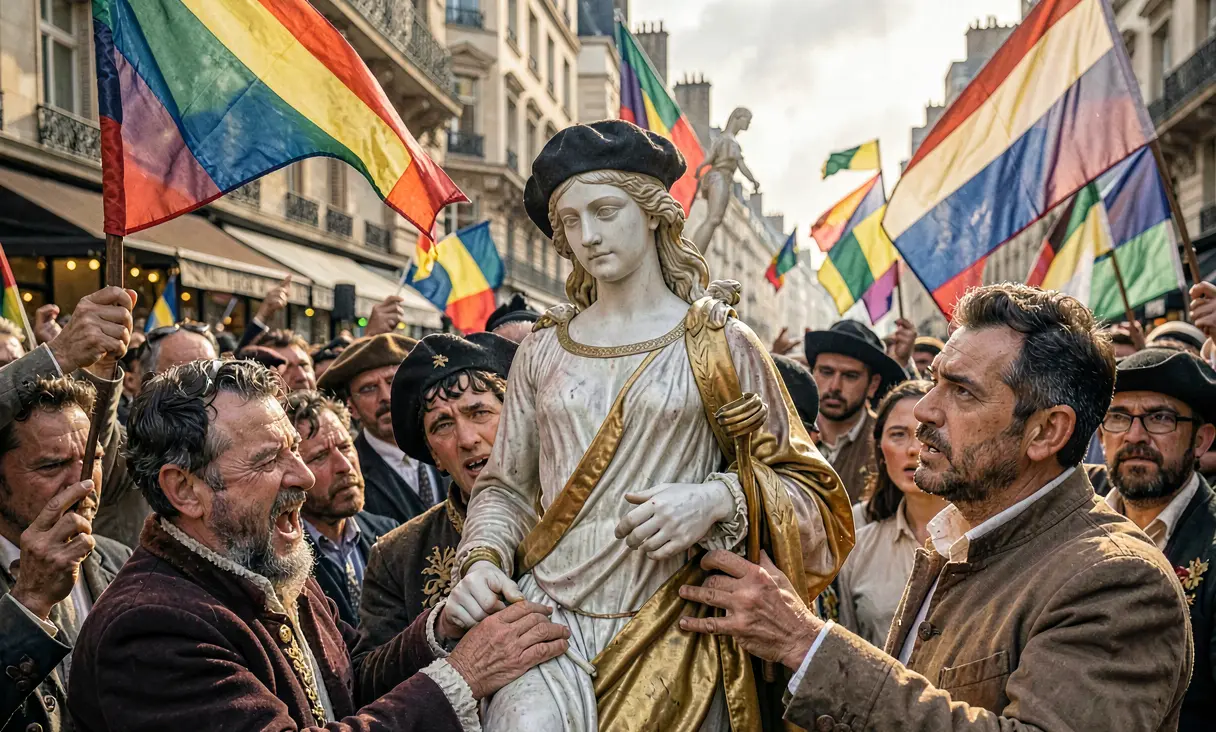
While no single decree formally named 'Marianne' as the official symbol on a specific date in 1792, the name and image coalesced rapidly during the autumn of that year. The choice of 'Marianne,' a common peasant name derived from Marie-Anne, was deliberate; it evoked the everyday French woman rather than an allegorical goddess or a queen. Early depictions varied wildly in art and caricature, but a consensus emerged around her attributes: she was often shown wearing the Phrygian cap, a soft red hat historically associated with freed slaves in antiquity, symbolizing the liberation of the citizenry from royal tyranny. This figure replaced the previous allegorical representations of France that had been tied to the monarchy or the Catholic Church.
Key Figures and Revolutionary Discourse
The popularization of Marianne was driven less by a single individual than by the collective voice of the Jacobins and the sans-culottes. Prominent revolutionaries like Maximilien Robespierre and Jean-Paul Marat utilized the imagery in their rhetoric to galvanize support against internal counter-revolutionaries and external monarchist coalitions. While no specific portrait painter is credited with creating the 'first' image, artists such as Jacques-Louis David played a crucial role in standardizing republican iconography. The name itself was reportedly used by soldiers and citizens who referred to the Republic as 'Marianne,' cementing her status through oral tradition before she ever appeared on official state documents.
From Allegory to State Iconography
The transition from a revolutionary folk symbol to an instrument of state began in earnest during the Reign of Terror and solidified under the Directory. By 1793, Marianne's image was being minted on copper coins and printed on government bonds, serving as a visual declaration that sovereignty resided with the nation, not the crown. The Phrygian cap became her most enduring attribute, often held aloft or worn proudly, distinguishing her from earlier depictions of Liberty which sometimes wore crowns or scepters. This standardization was vital for unifying a fractured France; whether in Paris, Lyon, or Marseille, the image of Marianne signaled that one was within the bounds of the Republic.
The Turbulent Aftermath and Evolution
Following the fall of Robespierre in 1794 and the subsequent thermidorian reaction, the symbol of Marianne faced periods of suppression and revival. Under Napoleon Bonaparte, who preferred imperial iconography featuring himself as the head of state, the republican figure was often relegated to the background or replaced by the eagle. However, every time France returned to a republican form of government—whether in 1830, 1848, or 1870—the image of Marianne resurfaced with renewed vigor. The Third Republic, established in 1870, finally made her presence permanent, placing busts of Marianne in every town hall across the country, ensuring that she remained the silent guardian of French civic life.
Legacy and Global Resonance
The adoption of Marianne in 1792 created a template for modern secular republicanism that influenced nations worldwide. She stands as one of history's most successful political personifications, bridging the gap between high philosophy and popular culture. Today, her likeness adorns French euro coins, postage stamps, and public monuments, serving as a constant reminder of the 1789 Revolution's ideals. Unlike many historical symbols that fade with their eras, Marianne has evolved to reflect changing societal values while maintaining her core identity as the embodiment of Reason and Liberty against tyranny.
Marianne remains the enduring symbol of the French Republic and its values of liberty, equality, and fraternity.
Where it happened
Paris, France — see it on the interactive map →
Explore related history
 PoliticsFounding of Fatehpur Sikric. 1571 CE · Fatehpur Sikri, Uttar Pradesh, IndiaAkbar establishes Fatehpur Sikri as the new capital of the Mughal Empire to honor his spiritual guide and centralize administration.
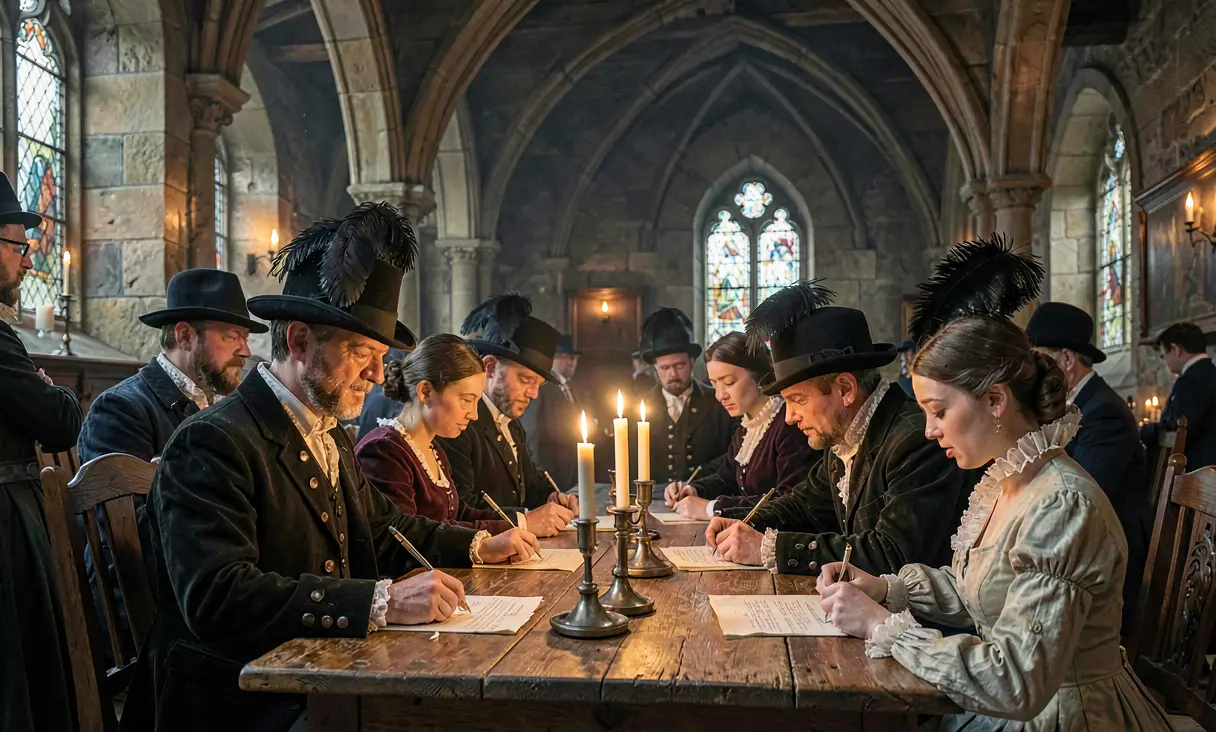 PoliticsPeace of WestphaliaOctober 24, 1648 · Münster and Osnabrück, GermanyTreaties end the Thirty Years' War, establishing state sovereignty.
 PoliticsShivaji Maharaj Coronation and Maratha Empirec. 1674 CE · Raigad Fort (modern Maharashtra/India)Chhatrapati Shivaji is crowned as the sovereign ruler of the Marathas, establishing an independent Hindu kingdom against Mughal dominance.
 PoliticsHaitian Revolution BeginsAugust 22, 1791 · Saint-Domingue (Haiti)Enslaved people revolt in Saint-Domingue, leading to the first black republic.
 TechnologyExpansion of Transatlantic Cotton Tradec. 1793 CE · Savannah, Georgia, USAEli Whitney's cotton gin revolutionizes production and fuels global textile manufacturing.
 PoliticsStorming of the BastilleJuly 14, 1789 · Paris, FranceRevolutionaries storm the Bastille prison, symbolizing the start of the French Revolution.
Discussion
Loading…