Rise of the Etruscan League in Central Italy
Emerging c. 750 BCE, the Etruscan League unified twelve city-states into a wealthy, religiously sophisticated civilization that fundamentally shaped early Rome's alphabet, architecture, and political
Context of the Villanovan Transformation
By the mid-8th century BCE, the Italian peninsula was undergoing a profound metamorphosis as the Late Bronze Age gave way to the Iron Age. In the region north of Rome, known to later Romans as Etruria (encompassing modern Tuscany, northern Lazio, and parts of Umbria), the Villanovan culture—a cremation-based society with distinct geometric pottery—began to evolve into a complex urban civilization. This transition was not merely demographic but catalytic; the arrival of Greek colonists in Cumae and Pithecusae around 775 BCE introduced new technologies, artistic motifs, and trade networks that accelerated social stratification. The local chieftains, previously buried in simple urn fields, began constructing monumental tumuli to house their elite dead, signaling a shift toward a society defined by wealth, hereditary power, and sophisticated religious hierarchies.
The Formation of the Dodecapolis
Around 750 BCE, this burgeoning civilization coalesced into a loose confederation known as the Etruscan League, or *Dodecapolis*, consisting of twelve independent city-states. While the exact composition fluctuated over centuries, the core members included Tarquinia (Tarchna), Cerveteri (Cisra), Veii (Velch), Vulci, and Volterra. These cities were not unified under a single monarch or central government but were bound by shared religious rites, linguistic roots, and mutual defense pacts. Each city-state operated as a sovereign entity with its own king (*lucumo*), yet they convened annually at the Fanum Voltumnae, a sacred sanctuary likely located near modern Orvieto, to elect a high priest who presided over pan-Etruscan religious ceremonies and coordinated diplomatic responses to external threats.
Economic Foundations: Mining and Mediterranean Trade
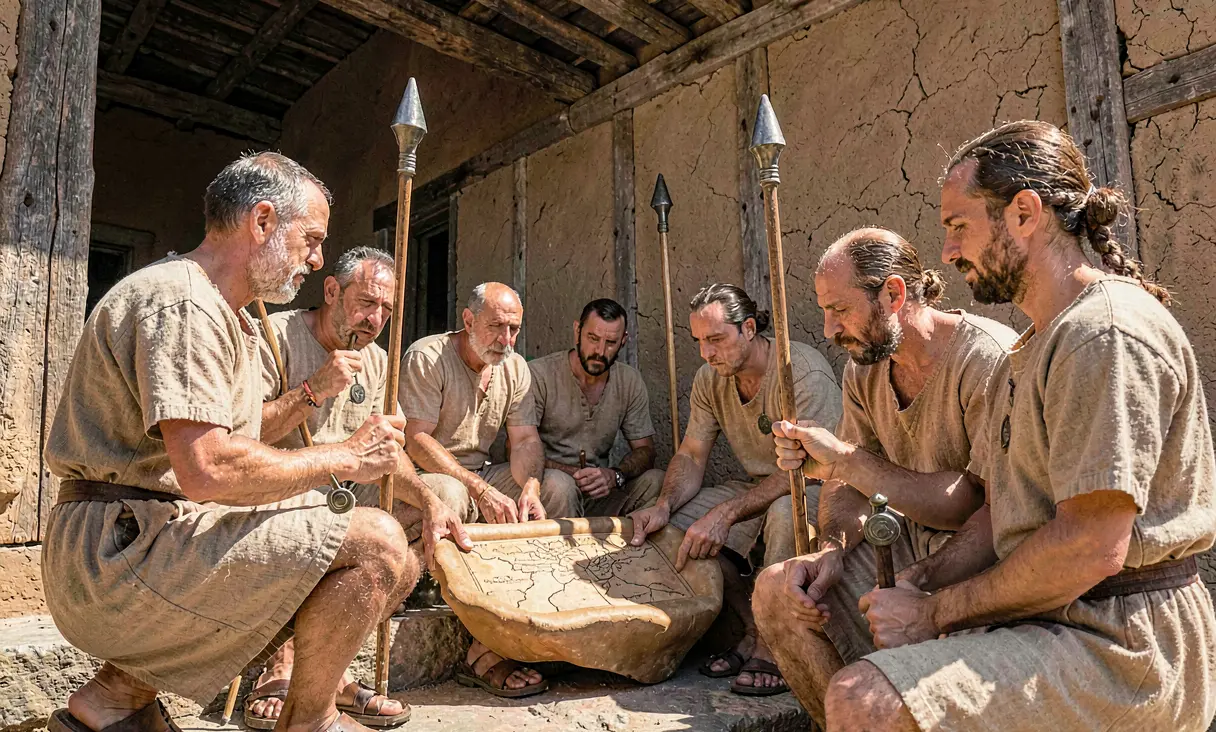
The rapid ascent of the Etruscan League was fueled by an unprecedented exploitation of natural resources and strategic maritime commerce. The region possessed rich deposits of iron, copper, tin, and lead, particularly in the Colline Metallifere (Metallic Hills) and on the island of Elba. Etruscan metallurgists mastered advanced smelting techniques, producing bronze and iron goods that were highly sought after throughout the Mediterranean. This industrial capacity supported a robust trade network connecting them with the Greeks of Magna Graecia, the Phoenicians, and the civilizations of the Near East. Excavations at sites like Cerveteri have revealed tombs filled with imported Greek kraters, Corinthian pottery, and Levantine amber, testifying to a merchant class that dominated the Tyrrhenian Sea and integrated Etruria into the wider Archaic world economy.
Cultural Flourishing and Religious Innovation
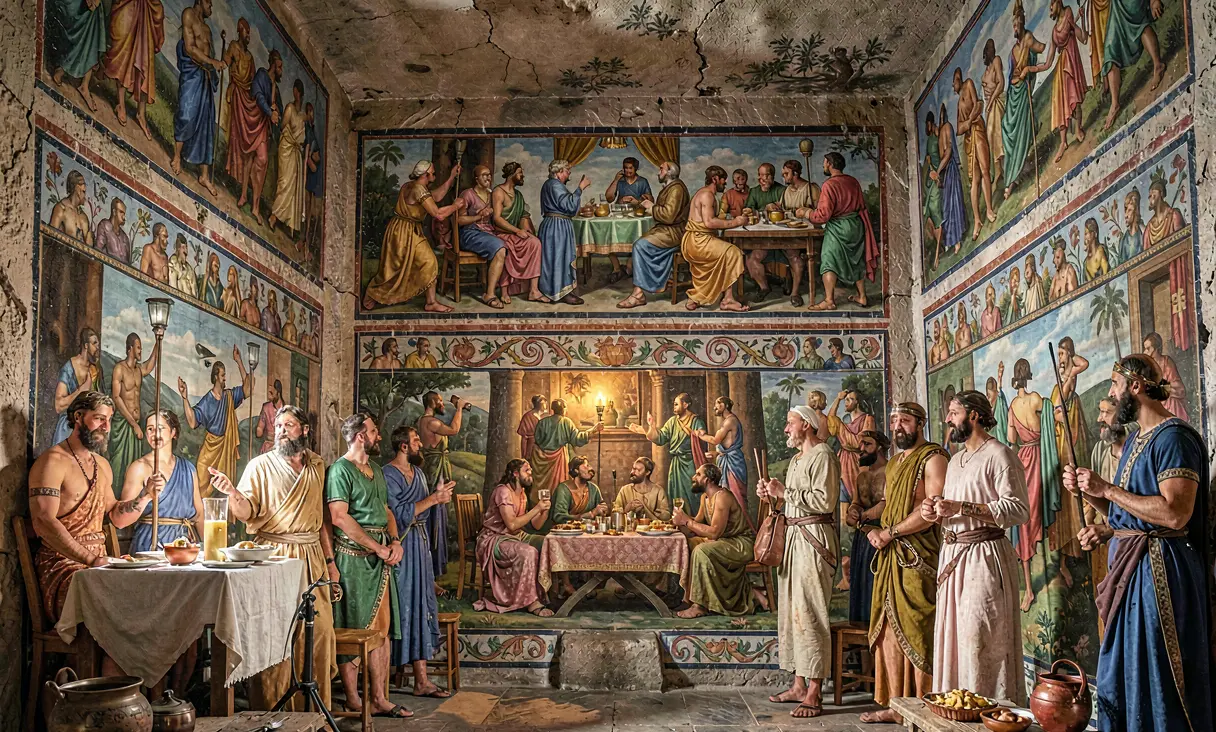
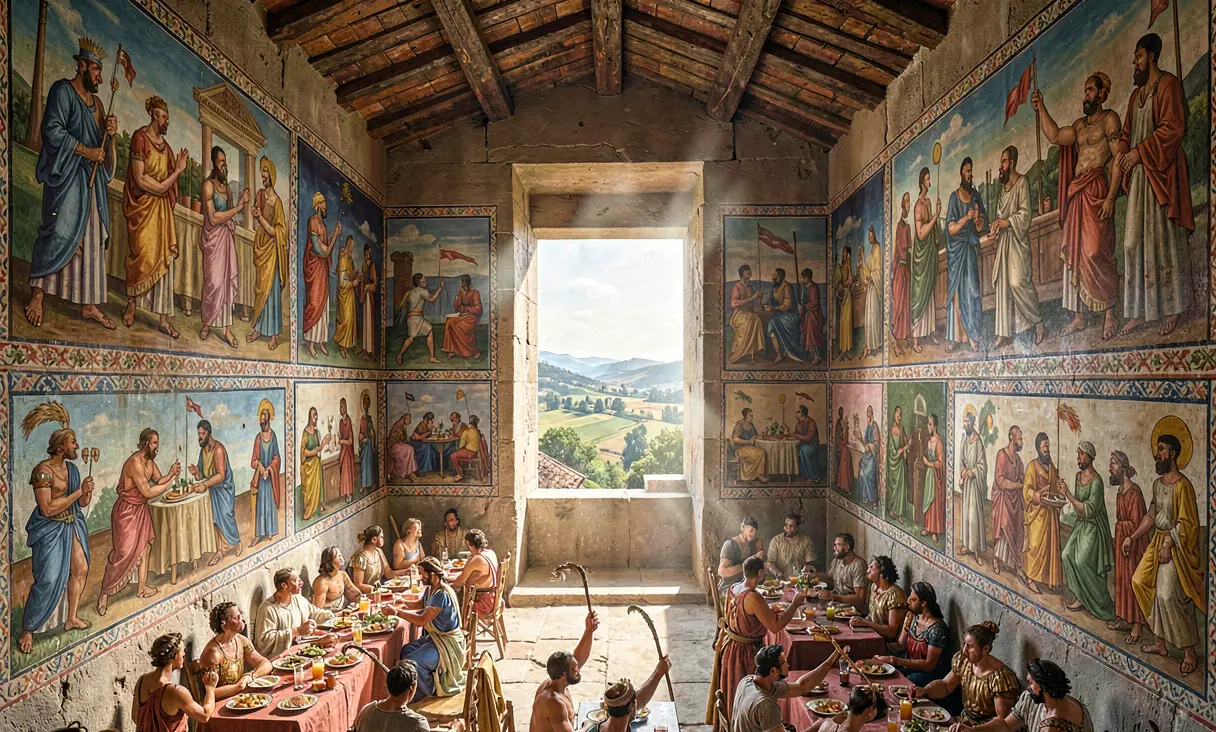
By 750 BCE, Etruscan culture had developed a distinct identity that would profoundly influence its neighbors. Their art moved away from abstract Villanovan patterns toward vibrant realism, evident in the later frescoes of the Tomb of the Leopards at Tarquinia and the intricate bronze figurines found in sanctuaries across the region. Religiously, the Etruscans were obsessed with divination; they believed the will of the gods was revealed through the flight of birds (*augury*) and the examination of animal livers (*haruspicy*). This theological framework was codified in the *Etrusca Disciplina*, a body of sacred texts that dictated ritual precision. Unlike their Greek contemporaries, who often viewed the afterlife with ambiguity, the Etruscans constructed elaborate necropolises, such as the Banditaccia at Cerveteri, designed as 'cities of the dead' mirroring the living cities above.
Legacy and the Roman Inheritance
The rise of the Etruscan League set the stage for the eventual dominance of Rome, which began as a small settlement on the Tiber within the sphere of Etruscan influence. The early Roman kings, including Tarquinius Priscus and Servius Tullius, were of Etruscan origin or heavily influenced by Etruscan customs. Rome adopted the Etruscan alphabet (derived from the Greek), architectural techniques such as the arch and vault, and religious practices like augury. The symbol of Roman power, the *fasces* (a bundle of rods with an axe), was an Etruscan invention representing magisterial authority. Although the league eventually fractured under pressure from Celtic invasions in the north and rising Roman military might in the south by the 4th century BCE, the cultural DNA of the Etruscans remained embedded in the fabric of the Roman Republic and Empire.
The Etruscan civilization laid much of the cultural and technological foundation for the rise of Rome.
Where it happened
Tarquinia (Cerveteri), Italy — see it on the interactive map →
Explore related history
 CivilizationCodices and Writing System of the Mayac. 200 BCE · El Mirador, GuatemalaThe Maya develop a complex logosyllabic writing system and astronomical calendars during the Preclassic period.
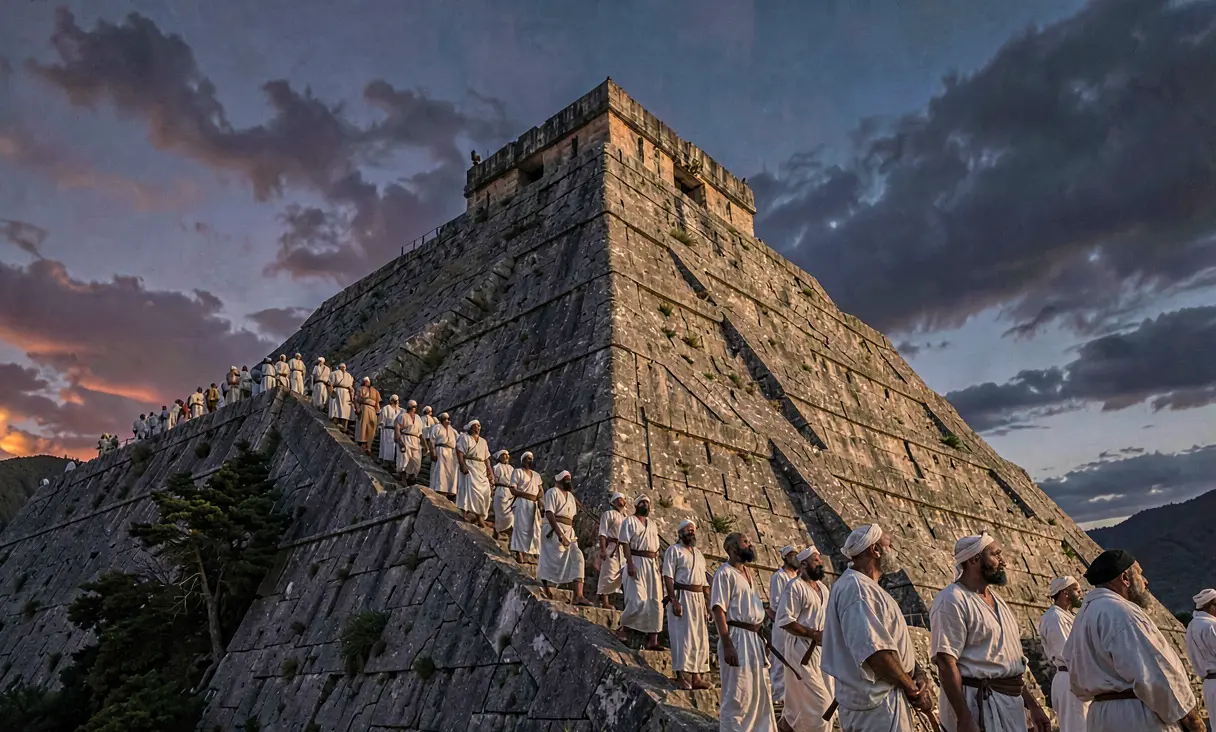 CivilizationConstruction of the Pyramid of the Moon at Teotihuacánc. 1 CE · Teotihuacán, MexicoThe second-largest pyramid is built to honor the Great Goddess and align with lunar cycles.
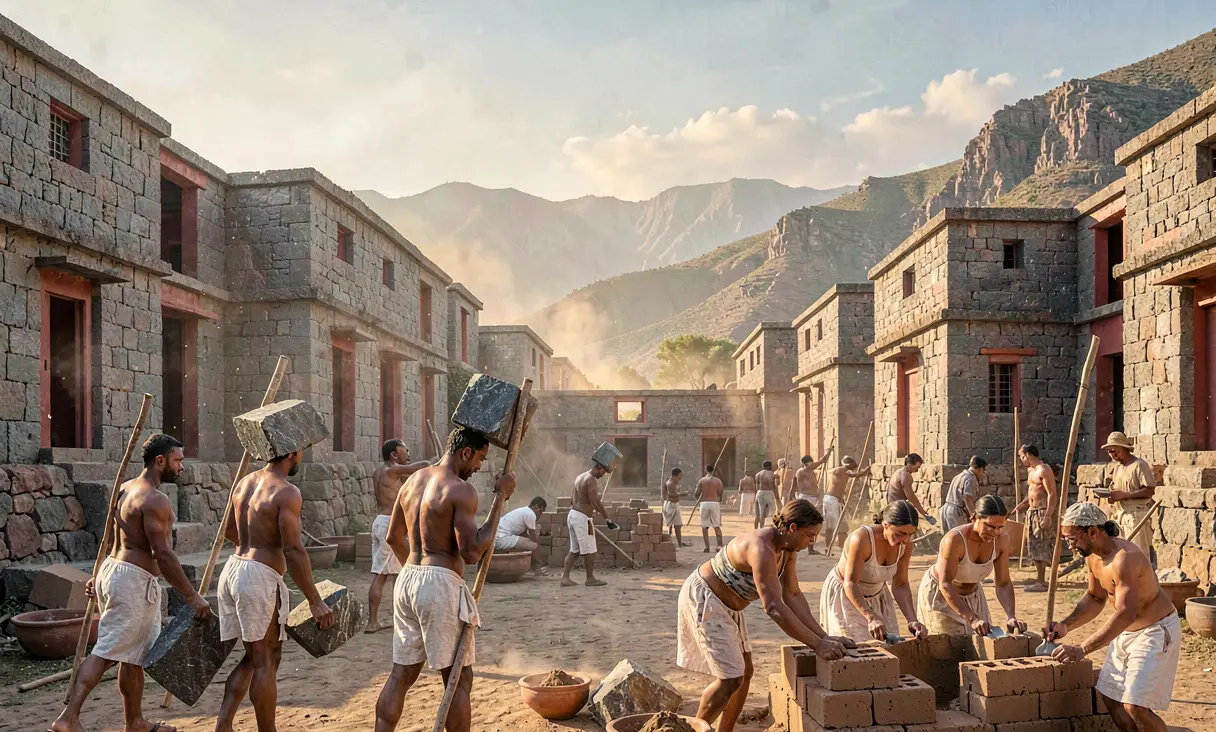 CivilizationConstruction of Teotihuacán Apartment Compoundsc. 100 BCE · Teotihuacán, MexicoMassive apartment complexes are built to house the growing urban population.
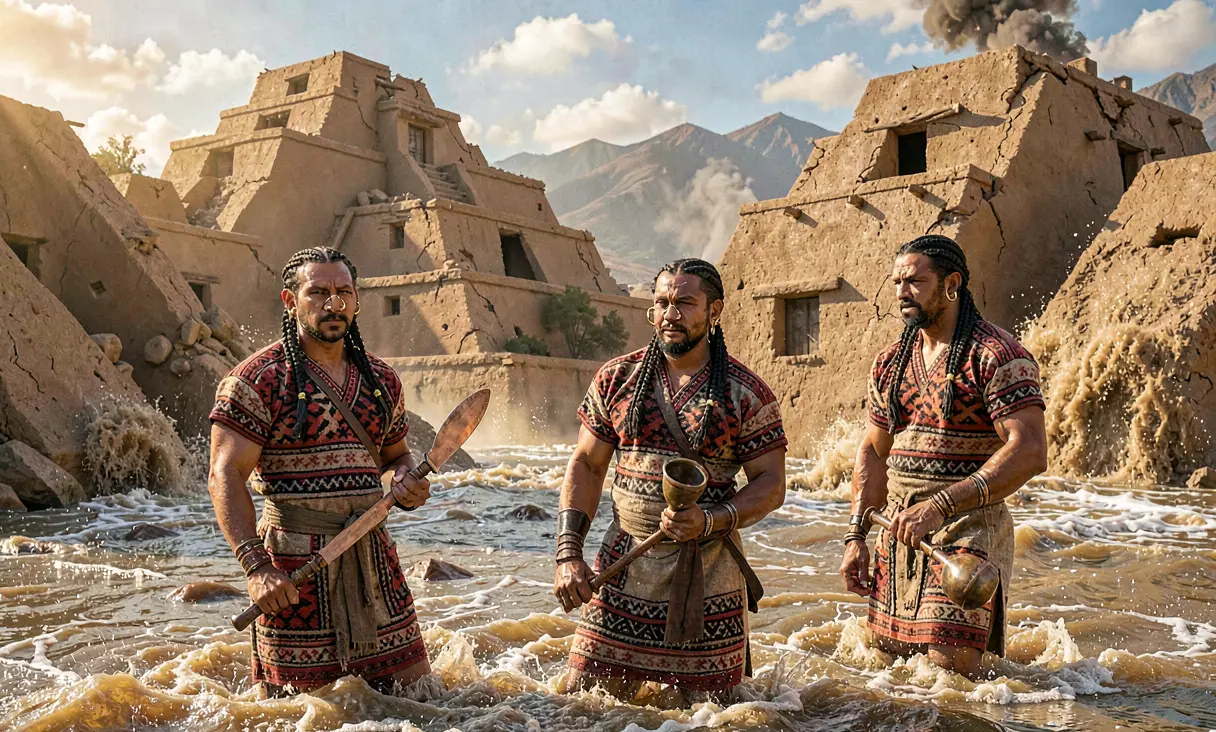 DisasterCatastrophic Floods and Collapse of Moche San José de Moroc. 750 CE · Lambayeque Valley, PeruEl Niño floods devastate Moche infrastructure leading to societal transformation.
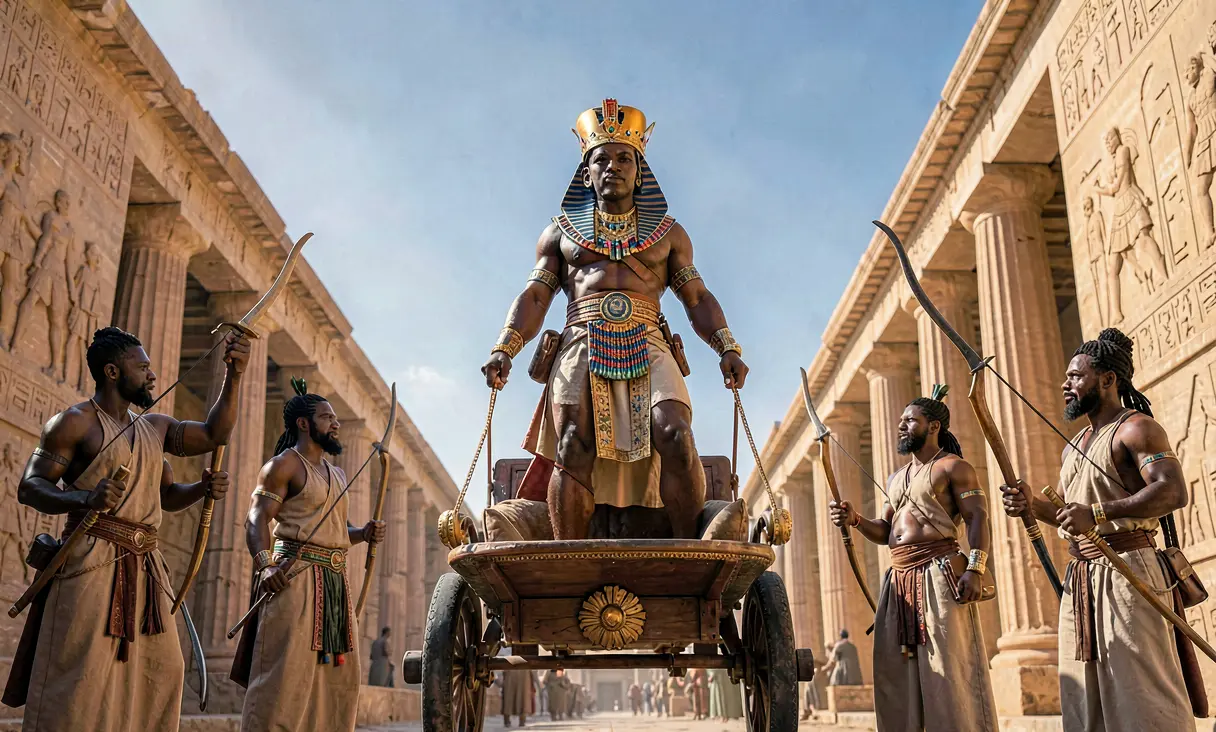 WarKushite Conquest of Egypt (25th Dynasty)c. 747 BCE · Thebes, EgyptKing Piye of Kush conquers Upper and Lower Egypt, establishing the first African-led dynasty in Egyptian history.
 ScienceEstablishment of the Babylonian Astronomical Observatoriesc. 747 BCE · Babylon, IraqBabylonian priests begin systematic nightly recording of planetary movements and eclipses.
Discussion
Loading…