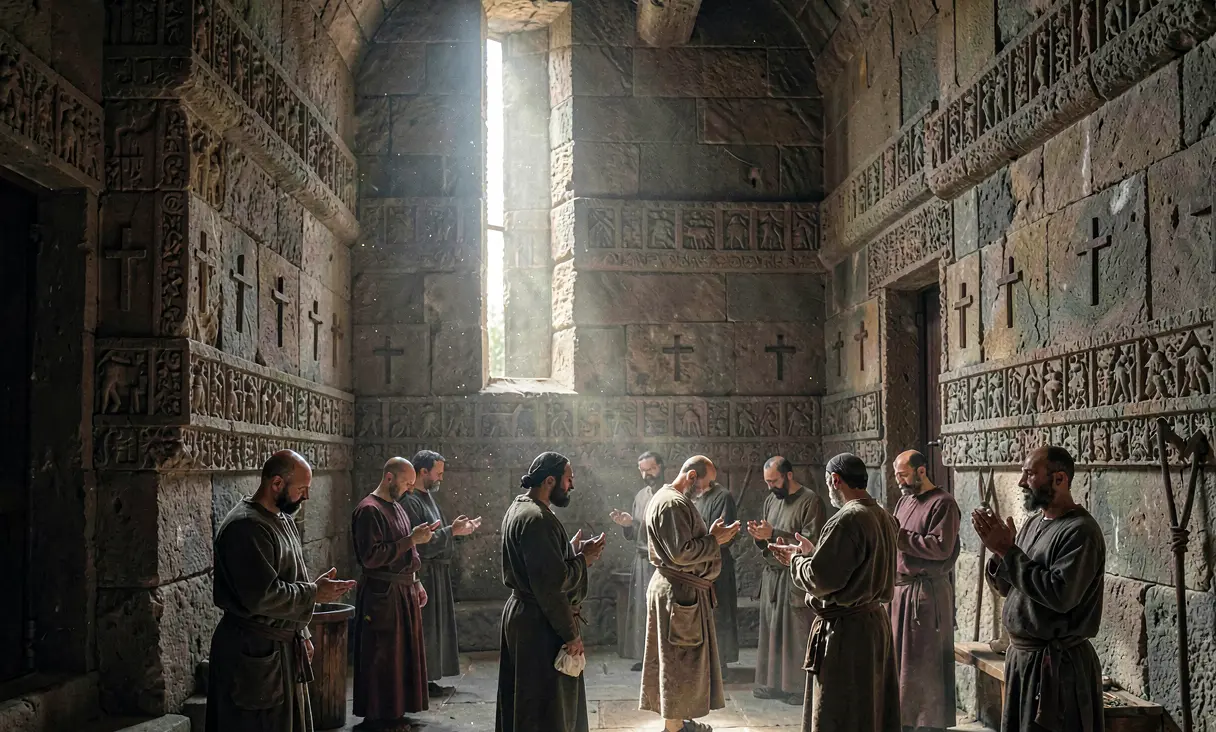
Rock-Hewn Churches of Lalibela Completed
King Lalibela's excavation of eleven monolithic churches around 1200 CE created a spiritual 'New Jerusalem' in Ethiopia, merging advanced engineering with deep faith to establish a living pilgrimage s
The Vision of a New Jerusalem
In the late 12th and early 13th centuries, amidst a period of political fragmentation following the decline of the Aksumite Empire, King Gebre Mesqel Lalibela ascended to the throne of the Zagwe dynasty in Ethiopia. Seeking to reinvigorate the spiritual life of his people and establish a new center of pilgrimage, he conceived an audacious architectural plan: to replicate the holy sites of Jerusalem within the Ethiopian highlands. This initiative was born from the belief that many Christians could not afford or survive the perilous journey to the Holy Land due to Islamic expansion blocking traditional routes. Thus, Lalibela envisioned a 'New Jerusalem' carved directly into the earth, serving as a sanctuary for worship and a testament to divine power.
The Monolithic Marvels
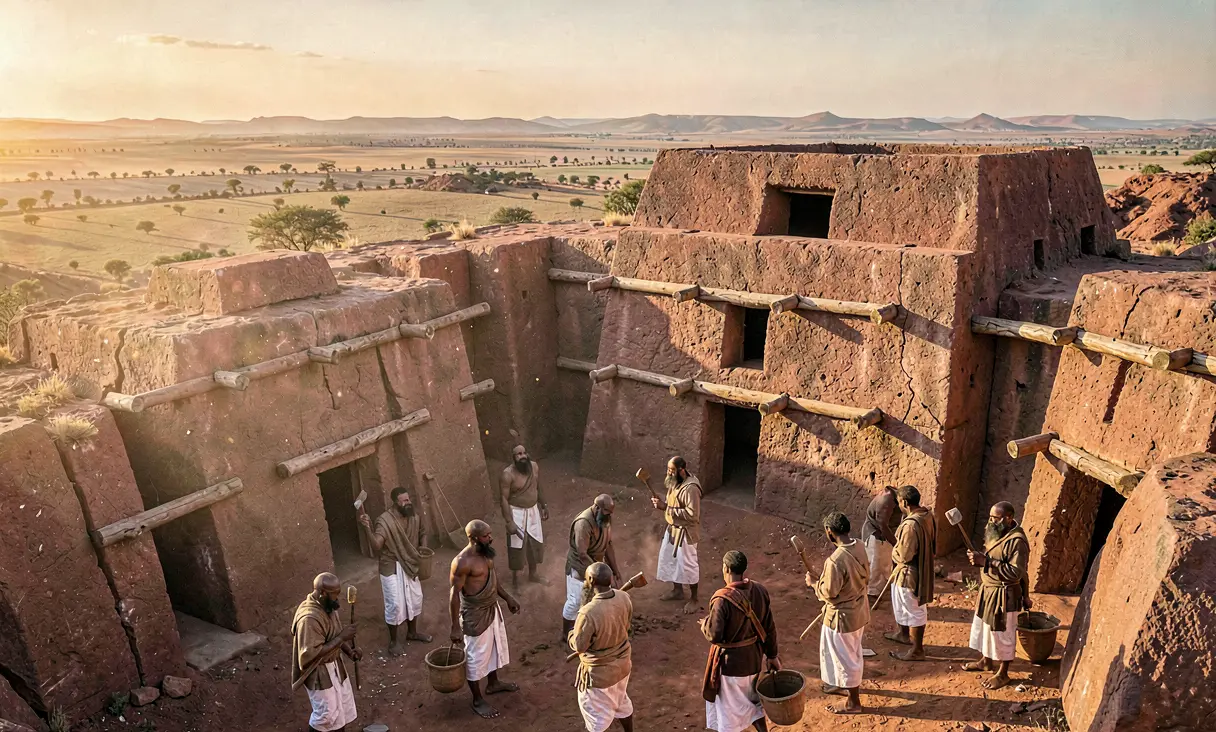
Between approximately 1180 and 1230 CE, the construction of the Rock-Hewn Churches of Lalibela transformed the landscape of Lasta province. Unlike traditional masonry structures built by stacking stones, these eleven churches were excavated downwards from the top of the bedrock, a technique known as monolithic architecture. The most famous among them, Beta Giyorgis (Church of Saint George), stands isolated in a deep trench, shaped like a Greek cross with its roof level with the surrounding ground. Other structures, such as Beta Maryam and Beta Medhane Alem, are interconnected by a labyrinthine network of tunnels, trenches, and prayer halls that descend dozens of meters into the volcanic tuff.
Engineering Without Mortar
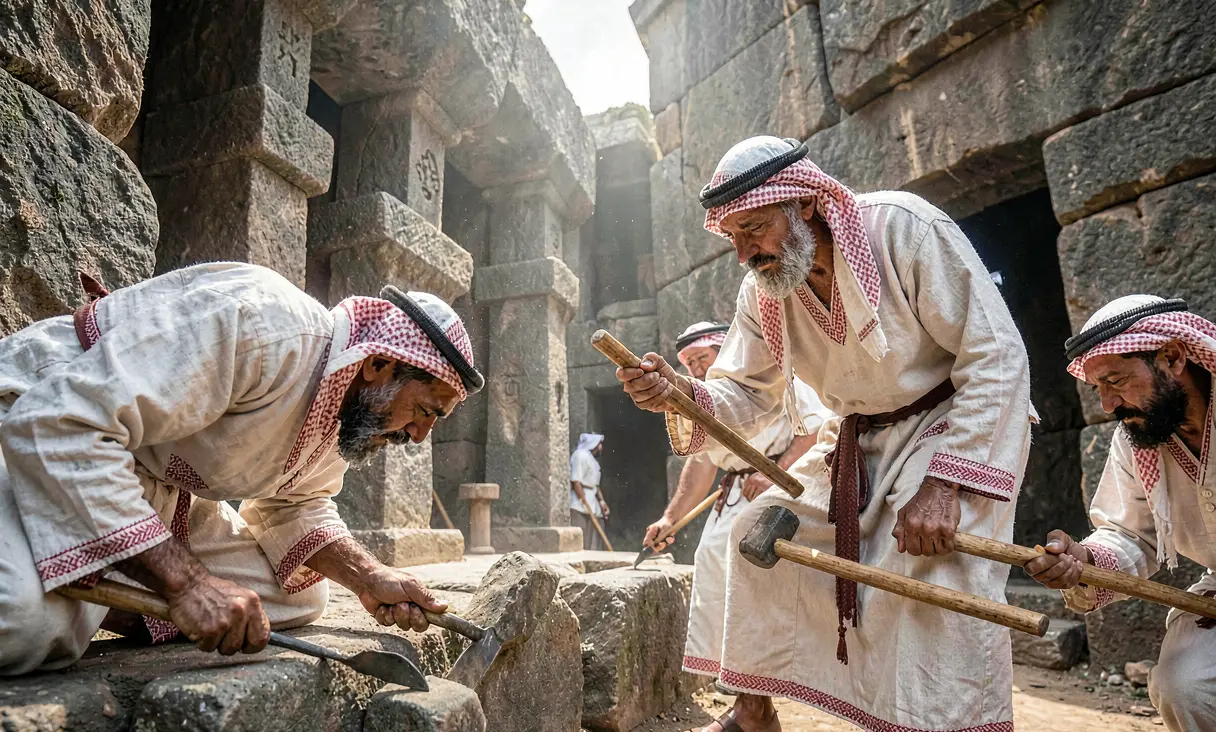
The realization of this project required an unprecedented mastery of engineering and a massive mobilization of labor. Historical accounts and local tradition suggest that thousands of workers, including skilled stonemasons and general laborers, toiled for decades under the King's direct supervision. The construction process involved precise topographical surveying to determine the dimensions of each church before any stone was removed. Workers carved the exterior facades first, then worked their way inward and downward, eventually freeing the structure from the surrounding rock. Remarkably, these complex buildings were created without the use of mortar or binding agents; the structural integrity relies entirely on the tensile strength of the volcanic rock and precise interlocking joints.
King Lalibela and Divine Intervention
Central to the narrative of these churches is King Gebre Mesqel Lalibela himself, a figure who straddles the line between historical monarch and saint. According to Ethiopian Orthodox tradition, the King was visited by angels during his sleep, who directed him in the construction methods and even assisted in moving stones overnight. While modern historians attribute the success of the project to human ingenuity and organizational prowess rather than supernatural aid, the legend underscores the immense spiritual significance attributed to the site. The King's reign is viewed as a golden age of religious consolidation, where art, architecture, and theology merged to create a physical manifestation of faith.
A Living Pilgrimage Site
Upon completion in the early 13th century, Lalibela immediately became the most important pilgrimage site in Ethiopia, rivaling Jerusalem for local Christians. The layout of the complex was designed to mirror the geography of the Holy Land, allowing pilgrims to walk through a symbolic reenactment of Christ's passion and resurrection within the confines of their own nation. Unlike many ancient monuments that fell into ruin or were repurposed as museums, the Rock-Hewn Churches have remained active centers of worship for over eight centuries. Daily liturgies are conducted in the original spaces, with priests and monks maintaining the traditions established during the Zagwe dynasty.
Enduring Legacy and Global Recognition
The Rock-Hewn Churches of Lalibela stand as a unique masterpiece of human creativity and spiritual devotion, representing one of the few instances where an entire city was carved from solid rock. Their survival through centuries of political upheaval, including the rise of the Solomonic dynasty which eventually eclipsed the Zagwe line, speaks to their enduring cultural resilience. In 1978, UNESCO designated the site as a World Heritage Site, recognizing it as a universal symbol of Christian heritage in Africa. Today, they remain a profound testament to the capability of pre-modern societies to execute complex engineering feats driven by unwavering religious conviction.
Created some of the most extraordinary religious architecture in human history, carved entirely from living rock.
Where it happened
Lalibela, Ethiopia — see it on the interactive map →
Explore related history
 ArtPeak Period of Australian Aboriginal Rock Artc. 3000 BCE to 1500 CE · Kakadu National Park, AustraliaAboriginal artists create vast galleries of rock paintings depicting ancestral beings and hunting scenes.
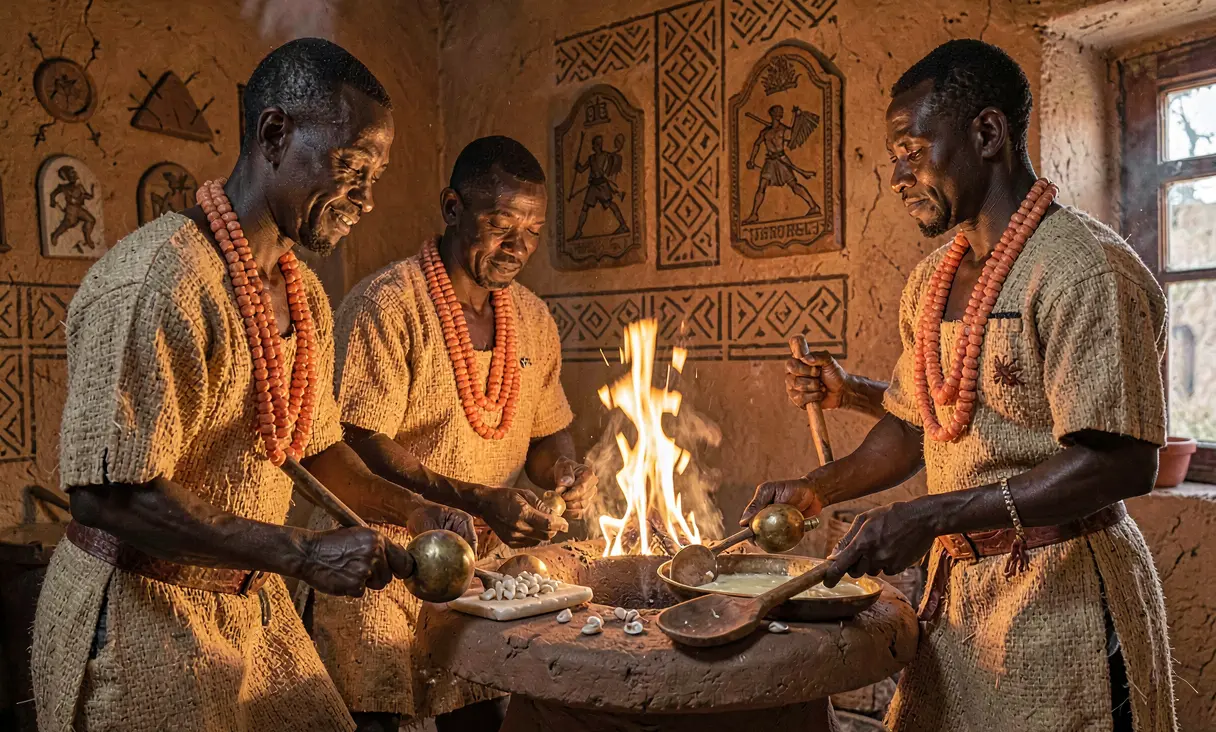 ArtCreation of the Benin Bronzes under Oba Ewuarec. 1450 CE · Benin City, NigeriaOba Ewuare commissions the famous bronze and ivory plaques documenting court life and military victories.
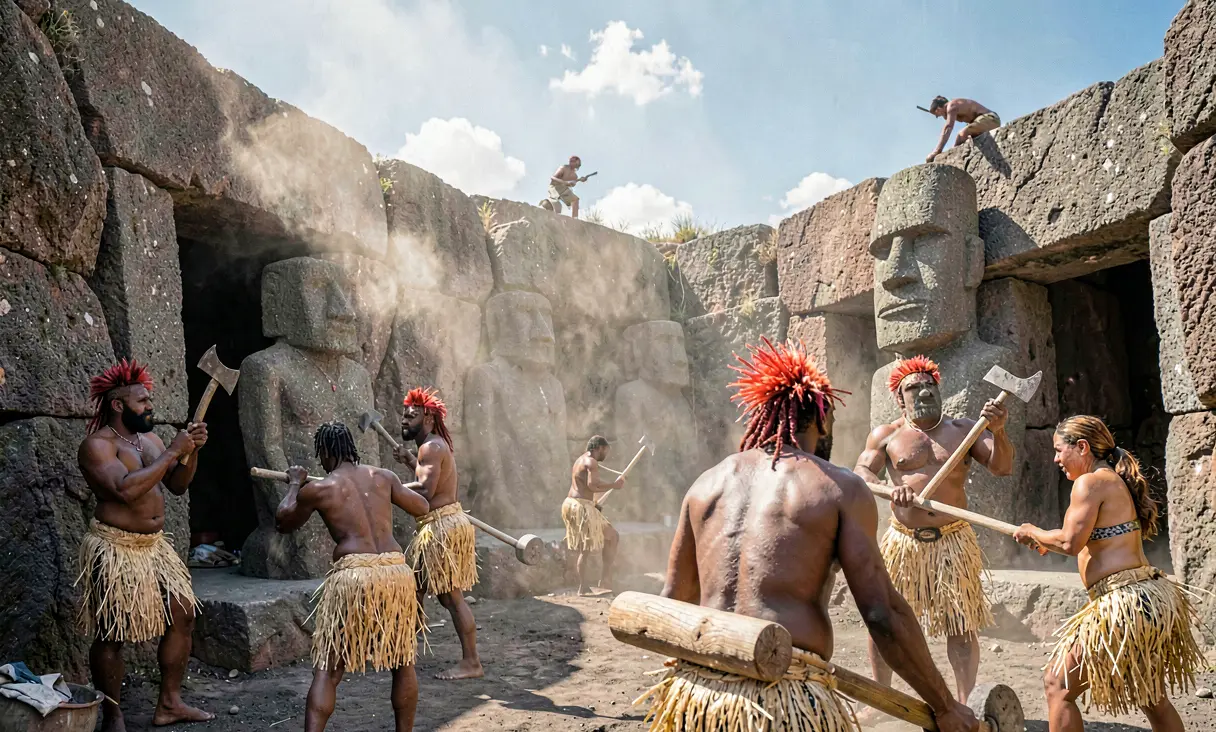 ArtMass Production of Moai Statues at Rano Rarakuc. 1400 CE · Rano Raraku Quarry, Rapa NuiThe peak period of moai carving begins at the Rano Raraku quarry under the direction of clan chiefs.
 ReligionZoroaster Preaches Dualistic Monotheismc. 1200 BCE · Greater Khorasan, Iran/Afghanistan border regionThe prophet Zoroaster establishes a dualistic faith emphasizing the cosmic struggle between good and evil in ancient Persia.
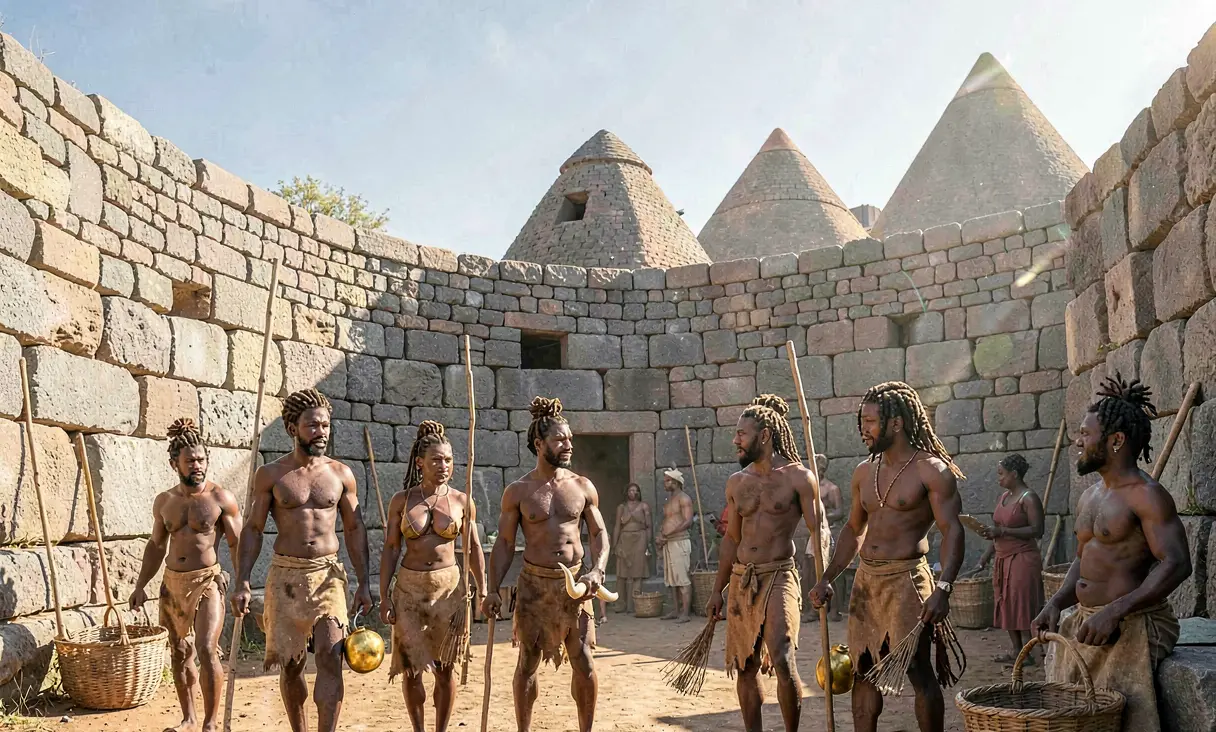 CivilizationConstruction and Peak of Great Zimbabwec. 1200 CE · Great Zimbabwe, ZimbabweThe Great Zimbabwe complex reaches its zenith as a major trading hub connecting the interior to the Swahili coast.
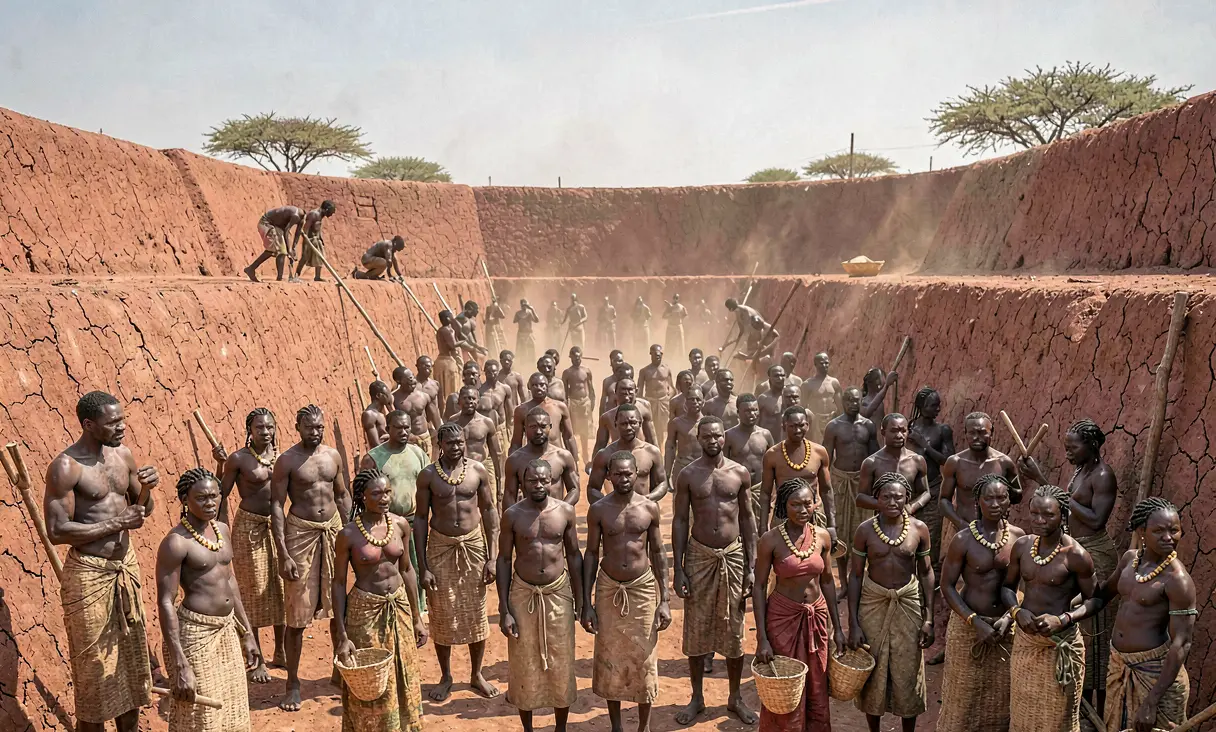 TechnologyConstruction of the Benin Walls Beginsc. 1200 CE · Benin City, NigeriaMassive earthwork fortifications begin to encircle Benin City, creating one of the world's largest pre-modern structures.
Discussion
Loading…