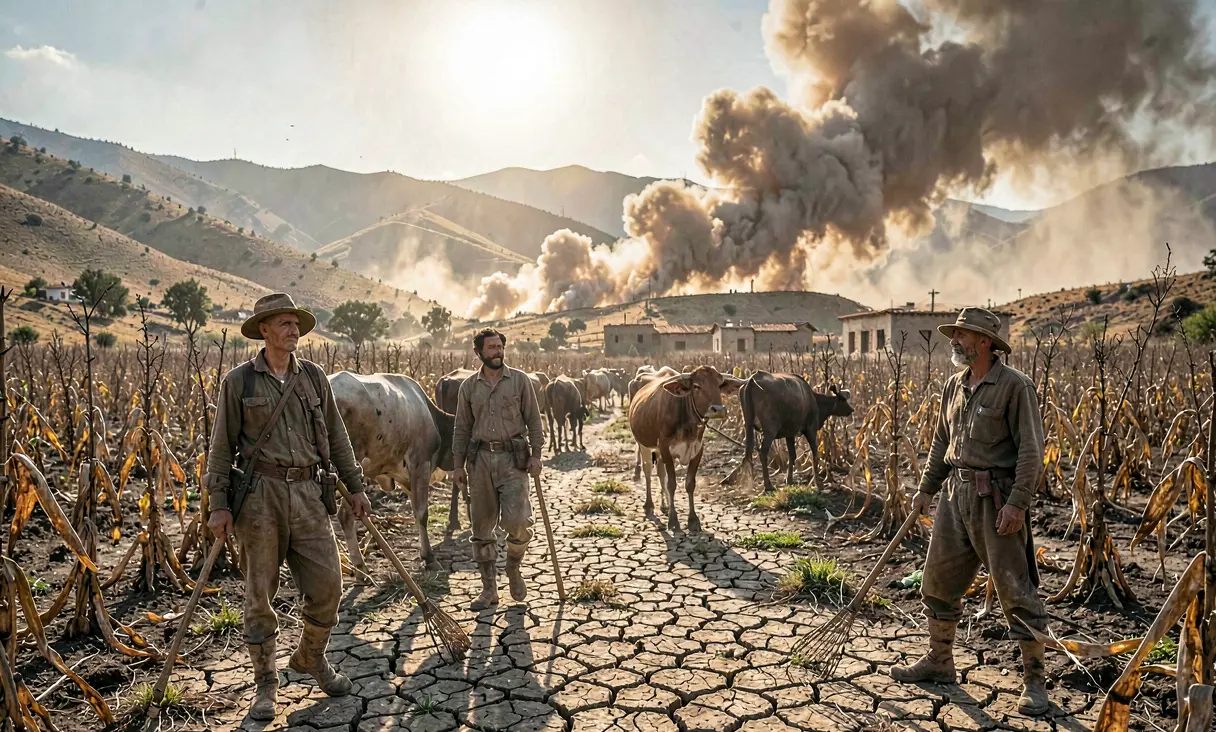
Great Famine of Ethiopia under Emperor Dawit I
A catastrophic convergence of drought and locusts around 1480 CE devastated Ethiopia's highlands, triggering mass starvation that fractured Emperor Dawit I's authority and exposed the empire's climati
Context of the Solomonic Restoration
By the late 15th century, the Ethiopian Empire under the Solomonic dynasty was navigating a precarious balance between central authority and regional autonomy. Emperor Dawit I (reigned c. 1468–1478, with influence extending into the early 1490s depending on chronology) presided over a realm that had recently experienced a resurgence of royal power but remained deeply dependent on the agrarian output of the northern and central highlands. The state's economy was overwhelmingly pastoral and agricultural, relying on the seasonal rhythms of the *kiremt* (summer rains) to sustain the vast population centers in provinces such as Amhara, Tigray, and Shewa. This reliance made the empire uniquely vulnerable to climatic anomalies, a fragility that would soon be catastrophically exposed.
The Convergence of Drought and Locusts
Around 1480 CE, a perfect storm of environmental disasters struck the Ethiopian Highlands. Paleoclimatic data and contemporary chronicles suggest a prolonged period of severe drought, likely linked to shifts in the El Niño-Southern Oscillation (ENSO) patterns that disrupted the vital summer monsoons. As crops withered and water sources dried up, the ecological balance was further shattered by massive swarms of desert locusts (*Schistocerca gregaria*). These insects descended upon the already failing fields, stripping the remaining vegetation bare. The combination of failed rains and total defoliation created a food security crisis of unprecedented scale, decimating the harvest in the empire's breadbasket.
The Unfolding Catastrophe
The famine unfolded with terrifying speed throughout the highlands. Traditional granaries were emptied within months, and the price of grain skyrocketed beyond the reach of the peasantry. Historical accounts describe a landscape where entire villages were abandoned as survivors fled to the lowlands or sought refuge in remote monasteries and mountain strongholds. The social fabric began to tear; with no food to distribute, the customary obligations between the *gult* (landholding) nobility and their tenants collapsed. In many regions, the state's capacity to provision its army evaporated, leaving military garrisons isolated and starving. The crisis was compounded by the consumption of wild foods, bark, and roots, leading to widespread malnutrition and disease.
Political Fragmentation and Imperial Weakness
Emperor Dawit I found his authority severely compromised by the disaster. Unable to provide relief or maintain order through traditional mechanisms of tribute and grain distribution, the central government lost its grip on distant provinces. Local governors and regional lords, facing their own survival crises, began to act with increasing autonomy, seizing control of remaining resources and withholding military levies from the throne. This period marked a significant regression in the consolidation of power achieved by Dawit's predecessors. The vacuum of authority allowed for the rise of warlords and intensified internal strife, as competing factions fought over the dwindling food supplies rather than uniting against external threats.
Aftermath and Demographic Shifts
The immediate aftermath of the 1480 famine was a demographic collapse that reshaped the highland landscape. Mortality rates were staggering, with estimates suggesting significant population losses in the hardest-hit provinces. The social order required decades to repair; many communities never returned to their ancestral lands, leading to permanent shifts in settlement patterns and land tenure systems. The economic base of the empire was shattered, forcing a reorientation toward more resilient but less productive subsistence strategies. The trauma of the famine became embedded in local oral traditions and ecclesiastical records, serving as a grim reminder of nature's indifference to imperial ambition.
Legacy and Historical Significance
While not a world-defining event on the scale of the fall of Rome, the Great Famine of c. 1480 was a pivotal moment in Ethiopian history that exposed the structural vulnerabilities of the Solomonic state. It highlighted the critical dependence of pre-modern African empires on climatic stability and demonstrated how environmental shocks could accelerate political fragmentation. The famine weakened Ethiopia's ability to project power against emerging external threats, particularly the expanding Muslim sultanates to the east, setting a precedent for future crises where climate and politics would intertwine. It remains a stark case study in the intersection of environmental history and statecraft, illustrating how nature can dictate the fate of nations.
Demonstrated the fragility of medieval African states in the face of environmental catastrophes.
Where it happened
Ethiopian Highlands — see it on the interactive map →
Explore related history
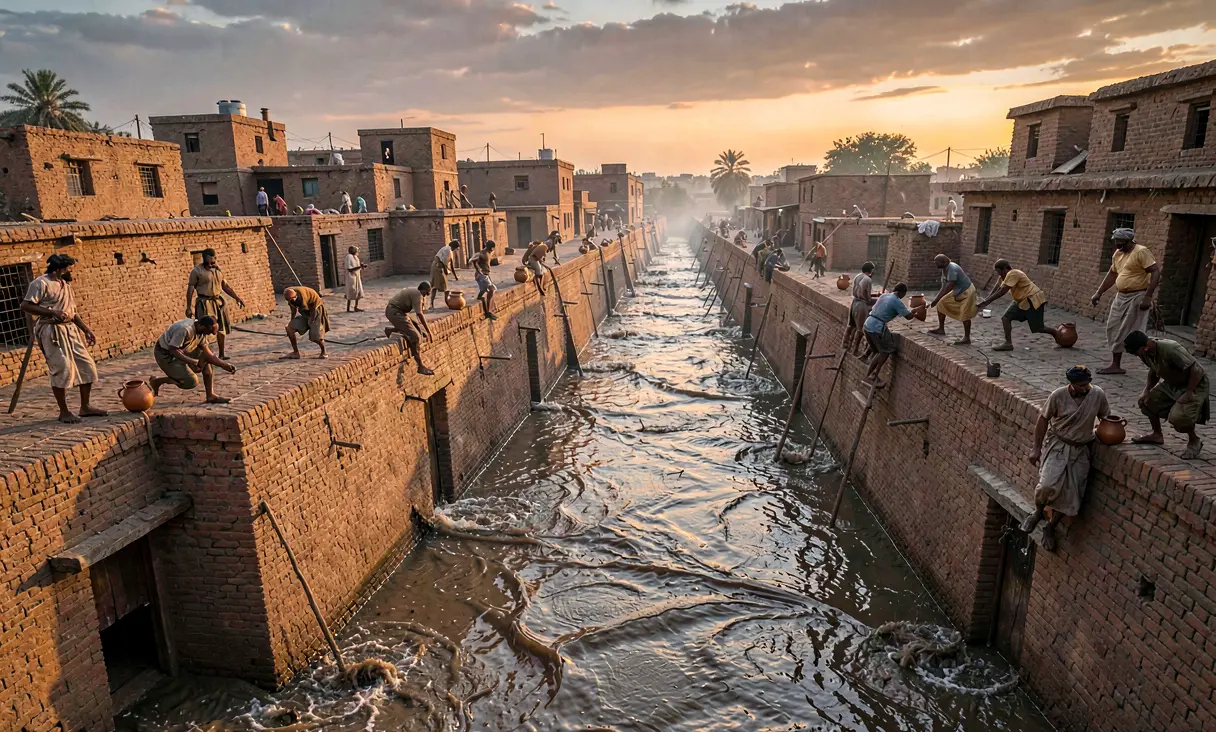 DisasterCatastrophic Flooding at Mohenjo-Daroc. 1900 BCE · Mohenjo-Daro, Sindh, PakistanDevastating floods from the Indus River repeatedly buried and destroyed layers of Mohenjo-Daro, signaling the decline of the urban phase.
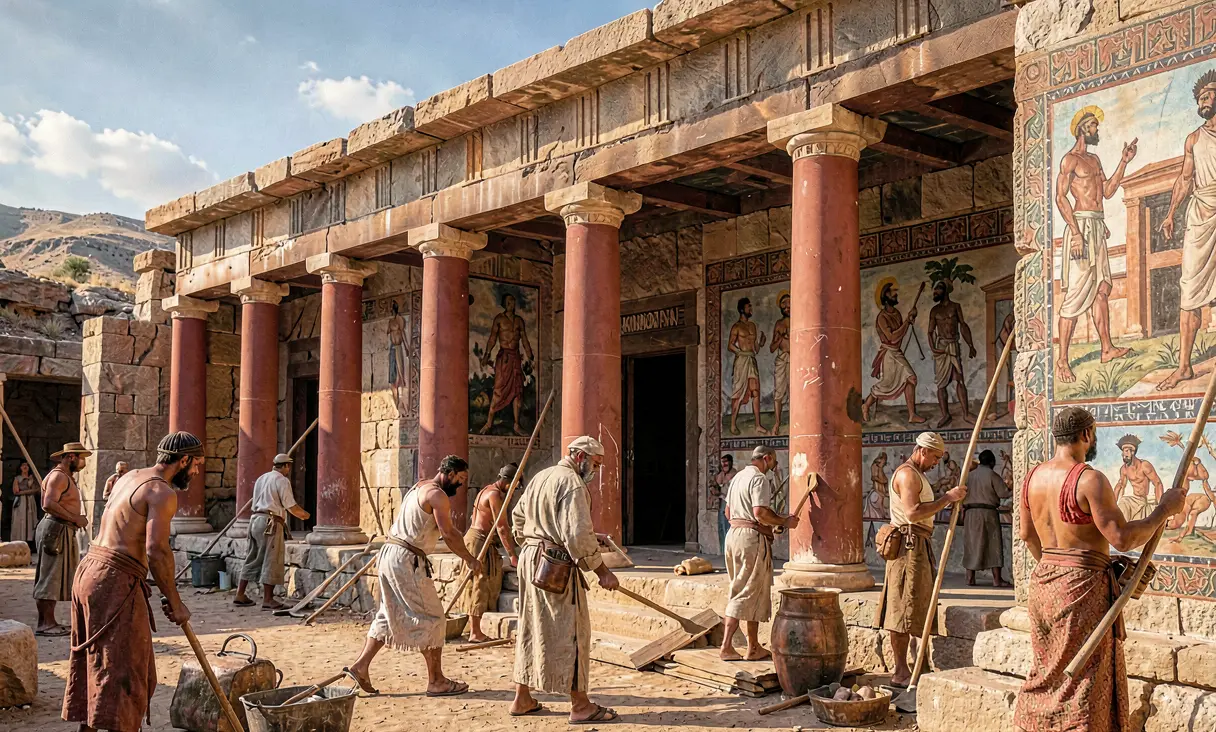 DisasterRebuilding of the Palace at Knossos after Earthquakec. 1700 BCE · Knossos, Crete (Greece)Minoans rebuild the Palace of Knossos after a massive earthquake destroys the old structure.
 DisasterEcological Collapse and Deforestation of Rapa Nuic. 1600 CE · Rapa Nui (Easter Island), ChileOverexploitation of resources leads to deforestation and societal transformation on Rapa Nui.
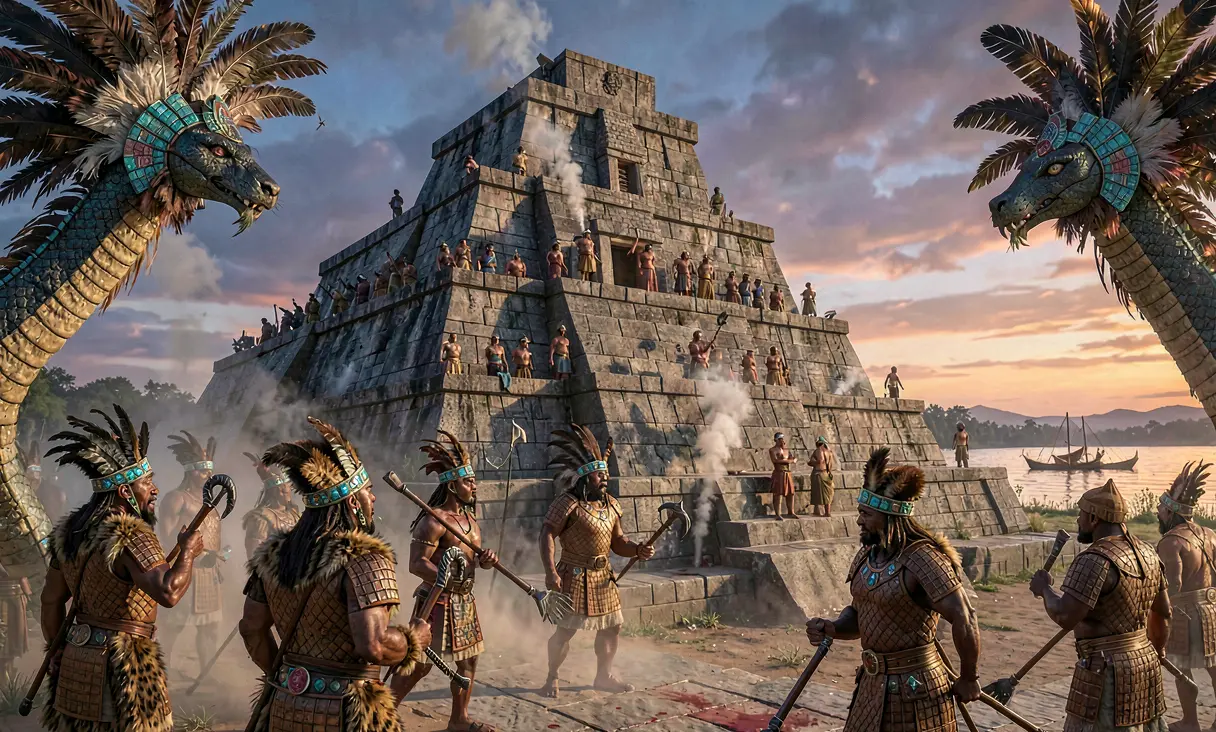 ReligionRededication of the Templo Mayor by Ahuitzotlc. 1487 CE · Tenochtitlan, Mexico City, MexicoSacrificial ceremonies attend the expansion of Tenochtitlan's main temple.
 WarDai Viet Annexation of Champa1471 CE · Vijaya (Quang Ngai), VietnamLe Thanh Tong destroys the Champa capital, ending its independence and absorbing its territory.
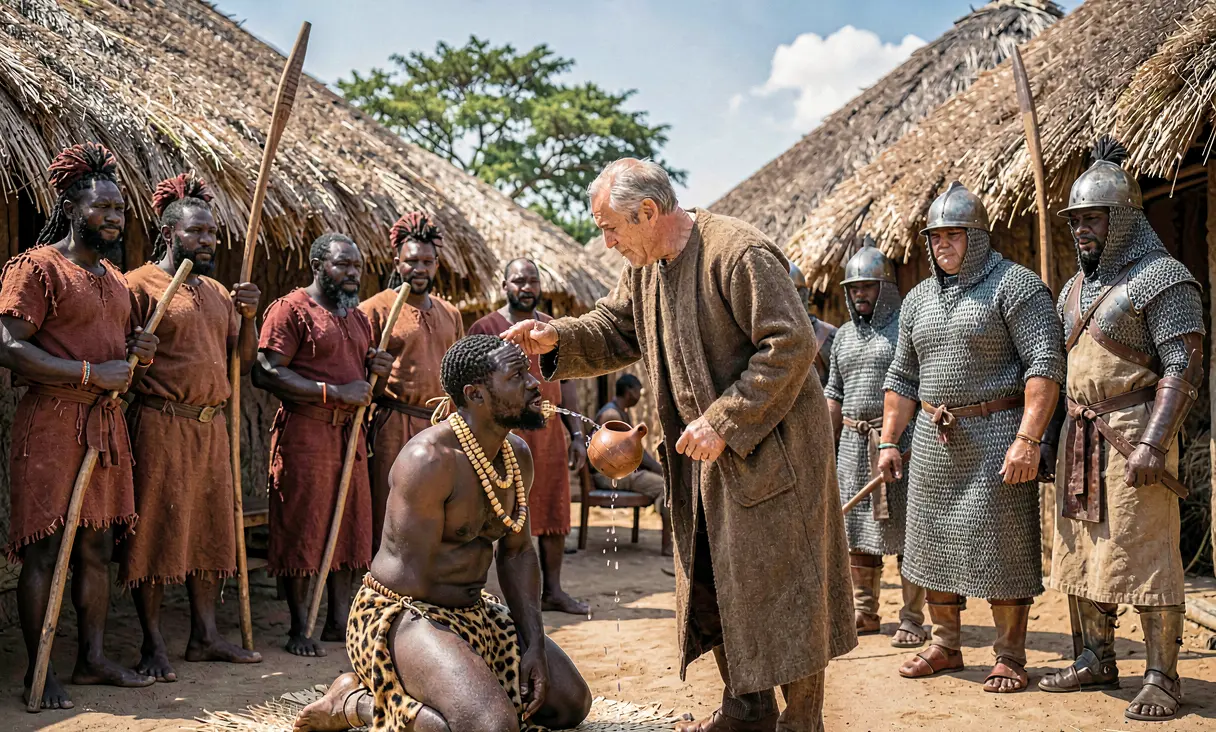 ReligionKing Nzinga a Nkuwu Baptized as João I of Kongo1491 CE · Mbanza Kongo, AngolaKing Nzinga a Nkuwu converts to Catholicism, initiating a complex fusion of Christian and traditional Kongo beliefs.
Discussion
Loading…