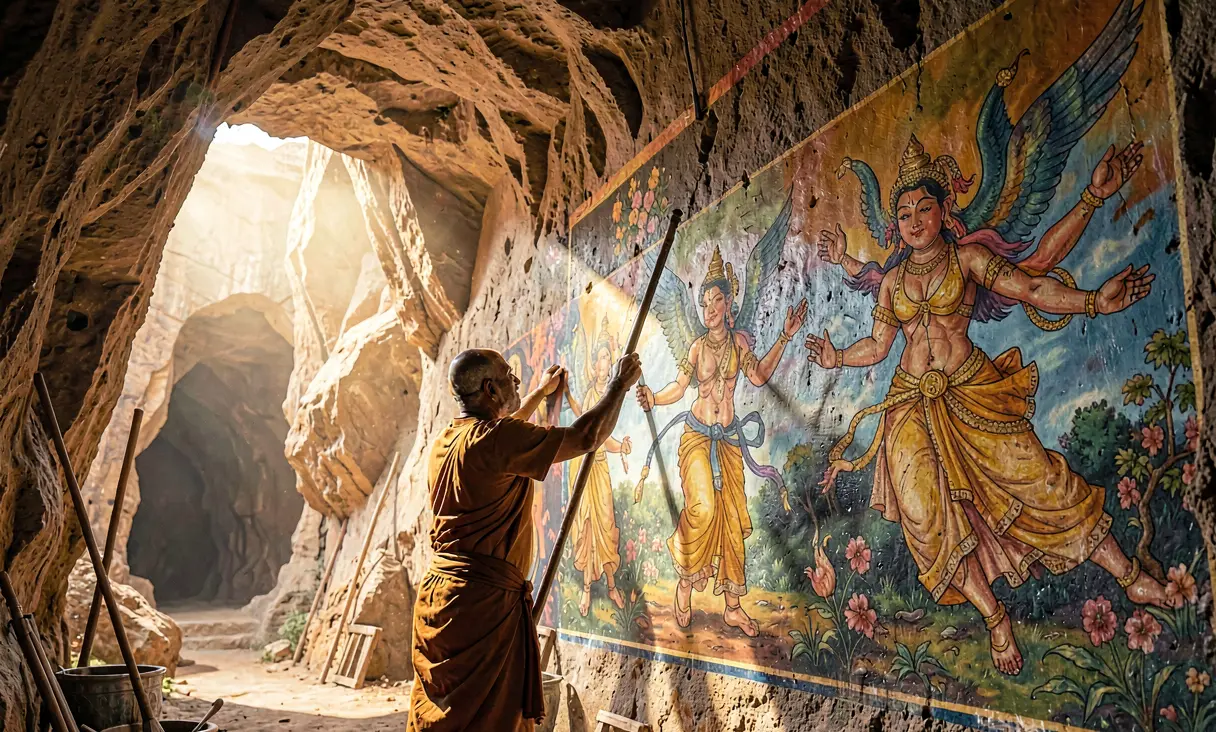
Creation of Mogao Caves Murals
Spanning a millennium, the Mogao Caves preserve the world's most extensive collection of Buddhist art, serving as a vibrant visual encyclopedia of Silk Road culture and religious devotion.
The Vision at Mingsha Mountain
In the year 366 CE, during the reign of the Former Qin dynasty, a Buddhist monk named Le Zun (also known as Yuezun) traveled westward along the Hexi Corridor. Upon reaching the base of Mingsha Mountain, near the oasis city of Dunhuang, he reportedly witnessed a miraculous vision: a thousand golden Buddhas radiating light against the cliff face, resembling a celestial city. Interpreting this as a divine mandate to establish a place of worship and meditation, Le Zun initiated the excavation of the first cave. This act marked the genesis of what would become the largest and most significant repository of Buddhist art in the world.
A Cosmopolitan Crossroads
Dunhuang's strategic location at the junction of the Northern and Southern Silk Road routes made it an indispensable hub for merchants, pilgrims, and diplomats traveling between China, India, Persia, and Central Asia. The caves were not built in isolation; they flourished under the patronage of diverse ruling powers, including the Northern Liang, Sui, Tang, and Western Xia dynasties. This unique geopolitical position allowed the Mogao Caves to absorb and synthesize artistic influences from across Eurasia. The resulting aesthetic is a masterful blend of Indian iconography, Persian color palettes, and Chinese brushwork, creating a distinct visual language that evolved over centuries.
Patrons, Monks, and the Art of Donation
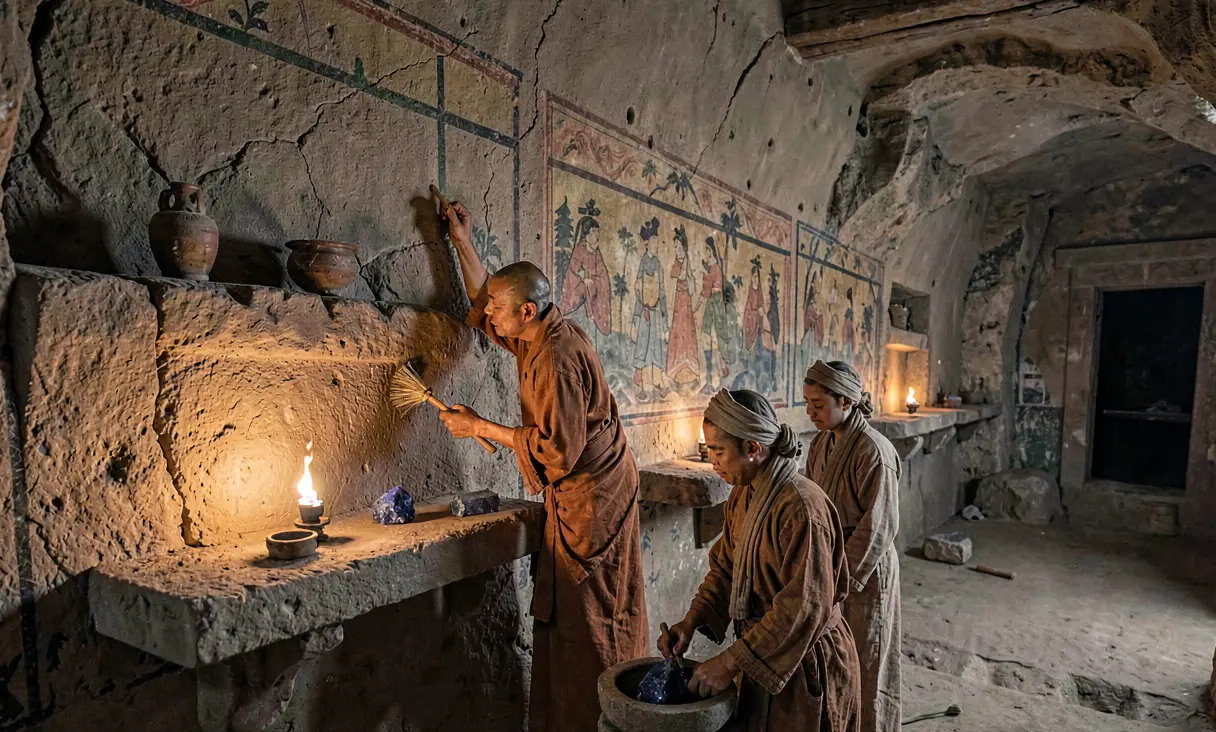
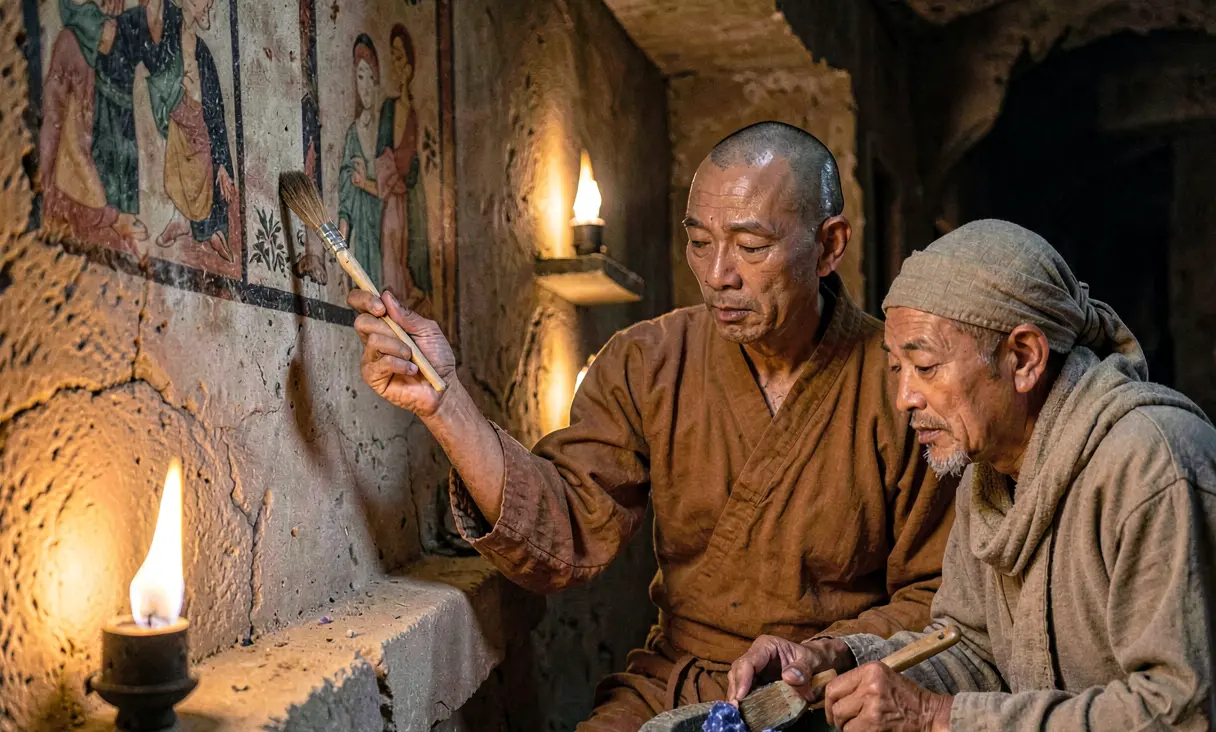
The expansion of the cave complex was driven by a symbiotic relationship between monastic communities and lay patrons. Wealthy merchants, local governors, and imperial families commissioned caves as acts of merit-making, often inscribing their names and titles on the walls alongside the artwork. While Le Zun is credited with the founding vision, subsequent generations of monks, such as those from the Northern Liang period who introduced the 'central pillar' architectural style, shaped the complex's evolution. The sheer scale of the project required a vast workforce of artisans, painters, and sculptors, many of whom remain anonymous to history despite their enduring contributions.
Centuries of Construction and Evolution
From the 4th century through the 14th century, the construction and decoration of the Mogao Caves continued almost uninterrupted. The complex eventually grew to encompass over 735 caves, with 492 containing surviving murals and sculptures covering an area of approximately 45,000 square meters. Each dynasty left its distinct mark: the Northern dynasties favored somber tones and Indian-influenced figures; the Sui period introduced more fluid lines; and the Tang Dynasty produced the complex's most magnificent works, characterized by vibrant colors, dynamic compositions, and life-sized bodhisattvas. The art depicts a vast array of subjects, from Jataka tales illustrating the Buddha's past lives to intricate mandalas and scenes of celestial music.
A Visual Encyclopedia of Medieval Life
Beyond their religious function, the murals serve as an unparalleled historical record of daily life in medieval China. The paintings meticulously document clothing styles, musical instruments, architectural techniques, agricultural practices, and social customs that are often absent from textual records. Scenes of donors paying homage reveal the complex hierarchy of society, while depictions of flying apsaras (celestial nymphs) showcase the evolution of Chinese dance and costume. These images provide historians with concrete evidence of how Buddhism was adapted to fit local cultural contexts, illustrating the fluidity of religious practice along the Silk Road.
Rediscovery and Global Legacy
Following a period of decline during the Yuan and Ming dynasties, when the overland Silk Road trade routes diminished, the Mogao Caves were largely forgotten by the outside world until 1900. In that year, a Taoist priest named Wang Yuanlu discovered the Library Cave (Cave 17), which contained tens of thousands of manuscripts and textiles dating from the 4th to the 11th centuries. This discovery triggered a wave of international exploration by figures such as Aurel Stein and Paul Pelliot, who removed vast quantities of artifacts, sparking both scholarly interest and controversy regarding cultural heritage. Today, recognized as a UNESCO World Heritage Site, the Mogao Caves stand as a testament to human creativity and the enduring power of cross-cultural exchange.
The Mogao Caves represent the largest and most complete repository of Buddhist art and cultural history from ancient Central Asia.
Where it happened
Dunhuang, China — see it on the interactive map →
Explore related history
 ArtConstruction of Sennacherib's Palace at Ninevehc. 705 BCE · Nineveh (Mosul), IraqSennacherib expands Nineveh into a magnificent capital filled with art and libraries.
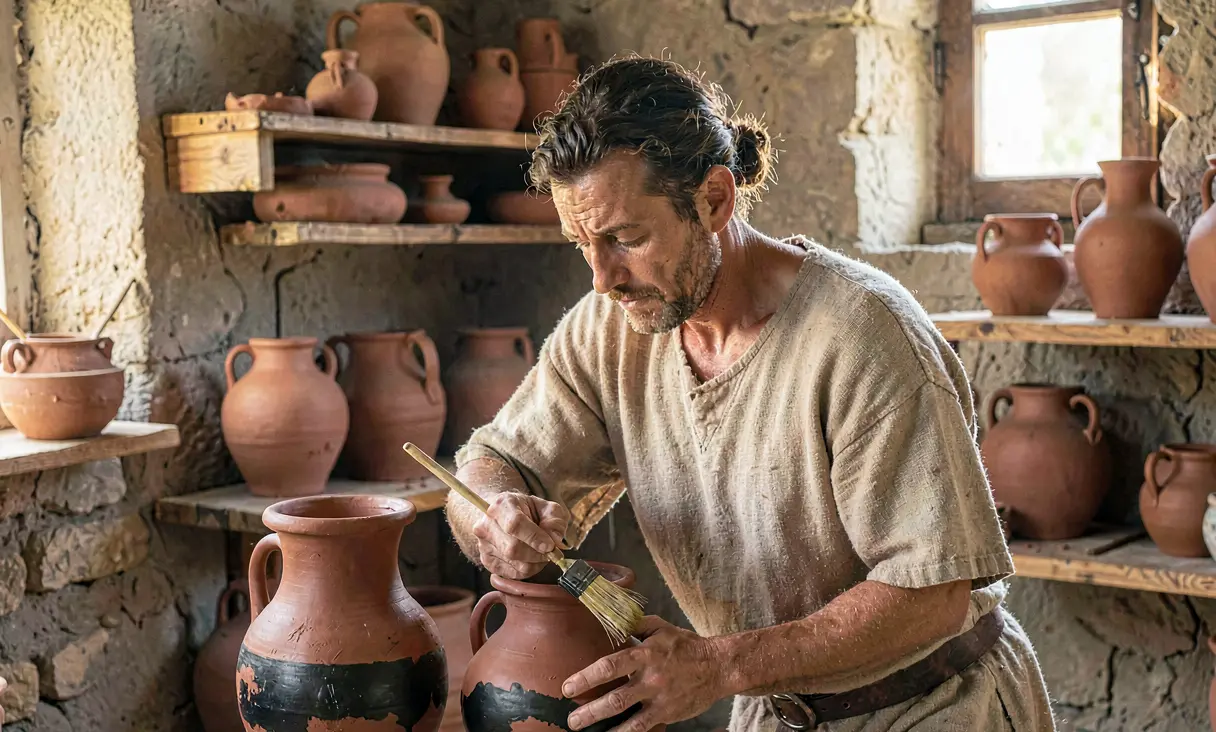 ArtRise of Black-Figure Vase Paintingc. 700 BCE · Athens, GreeceGreek potters perfect the black-figure technique to depict mythological scenes.
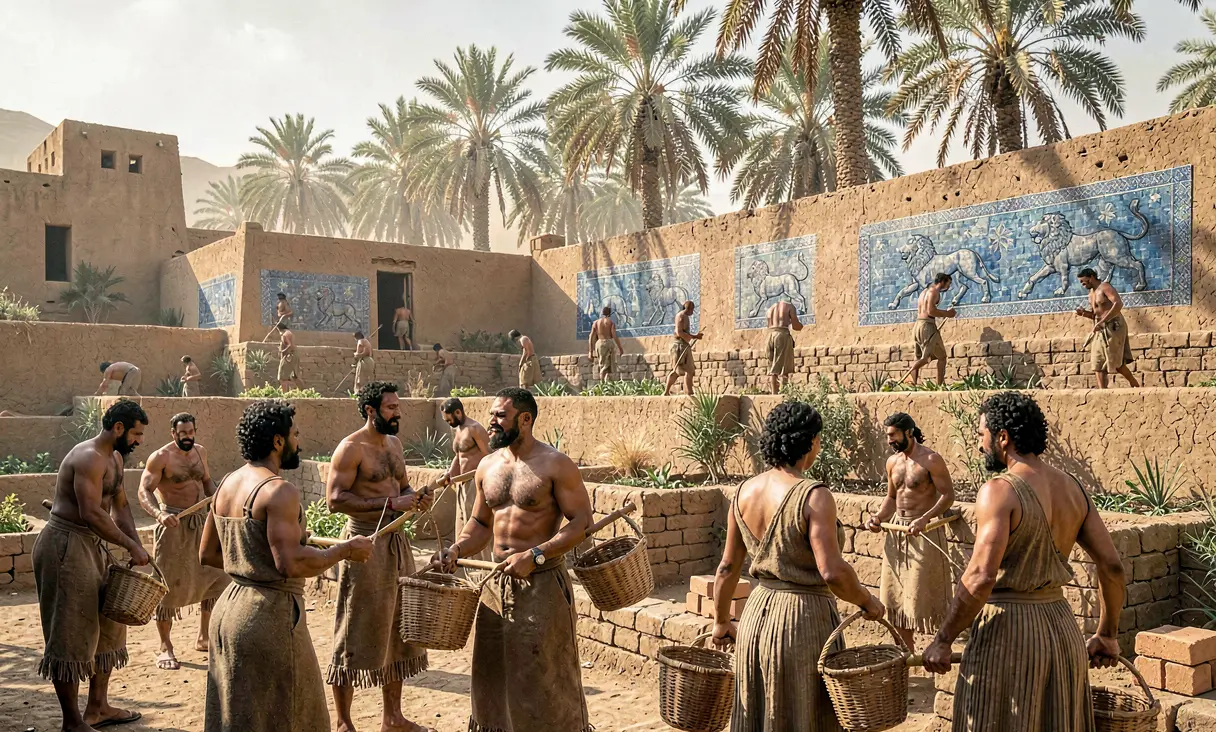 ArtConstruction of the Hanging Gardens of Babylonc. 605 BCE · Babylon, Mesopotamia (Iraq)Nebuchadnezzar II builds the legendary Hanging Gardens for his Median wife.
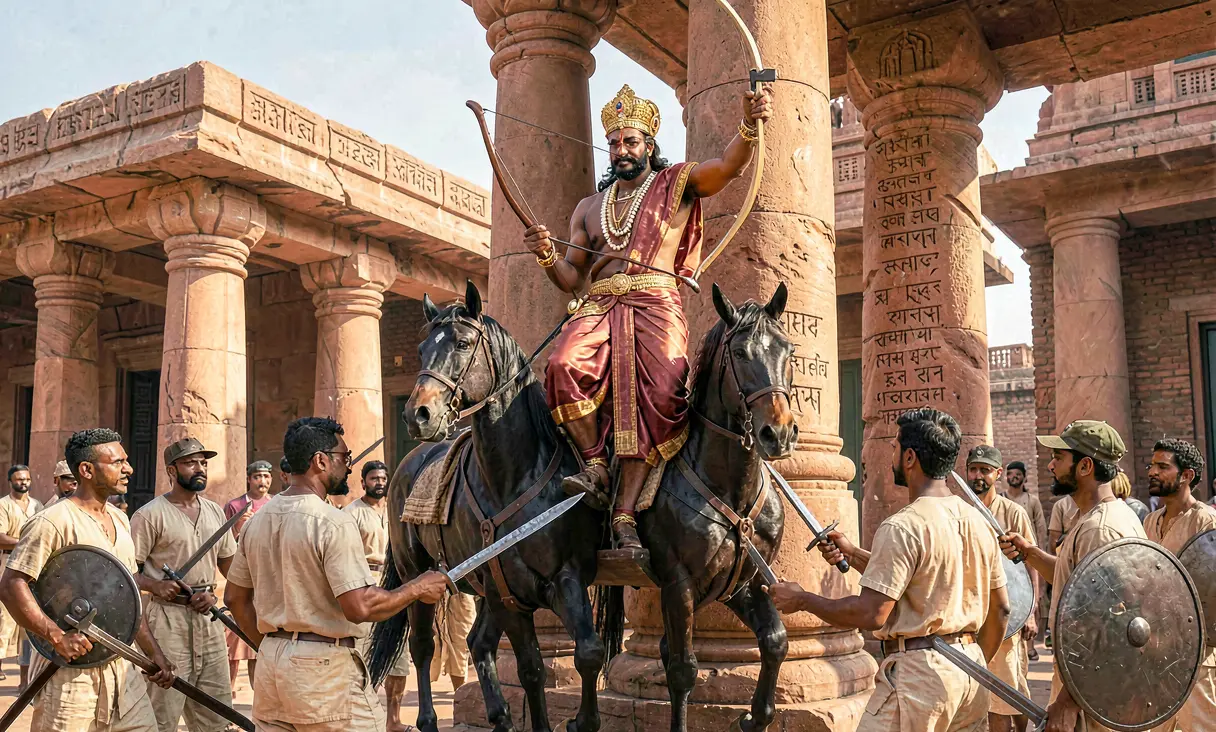 WarSamudragupta's Southern Campaigns and Allahabad Pillarc. 350 CE · Allahabad (modern Uttar Pradesh/India)Emperor Samudragupta conquers northern and southern India, recording his victories on the Allahabad Pillar.
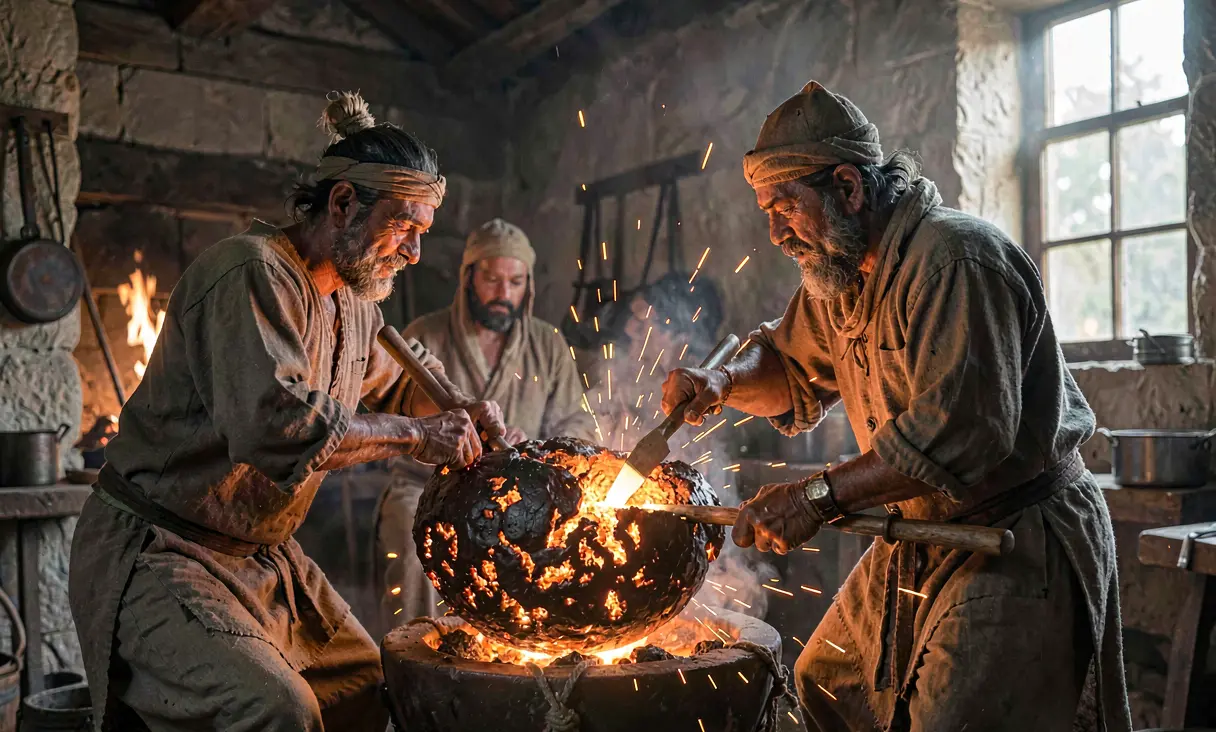 TechnologyCasting of the High-Corrosion Resistant Iron Pillar at Delhic. 400 CE · Delhi, IndiaIndian metallurgists forge a massive iron pillar that resists rust for over 1,600 years.
 literatureCompilation of the Kama Sutrac. 400 CE · India (likely Pataliputra)Vatsyayana compiles the treatise on love, desire, and social conduct.
Discussion
Loading…