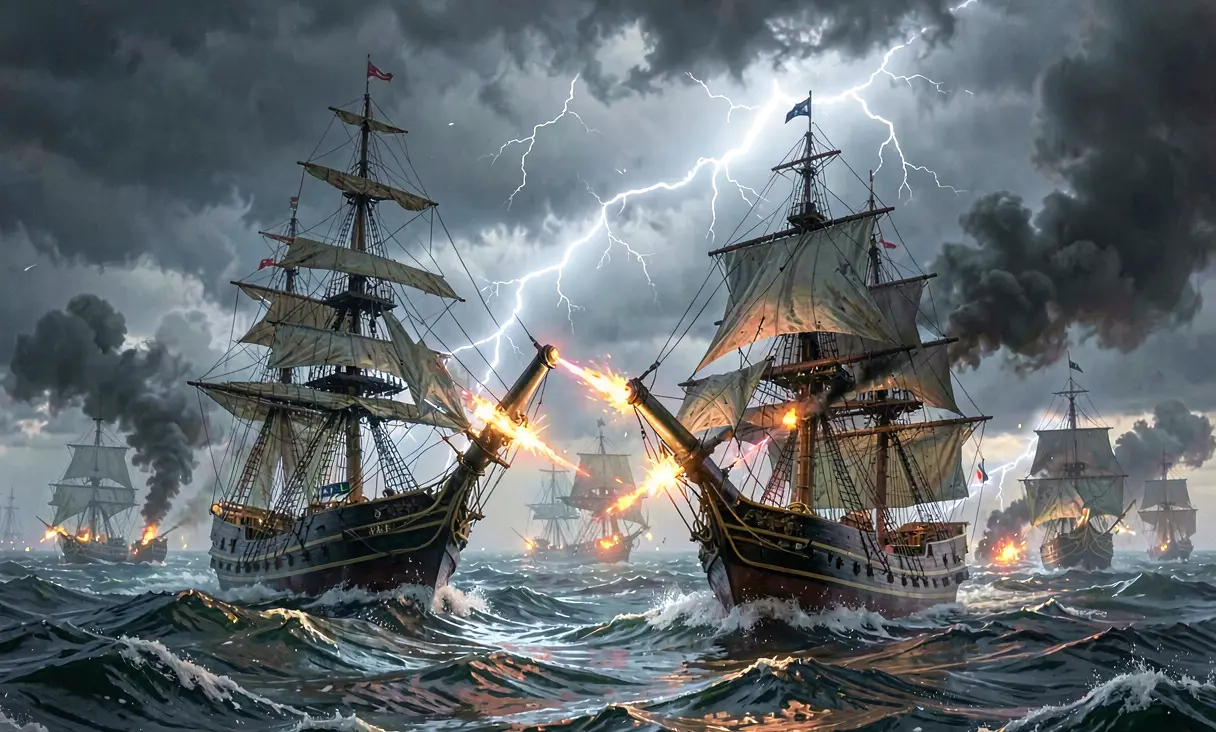
Defeat of the Spanish Armada
The 1588 defeat of Spain's Invincible Armada by English forces secured Protestant Britain, shattered Spanish naval supremacy, and launched England as a dominant global maritime power.
The Clash of Empires
By the late 16th century, the Spanish Empire under King Philip II stood as the undisputed hegemon of Europe and the New World, wielding immense wealth from American silver and a formidable military machine. Philip's primary objective was to depose Queen Elizabeth I, whom he viewed as a heretic and illegitimate ruler, and restore Catholicism to England. This religious and political imperative culminated in the formation of the 'Invincible Armada' (La Grande y Felicísima Armada), a massive fleet of 130 ships carrying nearly 30,000 men, including 21,000 soldiers and 8,000 sailors. The strategic plan was simple yet ambitious: sail from Lisbon to the Netherlands, rendezvous with the Duke of Parma's army of invasion, cross the English Channel, and land troops on English soil to overthrow the Protestant regime.
The English Defense
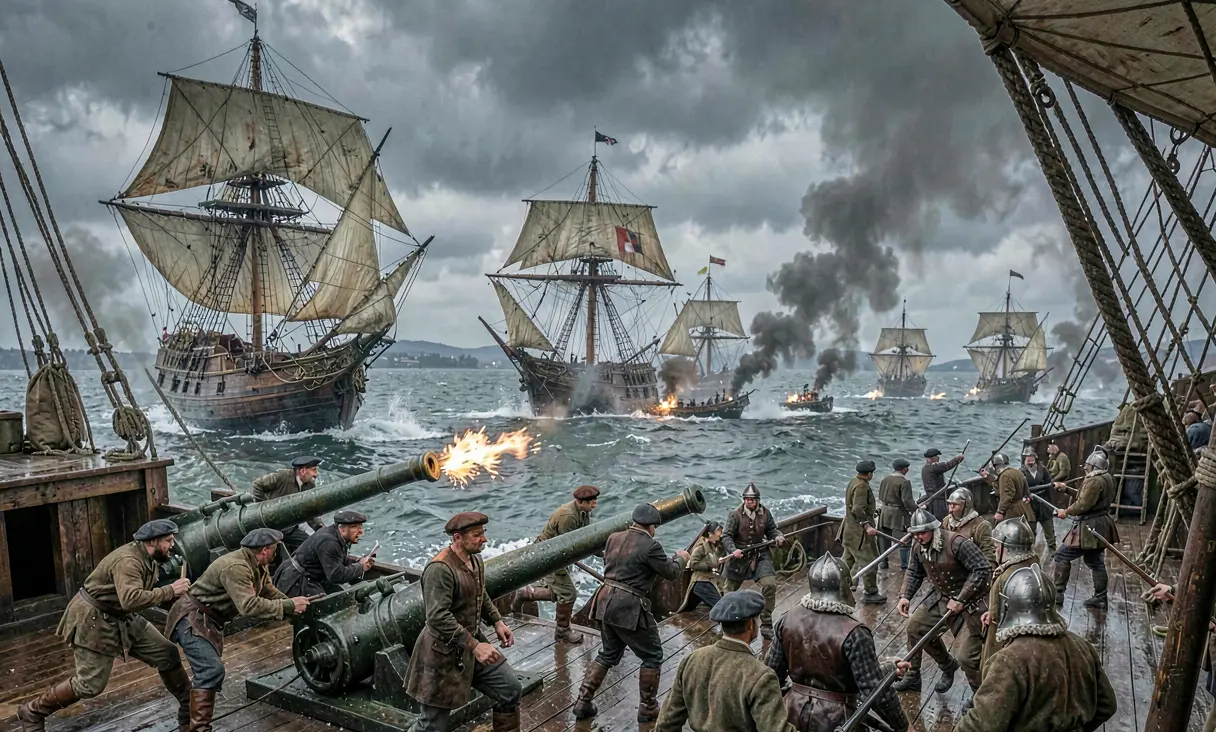
In stark contrast to Spanish heavy galleons designed for boarding and close-quarters combat, the English fleet under Lord High Admiral Charles Howard of Effingham and Vice-Admiral Sir Francis Drake relied on speed, maneuverability, and long-range artillery. The English force numbered approximately 197 ships, though many were smaller merchant vessels pressed into service, with a core fighting strength of around 34 royal warships. Crucially, the English had developed superior gunnery tactics, utilizing 'running guns' to fire broadsides while maintaining distance, rather than attempting to grapple and board enemy vessels. This tactical divergence would prove decisive as the two fleets prepared to meet in the narrow waters of the English Channel.
The Battle Begins
The Armada entered the English Channel on July 19, 1588 (Old Style), forming a defensive crescent formation as it advanced toward Plymouth. The initial engagement began on July 21 when Howard's fleet attacked from windward, utilizing their superior speed to dictate the terms of combat. For several days, the fleets skirmished along the coast, with the English firing thousands of cannonballs that damaged Spanish rigging and hulls but failed to sink major capital ships due to a lack of effective explosive shells. The Spanish maintained their formation with remarkable discipline, repelling repeated boarding attempts by English fireships on July 28 off Calais, which forced the Armada to scatter its defensive crescent.
The Turning Point at Gravelines
On August 8, 1588, the decisive battle occurred near Gravelines. With the Spanish fleet broken and drifting helplessly against the wind, Howard ordered a full-scale assault. The English ships unleashed a relentless barrage of cannon fire at close range, inflicting catastrophic damage on the disorganized Spanish vessels. Unlike previous skirmishes, this was not a war of attrition but a slaughter; several large Spanish galleons were sunk or captured, and the remaining fleet was driven northward, unable to return to Calais or link up with Parma's army. The failure to secure the Channel meant the invasion was effectively aborted, leaving the Armada to attempt a perilous retreat around Scotland and Ireland.
The Storms of the North Atlantic
While the English fleet had won the tactical battle, the ultimate destruction of the Armada occurred during its return voyage. Suffering from shortages of food and water, and battered by severe storms in the North Atlantic and around the coasts of Scotland and Ireland, dozens of Spanish ships were wrecked on rocky shores. Of the original 130 ships that departed Lisbon, fewer than half returned to Spain; estimates suggest over 25,000 men perished, most not from combat but from disease, starvation, drowning, or execution by Irish clansmen. The 'Protestant Wind' had played a critical role in sealing the fate of Philip II's greatest military undertaking.
Legacy and Historical Significance
The defeat of the Spanish Armada marked a profound turning point in global history, shattering the myth of Spanish invincibility and halting the spread of Catholic hegemony in Northern Europe. It secured the survival of the Protestant Reformation in Britain, allowing Elizabeth I's reign to continue and fostering the growth of English national identity. Militarily, it signaled the decline of the galley-based warfare era and the ascendancy of the sailing warship as the dominant instrument of naval power. Politically, it paved the way for England to challenge Spanish dominance in the Americas and eventually establish its own maritime empire, fundamentally altering the balance of power that would define European geopolitics for centuries.
It halted Spanish expansionism, established English naval supremacy, and ensured the survival of Protestantism in England.
Where it happened
English Channel, near Plymouth, UK — see it on the interactive map →
Explore related history
 WarBabur's Victory at Panipat and Founding of Mughalsc. 1526 CE · Panipat (modern Haryana/India)Babur defeats the Lodi Sultanate at the First Battle of Panipat, establishing the Mughal Empire in India.
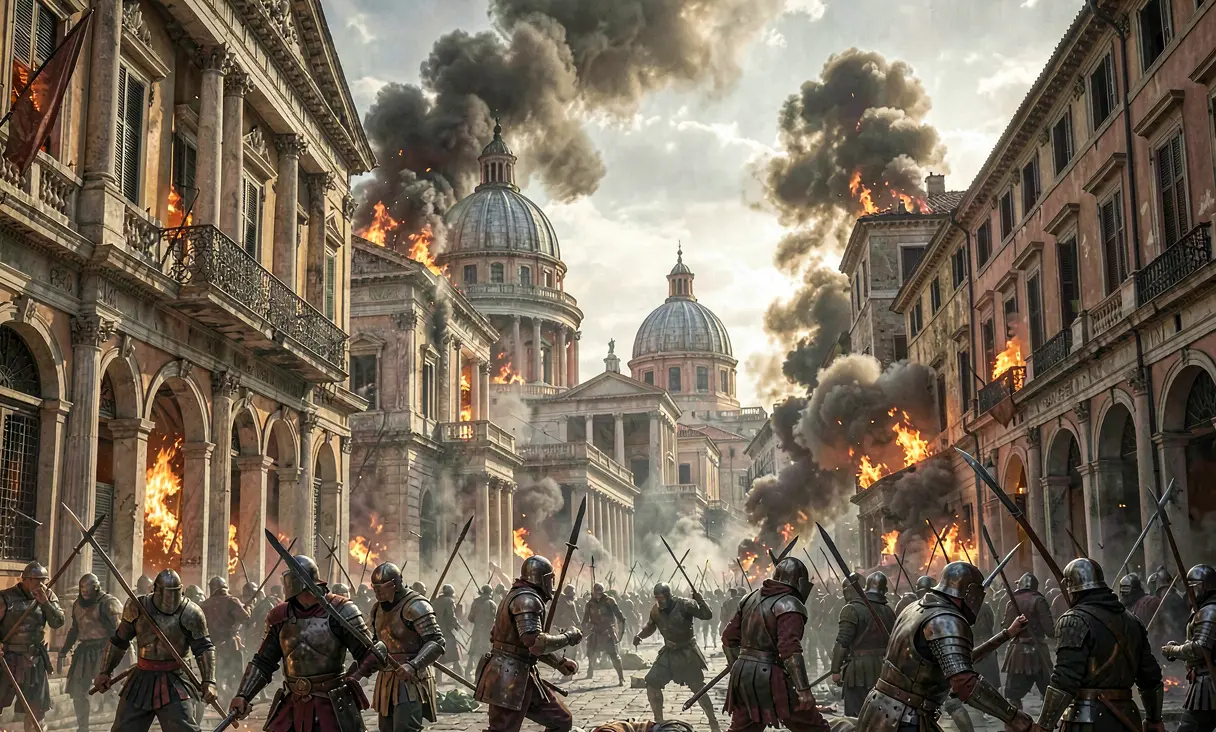 WarSack of RomeMay 6, 1527 · Rome, ItalyMutinous troops of Charles V brutally loot Rome, ending the High Renaissance.
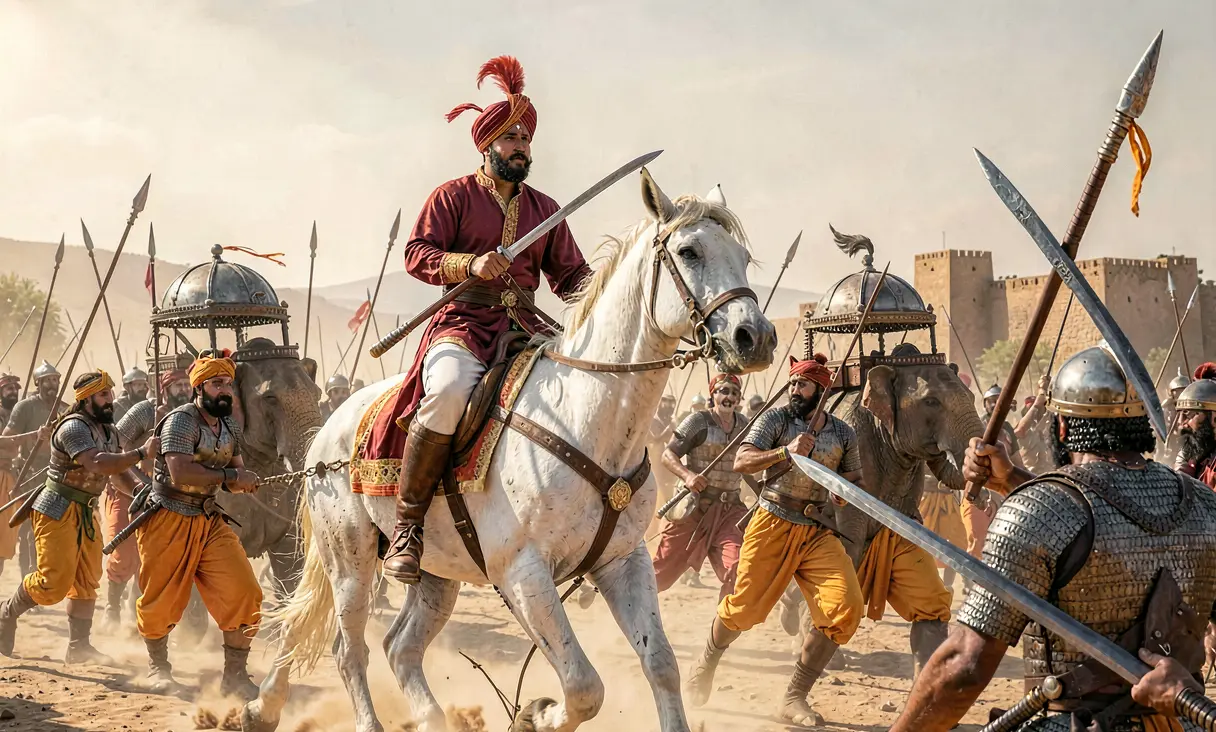 WarBabur's Victory at Khanwac. 1527 CE · Khanwa, Rajasthan, IndiaBabur defeats the Rajput confederacy led by Rana Sanga, consolidating Mughal rule over North India.
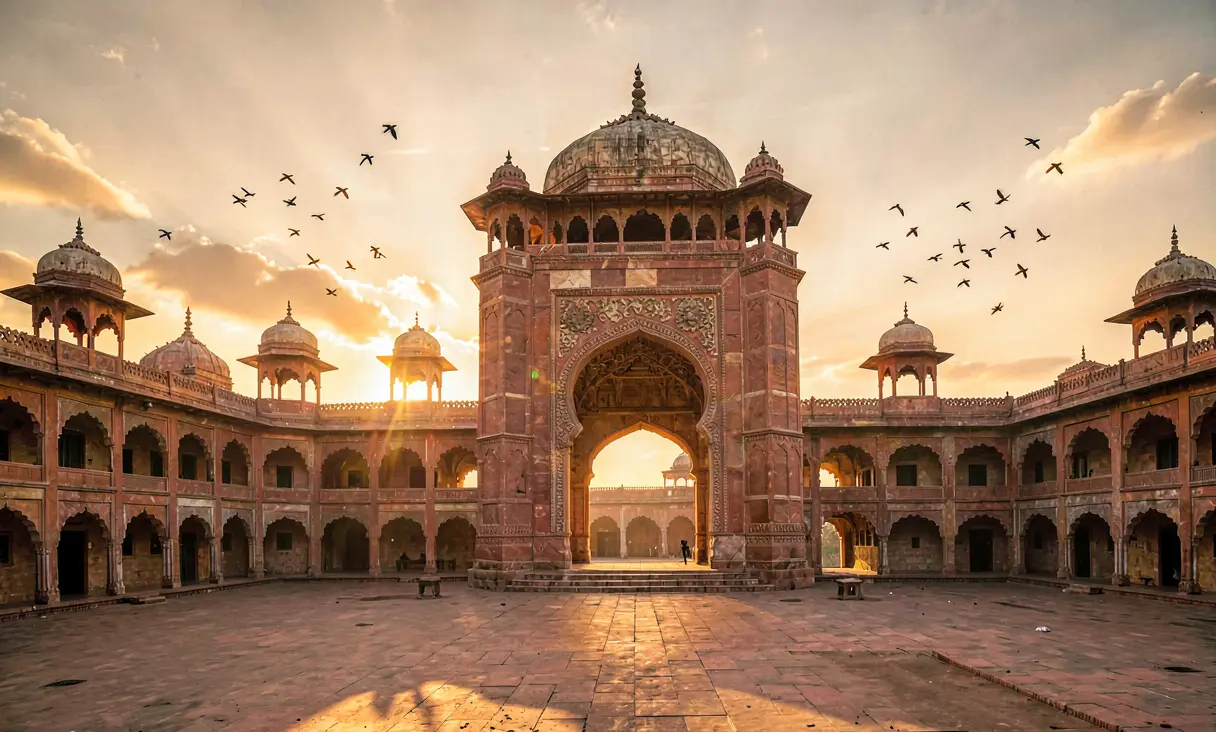 PoliticsFounding of Fatehpur Sikric. 1571 CE · Fatehpur Sikri, Uttar Pradesh, IndiaAkbar establishes Fatehpur Sikri as the new capital of the Mughal Empire to honor his spiritual guide and centralize administration.
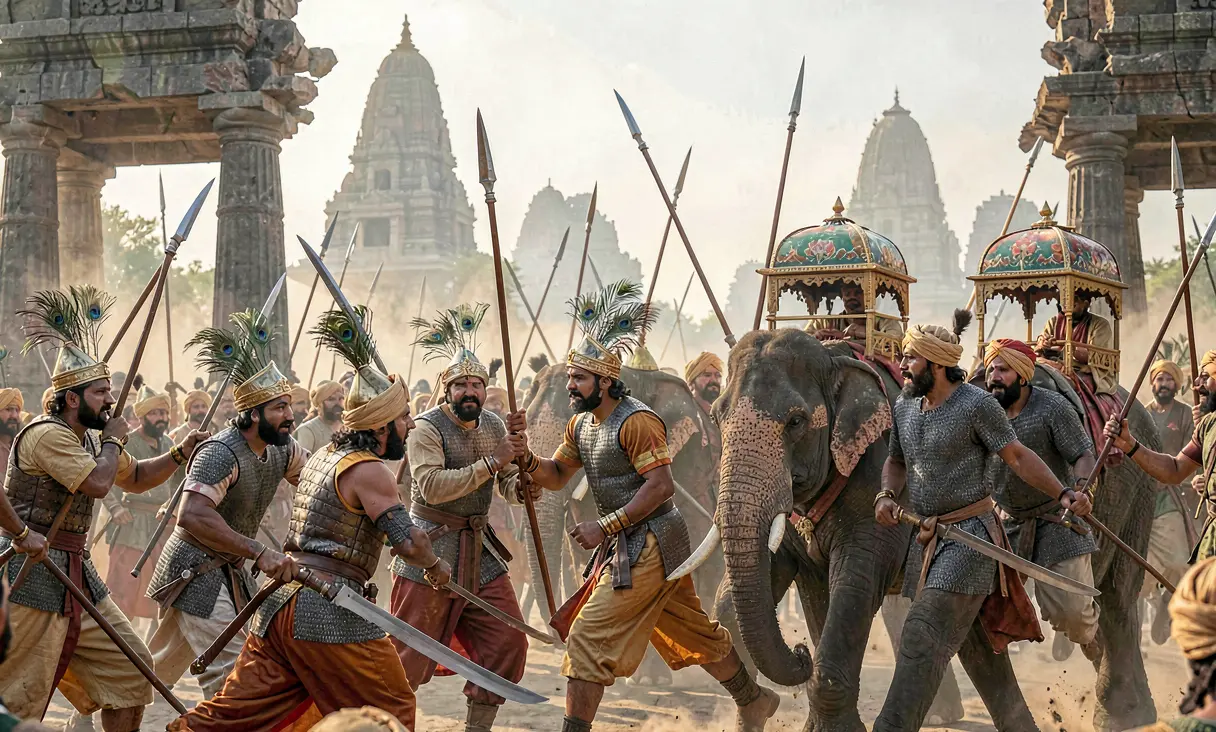 WarBattle of Talikota and Fall of Vijayanagarac. 1565 CE · Talikota, Karnataka, IndiaThe Deccan Sultanates defeat the Vijayanagara Empire in a decisive battle, leading to the sack of Hampi and the empire's collapse.
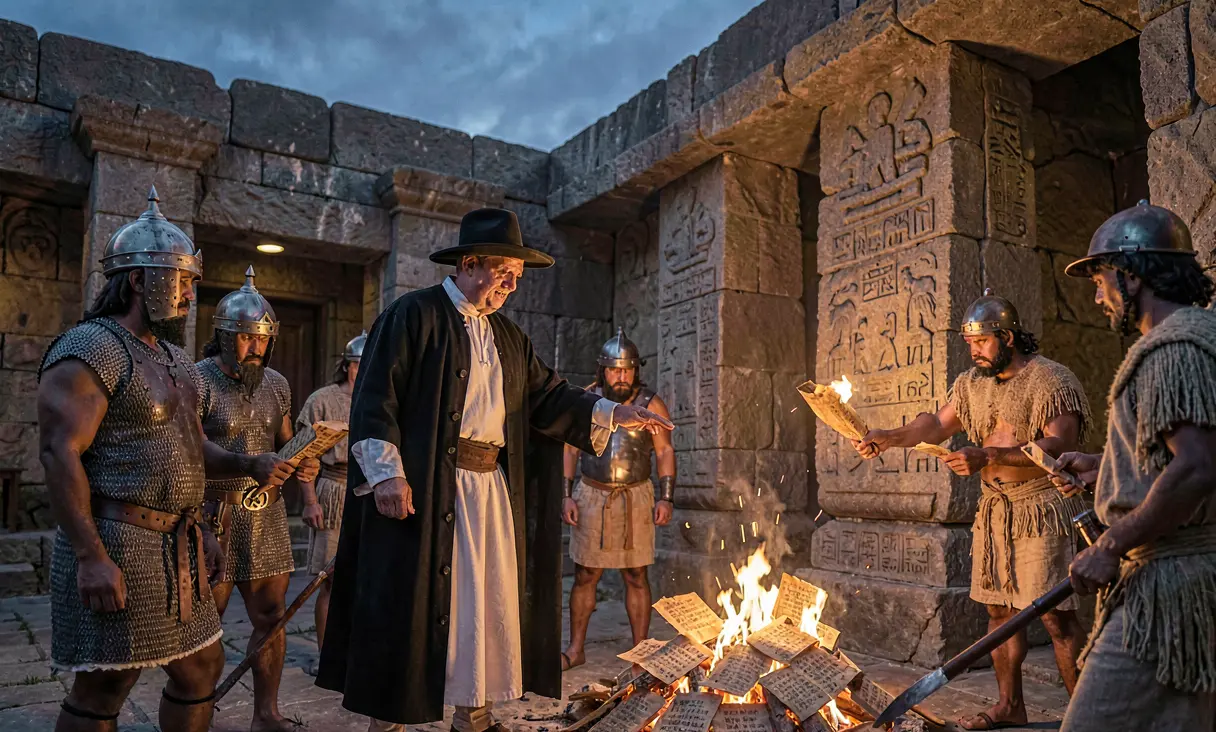 DisasterBurning of Maya Codices by Bishop LandaJuly 1562 CE · Mani, Yucatan, MexicoSpanish Bishop Diego de Landa orders the destruction of most surviving Maya written records in a campaign against idolatry.
Discussion
Loading…