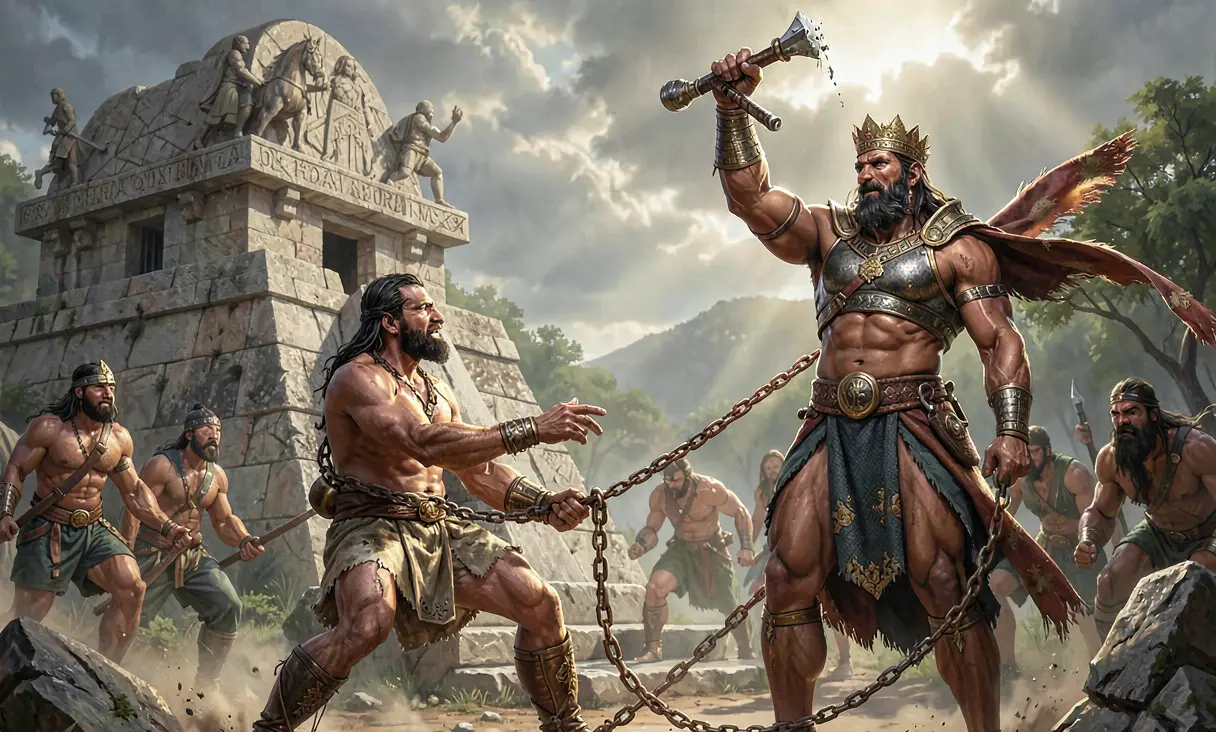
Death of Ah Cacao and Fall of Copán's Dynasty
In 738 CE, Quiriguá's K'ak' Tiliw Chan Yopaat captured and beheaded Copán's ruler 18 Rabbit, shattering a dynasty and permanently shifting regional power dynamics in the Maya lowlands.
The Zenith of Copán
By the early eighth century, Copán stood as a preeminent power in the southeastern Maya lowlands, its influence stretching across modern-day Honduras and Guatemala. Under the reign of Uaxaclajuun Ub'aah K'awiil, known to history as '18 Rabbit,' the city reached an unprecedented cultural and architectural apex. Ascending the throne in 695 CE at the age of ten, 18 Rabbit presided over a golden age that saw the construction of the Great Plaza, the elaboration of the Hieroglyphic Stairway, and the refinement of Copán's distinctive artistic style. His rule was characterized by aggressive diplomatic maneuvering and military campaigns designed to secure control over vital trade routes connecting the Pacific coast with the highlands.
The Rise of Quiriguá
Directly upstream along the Motagua River lay Quiriguá, a vassal state that had long served Copán's strategic interests by controlling the flow of jade and obsidian. However, under the leadership of K'ak' Tiliw Chan Yopaat (Cauac Sky), who ascended to kingship in 724 CE, Quiriguá began to assert its own autonomy. The geopolitical landscape was shifting; trade routes were becoming more contested, and the economic leverage held by subordinate cities grew increasingly valuable. K'ak' Tiliw Chan Yopaat likely forged alliances with rival powers or exploited internal dissent within Copán's sphere of influence, setting the stage for a dramatic reversal of fortunes that would reshape the region's political map.
The Decisive Confrontation
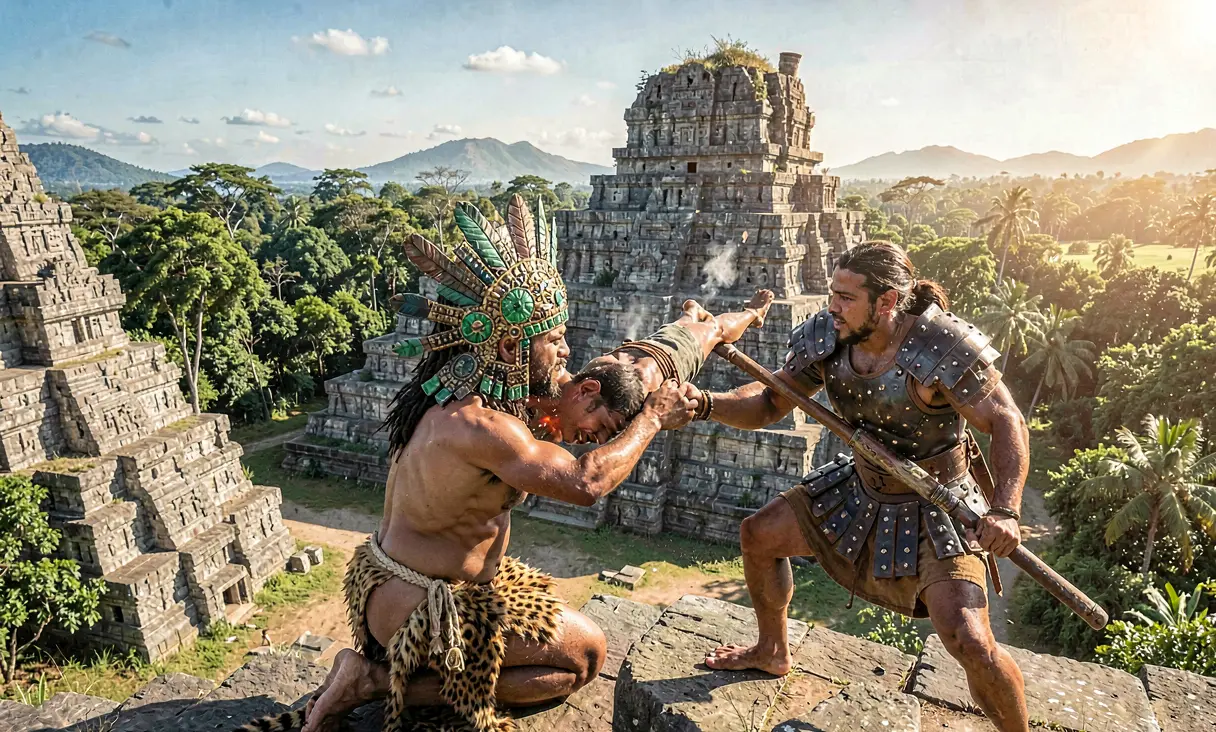
On May 3, 738 CE (9.15.6.0.0 in the Maya Long Count), the tension between the two city-states erupted into open warfare. In a stunning military reversal, K'ak' Tiliw Chan Yopaat led Quiriguá's forces against the Copán army and achieved a decisive victory. The conflict culminated not merely in a battlefield defeat but in the ritual capture of Uaxaclajuun Ub'aah K'awiil himself. The ruler of Copán was taken prisoner to Quiriguá, where he faced a fate reserved for the most significant enemies: public execution by beheading. This act was meticulously recorded on Stela C at Quiriguá, which depicts the captive 18 Rabbit in chains before his captor, emphasizing the total humiliation and transfer of divine authority.
Ritual Execution and Symbolism
The execution of 18 Rabbit was a profound theological and political statement within Maya cosmology. By beheading the ruler, K'ak' Tiliw Chan Yopaat did not just kill a man; he severed the divine lineage that legitimized Copán's rule. In the Maya worldview, kings were intermediaries between the gods and the people; their capture and ritual death signified the withdrawal of divine favor from one city and its transfer to another. The event was celebrated in Quiriguá through the erection of massive stone monuments, including Stela C and Altar Q, which commemorate the date of the victory with unprecedented detail, effectively rewriting history to cement Quiriguá's new status as a sovereign power.
The Collapse of Copán
The aftermath of 738 CE was catastrophic for Copán. The loss of its supreme ruler left the city in a state of political paralysis and spiritual crisis. Monumental construction, which had defined the city's identity for centuries, halted almost immediately. For decades, no new stelae were raised, and the great architectural projects remained unfinished or were abandoned entirely. While a successor eventually took the throne, the dynasty never regained its former hegemony. The once-mighty city entered a prolonged period of decline, losing control over its tributary states and trade networks to rising competitors like Quiriguá and other regional powers.
Legacy and Historical Significance
The fall of Copán's dynasty in 738 CE serves as a pivotal case study in the fragility of Maya political structures. It demonstrated that even the most dominant city-states were vulnerable to sudden shifts in military fortune and economic leverage. The event marked a definitive shift in power dynamics within the southeastern lowlands, elevating Quiriguá from a minor outpost to a major regional player for nearly two centuries. Furthermore, it highlighted the critical role of trade route control in Maya geopolitics; the struggle over the Motagua River corridor was as much about economic survival as it was about military conquest, foreshadowing the broader systemic collapses that would eventually engulf the Classic Maya civilization.
A major political shock that destabilized the southeastern Maya region and ended Copán's golden age.
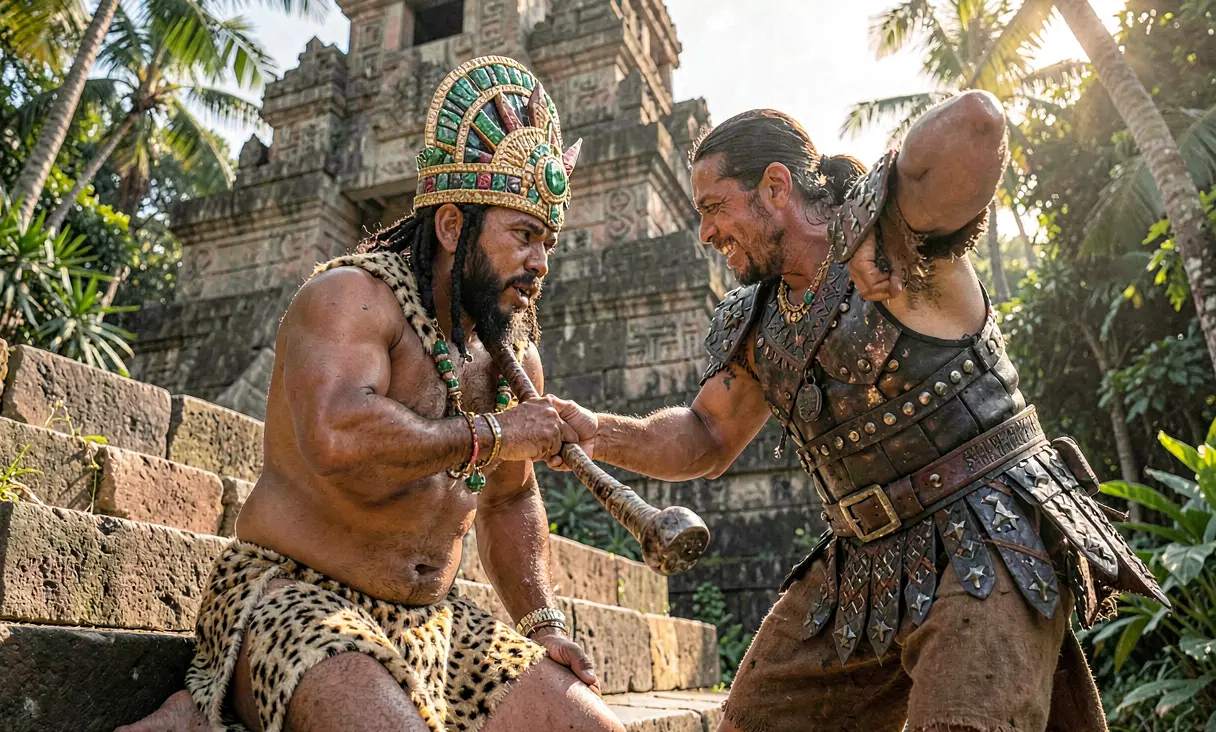
Where it happened
Copán, Honduras — see it on the interactive map →
Explore related history
 WarAn Lushan Rebellion Begins755 CE · Chang'an, ChinaGeneral An Lushan revolts against Emperor Xuanzong, devastating the Tang Dynasty and population.
 WarKushite Conquest of Egypt (25th Dynasty)c. 747 BCE · Thebes, EgyptKing Piye of Kush conquers Upper and Lower Egypt, establishing the first African-led dynasty in Egyptian history.
 WarKushite Conquest of Egypt Establishes 25th Dynastyc. 744 BCE · Napata, Nubia (Modern Sudan)King Piye of Kush conquers Upper Egypt, establishing the 25th Dynasty and restoring traditional Egyptian religious practices.
 ScienceEstablishment of the Babylonian Astronomical Observatoriesc. 747 BCE · Babylon, IraqBabylonian priests begin systematic nightly recording of planetary movements and eclipses.
 DisasterCatastrophic Floods and Collapse of Moche San José de Moroc. 750 CE · Lambayeque Valley, PeruEl Niño floods devastate Moche infrastructure leading to societal transformation.
 CivilizationRise of the Etruscan League in Central Italyc. 750 BCE · Tarquinia (Cerveteri), ItalyEtruscan city-states form a powerful confederation dominating central Italy and influencing Rome.
Discussion
Loading…