Dai Viet Repels Third Mongol Invasion
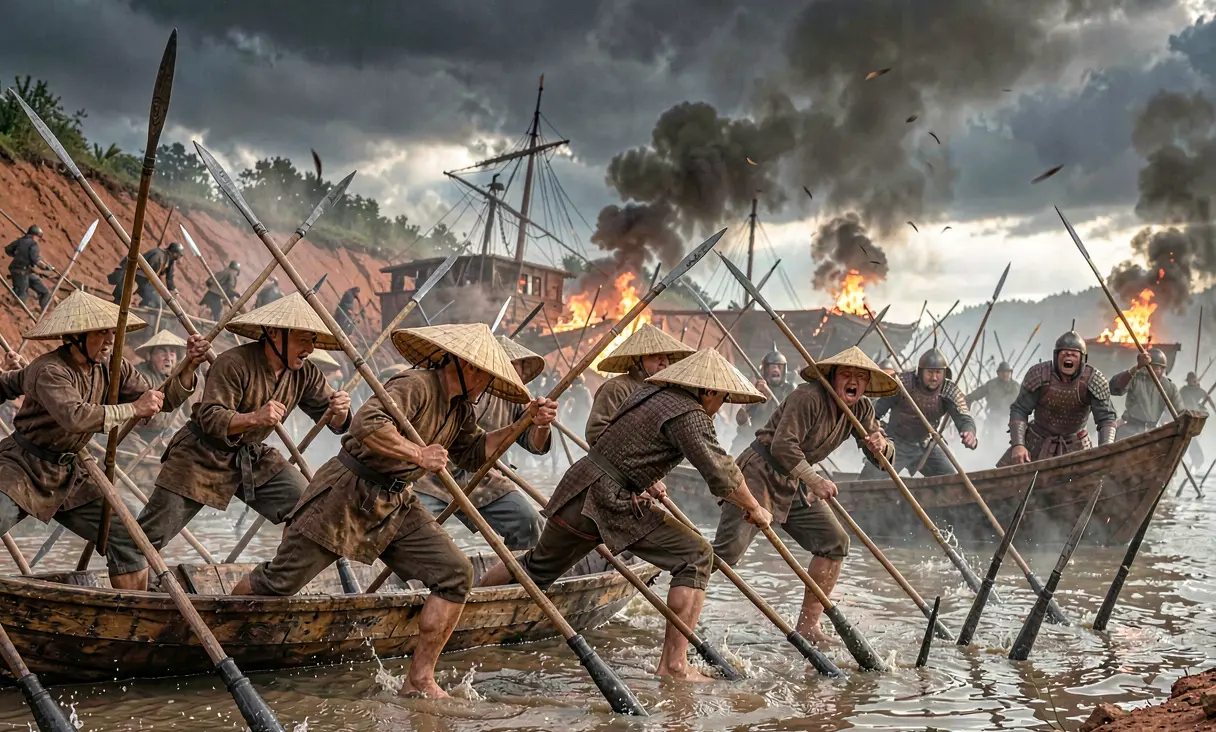
In 1288, General Tran Hung Dao's ingenious use of iron-tipped stakes at Bach Dang River decimated the Yuan fleet, ending Mongol ambitions in Vietnam and securing Dai Viet's independence.
The Shadow of the Yuan
By the late 13th century, the Mongol Empire under Kublai Khan had established the Yuan Dynasty in China and turned its gaze southward toward the independent kingdom of Dai Viet. Following two failed invasions in 1258 and 1285, the Yuan court viewed the refusal of King Tran Nhan Tong to submit as a direct challenge to imperial authority. In late 1287, Kublai Khan dispatched a massive expeditionary force estimated at over 300,000 troops, supported by a formidable fleet of thousands of ships. This third invasion was not merely punitive; it was an existential campaign designed to permanently annex Dai Viet into the Yuan sphere of influence, leveraging overwhelming logistical superiority and naval might.
The Tran Dynasty's Strategic Dilemma
Facing an enemy that had conquered vast swathes of Eurasia, the Tran leadership recognized that conventional pitched battles would result in annihilation. General Tran Hung Dao, the supreme commander and a brilliant strategist, orchestrated a policy of strategic withdrawal. The capital, Thang Long (modern-day Hanoi), was evacuated to lure the Mongols deep into the Red River Delta, stretching their supply lines to the breaking point. While the Yuan forces captured the empty city in early 1288, they found themselves isolated, plagued by disease, and unable to secure food from a scorched-earth countryside. The stage was set not for a clash of armies, but for a masterful exploitation of geography and hydrology.
The Mastermind: Tran Hung Dao
Tran Hung Dao (Tranh Quoc Toan) stands as the preeminent military figure in Vietnamese history. A prince of the ruling Tran family, he possessed an uncanny ability to blend Confucian statecraft with pragmatic guerrilla warfare. Unlike his counterparts who sought honor in direct confrontation, Hung Dao understood that Dai Viet's survival depended on asymmetry. He famously articulated this philosophy in his treatise 'Hoi Ba Quyen' (The Art of War), advising the king to avoid fighting when the enemy was strong and to strike only when they were vulnerable. His leadership unified the fractious nobility and mobilized the peasantry, creating a cohesive national defense that transcended class divisions.
The Trap at Bach Dang
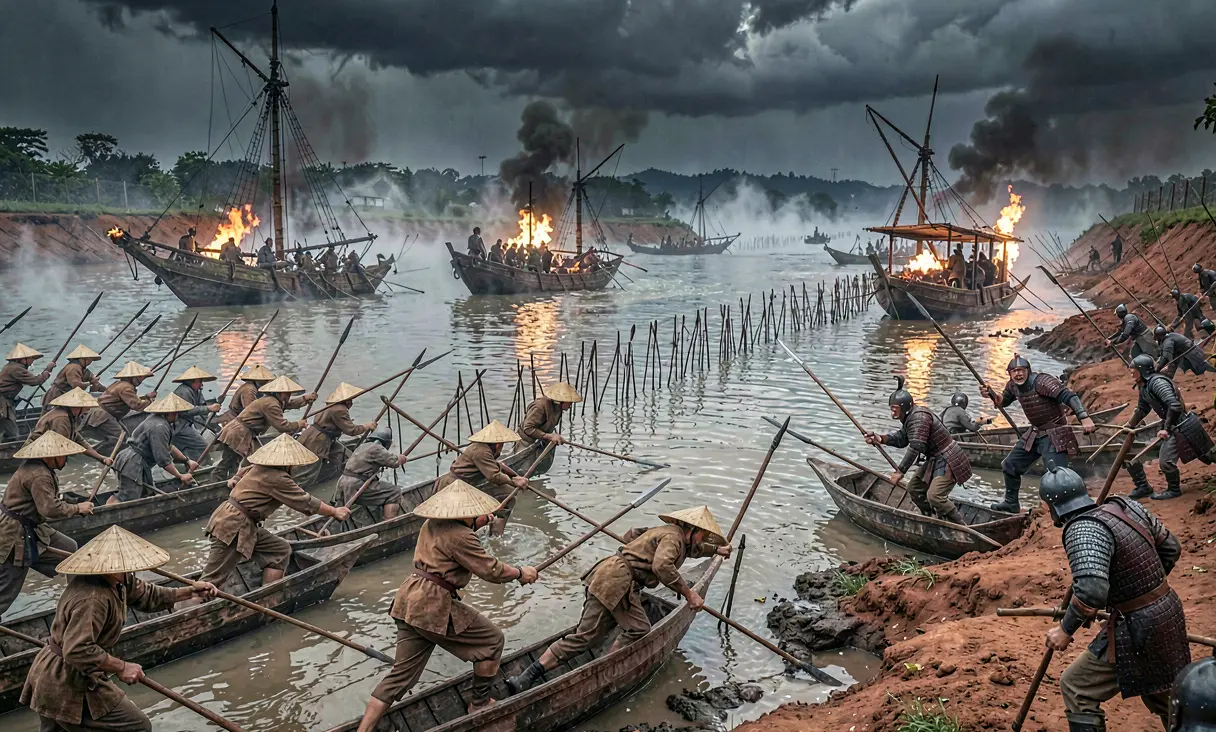
In early April 1288, the Yuan fleet, commanded by General Ogatu, attempted to retreat northward along the Bach Dang River after their supply lines were severed. Tran Hung Dao anticipated this movement and prepared a devastating ambush. He ordered the construction of thousands of sharpened wooden stakes, reinforced with iron tips, which were driven into the riverbed at strategic intervals. These stakes were submerged just below the waterline during high tide, rendering them invisible to the approaching Mongol ships. The Vietnamese forces then feigned a retreat, luring the heavy Yuan fleet into the narrowest and most treacherous section of the estuary.
The Tide Turns
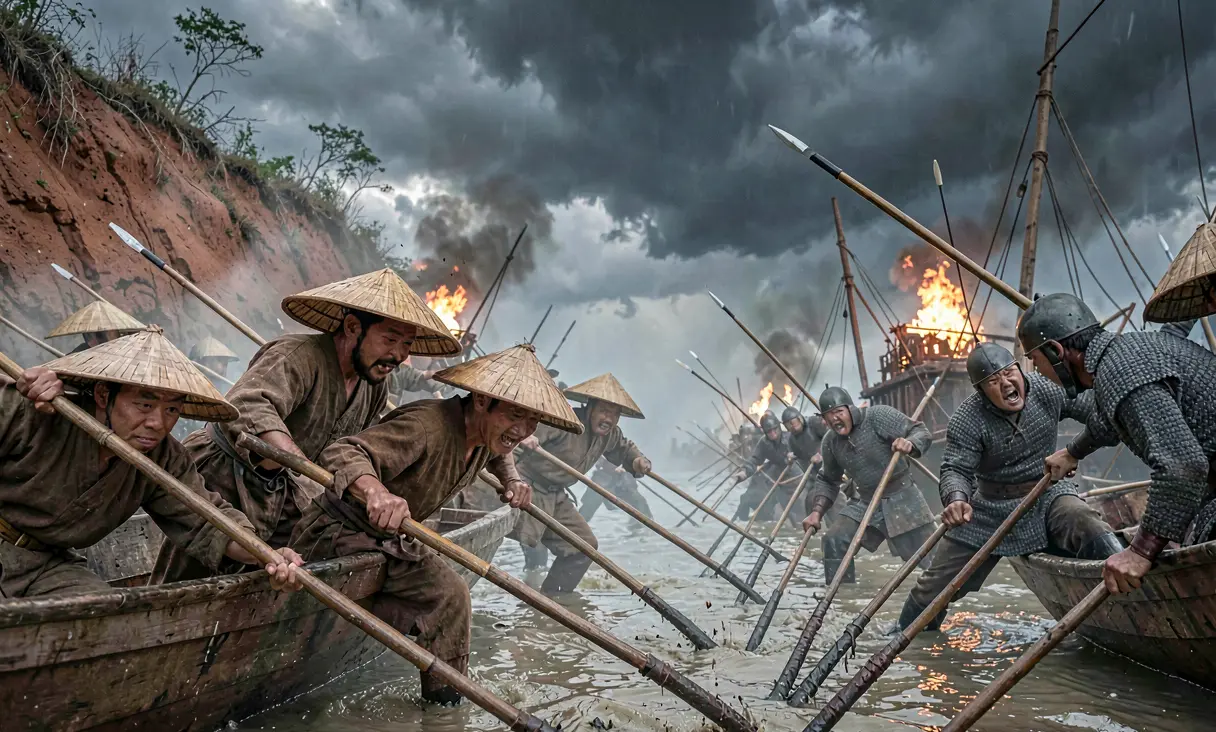
As the high tide peaked, the Mongol ships sailed confidently into the trap, only to be met by a sudden barrage from Vietnamese light boats. At this critical moment, the tide began to recede rapidly. The heavy Yuan vessels, unable to maneuver in the shallow waters, ran aground on the hidden iron-tipped stakes, their hulls punctured and immobilized. Seizing the opportunity, Tran Hung Dao's forces launched a coordinated counterattack from the riverbanks and hidden coves. The trapped Mongol fleet was systematically destroyed; thousands of soldiers drowned or were captured, and General Ogatu himself barely escaped with his life. The battle concluded within hours, marking a catastrophic defeat for the Yuan navy.
The End of the Invasion
The destruction at Bach Dang effectively broke the back of the third Mongol invasion. With their naval power decimated and their land forces starving and demoralized, the remaining Yuan troops were forced into a chaotic retreat across the border. Kublai Khan, facing internal pressures in China and the realization that Dai Viet could not be subjugated without unsustainable costs, abandoned further attempts to conquer Vietnam. The victory preserved the sovereignty of the Tran Dynasty for another century and demonstrated that even the most powerful empire on earth could be halted by local ingenuity and determination.
A Legacy of Resistance
The Battle of Bach Dang in 1288 remains a defining moment in Asian military history, often cited alongside the Battle of Red Cliffs as a prime example of naval strategy overcoming numerical superiority. It cemented Tran Hung Dao's status as a national hero and a symbol of Vietnamese resilience. The victory ensured that Dai Viet remained an independent buffer state between the Chinese empire and the southern kingdoms, influencing the geopolitical balance of Southeast Asia for centuries. Today, the site is revered not just as a battlefield, but as a testament to the power of strategic foresight and the enduring spirit of national self-determination.
The victory at Bach Dang secured Vietnamese sovereignty against the Mongol Empire, cementing the reputation of the Tran Dynasty and national heroes like Tran Hung Dao.
Where it happened
Bach Dang River, Vietnam — see it on the interactive map →
Explore related history
 WarAlgerian War of Independence BeginsNovember 1, 1954 · Algiers, AlgeriaThe National Liberation Front launches coordinated attacks marking the start of the Algerian War against France.
 WarMau Mau Uprising Begins in KenyaOctober 20, 1952 · Nairobi, KenyaThe Kikuyu-led Mau Mau rebellion begins against British colonial rule and white settler land ownership.
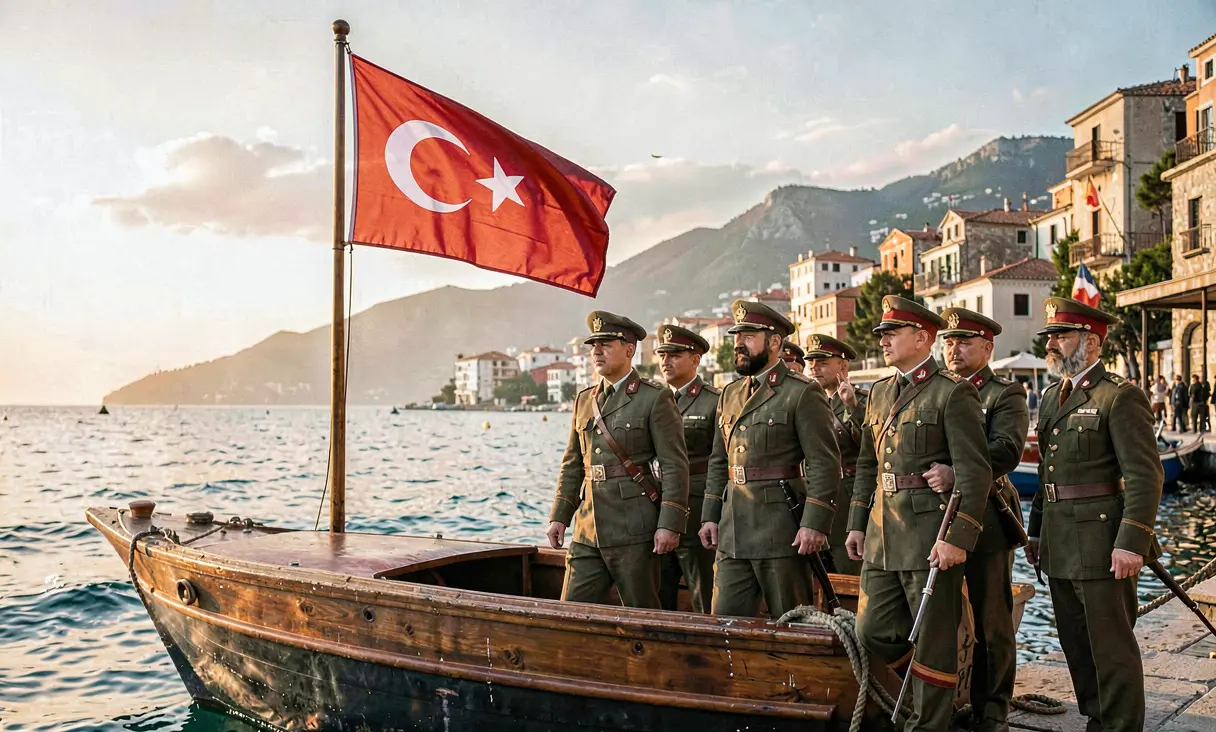 WarTurkish War of Independence BeginsMay 19, 1919 · Samsun, TurkeyMustafa Kemal Atatürk lands in Samsun to organize resistance against Allied occupation and the Ottoman Sultanate.
 PoliticsRaden Wijaya Founding of Majapahit Empire1293 CE · Trowulan, Java, IndonesiaRaden Wijaya defeats the Mongol invaders and establishes the Majapahit Empire in East Java.
 ExplorationMāori Settlement of Aotearoa (New Zealand)c. 1280 CE · North Island, New ZealandPolynesian voyagers from East Polynesia arrive in Aotearoa, marking the last major human migration.
 ScienceAbsence of Pottery in Māori Culturec. 1280 CE onwards · New ZealandMāori settlers abandon pottery making upon arrival in New Zealand due to lack of suitable clay and fuel.
Discussion
Loading…