Dai Viet Annexation of Champa
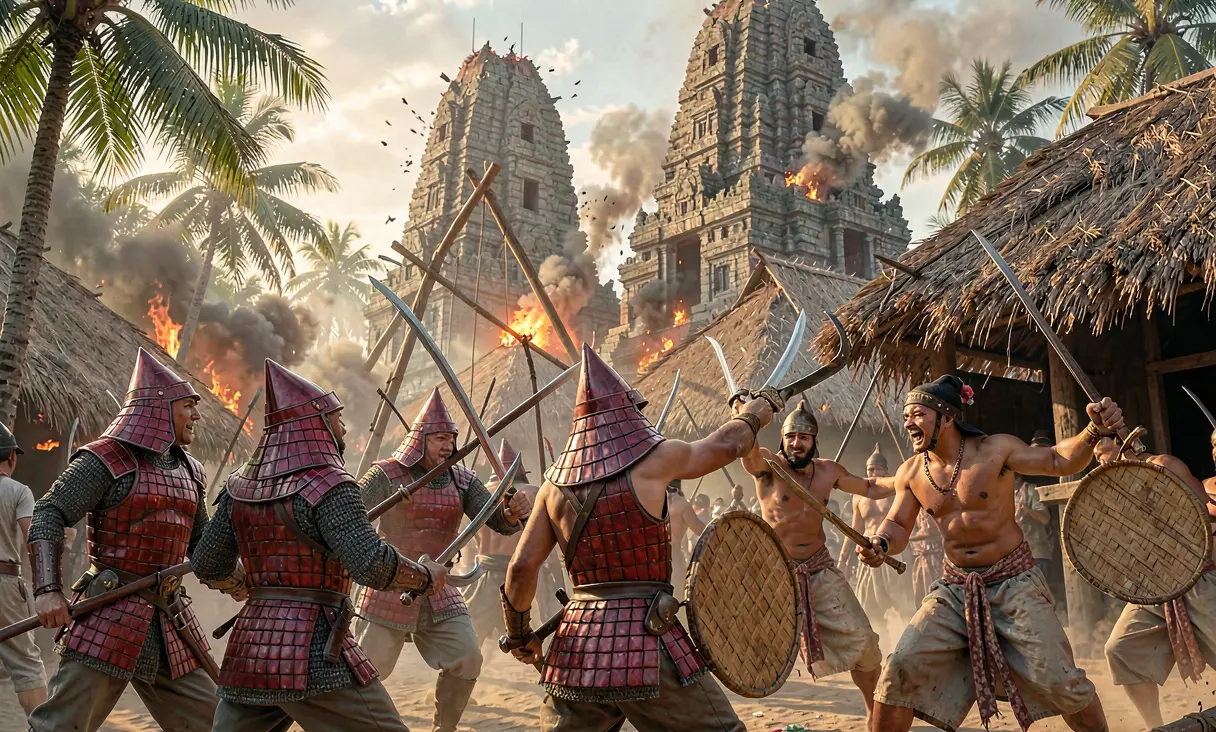
In 1471, Emperor Le Thanh Tong's annihilation of Champa's capital Vijaya ended a millennium-old kingdom, triggering Vietnamese southward expansion and reshaping Southeast Asia's political map forever.
The Shifting Balance of Power
By the mid-15th century, the geopolitical landscape of mainland Southeast Asia had undergone a profound transformation. The Later Le Dynasty, having successfully repelled Ming Chinese occupation in 1427 under Le Loi, emerged as a revitalized and expansionist power in the Red River Delta. Conversely, the Champa Kingdom, once a formidable maritime rival controlling the central coast of modern Vietnam, had suffered centuries of attrition. Internal dynastic strife, coupled with repeated raids by Vietnamese forces in the preceding decades, had eroded Cham military strength and territorial integrity. The stage was set for a decisive confrontation that would irrevocably alter the demographic and cultural map of the region.
The Catalyst: A Broken Truce
Tensions reached a breaking point in 1470 when Cham King Tra To (also known as Ponheara) launched a devastating raid into Vietnamese territory, reportedly capturing several thousand people and causing significant disruption to the southern frontier. This aggression provided Emperor Le Thanh Tong with the perfect casus belli to launch a preemptive, total war aimed not merely at repelling an enemy but at dismantling the Champa state entirely. Leveraging the administrative efficiency of his new bureaucracy and the military reforms implemented during his reign, Le Thanh Tong mobilized a massive force estimated at over 260,000 troops, including infantry, cavalry, and a formidable naval fleet.
The Siege of Vijaya
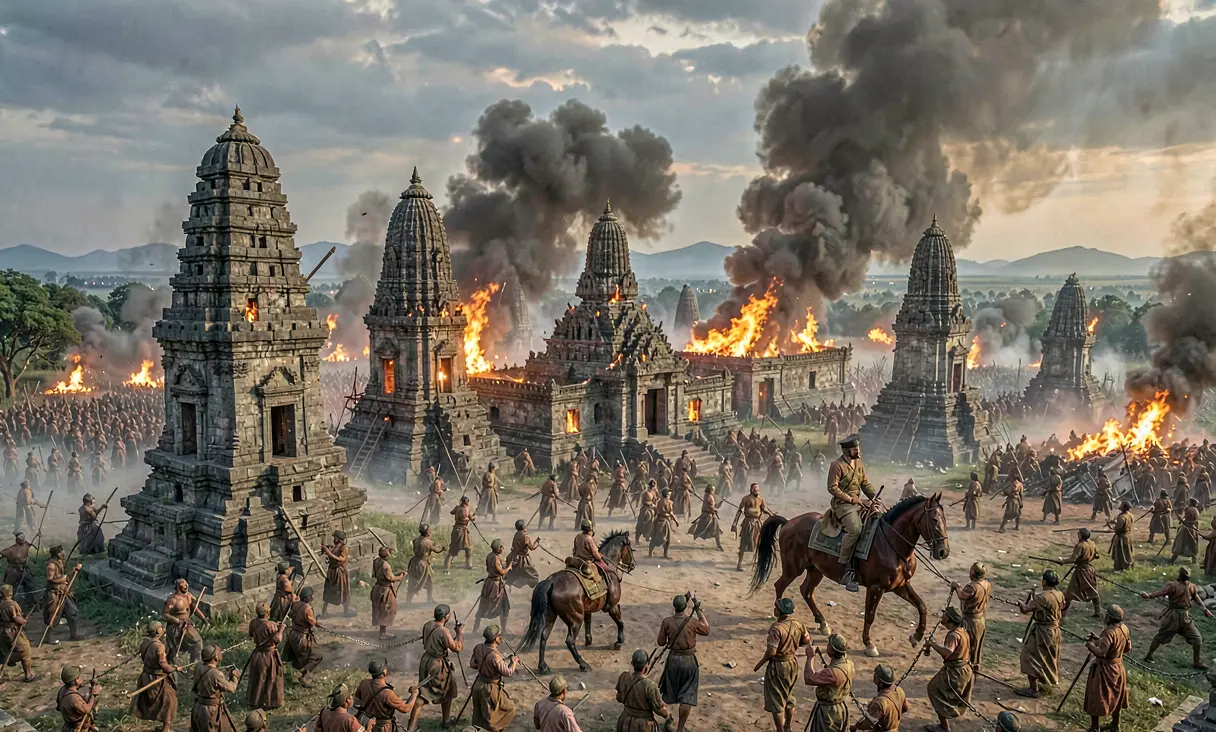
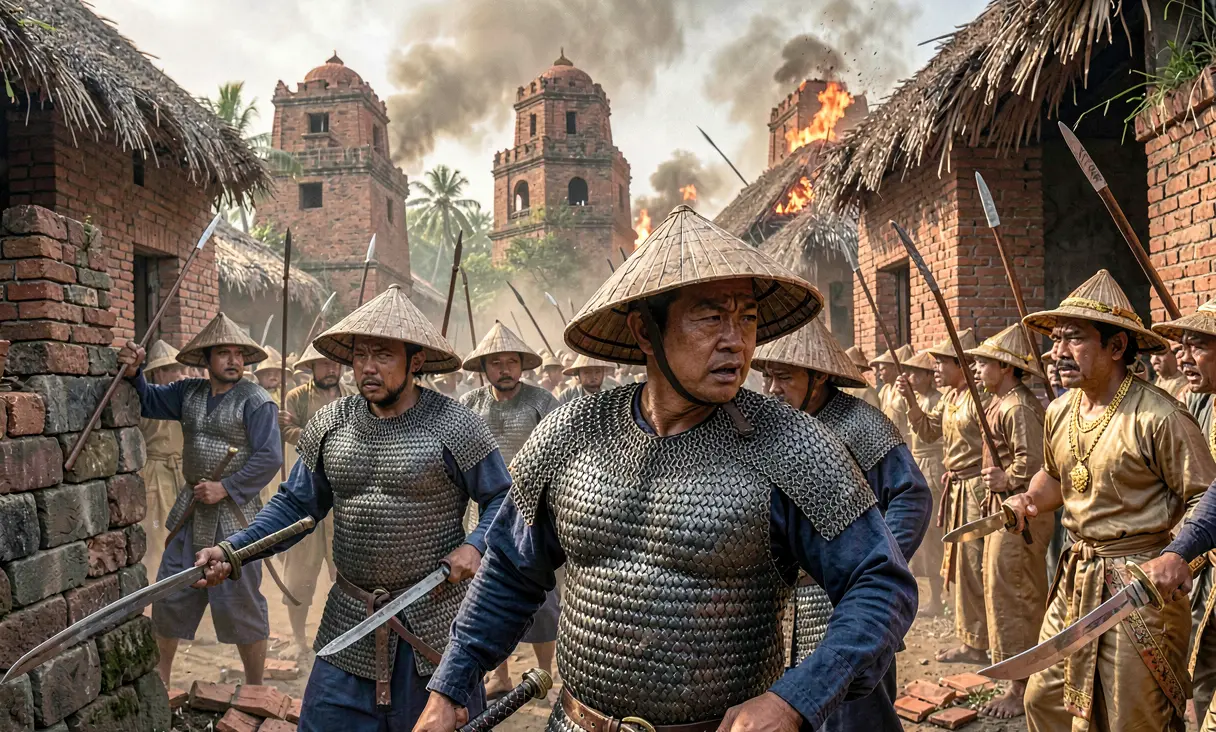
In early 1471, the Vietnamese army marched south in a coordinated pincer movement. The primary objective was Vijaya (modern-day Quy Nhon), the capital and spiritual heart of Champa. The campaign was swift and overwhelming; Cham defenses crumbled under the sheer weight of the Le forces. By March 1471, the city of Vijaya fell after a brutal siege. Vietnamese troops breached the citadel, resulting in a catastrophic defeat for the Chams. King Tra To attempted to flee but was captured shortly thereafter. The sack of Vijaya was total; historical records indicate that over 60,000 Cham subjects were taken captive and deported north to be assimilated into Vietnamese society, while the royal archives, temples, and palaces were systematically destroyed.
The End of an Indianized Kingdom
The fall of Vijaya marked the effective end of Champa as a unified, independent political entity. The kingdom was partitioned: the northern territories were directly annexed by Vietnam and organized into new administrative provinces (Thuan Hoa and Quang Nam), while three small, rump states—Panduranga in the far south, Kauthara, and Amaravati—survived as vassal tributaries under Vietnamese suzerainty. The cultural devastation was equally profound; the loss of the capital severed the continuity of the Cham courtly tradition that had thrived for over a millennium. The great Indianized maritime civilization, which had once rivaled Angkor and Srivijaya in influence, ceased to exist as a sovereign power.
Consolidation and the Nam Tien
Emperor Le Thanh Tong did not stop at victory; he immediately instituted a policy of rapid colonization. He established new military garrisons, encouraged Vietnamese peasants to migrate south, and integrated the conquered lands into the imperial examination system. This event served as the critical acceleration point for the Nam Tien (March South), a centuries-long process of Vietnamese territorial expansion that would eventually extend control all the way to the Mekong Delta by the 18th century. The annexation transformed Vietnam from a northern kingdom into a unified state stretching along the entire eastern coast of the Indochinese peninsula.
Legacy and Historical Significance
The 1471 campaign remains one of the most consequential events in Southeast Asian history. It cemented Vietnamese dominance over the region, shifting the center of gravity away from maritime trade networks dominated by Cham and Khmer powers toward a land-based agrarian empire. For the Cham people, it was an existential trauma that forced a diaspora; many fled to Cambodia or the Malay Archipelago, while those who remained faced centuries of gradual assimilation. The event stands as a definitive turning point that closed the chapter on ancient Indianized kingdoms in mainland Southeast Asia and opened the era of modern nation-state formation dominated by Vietnam and Siam.
The destruction of Vijaya ended Champa's independence, permanently shifting the balance of power to Vietnam and expanding its southern borders.
Where it happened
Vijaya (Quang Ngai), Vietnam — see it on the interactive map →
Explore related history
 WarAlgerian War of Independence BeginsNovember 1, 1954 · Algiers, AlgeriaThe National Liberation Front launches coordinated attacks marking the start of the Algerian War against France.
 WarMau Mau Uprising Begins in KenyaOctober 20, 1952 · Nairobi, KenyaThe Kikuyu-led Mau Mau rebellion begins against British colonial rule and white settler land ownership.
 WarTurkish War of Independence BeginsMay 19, 1919 · Samsun, TurkeyMustafa Kemal Atatürk lands in Samsun to organize resistance against Allied occupation and the Ottoman Sultanate.
 WarSunni Ali Seizes Gao and Expands Songhai Empirec. 1464 CE · Gao, MaliSunni Ali launches military campaigns to conquer Gao and expand the Songhai Empire across West Africa.
 DisasterGreat Famine of Ethiopia under Emperor Dawit Ic. 1480 CE · Ethiopian HighlandsSevere drought and locust swarms devastate the Ethiopian highlands, causing widespread famine.
 ReligionRededication of the Templo Mayor by Ahuitzotlc. 1487 CE · Tenochtitlan, Mexico City, MexicoSacrificial ceremonies attend the expansion of Tenochtitlan's main temple.
Discussion
Loading…