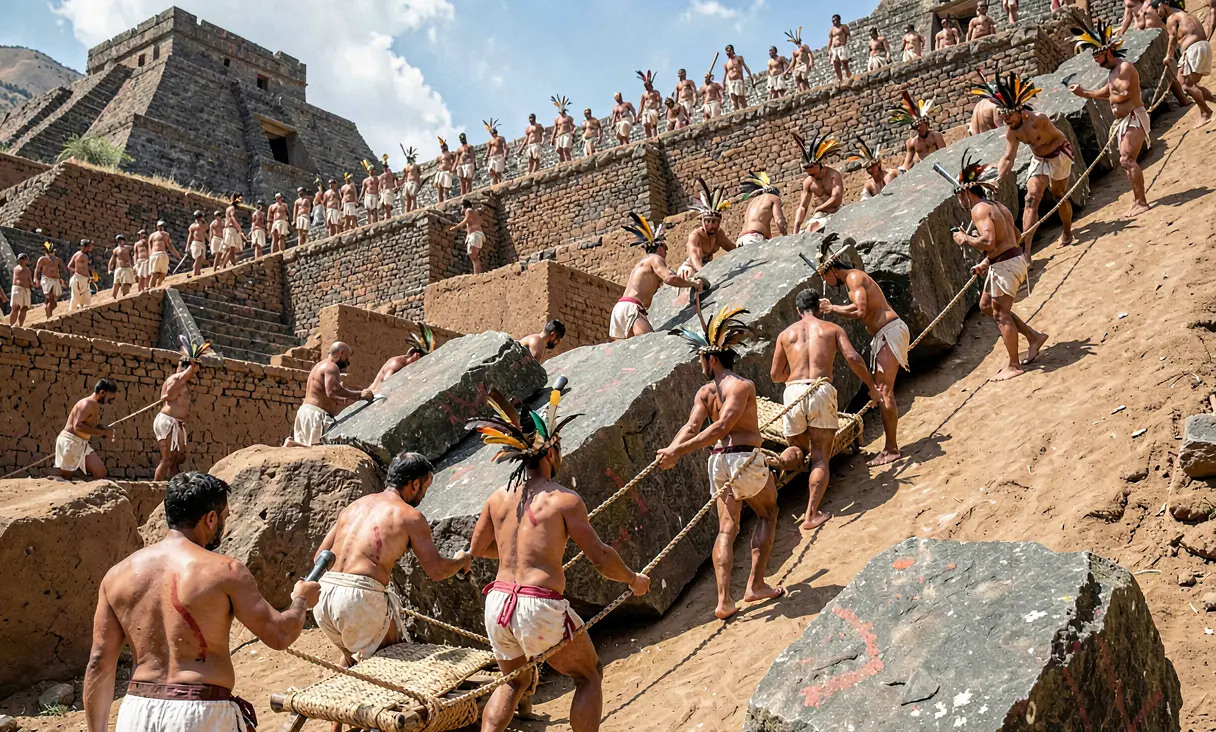
Construction of the Pyramid of the Sun at Teotihuacán
Constructed circa 2 CE over a sacred cave, the Pyramid of the Sun stands as Teotihuacán's monumental testament to astronomical precision and collective state power in pre-Columbian America.
The Rise of the Valley's Metropolis
By the turn of the Common Era, the Valley of Mexico was undergoing a profound demographic and political transformation. The city of Teotihuacán, rising from the ashes of earlier settlements like Cuicuilco which had been buried by volcanic activity, evolved into a planned urban center of unprecedented scale. Unlike the city-states of the Maya or the later Aztec empire, Teotihuacán appears to have operated under a unique collective governance structure rather than the rule of a single divine king. It was within this atmosphere of rapid urbanization and social reorganization that the decision was made to construct a monument that would physically dominate the landscape: the Pyramid of the Sun.
Convergence of Astronomy and Mythology
The construction of the Pyramid of the Sun, initiated circa 2 CE, was not merely an architectural feat but a cosmological statement. The structure was deliberately aligned with astronomical precision to face the setting sun on days marking the zenith passage in Teotihuacán, approximately April 30 and August 13. This alignment suggests that the pyramid served as a massive calendar and ritual apparatus, anchoring the city's agricultural cycles and religious festivals to celestial events. Furthermore, excavations beneath the structure revealed a natural cave system, interpreted by archaeologists as a symbolic representation of the underworld (Mictlan) or a sacred womb from which life emerged, reinforcing the pyramid's role as an axis mundi connecting the earthly realm with the divine.
Engineering on a Colossal Scale
The physical realization of the Pyramid of the Sun required resources and labor organization that rivaled any contemporary project in the Old World. Rising to an original height of approximately 65 meters with a base measuring roughly 225 meters per side, it stands as the third-largest pyramid in the world by volume. The construction involved the movement of millions of cubic meters of earth, stone, and adobe bricks. Unlike Egyptian pyramids built primarily of cut limestone blocks, Teotihuacán's architects utilized a core of rubble and soil faced with stone and stucco, creating a stable yet massive structure capable of withstanding seismic activity in the region.
Mobilization of the Collective
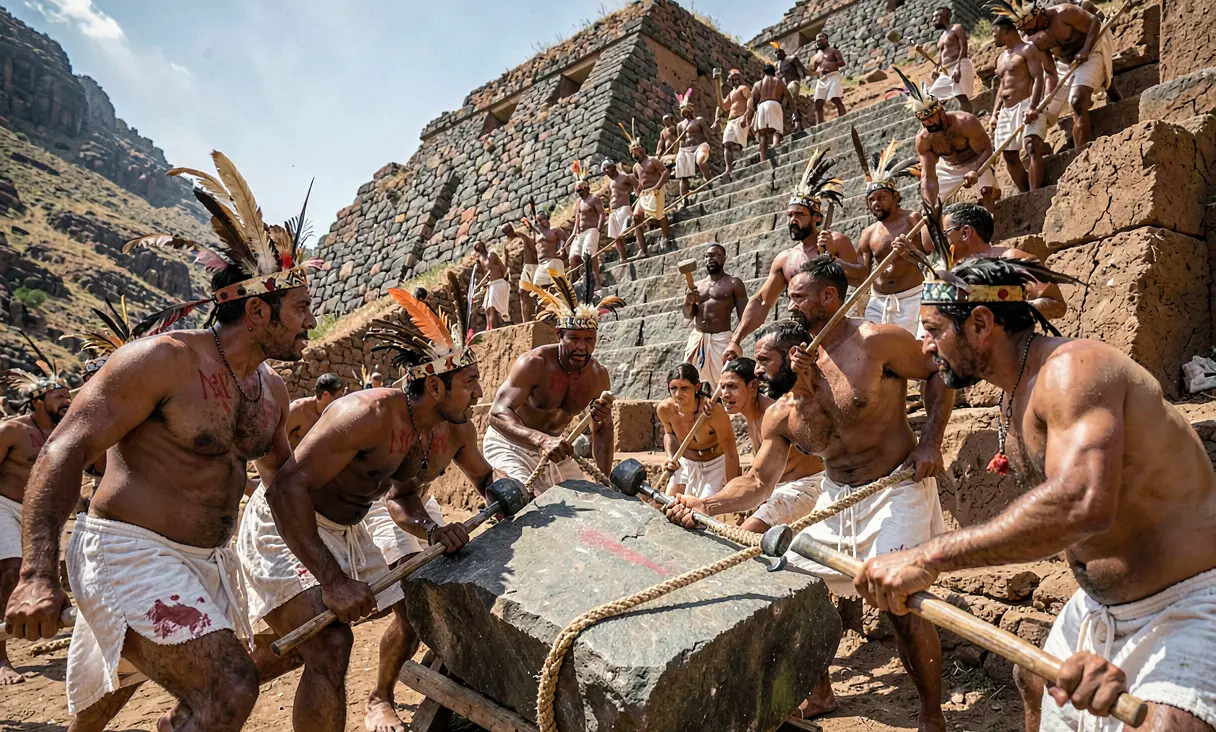
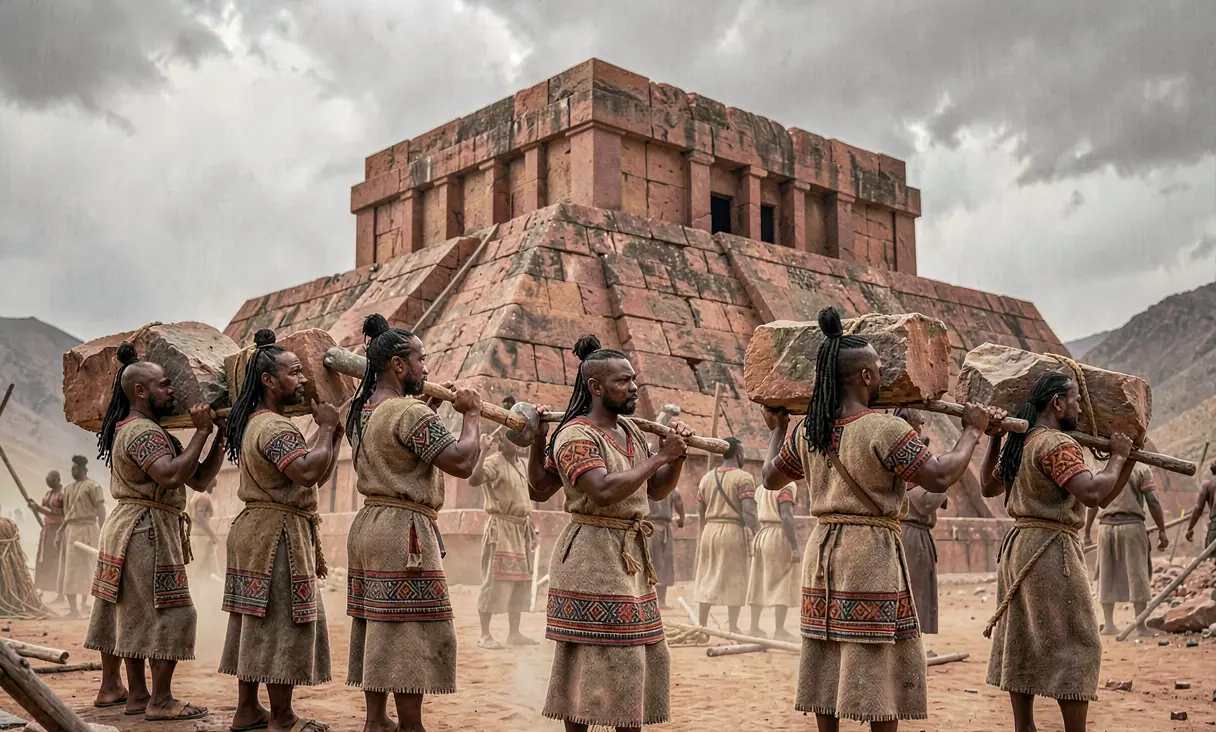
The workforce required to raise such a monument remains one of history's great questions regarding pre-Columbian labor dynamics. There is no evidence of a single named architect or ruler credited with its design; instead, the project reflects a highly centralized state capable of mobilizing thousands of workers through religious obligation or civic duty. The construction likely occurred in phases, with the initial core built first and subsequent enlargements adding to its mass over decades. This massive undertaking necessitated sophisticated logistics for food distribution, housing for laborers, and the quarrying of materials from distant sources, demonstrating a level of administrative complexity that defined Teotihuacán's golden age.
Ritual Function and Social Cohesion
Once completed, the Pyramid of the Sun became the spiritual heart of Teotihuacán. It was not a tomb for a specific ruler but a temple dedicated to solar worship and likely a deity associated with rain and fertility, given the region's agricultural dependence on seasonal cycles. The plaza surrounding the pyramid hosted elaborate ceremonies involving bloodletting, sacrifice, and processions that reinforced social hierarchies and unified the city's diverse population. The sheer scale of the structure served as a constant visual reminder of the state's power and its ability to command the forces of nature through ritual.
Enduring Legacy in the Americas
Although Teotihuacán eventually declined around 550 CE, possibly due to internal strife or environmental factors, the Pyramid of the Sun survived as a sacred site for centuries. Later civilizations, including the Aztecs who arrived in the region nearly a millennium after the city's fall, revered the ruins and named them 'Teotihuacán' (the place where gods are born). Today, it remains one of the most significant archaeological sites in the Americas, offering unparalleled insight into early urban planning, astronomical knowledge, and statecraft. Its influence on Mesoamerican culture is profound, serving as a template for religious architecture that persisted long after the original builders vanished.
Establishes Teotihuacán as a dominant religious and political power in Mesoamerica for centuries.
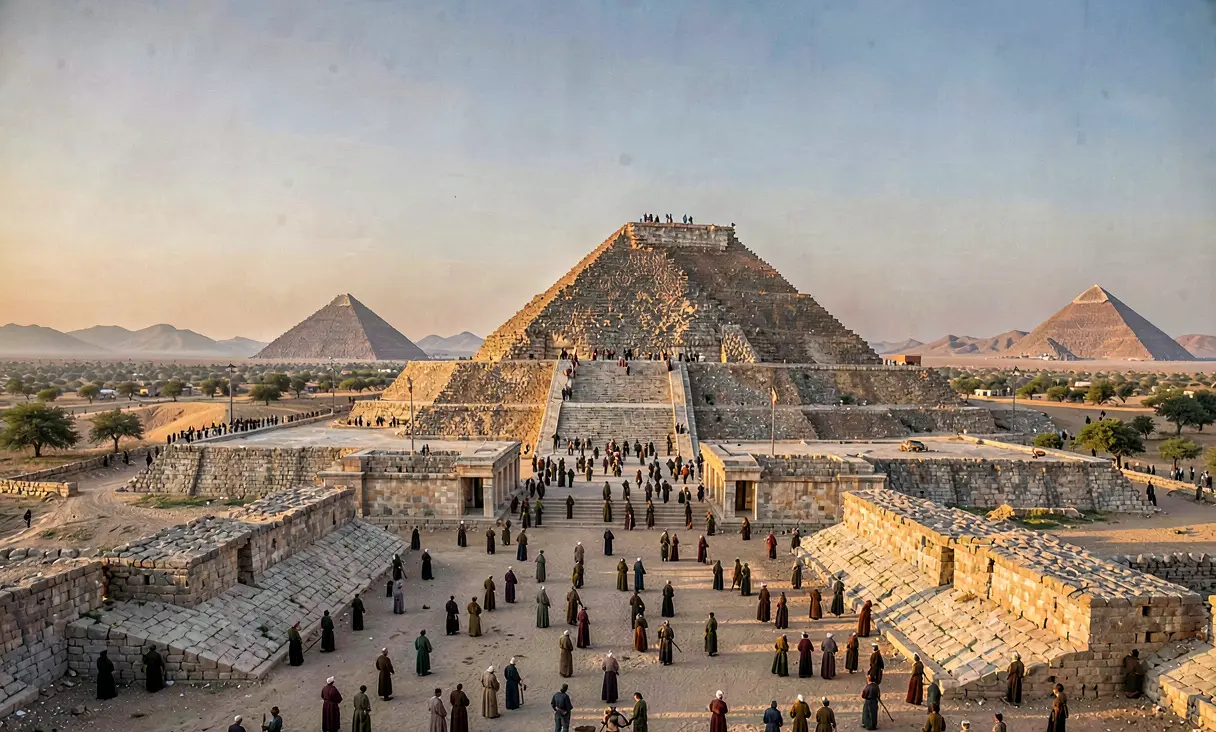
Where it happened
Teotihuacán, Mexico — see it on the interactive map →
Explore related history
 CivilizationRise of the Etruscan League in Central Italyc. 750 BCE · Tarquinia (Cerveteri), ItalyEtruscan city-states form a powerful confederation dominating central Italy and influencing Rome.
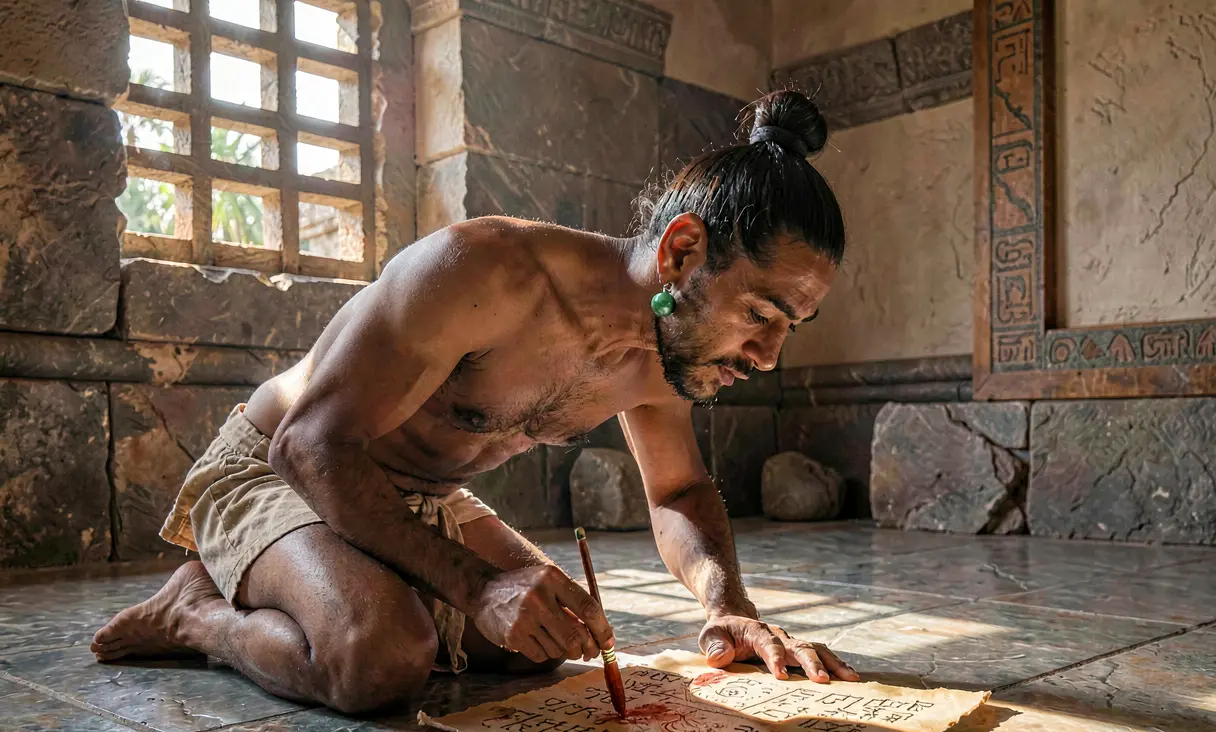 CivilizationCodices and Writing System of the Mayac. 200 BCE · El Mirador, GuatemalaThe Maya develop a complex logosyllabic writing system and astronomical calendars during the Preclassic period.
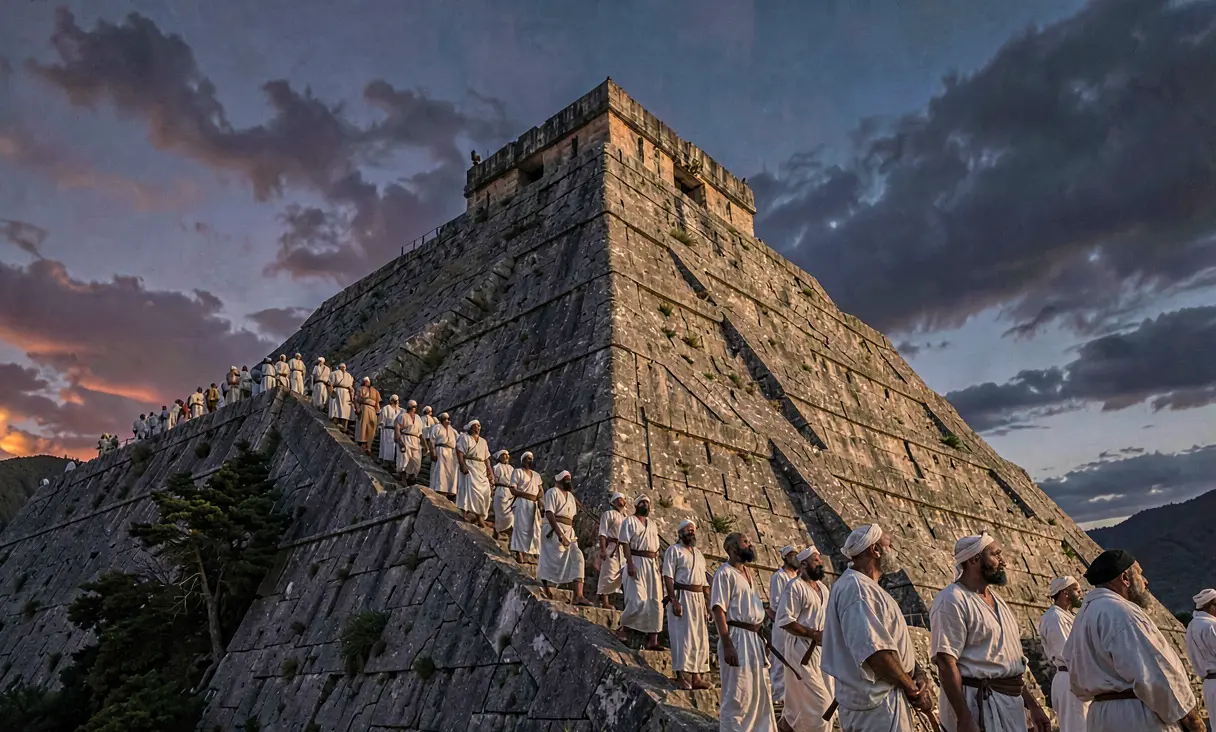 CivilizationConstruction of the Pyramid of the Moon at Teotihuacánc. 1 CE · Teotihuacán, MexicoThe second-largest pyramid is built to honor the Great Goddess and align with lunar cycles.
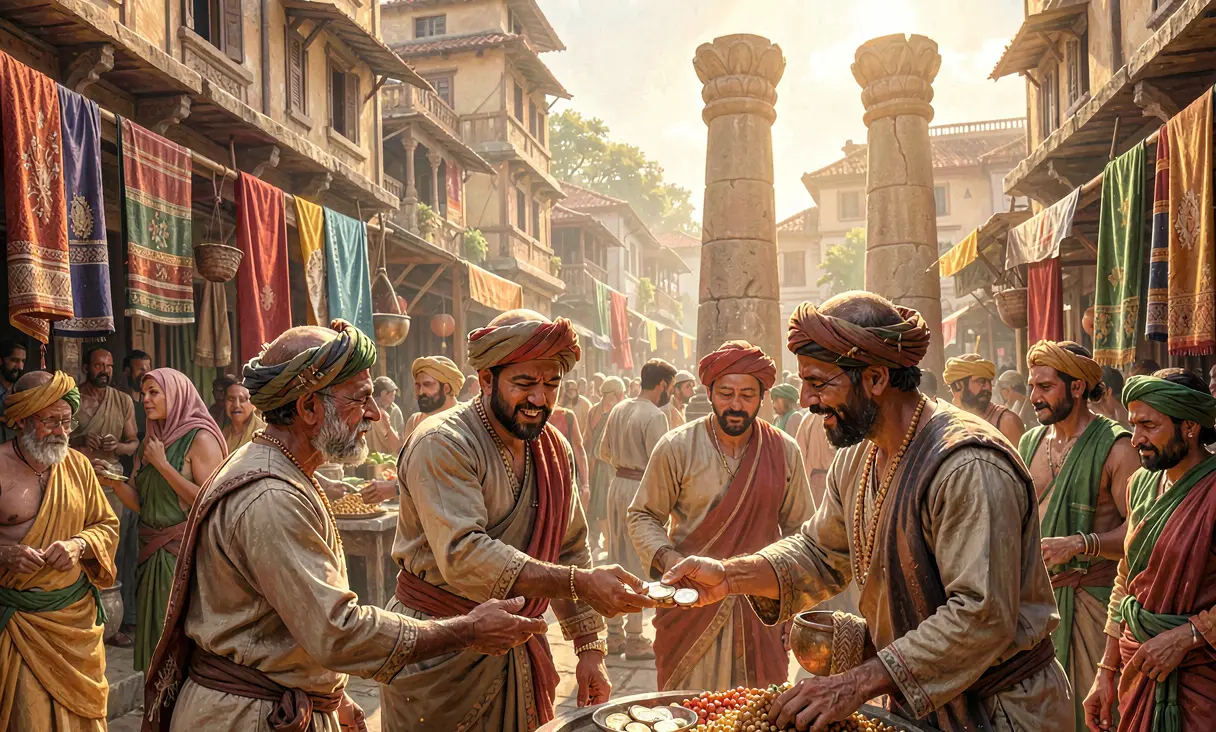 PoliticsSatavahana Ascendancy in the Deccanc. 100 BCE · Pratishthana, Maharashtra, IndiaThe Satavahana dynasty consolidates power in the Deccan plateau, breaking away from Shunga dominance and becoming a major trade hub.
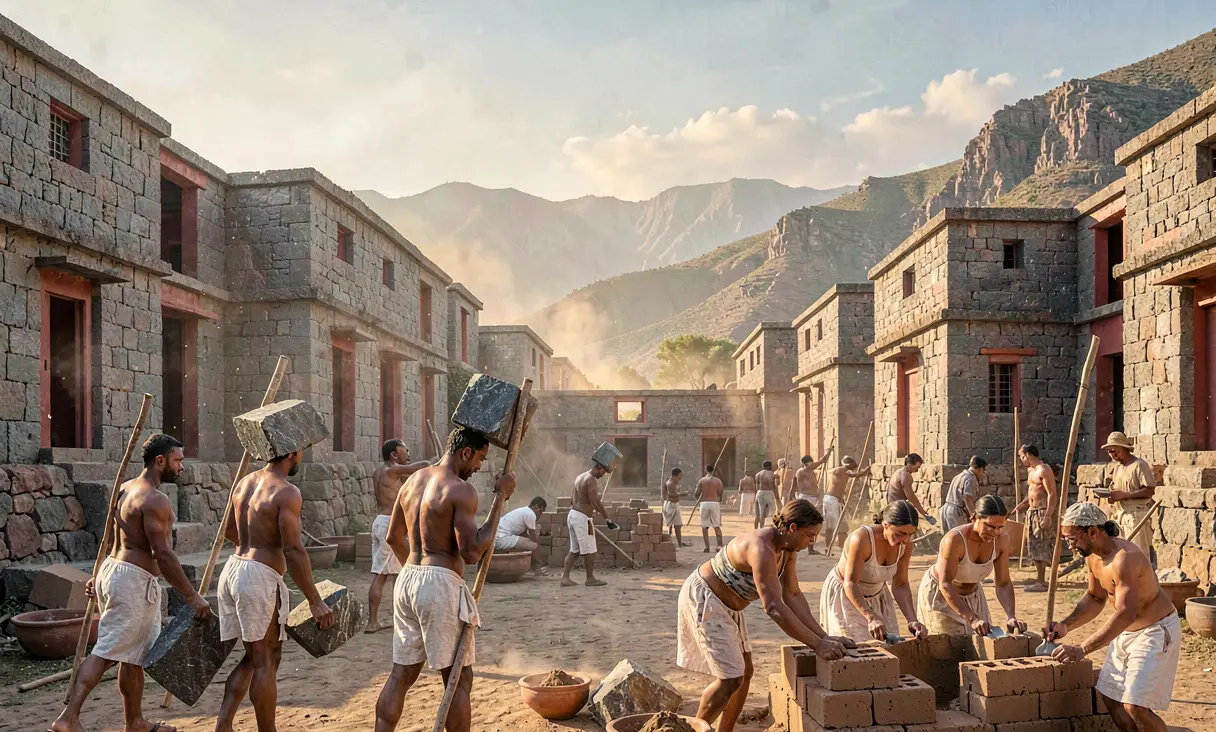 CivilizationConstruction of Teotihuacán Apartment Compoundsc. 100 BCE · Teotihuacán, MexicoMassive apartment complexes are built to house the growing urban population.
 CivilizationExpansion of the Akapana Pyramid at Tiwanakuc. 100 BCE · Tiwanaku, BoliviaThe Akapana pyramid is expanded into a massive artificial mountain for ritual use.
Discussion
Loading…