Construction of Royal Tombs at Sipán (Huaca Rajada)
Constructed circa 200 CE, the Huaca Rajada necropolis at Sipán established the divine legitimacy of Moche rulers through monumental adobe architecture and lavish burials, defining early Andean statecr
The Moche Ascendancy and the Need for a Royal Necropolis
By the early centuries of the Common Era, the Moche civilization had consolidated power across the arid coastal valleys of northern Peru, establishing a complex theocratic state. Unlike later Andean empires that relied on vast territorial expansion, the Moche maintained dominance through religious authority and sophisticated hydraulic engineering. By approximately 200 CE, the ruling elite in the Lambayeque Valley required a permanent, monumental space to cement their lineage's divine status. The construction of Huaca Rajada at Sipán was not merely an architectural project but a political statement, designed to separate the sacred dead from the profane living and to serve as the physical anchor for the state's cosmological order.
Architectural Planning and Massive Labor Mobilization
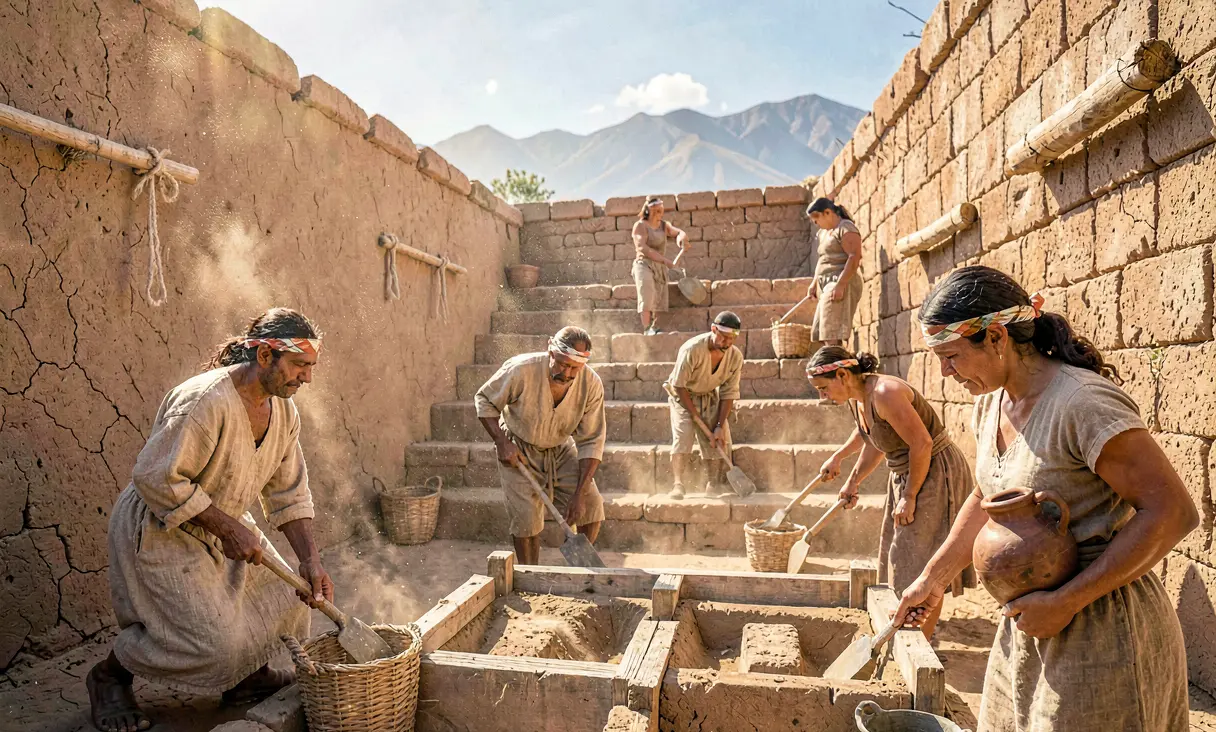
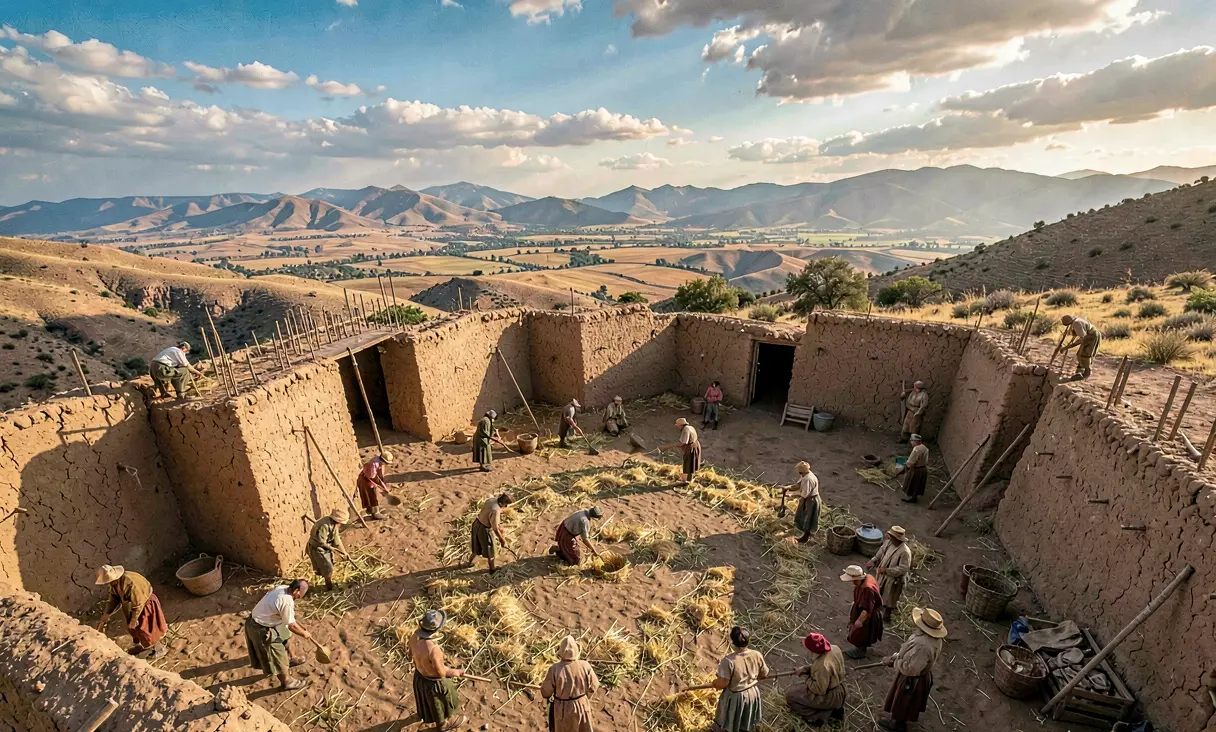
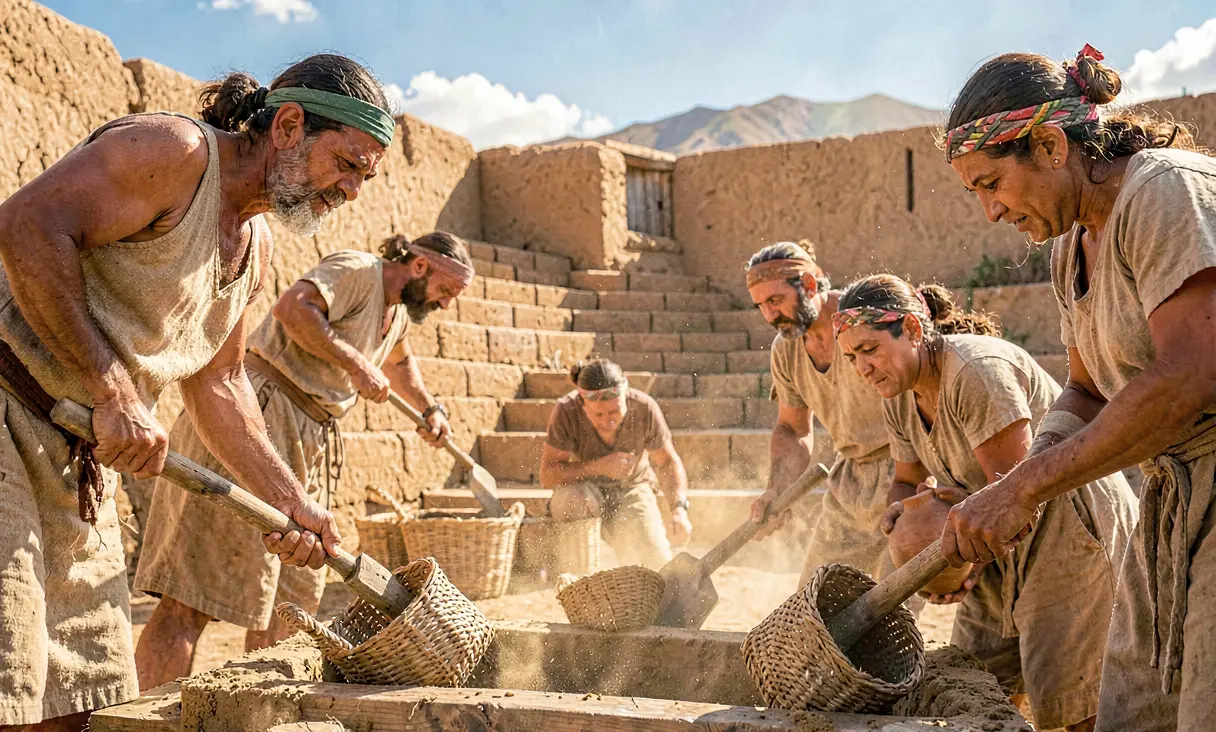
The construction of the Huaca Rajada complex represented a feat of organizational prowess that rivaled contemporary achievements in Rome or China. Archaeologists estimate that the primary adobe platforms required millions of mud bricks, each stamped with distinct maker's marks to track labor quotas assigned to different communities. The site was meticulously planned as a series of concentric ramps and courtyards leading to elevated burial chambers, designed to facilitate elaborate funerary processions. This massive mobilization of labor, likely organized through a system of reciprocal tribute known as *mit'a*, underscored the absolute authority of the Moche priesthood and state over the populace.
The Burial Rites of the First Lord
Around 200 CE, the first major interment took place within the newly constructed complex, setting a precedent for centuries of royal burials. While the site would later yield the intact tomb of the famous 'Lord of Sipán' in 1987, the initial construction phase accommodated the entombment of early paramount chiefs. These rulers were laid to rest in deep, rectangular shafts lined with wattle and reed mats, surrounded by hundreds of sacrificial retainers, including warriors, concubines, and children. The sheer volume of grave goods—gold, silver, copper, spondylus shells from Ecuador, and intricate ceramic vessels—demonstrates the ruler's role as a mediator between the human world and the gods.
Theological Implications of Divine Kingship
The construction of these tombs reflects a profound shift in Moche political theology, where the living ruler was increasingly associated with the deity Ai Apaec, the 'Decapitator.' By burying their leaders in such opulence and proximity to the sacred temple structures, the Moche elite blurred the line between mortality and divinity. The architecture itself functioned as a machine for deification; the ascent up the ramps mirrored the soul's journey to the afterlife. This ritualized death served to legitimize the succession of heirs, ensuring that political power was viewed not as a human acquisition but as a divine inheritance protected by the ancestors interred at Sipán.
Legacy and the Enduring Mystery of Huaca Rajada
For over fifteen centuries following its abandonment around 850 CE, the site remained largely forgotten to history, buried beneath sand dunes and looted by *huaqueros* (tomb raiders) who stripped it of gold but left the stratigraphy intact. It was not until the groundbreaking excavations led by archaeologist Walter Alva in 1987 that the true scale of the construction became clear. The discovery confirmed that Huaca Rajada was indeed a royal necropolis, validating oral traditions and iconographic evidence found on Moche pottery. The site stands today as the most significant archaeological discovery in the Americas regarding pre-Columbian statecraft.
Significance for Understanding Andean History
The construction of the Royal Tombs at Sipán fundamentally altered the historical understanding of South America, proving that complex, stratified states existed in the region long before the Inca Empire. It provided the first physical evidence of a hereditary monarchy with a standing army and specialized artisans, challenging previous assumptions about pre-Incan societies being merely tribal or egalitarian. The site remains a critical pilgrimage destination for scholars and Peruvians alike, offering an unbroken link to the sophisticated political and religious systems that shaped the Andean world during the first millennium CE.
Establishes Sipán as a major political and religious center in the Lambayeque Valley during the Moche era.
Where it happened
Sipán, Peru — see it on the interactive map →
Explore related history
 PoliticsFounding of Dur-Sharrukin by Sargon IIc. 717 BCE · Khorsabad (Dur-Sharrukin), IraqSargon II builds a new capital city to project Assyrian power and administrative control.
 PoliticsReign of Emperor Taizong and the Zhenguan Era626 CE · Chang'an, ChinaLi Shimin ascends the throne after the Xuanwu Gate Incident, ushering in a golden age of governance.
 PoliticsRise of the Sixteen Mahajanapadasc. 600 BCE · Gangetic Plain (modern Uttar Pradesh/India)Sixteen great kingdoms and republics emerge across the Gangetic plain, marking the transition from tribal chiefdoms to state-level societies.
 CivilizationCodices and Writing System of the Mayac. 200 BCE · El Mirador, GuatemalaThe Maya develop a complex logosyllabic writing system and astronomical calendars during the Preclassic period.
 ArtPeak of Pyramid Construction in Meroec. 200 BCE · Meroe, SudanThe Kingdom of Kush reaches its architectural zenith with the construction of steep pyramids at Meroe.
 CivilizationConstruction of the Pyramid of the Moon at Teotihuacánc. 1 CE · Teotihuacán, MexicoThe second-largest pyramid is built to honor the Great Goddess and align with lunar cycles.
Discussion
Loading…