
Introduction of the Tomato to Europe
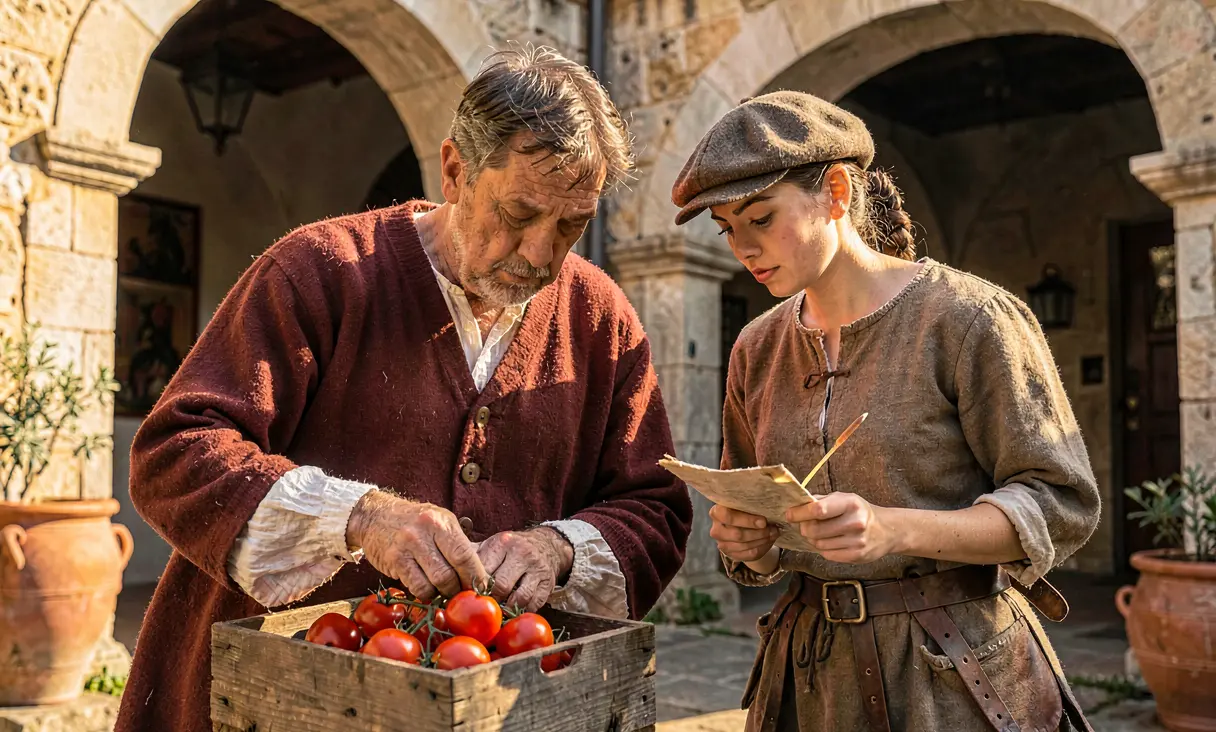
Introduced to Rome circa 1520 as a feared ornamental, the tomato evolved from a poisonous curiosity into the cornerstone of Italian cuisine within two centuries.
Background: The Columbian Exchange and the Nightshade Stigma
In the wake of Christopher Columbus's voyages to the Americas, a biological revolution known as the Columbian Exchange began reshaping global agriculture. Among the most significant transfers was the tomato (Solanum lycopersicum), a plant domesticated by indigenous peoples in the Andes and later cultivated extensively by the Aztecs in central Mexico, where it was known as 'tomatl'. When Spanish conquistadors and explorers first encountered the fruit in the early 16th century, they brought seeds back to the Old World. However, upon arrival in Southern Europe around 1520, the tomato faced immediate suspicion. Botanists of the era classified it within the Solanaceae family, which included deadly nightshade and belladonna. Consequently, European scholars and the general populace viewed the red fruit with deep trepidation, believing its consumption would induce madness or death.
The Event: Arrival in Rome and Initial Cultivation
By 1520, tomato seeds had reached the Italian peninsula, specifically taking root in the gardens of Rome. The climate of central Italy proved remarkably conducive to the plant's growth, mirroring the conditions of its native highlands. Initially, the introduction was not culinary but ornamental. Wealthy Roman botanists and aristocrats cultivated the vines in their terraced gardens, admiring the vibrant yellow and red fruits as exotic curiosities rather than food sources. The first recorded European description appeared in 1544 by the Italian herbalist Pietro Andrea Mattioli, who referred to the plant as 'pomi d'oro' (golden apples). Mattioli noted its ornamental beauty but explicitly warned against eating it, reinforcing the prevailing fear that it was a poisonous novelty fit only for display.
How It Unfolded: From Ornament to Table
The transition from garden decoration to kitchen staple was a gradual process driven by necessity and regional adaptation. In the impoverished rural areas of southern Italy, particularly Naples and Sicily, where land was scarce and the climate hot, the tomato's high yield and nutritional value became undeniable. By the late 17th century, the stigma began to erode as local peasants, often excluded from the strict dietary laws of the elite, began experimenting with the fruit. They discovered that cooking the tomatoes neutralized perceived toxins and enhanced their flavor when paired with olive oil, garlic, and herbs. The first known printed recipe featuring tomatoes appeared in 1692 in a Neapolitan cookbook by Antonio Latini, titled 'Lo Scalco alla Moderna', marking the definitive shift from botanical curiosity to culinary ingredient.
Key Figures: Mattioli and the Early Advocates
While no single individual can be credited with the tomato's adoption, Pietro Andrea Mattioli stands as a pivotal figure in its early European history. His 1544 commentary provided the first detailed botanical account of the plant in Europe, even if his advice was initially conservative. Later, the anonymous cooks of Naples played an equally critical role by demonstrating the fruit's viability as a food source. Their practical experimentation laid the groundwork for what would become the foundation of Mediterranean cuisine. Unlike other introductions that required royal decrees or religious edicts to gain traction, the tomato's rise was a grassroots phenomenon, driven by the ingenuity of the working class who transformed a feared nightshade into a staple.
Aftermath: The Transformation of Italian Cuisine
Within two centuries of its introduction, the tomato had fundamentally altered the culinary landscape of Italy. By the 19th century, it was no longer an exotic oddity but the cornerstone of national identity in food. Dishes that are now synonymous with Italian culture, such as pasta al pomodoro and pizza Margherita, emerged during this period. The fruit's acidity balanced rich meats and heavy pastas, while its ability to preserve well allowed for winter consumption, revolutionizing food security in the region. This rapid integration stands as a unique case study in agricultural history, where a crop went from feared poison to essential ingredient in less than 300 years.
Legacy and Global Significance
The introduction of the tomato to Europe exemplifies the profound impact of biological exchange on human civilization. It demonstrates how agricultural technology and crop domestication can transcend cultural barriers, eventually becoming inseparable from a nation's heritage. Today, the tomato is one of the most widely consumed vegetables globally, essential to cuisines from Spain to India. Its journey from the Andes to Rome illustrates that food traditions are not static but dynamic, shaped by migration, adaptation, and the willingness of cultures to embrace new flavors. The tomato remains a testament to the power of the Columbian Exchange in defining modern global diets.
The tomato's integration into European agriculture represents one of the most profound impacts of the Columbian Exchange on human diet and culture.

Where it happened
Rome, Italy — see it on the interactive map →
Explore related history
 TechnologyExpansion of Transatlantic Cotton Tradec. 1793 CE · Savannah, Georgia, USAEli Whitney's cotton gin revolutionizes production and fuels global textile manufacturing.
 ExplorationMagellan's Circumnavigation CompletedSeptember 6, 1522 CE · Seville, SpainFirst expedition sails around the globe proving Earth is round and vast.
 ReligionLuther Posts Ninety-Five ThesesOctober 31, 1517 CE · Wittenberg, GermanyMartin Luther challenges Catholic Church practices sparking the Protestant Reformation.
 WarBabur's Victory at Panipat and Founding of Mughalsc. 1526 CE · Panipat (modern Haryana/India)Babur defeats the Lodi Sultanate at the First Battle of Panipat, establishing the Mughal Empire in India.
Discussion
Loading…