
Promulgation of the Code of Ur-Nammu
King Ur-Nammu's c. 2100 BCE Code established the world's first written legal system, prioritizing monetary compensation over retribution to unify his empire and define justice for millennia.
The Crisis of the Third Dynasty
By the late third millennium BCE, the political landscape of southern Mesopotamia was fractured following the collapse of the Akkadian Empire. The Gutian invasions had plunged the region into a period often described as chaos, where local city-states vied for dominance and legal consistency was nonexistent. Into this vacuum stepped Ur-Nammu, a former general who rose to power in the city-state of Ur around 2112 BCE. Recognizing that military conquest alone could not sustain his burgeoning Neo-Sumerian empire, he sought to unify his diverse territories through administrative standardization and the rule of law. The promulgation of his legal code was not merely an act of legislation but a strategic political maneuver designed to centralize authority, curb the power of local elites, and restore economic stability to a war-torn region.
The Discovery and Nature of the Code
The Code of Ur-Nammu survives today primarily through two fragmented clay tablets discovered in the ancient city of Nippur by archaeologists in the early 20th century. Dated to approximately 2100 BCE, these texts represent the oldest known law code in human history, predating the famous Code of Hammurabi by roughly three centuries. The prologue explicitly states that Ur-Nammu established justice in the land, freeing the weak from oppression and ensuring that the orphan and widow were not exploited. Unlike later Mesopotamian codes, which often relied on retributive lex talionis (the law of retaliation), the Code of Ur-Nammu is characterized by a sophisticated system of monetary compensation. For instance, if a man caused injury to another by breaking his bone, the penalty was not physical mutilation but the payment of one mina of silver, establishing a precedent that valued economic restitution over bodily vengeance.
Divine Sanction and the Stele
To legitimize this new legal order, Ur-Nammu commissioned a monumental limestone stele, now lost but known through later copies and descriptions. The imagery on the stele depicted the king standing before Nanna, the moon god and patron deity of Ur, receiving the symbols of kingship and law. This iconography served a critical political function: it framed human jurisprudence as an extension of divine will. By positioning himself as the steward of Nanna's justice, Ur-Nammu elevated his decrees above mere royal edicts, making them immutable and sacred. The visual narrative reinforced the idea that the king was the sole mediator between the gods and the people, responsible for maintaining 'me' (divine order) in society through fair adjudication.
Jurisprudence and Social Reform
The legal text itself reveals a nuanced understanding of social stratification and liability. The laws covered a wide spectrum of civil and criminal matters, including slavery, marriage, divorce, inheritance, and professional negligence. A striking feature is the differentiation of penalties based on the social status of the victim; while the code protected the vulnerable, it also reinforced the hierarchy of the time. However, the shift toward monetary fines for physical injuries suggests a society moving away from blood feuds that could destabilize communities. The code also addressed issues of professional malpractice, such as a builder constructing a house that subsequently collapsed and killed the owner, prescribing death for the builder—a rare instance where the principle of capital punishment was applied to negligence rather than intentional harm.
Consolidation of the Neo-Sumerian State
The implementation of this code coincided with a broader administrative revolution under Ur-Nammu and his successor, Shulgi. The standardization of weights, measures, and legal procedures facilitated trade across the empire's vast territory, stretching from the Persian Gulf to the Mediterranean coast. By creating a predictable legal environment, the state encouraged agricultural productivity and commercial exchange, fueling the economic boom that characterized the Third Dynasty of Ur. The code acted as a binding agent for the diverse populations under Sumerian rule, replacing local customary laws with a unified imperial standard that strengthened the central government's grip on the periphery.
Enduring Legacy and Historical Significance
Although the Third Dynasty of Ur eventually fell to Elamite invasions around 2004 BCE, the legacy of Ur-Nammu's legal innovations endured for millennia. The Code served as a direct precursor to subsequent Mesopotamian law codes, including those of Lipit-Ishtar and Hammurabi, establishing a tradition of written jurisprudence that would influence the Near East until the rise of monotheistic legal systems. Its emphasis on compensation over retribution reflects an early sophistication in legal philosophy, recognizing that social harmony is often better served by restitution than by violence. Today, the Code of Ur-Nammu stands as a testament to the complexity of Bronze Age civilization, proving that the concepts of due process, state responsibility for justice, and codified rights were not modern inventions but foundational pillars of ancient governance.
It represents the earliest known written legal system, establishing principles of justice that shaped Mesopotamian law for centuries.


Where it happened
Ur, Southern Mesopotamia (Iraq) — see it on the interactive map →
Explore related history
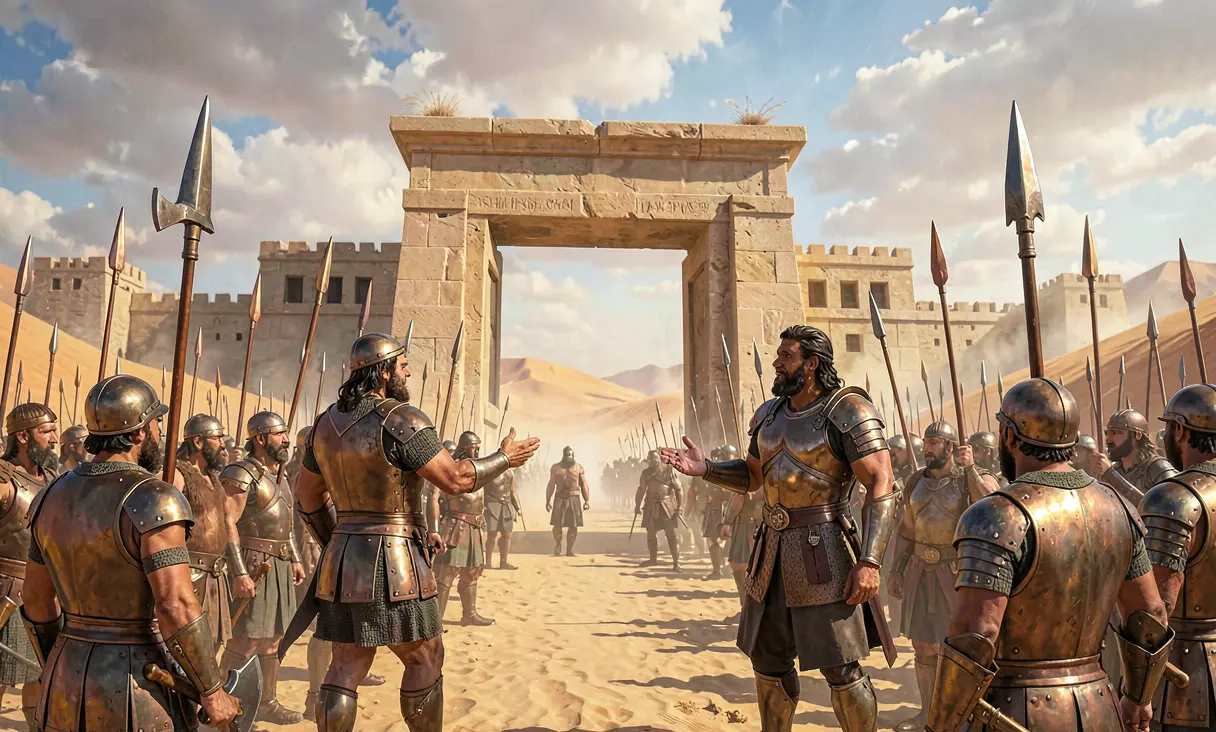 PoliticsSargon of Akkad Establishes the First Empirec. 2334 BCE · Akkad (Location uncertain, near Baghdad, Iraq)Sargon unifies Sumerian city-states to create the world's first multi-ethnic empire.
 PoliticsNelson Mandela Elected President of South AfricaApril 27, 1994 · Cape Town, South AfricaSouth Africa holds its first democratic election, ending the apartheid regime and establishing a multiracial government.
 PoliticsZimbabwe Gains Independence from BritainApril 18, 1980 · Harare, ZimbabweRobert Mugabe leads the transition from Rhodesia to the independent nation of Zimbabwe.
 PoliticsAngolan War of Independence EndsNovember 11, 1975 · Luanda, AngolaAngola gains independence from Portugal, immediately plunging into a civil war between rival liberation movements.
 PoliticsCongo Gains Independence from BelgiumJune 30, 1960 · Kinshasa, Congo (DRC)The Belgian Congo becomes the independent Republic of the Congo, sparking immediate political turmoil.
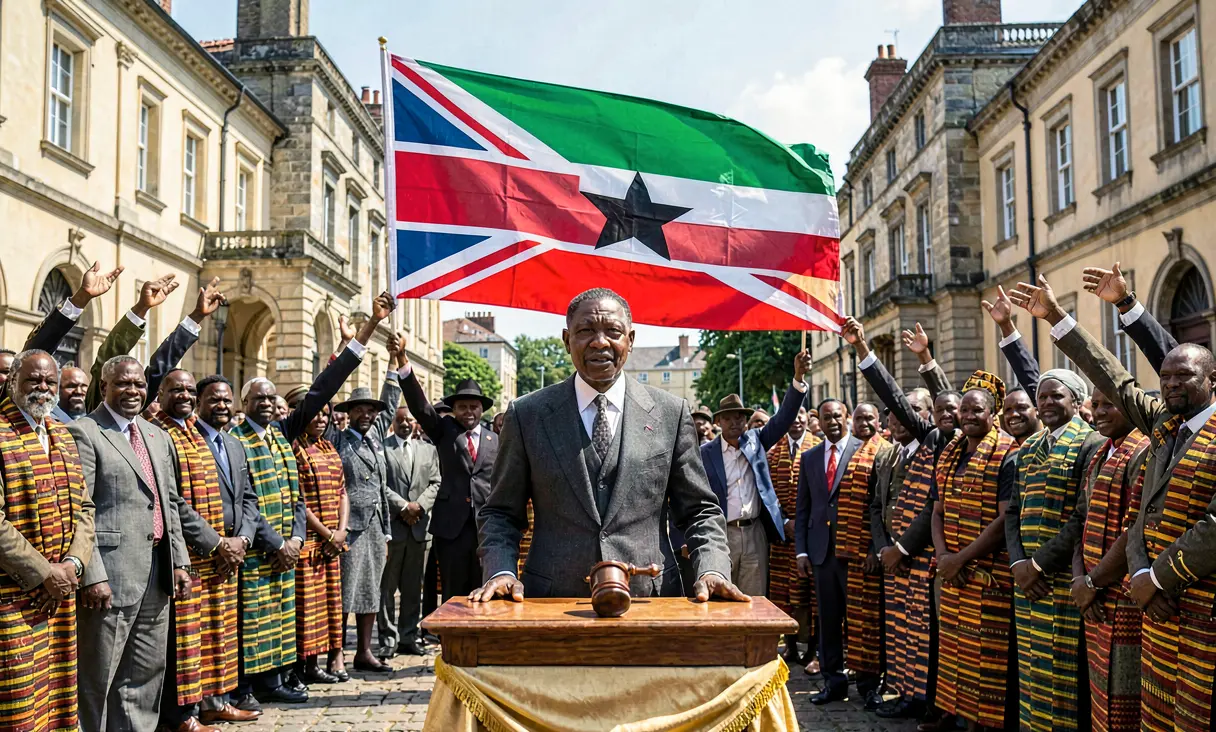 PoliticsGhana Gains Independence from BritainMarch 6, 1957 · Accra, GhanaKwame Nkrumah leads the Gold Coast to become the first sub-Saharan African nation to gain independence from colonial rule.
Discussion
Loading…