Chernobyl Nuclear Disaster
The 1986 Chernobyl explosion exposed fatal Soviet secrecy flaws, devastated Belarus and Ukraine with radiation, and accelerated the collapse of the USSR while redefining global nuclear safety.
Context and the Flawed Design
By the mid-1980s, the Soviet Union's RBMK-1000 reactor design was a cornerstone of its energy strategy, yet it possessed inherent safety vulnerabilities unknown to many operators. The Chernobyl Nuclear Power Plant, located near the city of Pripyat in the Ukrainian SSR, housed four such reactors. On April 26, 1986, engineers scheduled a routine test on Reactor Four to determine if the turbine's decaying momentum could generate enough electricity to power emergency coolant pumps during a station blackout. This procedure required lowering reactor power to a dangerously low level, a maneuver that would prove catastrophic due to the RBMK's positive void coefficient and an unstable control rod design.
The Fatal Sequence of Errors
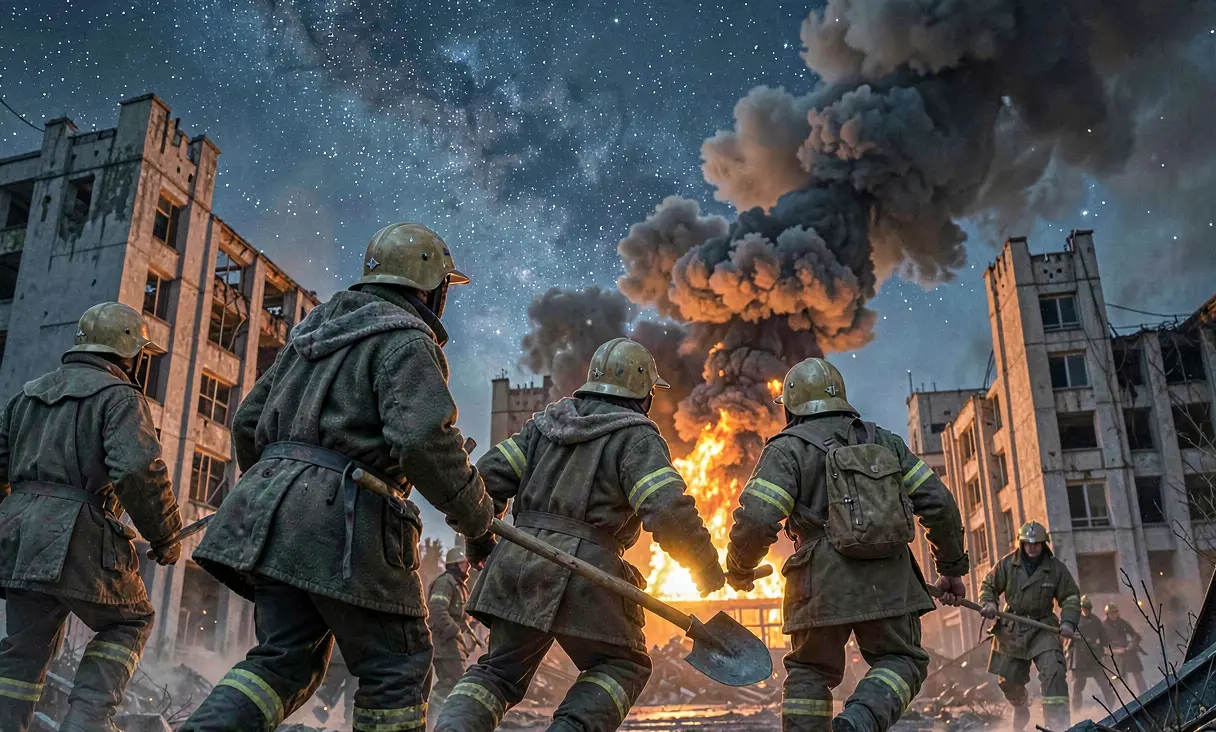
The test was plagued by delays and procedural deviations. Operators inadvertently reduced power far below the safety protocol minimum, causing the reactor to enter a 'xenon poisoning' state where neutron absorption stifled fission. In an attempt to restore power, they disabled critical automatic shutdown systems and withdrew nearly all control rods. At 1:23:40 AM, as steam flow increased, the reactor's instability spiked. A massive power surge followed, causing fuel channels to rupture and generating a hydrogen explosion that blew the 2,000-ton biological shield off the reactor core. This was immediately followed by a second explosion, likely from steam pressure, which exposed the graphite moderator to air, igniting a fire that would burn for days.
Key Figures and Immediate Response
In the chaotic aftermath, plant personnel like Deputy Chief Engineer Anatoly Dyatlov initially struggled to comprehend the scale of the disaster, believing the core remained intact despite the visible destruction. The first responders were local firefighters from Pripyat, led by Lieutenant Volodymyr Pravyk, who arrived within minutes. Unaware they were battling a reactor fire emitting lethal levels of radiation, these men fought the blaze with standard equipment, suffering acute radiation sickness (ARS) that claimed many lives within weeks. Meanwhile, Soviet leadership in Moscow remained largely silent; it was not until Swedish monitoring stations detected anomalous radiation levels on April 27 that the Kremlin acknowledged the catastrophe, forcing a hasty evacuation of Pripyat's 49,000 residents.
Containment and the Human Cost
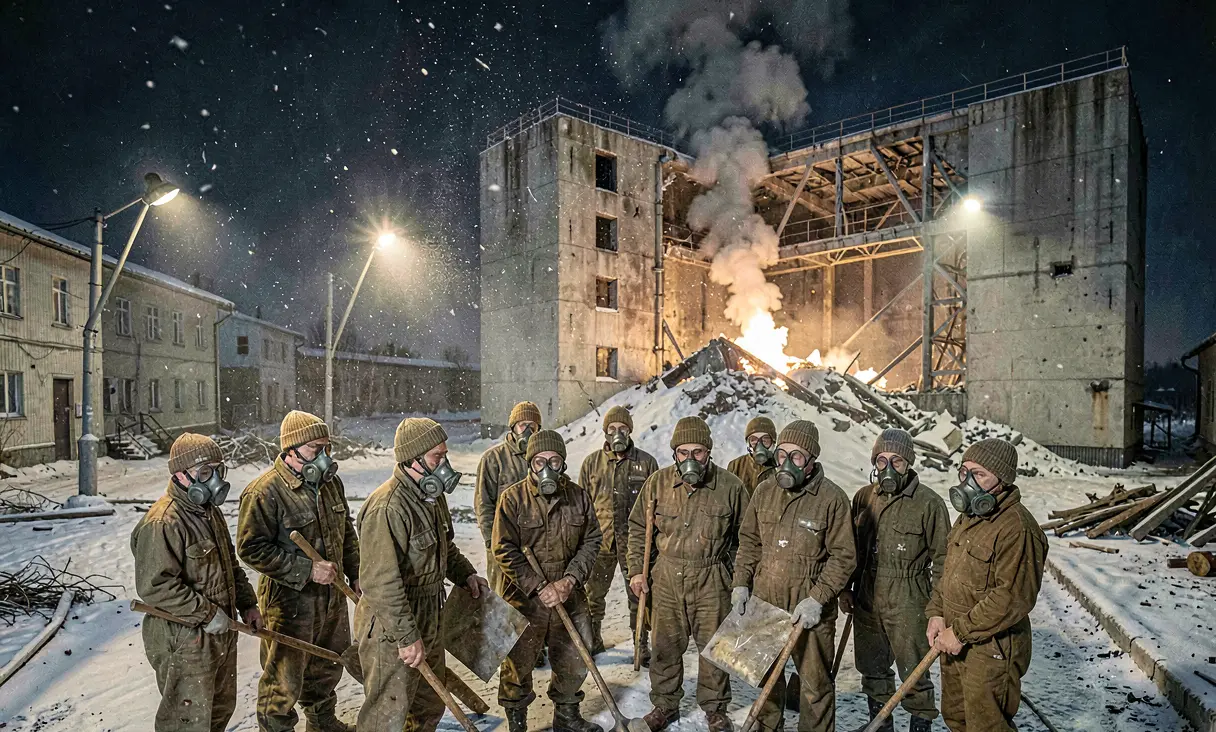
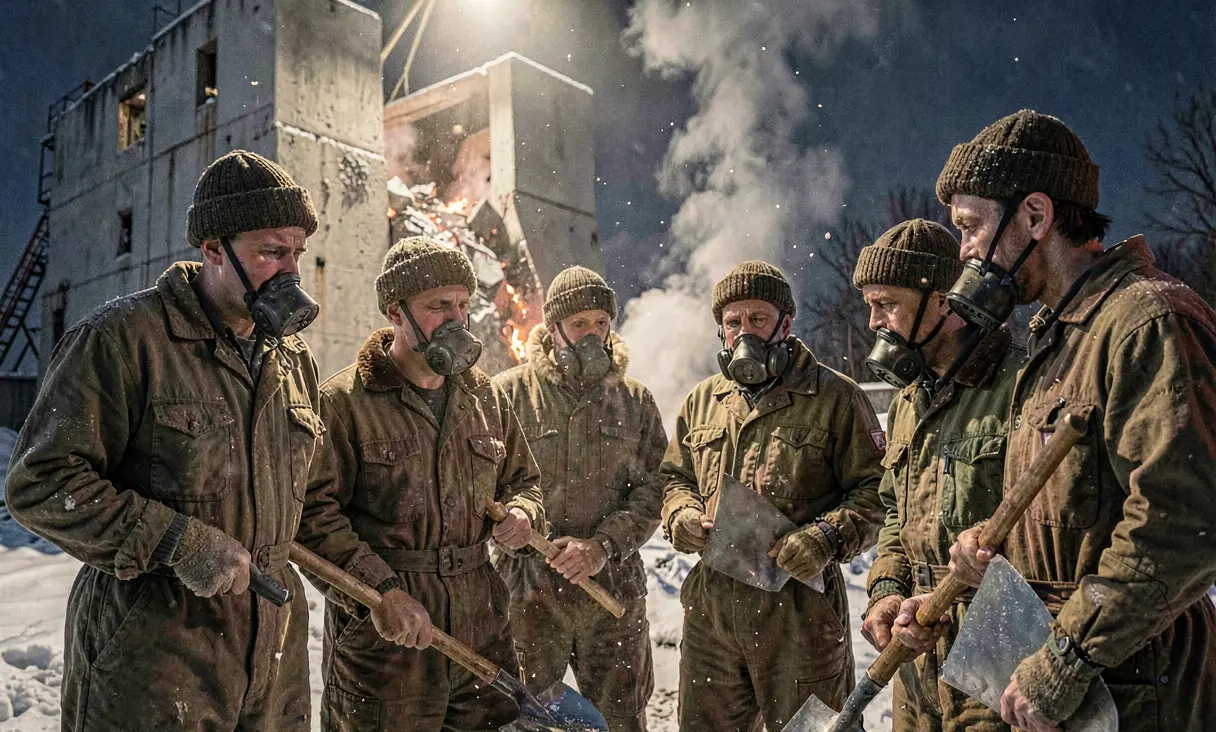
The immediate containment effort involved a massive aerial campaign where Soviet helicopters dropped over 5,000 tons of boron, sand, clay, and lead onto the burning reactor to smother the fire and absorb radiation. This operation cost the lives of many pilots who flew into lethal plumes. The construction of the 'Sarcophagus,' an emergency concrete shelter, began in June 1986 under extreme conditions, employing over 200,000 liquidators—soldiers, miners, and civilians—who worked in shifts to clear radioactive debris and seal the reactor. Official Soviet figures initially cited only 31 deaths, but modern epidemiological studies suggest thousands of excess cancer deaths may eventually result from the exposure, with Belarus absorbing roughly 60% of the fallout.
Global Fallout and Political Repercussions
The radioactive cloud drifted across Europe, contaminating vast swathes of land in Belarus, Russia, Ukraine, Scandinavia, and Central Europe. The event shattered the illusion of Soviet technological invincibility and exposed a culture of secrecy that had prioritized production quotas over safety. Mikhail Gorbachev's policy of *glasnost* (openness) was accelerated by the disaster, as the state could no longer suppress information about the environmental and human toll. The loss of public trust in the Communist Party's competence became a catalyst for broader political unrest, contributing significantly to the dissolution of the USSR just five years later.
Legacy and Modern Safety Standards
Chernobyl fundamentally altered global nuclear energy policy, leading to the establishment of the World Association of Nuclear Operators (WANO) and rigorous international safety reviews. The RBMK design was modified to eliminate its fatal flaws, though some remained in operation until recently. In 2016, the New Safe Confinement—a massive arch structure designed to last a century—was slid over the old Sarcophagus to allow for the safe dismantling of the damaged reactor and removal of spent fuel. The exclusion zone remains one of the most contaminated places on Earth, serving as a somber monument to the consequences of technological hubris and the enduring power of nature.
It remains the worst nuclear accident in history shaping global energy policy.
Where it happened
Pripyat, Ukraine — see it on the interactive map →
Explore related history
 PoliticsFall of the Berlin WallNovember 9, 1989 CE · Berlin, GermanyCitizens breach the barrier dividing East and West Berlin ending Cold War division.
 ScienceLaunch of Hubble Space TelescopeApril 24, 1990 CE · Cape Canaveral, USASpace telescope deployed into orbit providing unprecedented deep space observations.
 ExplorationApollo 11 Moon LandingJuly 20, 1969 CE · Cape Canaveral, USAHumans first walk on the lunar surface during the Space Race.
Discussion
Loading…