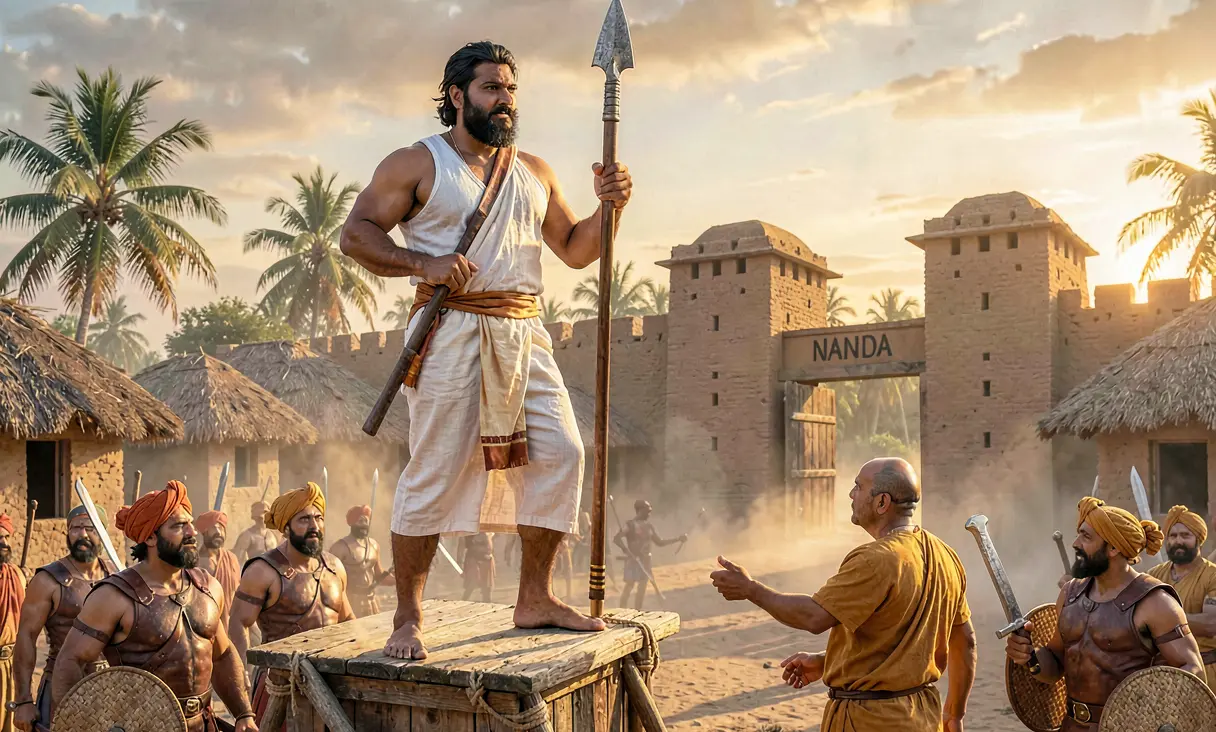
Chandragupta Maurya Founding the Mauryan Empire
In 321 BCE, Chandragupta Maurya and his mentor Chanakya toppled the Nanda Empire to forge India's first unified state, establishing a centralized bureaucracy that dominated Eurasia for over a century.
The Vacuum of Power in the Indus Valley
By the late 4th century BCE, the Indian subcontinent was a fractured landscape of sixteen major states known as the Mahajanapadas. The most powerful among them, the Nanda Empire, ruled from Pataliputra with an army estimated by Greek sources at 200,000 infantry and 3,000 war elephants, yet it suffered from deep internal resentment due to its perceived illegitimacy and heavy taxation. Simultaneously, the northwest had been destabilized by the invasion of Alexander the Great, whose forces withdrew in 325 BCE, leaving a power vacuum in the Punjab and Sindh regions. This geopolitical chaos created a unique opening for a charismatic leader to challenge the established order, setting the stage for the first true pan-Indian empire.
The Mentor and the Disciple
Central to this transformation were two figures: Chandragupta Maurya, a young man of obscure origins often linked to the Moriya clan or the Peacock dynasty, and his mentor Chanakya (also known as Kautilya or Vishnugupta). A Brahmin scholar from Takshashila, Chanakya was renowned for his sharp intellect and mastery of political science. Legend recounts that after being insulted by the Nanda King Dhana Nanda, Chanakya vowed to destroy the dynasty. He identified Chandragupta as the vessel for this ambition, training him in statecraft, military strategy, and the subtle arts of espionage described later in his seminal treatise, the Arthashastra.
The Conquest of the Northwest
Chandragupta did not march directly on Pataliputra; instead, he first secured the vulnerable northwest frontier. Capitalizing on the disarray following Alexander's departure and the subsequent conflicts between his generals, Chandragupta systematically dismantled the Macedonian satrapies. By 321 BCE, he had seized control of the Punjab region, defeating Seleucus Nicator, one of Alexander's successors, in a decisive campaign that likely concluded around 305 BCE with a treaty ceding vast territories including Arachosia and Gedrosia to the Mauryans. This initial victory provided Chandragupta with a seasoned army, control over vital trade routes, and the resources necessary for a full-scale invasion of the Gangetic heartland.
The Fall of the Nandas
With his forces bolstered by the conquests in the northwest, Chandragupta turned his attention to Pataliputra. Utilizing Chanakya's strategies of internal subversion and psychological warfare, he undermined the loyalty of the Nanda army and court. Historical accounts, including those from Greek observers like Plutarch and Justin, suggest that the Nanda King Dhana Nanda was widely hated, making his overthrow a relatively swift affair compared to the prolonged sieges of earlier eras. By 321 BCE, Chandragupta had successfully captured Pataliputra, executing or deposing the last Nanda ruler and declaring himself the Emperor (Chakravartin) of India.
Centralization and Administrative Innovation
The establishment of the Mauryan Empire was not merely a change in dynasty but a revolution in governance. Chandragupta, guided by Chanakya's principles, instituted a highly centralized bureaucracy that extended from the capital to the farthest provinces. The empire was divided into four major administrative zones, each governed by a royal prince or high official, supported by a complex network of spies, tax collectors, and judges. This system standardized weights and measures, regulated trade, and maintained a massive standing army, creating an economic zone that stretched from the Hindu Kush mountains in the west to Bengal in the east, and as far south as the Deccan plateau.
Legacy of Unification
The founding of the Mauryan Empire marked the first time a significant portion of the Indian subcontinent was unified under a single political authority. This unification facilitated unprecedented cultural exchange, economic integration, and the spread of ideas, laying the groundwork for future empires. The administrative models developed by Chandragupta and Chanakya influenced South Asian statecraft for centuries, while the empire's stability allowed his grandson, Ashoka, to later propagate Buddhism across Asia. The event stands as a pivotal moment in world history, demonstrating how strategic vision and political acumen could transform a fragmented region into a global superpower.
This event unified most of the Indian subcontinent for the first time, establishing a model of imperial governance that influenced South Asian politics for centuries.

Where it happened
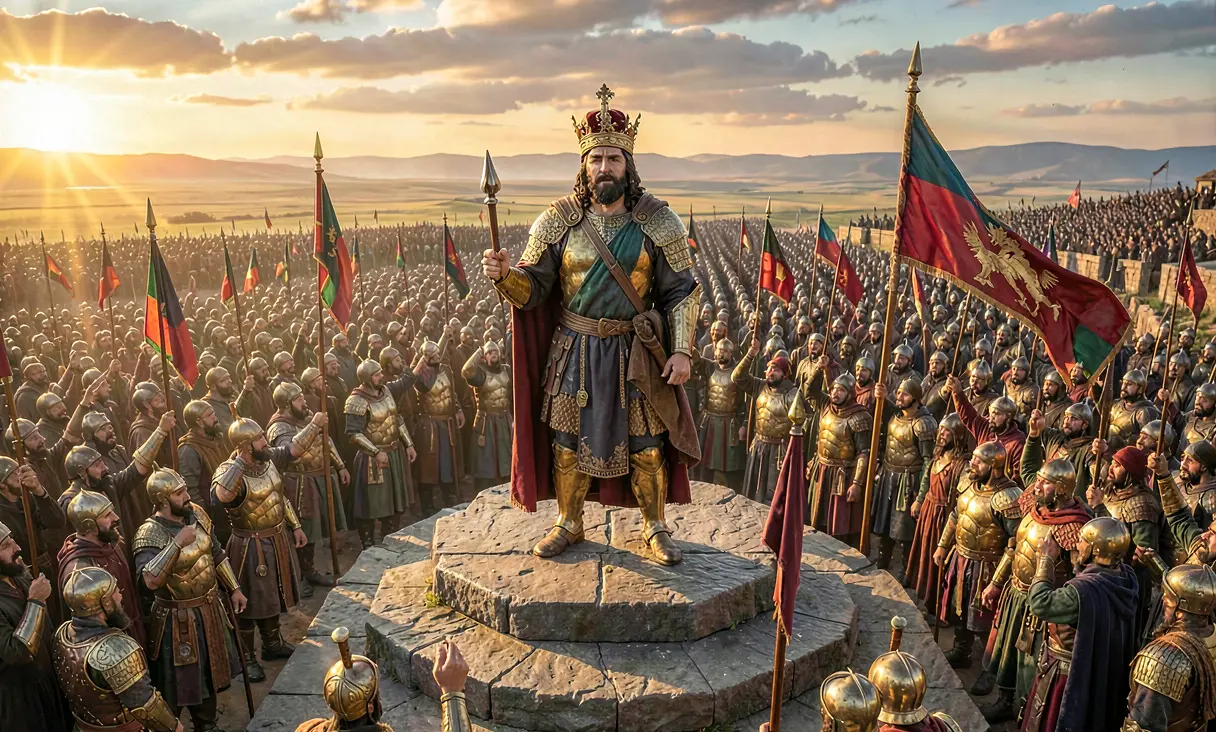
Pataliputra (modern Patna/India) — see it on the interactive map →
Explore related history
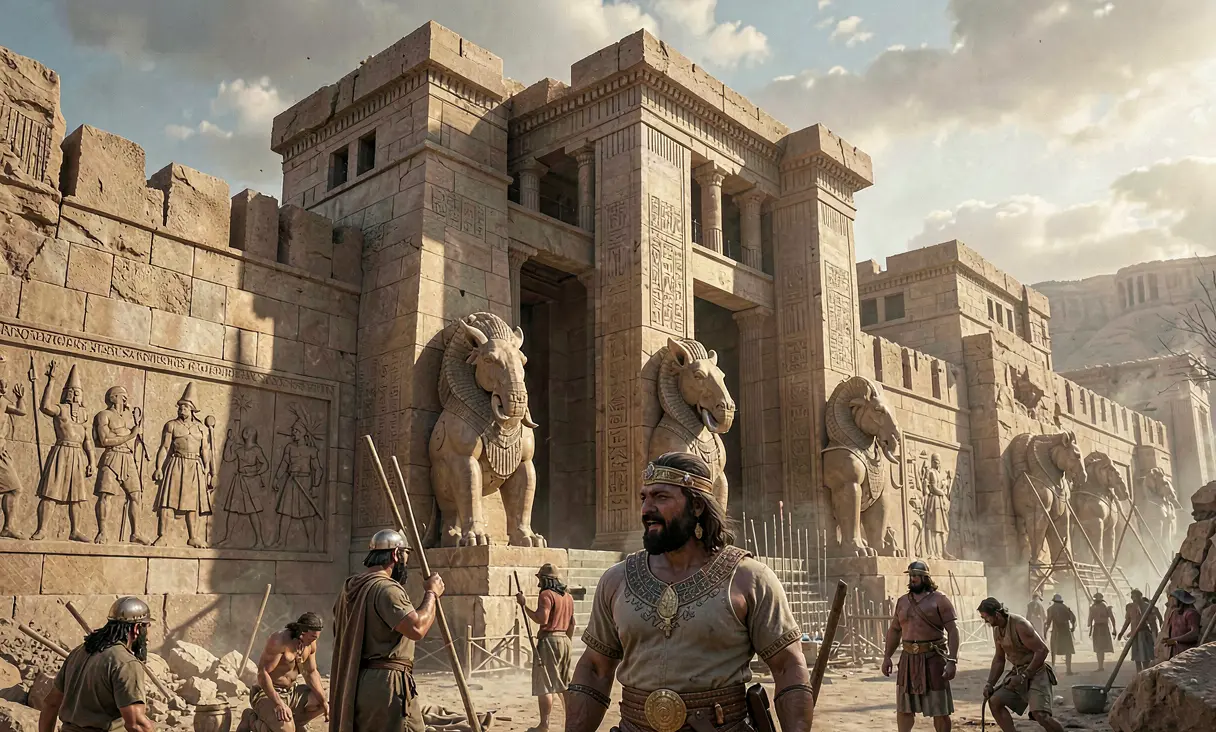 PoliticsFounding of Dur-Sharrukin by Sargon IIc. 717 BCE · Khorsabad (Dur-Sharrukin), IraqSargon II builds a new capital city to project Assyrian power and administrative control.
 PoliticsReign of Emperor Taizong and the Zhenguan Era626 CE · Chang'an, ChinaLi Shimin ascends the throne after the Xuanwu Gate Incident, ushering in a golden age of governance.
 PoliticsRise of the Sixteen Mahajanapadasc. 600 BCE · Gangetic Plain (modern Uttar Pradesh/India)Sixteen great kingdoms and republics emerge across the Gangetic plain, marking the transition from tribal chiefdoms to state-level societies.
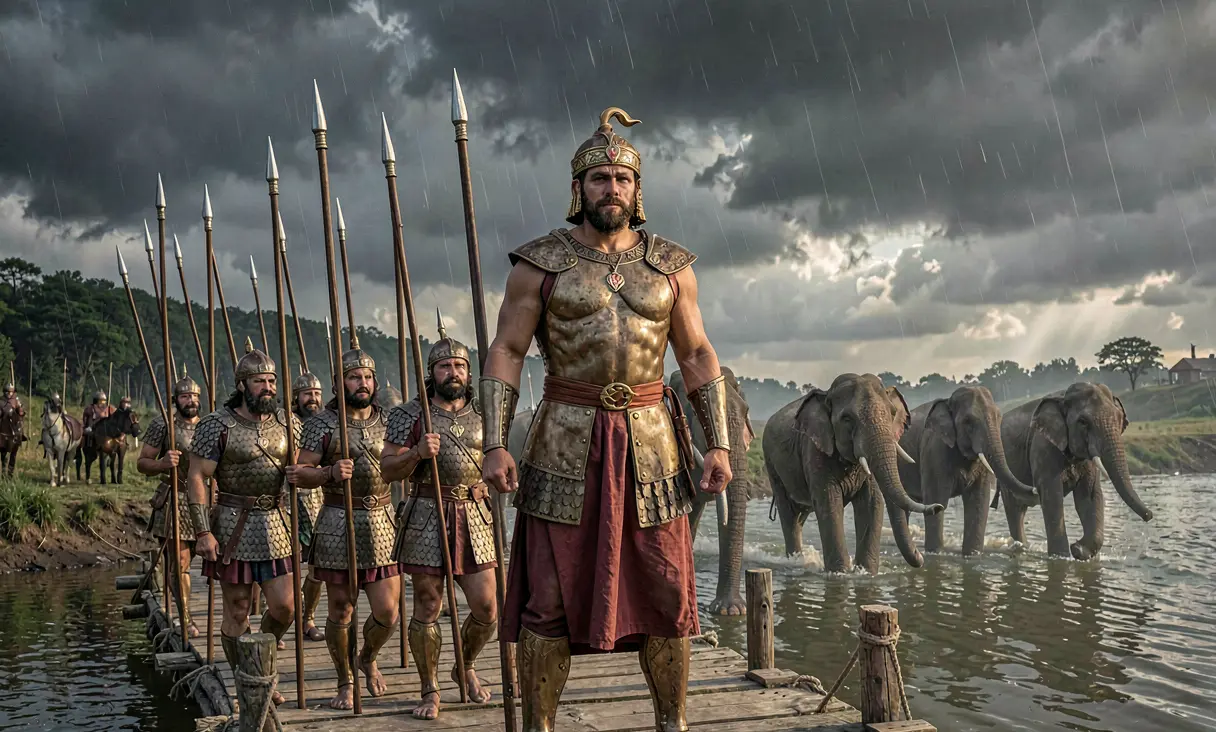 WarAlexander the Great Crosses the Indus Riverc. 326 BCE · Attock (modern Pakistan)Alexander crosses the Indus and defeats King Porus at the Battle of the Hydaspes, expanding his empire to the edge of South Asia.
 ReligionKing Ezana Declares Aksum a Christian Kingdomc. 330 CE · Aksum, EthiopiaKing Ezana adopts Christianity as the state religion of Aksum under the influence of Frumentius.
 TechnologyConstruction of the Aqua Appia: Rome's First Aqueduct312 BCE · Rome, ItalyAppius Claudius Caecus builds the first aqueduct to supply fresh water to Rome.
Discussion
Loading…