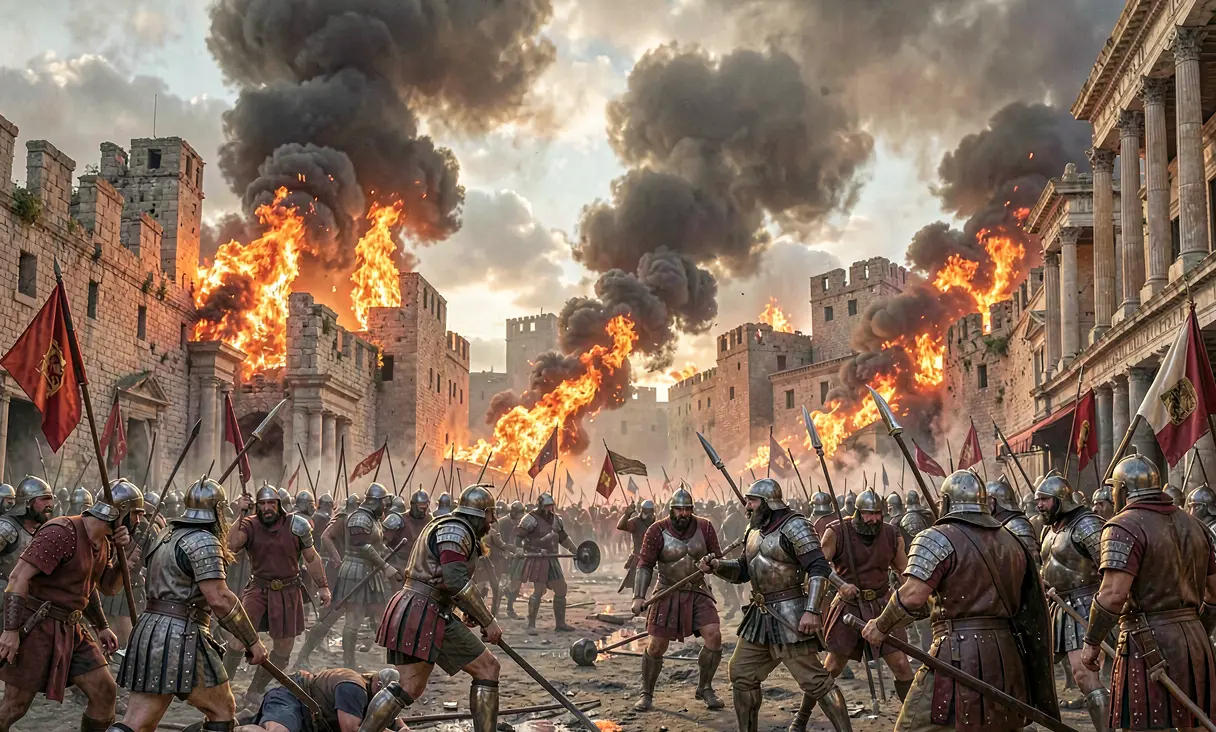
Destruction of Carthage by Rome
The systematic annihilation of Carthage in 146 BCE eliminated Rome's last great rival, cementing its hegemony over the Mediterranean and establishing a brutal precedent for total war.
The Inevitable Conflict
By the mid-2nd century BCE, the Roman Republic stood as the undisputed hegemon of Italy and the western Mediterranean, yet a singular shadow loomed over its political consciousness: Carthage. Despite having been severely weakened by Hannibal's defeat in the Second Punic War decades prior, the North African city-state had miraculously recovered its economic vitality, rebuilding its trade networks and agricultural output without rearming militarily. This resurgence, however, was viewed with paranoid suspicion by Cato the Elder, who famously concluded every speech in the Senate regardless of topic with 'Carthage must be destroyed' (Delenda est Carthago). The pretext for war finally arrived in 150 BCE when Carthage, acting in self-defense against incursions by Rome's Numidian ally Masinissa, violated a peace treaty that forbade them from taking up arms without Roman consent. Rome seized this technicality to launch the Third Punic War, demanding the city be abandoned and relocated inland—a demand Carthage rightly interpreted as an ultimatum for extinction.
The Siege of 149–146 BCE
What followed was a grueling three-year siege that tested the resolve of both belligerents. Initially, Roman consuls struggled to breach Carthage's formidable triple walls and its massive harbor defenses, suffering from poor leadership and logistical failures. The tide turned in 147 BCE with the election of Scipio Aemilianus as consul, a man who combined military genius with strategic patience. He systematically blockaded the city by land and sea, cutting off all supply lines while constructing an immense mole across the harbor entrance to starve the defenders into submission. Inside the walls, the Carthaginians displayed desperate resilience, manufacturing weapons from melted-down statues and repurposing women's hair for bowstrings. For months, they held out against starvation and disease, turning their city into a fortress of grim determination until the Roman lines finally tightened enough to allow for an assault.
The Breach and The Sack
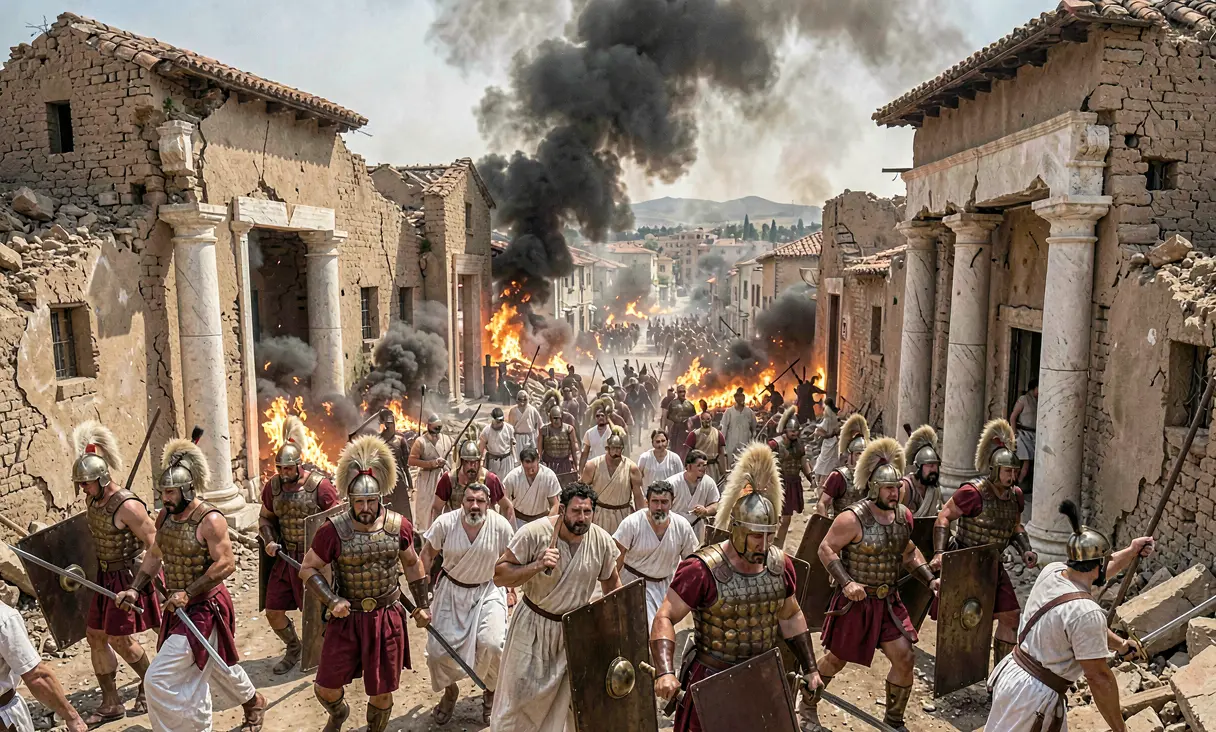
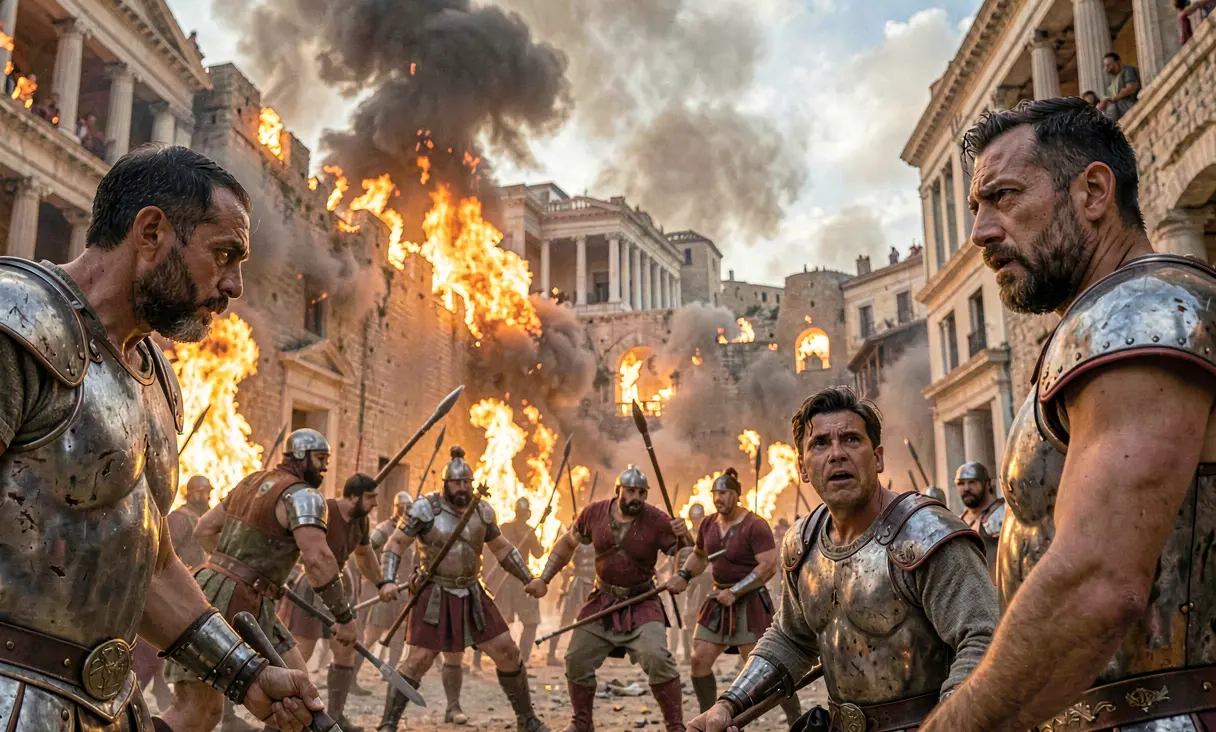
In the spring of 146 BCE, Scipio's forces launched a coordinated attack that breached the city's defenses. What ensued was six days of unrelenting carnage and destruction. Roman legions fought house-to-house through narrow streets, systematically dismantling the urban fabric while the Carthaginian population, led by the commander Hasdrubal the Boetharch, made a last stand atop the Byrsa citadel. The fighting was brutal; ancient sources estimate that of a pre-siege population of perhaps 700,000, only 50,000 survivors were spared to be sold into slavery at the slave markets of Delos and elsewhere. As the city burned, the great temples and palaces were reduced to ash, and the famous circular military harbor was left a hollow shell. The systematic razing ensured that no structure remained standing to serve as a rallying point for resistance or a symbol of Carthaginian glory.
The Myth of Salt
A persistent legend claims that after the city fell, Roman soldiers sowed salt into the scorched earth of the Carthaginian hinterland to ensure nothing would ever grow there again, symbolizing a curse of eternal barrenness. While this narrative has become iconic in popular culture, modern historians regard it as a later invention, likely originating from 19th-century romanticized accounts rather than contemporary Roman records like those of Polybius or Appian. There is no archaeological evidence of salting, nor do ancient texts mention the practice; indeed, the fertile plains around Carthage were too valuable to waste. The Romans did, however, formally dedicate the site to eternal ruin and established a small garrison, but the 'curse' was more political than agricultural. The true intent was not to poison the soil, but to erase the memory of a rival civilization from the geopolitical map.
Aftermath and Transformation
The destruction of Carthage marked a definitive turning point in Mediterranean history. With its primary naval and commercial rival annihilated, Rome faced no significant opposition to its expansion in the western Mediterranean, effectively transforming the sea into 'Mare Nostrum' (Our Sea). The territory of Carthage was annexed as the Roman province of Africa Proconsularis, one of the empire's most vital grain-producing regions. Ironically, within a century, Julius Caesar would found a new colony on the same site, and by the reign of Augustus, it had re-emerged as a thriving metropolis and the second city of the Western Empire. Yet, the original Punic Carthage was gone forever; its culture, language, and political institutions were extinguished, leaving only ruins to remind future generations of Rome's capacity for total war.
Legacy of Total War
The fall of Carthage established a precedent for 'total war' that would echo through history. It demonstrated that in the Roman worldview, no compromise was possible with existential threats; the enemy had to be completely eradicated rather than subjugated or integrated. This event cemented the reputation of Rome as an unyielding imperial power and signaled the end of the Hellenistic era's balance of powers. The psychological impact on the Mediterranean world was profound, serving as a grim warning to any state that dared challenge Roman authority. While the physical city rose again from the ashes, the destruction of 146 BCE remains the ultimate symbol of Rome's ruthless efficiency in securing its dominance, reshaping the cultural and political landscape of the ancient world forever.
The fall of Carthage eliminated Rome's greatest rival and established its undisputed hegemony over the Mediterranean world.
Where it happened
Carthage (Tunis), Tunisia — see it on the interactive map →
Explore related history
 WarAn Lushan Rebellion Begins755 CE · Chang'an, ChinaGeneral An Lushan revolts against Emperor Xuanzong, devastating the Tang Dynasty and population.
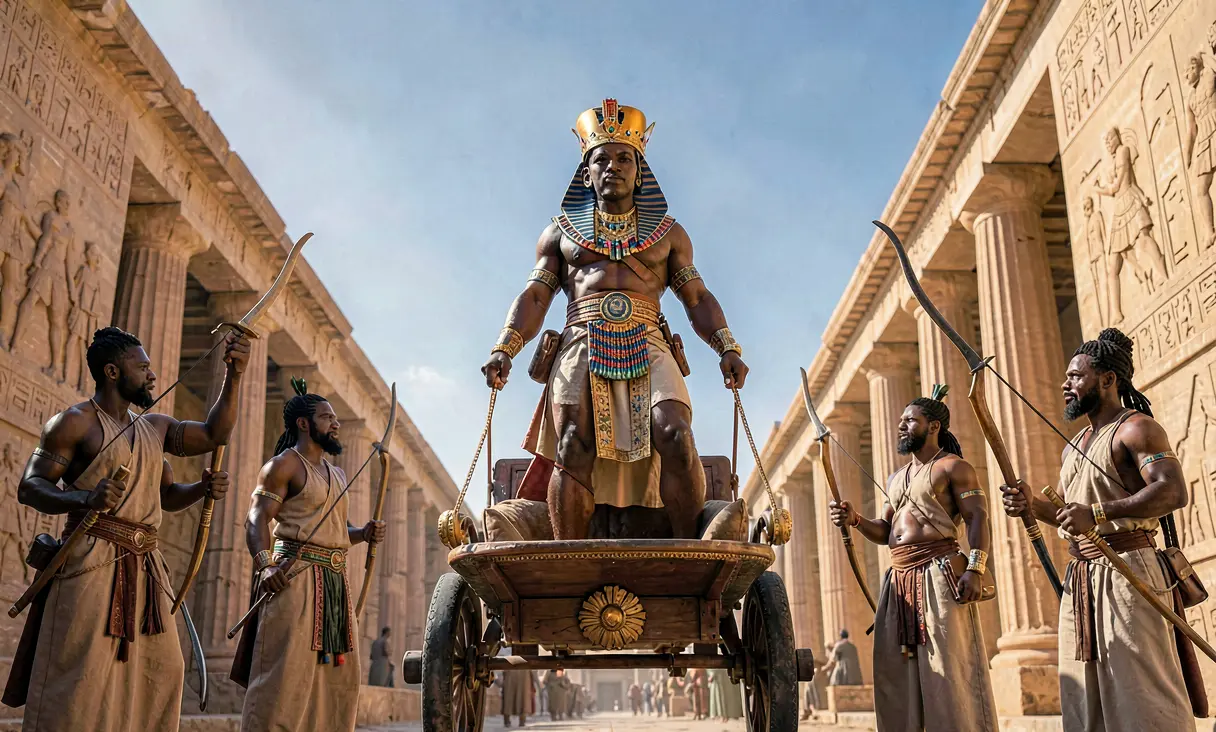 WarKushite Conquest of Egypt (25th Dynasty)c. 747 BCE · Thebes, EgyptKing Piye of Kush conquers Upper and Lower Egypt, establishing the first African-led dynasty in Egyptian history.
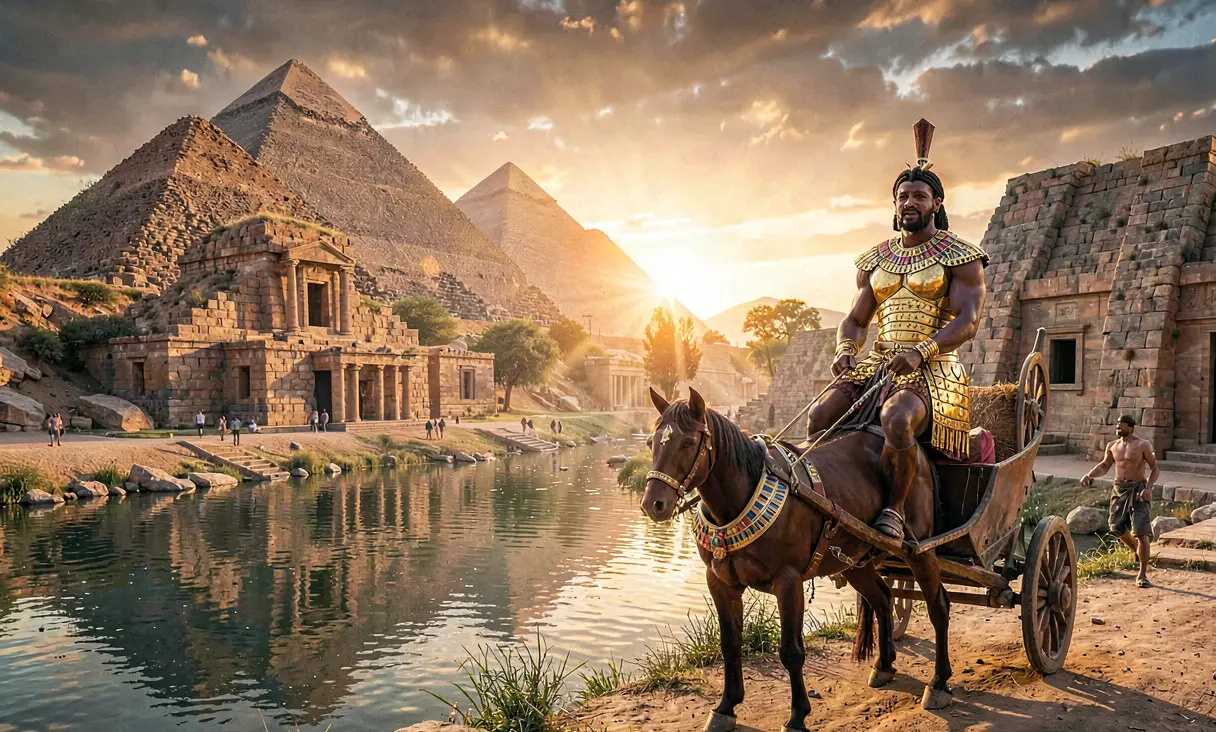 WarKushite Conquest of Egypt Establishes 25th Dynastyc. 744 BCE · Napata, Nubia (Modern Sudan)King Piye of Kush conquers Upper Egypt, establishing the 25th Dynasty and restoring traditional Egyptian religious practices.
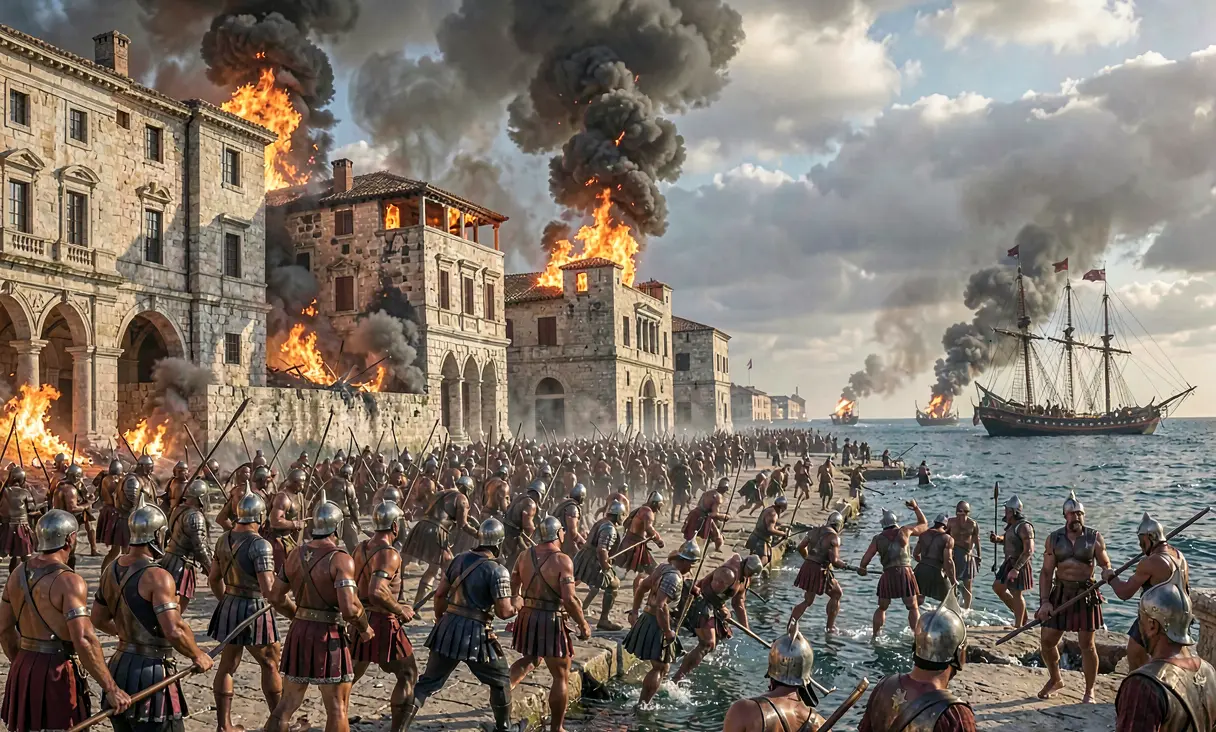 WarRoman Destruction of Carthage146 BCE · Carthage, TunisiaRome completely destroys Carthage at the end of the Third Punic War, ending its rivalry and enslaving its population.
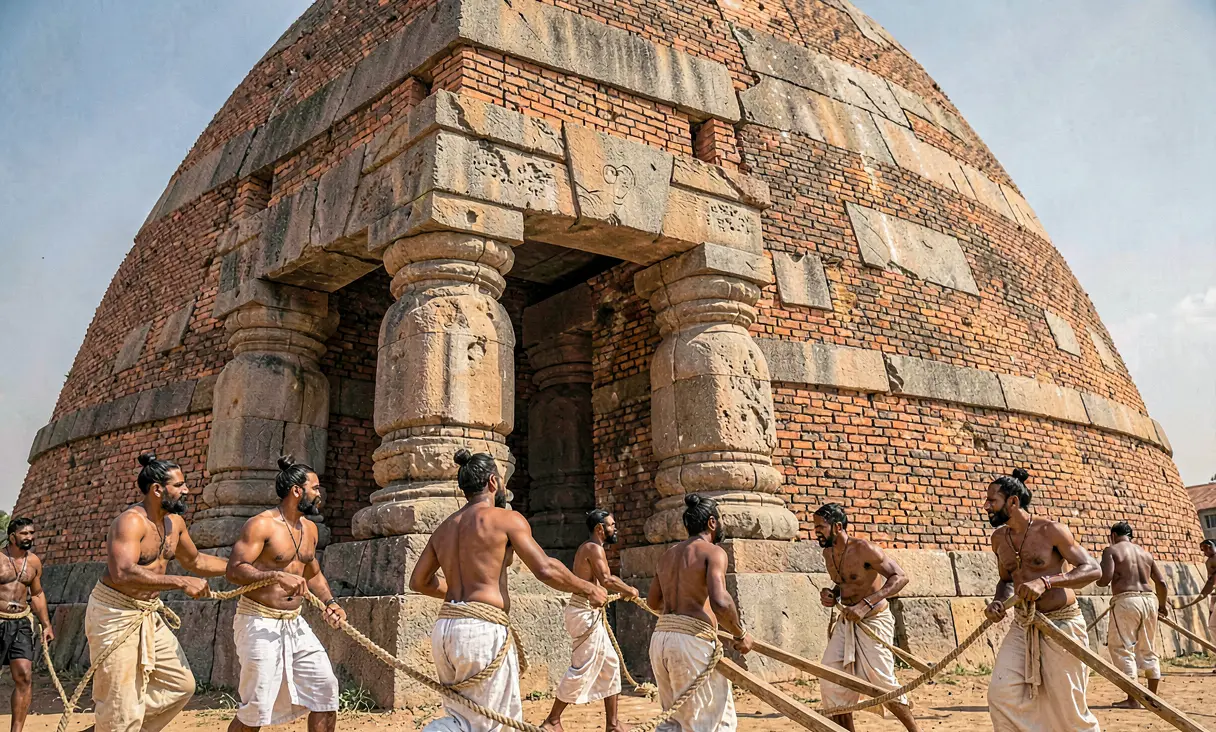 ReligionExpansion of the Great Stupa at Sanchic. 150 BCE · Sanchi, Madhya Pradesh, IndiaThe Shunga Dynasty expands the original brick stupa into a massive stone structure, adding the first elaborate gateways and railings.
 TechnologyConstruction of the Antikythera Mechanismc. 150 BCE · Antikythera Island, GreeceGreek engineers craft the world's first known analog computer for astronomical calculations.
Discussion
Loading…