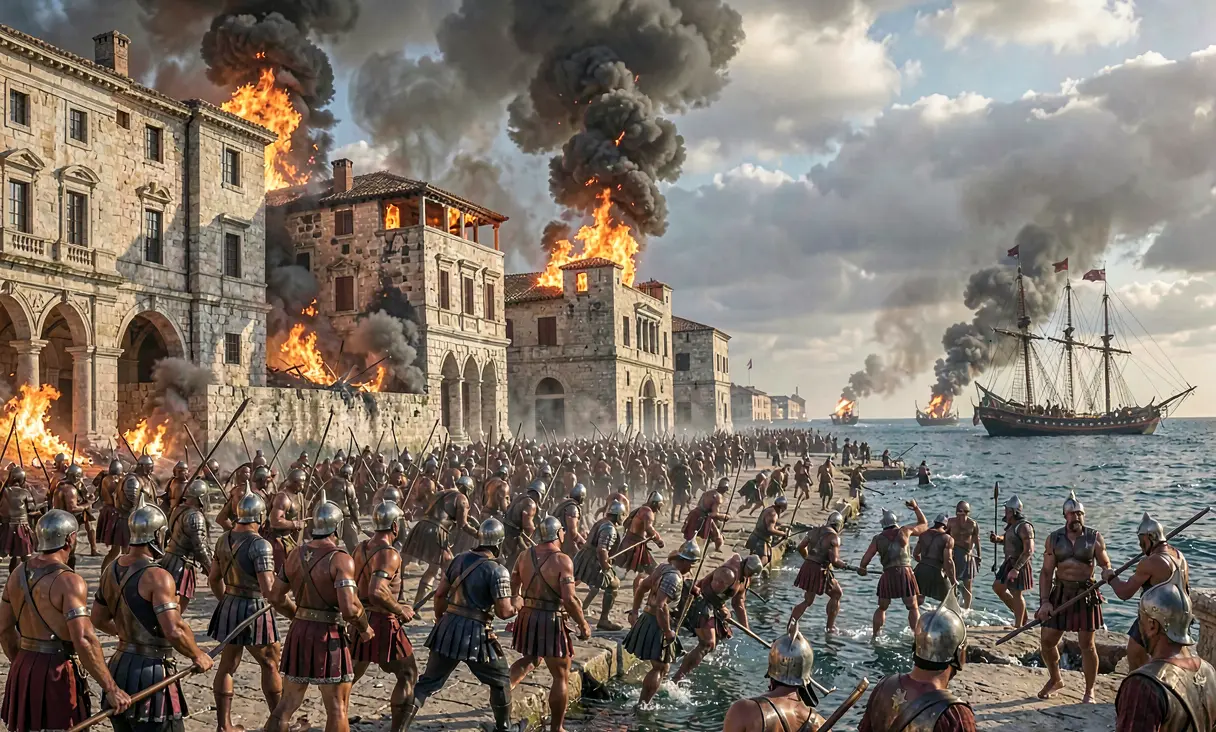
Roman Destruction of Carthage
The 146 BCE annihilation of Carthage by Scipio Aemilianus erased Rome's greatest rival, securing Mediterranean dominance and catalyzing the Republic's transformation into an aggressive empire.
The Genesis of a Final Conflict
By the mid-2nd century BCE, the Mediterranean world was defined by the shadow of two superpowers: Rome and Carthage. Following the Second Punic War, where Hannibal had nearly shattered the Roman Republic, Carthage remained a formidable economic entity despite its military restrictions. The aging statesman Cato the Elder famously concluded every speech in the Senate with 'Carthago delenda est' (Carthage must be destroyed), driven by fear of a resurgent rival and the lucrative trade networks that bypassed Rome. In 151 BCE, Carthage's defensive war against Numidian incursions violated the peace treaty, providing the Senate with the pretext for the Third Punic War. The Roman demand was absolute: the Carthaginians must abandon their city and relocate inland, a condition effectively tantamount to national suicide.
The Siege of 149–146 BCE
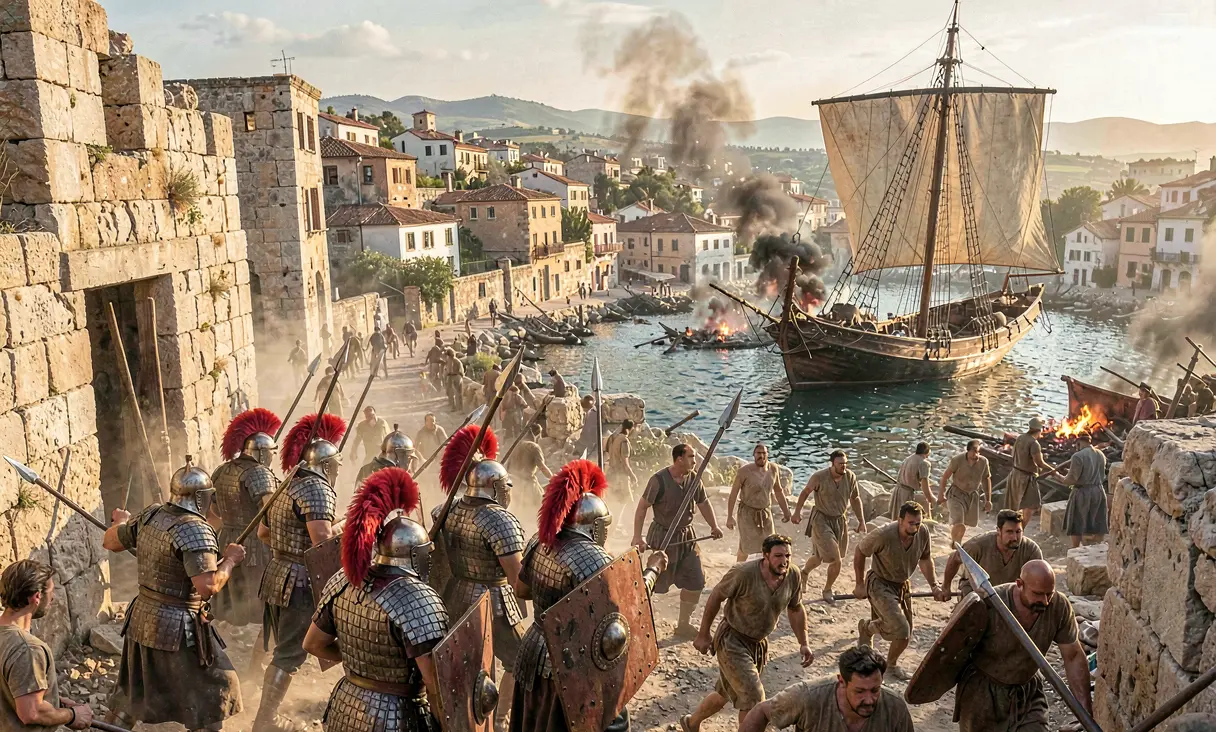
The siege began in earnest in 149 BCE under the command of consuls Manius Manilius and Lucius Marcius Censorinus. Initially, Roman forces struggled to breach Carthage's formidable triple walls and harbor defenses, facing a population that had mobilized with desperate ingenuity, forging weapons from temple statues and even women cutting their hair for bowstrings. The stalemate lasted three years until 147 BCE, when Publius Cornelius Scipio Aemilianus was elected consul specifically to lead the campaign due to his military acumen. Scipio tightened the blockade, constructing a massive mole across the harbor entrance and systematically starving the city into submission while fending off Carthaginian naval sorties.
Scipio Aemilianus and the Brutal Assault
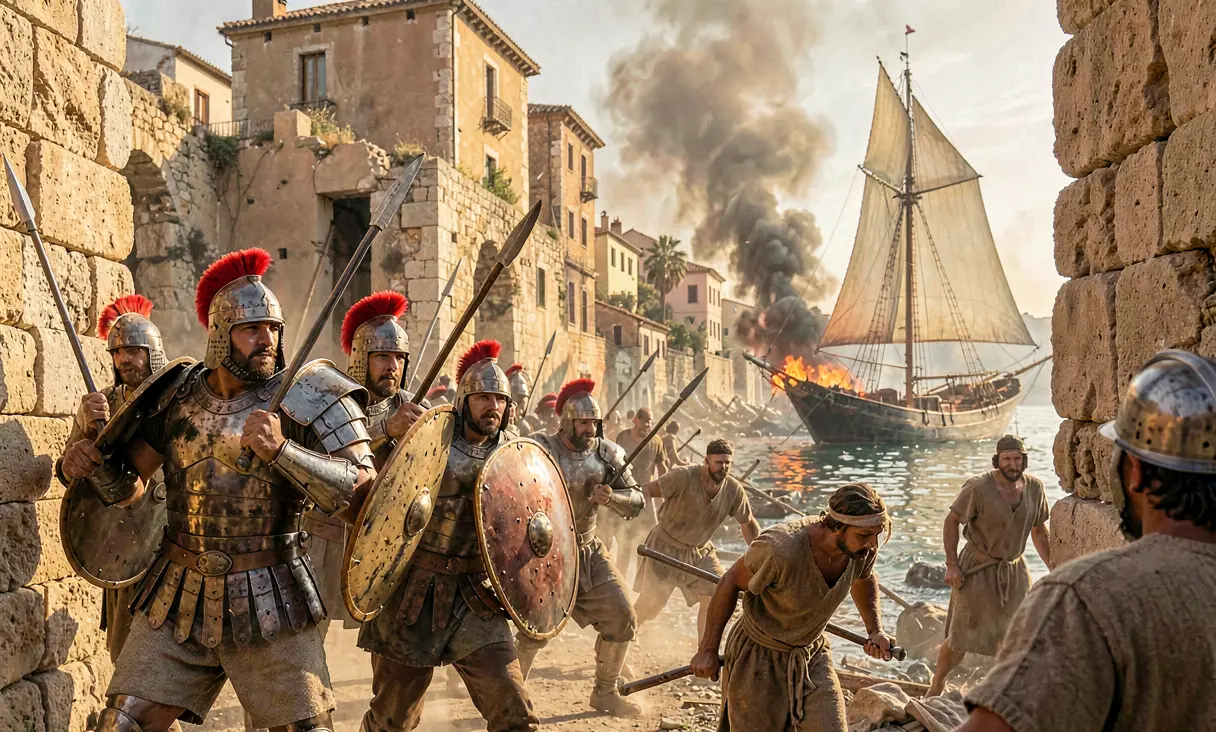
In the spring of 146 BCE, Scipio launched the final assault. The fighting was house-to-house and street-by-street, lasting six days as Roman legions pushed deeper into the Byrsa citadel. The streets ran with blood, and the screams of the dying echoed off the ancient Phoenician architecture. On the seventh day, 50,000 survivors, primarily women and children, surrendered from the Temple of Eshmun, having held out while the rest of the city burned. Scipio ordered their enslavement; only a handful of notable figures, including the historian Polybius's mentor, were spared to document the fall. The city itself was systematically dismantled, with fires burning for seventeen days until little remained but ash and rubble.
The Myth and Reality of Salting the Earth
While ancient sources like Appian describe the total annihilation of Carthage, the specific act of sowing salt upon the fields is a later historical embellishment, likely originating from 19th-century romanticism rather than contemporary Roman records. The primary objective was not agricultural sabotage but the erasure of a political and cultural entity. The Senate decreed that no one should ever rebuild Carthage, placing the site under a curse (sacrum). Nevertheless, the scale of destruction was absolute; the city's library was dispersed, its temples razed, and its population decimated or sold into slavery, effectively ending the Punic civilization as an independent force.
The Proclamation of Roman Hegemony
The fall of Carthage marked a definitive geopolitical shift. With its greatest commercial rival extinguished, Rome secured undisputed control over the western Mediterranean and the North African grain supply. The territory was organized into the province of Africa, becoming a vital breadbasket for the Republic. This victory also signaled a transformation in Roman foreign policy; the Republic moved from a defensive posture to an aggressive imperialist expansionism. The psychological impact on Rome was profound, removing the existential dread that had haunted them since Hannibal's campaigns and fostering a sense of invincibility that would eventually lead to internal corruption and civil wars.
Legacy: From Republic to Empire
The destruction of Carthage in 146 BCE is often cited by historians as the moment Rome ceased to be a city-state and became an empire. The moral and legal precedents set here—total war, the enslavement of entire populations, and the deliberate erasure of culture—became standard tools of Roman expansion for centuries. Ironically, Carthage was eventually refounded by Julius Caesar and Augustus as a Roman colony, yet it never regained its former independence or identity. The event remains a stark symbol of the ruthlessness required to build an empire and serves as a cautionary tale about the fragility of civilization in the face of unchecked imperial ambition.
The event cemented Roman dominance in the Mediterranean and removed the last major barrier to its expansion.
Where it happened
Carthage, Tunisia — see it on the interactive map →
Explore related history
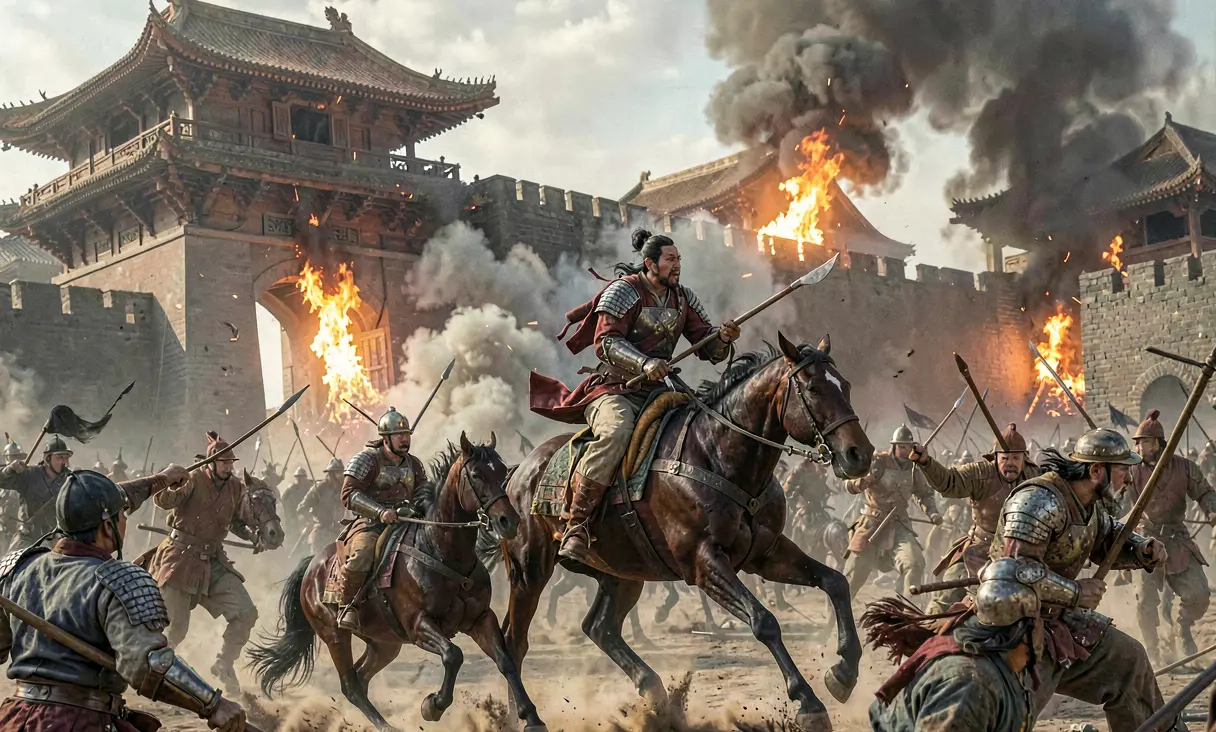 WarAn Lushan Rebellion Begins755 CE · Chang'an, ChinaGeneral An Lushan revolts against Emperor Xuanzong, devastating the Tang Dynasty and population.
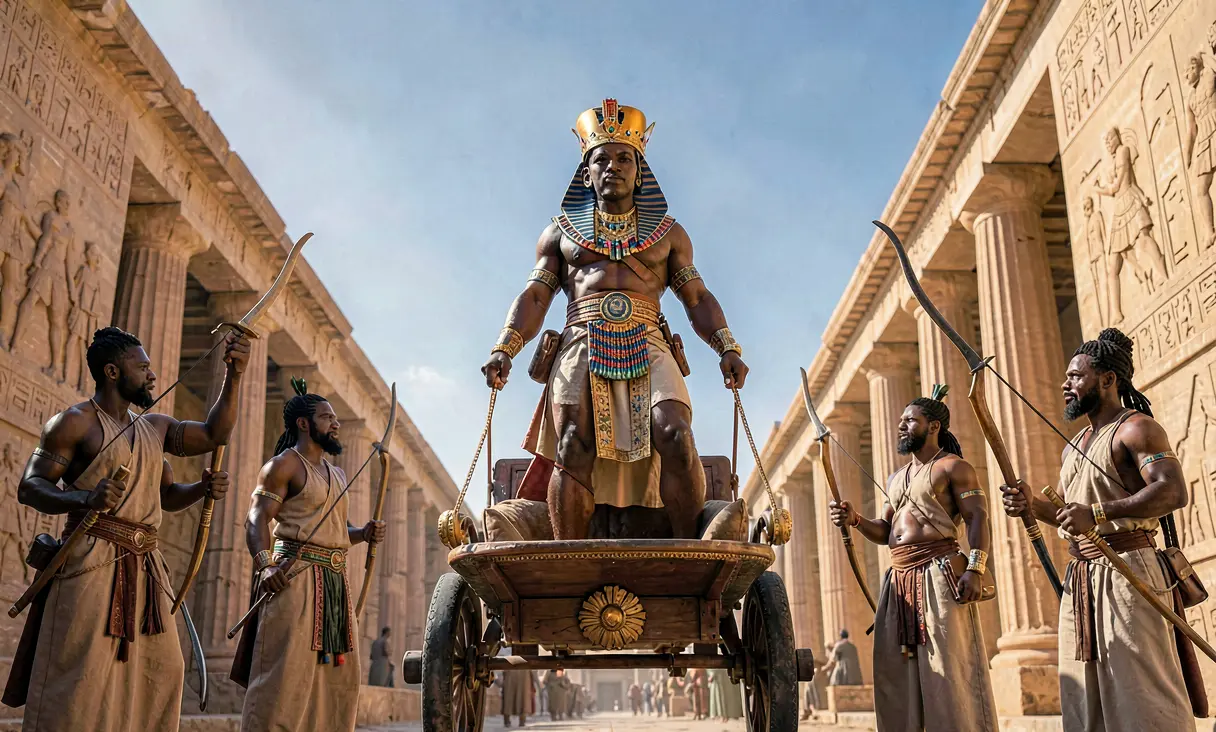 WarKushite Conquest of Egypt (25th Dynasty)c. 747 BCE · Thebes, EgyptKing Piye of Kush conquers Upper and Lower Egypt, establishing the first African-led dynasty in Egyptian history.
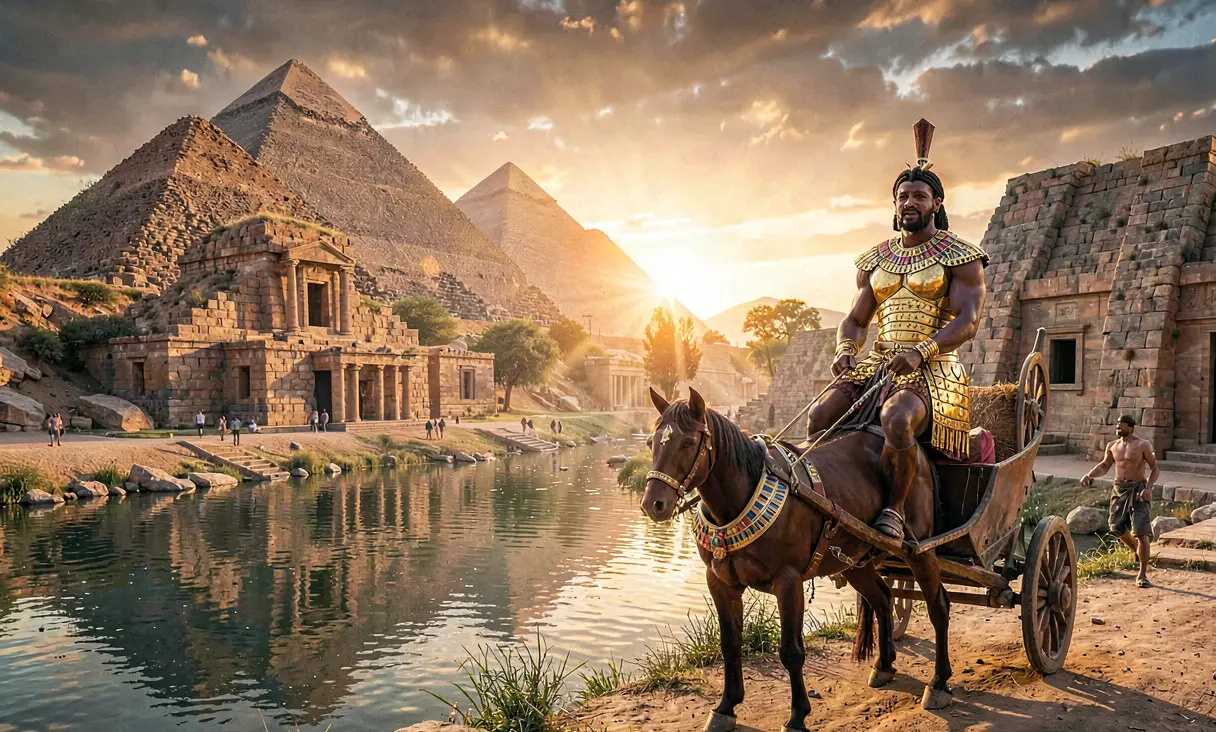 WarKushite Conquest of Egypt Establishes 25th Dynastyc. 744 BCE · Napata, Nubia (Modern Sudan)King Piye of Kush conquers Upper Egypt, establishing the 25th Dynasty and restoring traditional Egyptian religious practices.
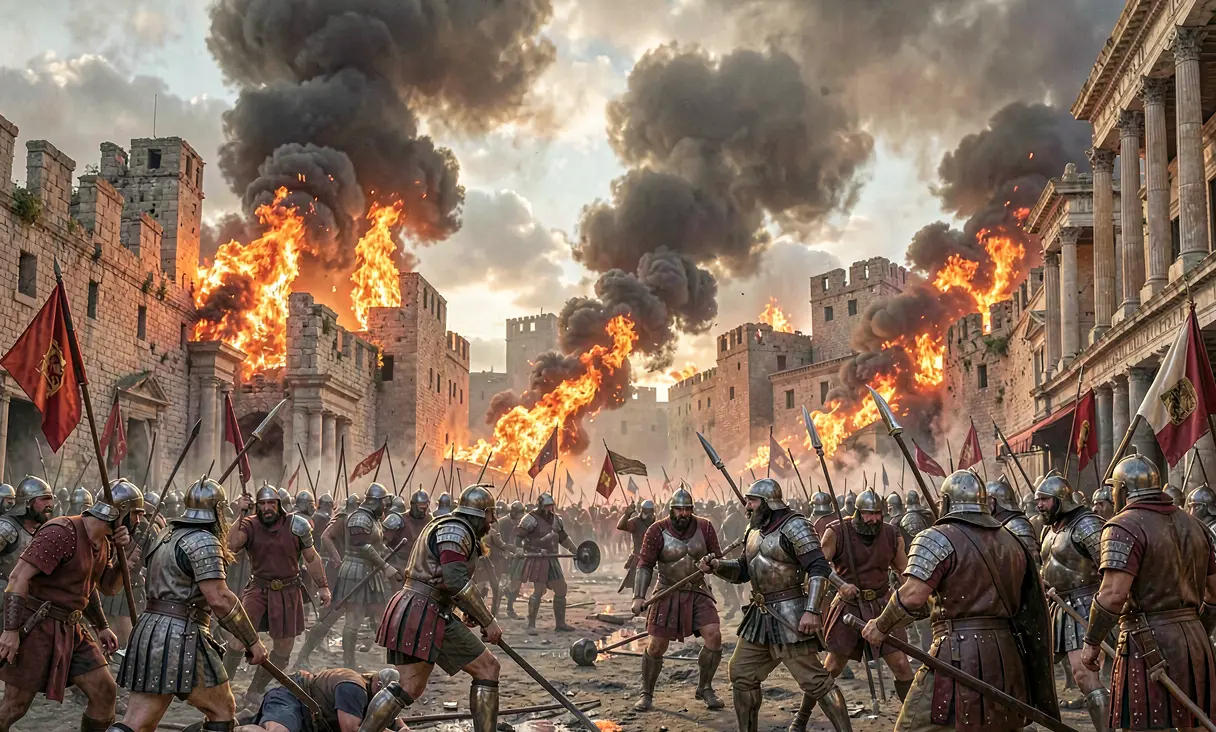 WarDestruction of Carthage by Romec. 146 BCE · Carthage (Tunis), TunisiaRome systematically destroys Carthage, ending the Punic Wars and erasing its civilization.
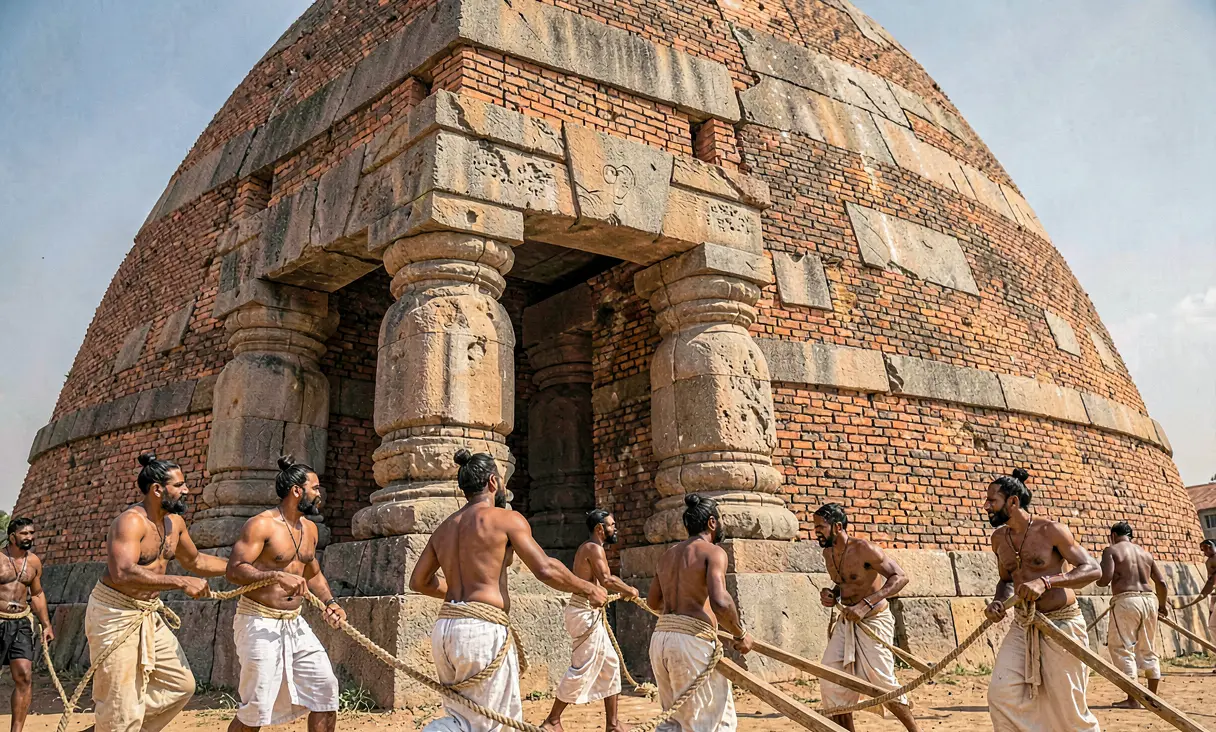 ReligionExpansion of the Great Stupa at Sanchic. 150 BCE · Sanchi, Madhya Pradesh, IndiaThe Shunga Dynasty expands the original brick stupa into a massive stone structure, adding the first elaborate gateways and railings.
 TechnologyConstruction of the Antikythera Mechanismc. 150 BCE · Antikythera Island, GreeceGreek engineers craft the world's first known analog computer for astronomical calculations.
Discussion
Loading…