The Birdman Burial at Cahokia Mound 72
Cahokia's Mound 72 reveals a paramount chief buried with ritual sacrifices and sacred falcon iconography, marking the peak of Mississippian political complexity.
Background and Context
Around 1050 CE, Cahokia stood as the largest pre-Columbian settlement north of Mexico, spanning over six square miles near present-day Collinsville, Illinois. This urban center exemplified the Mississippian culture, characterized by large platform mounds and a complex social hierarchy centered on religious authority. The society relied heavily on maize agriculture to sustain its dense population, estimated at ten thousand or more inhabitants during this peak period. Situated strategically along the Mississippi River confluence, Cahokia controlled extensive trade networks bringing copper from the Great Lakes and shells from the Gulf Coast. Political power was inextricably linked to cosmological beliefs, where leaders acted as intermediaries between the earthly realm and celestial forces, legitimizing their rule through sacred rituals.
The Mound 72 Complex
Mound 72 functioned as a specialized mortuary complex rather than a standard residential platform. Located on a ridge overlooking the American Bottom floodplain, it was constructed in phases beginning around 1020 CE. Archaeological excavations revealed that the mound covered multiple distinct burial layers and mass graves, indicating its use over several decades. The structure served as a final resting place for the elite while simultaneously acting as a stage for public rituals designed to reinforce social order through controlled violence and display. Unlike other mounds used for temples or residences, Mound 72 was dedicated almost exclusively to funerary practices, highlighting the paramount importance of death rites in maintaining political stability within the city.
The Birdman Interment
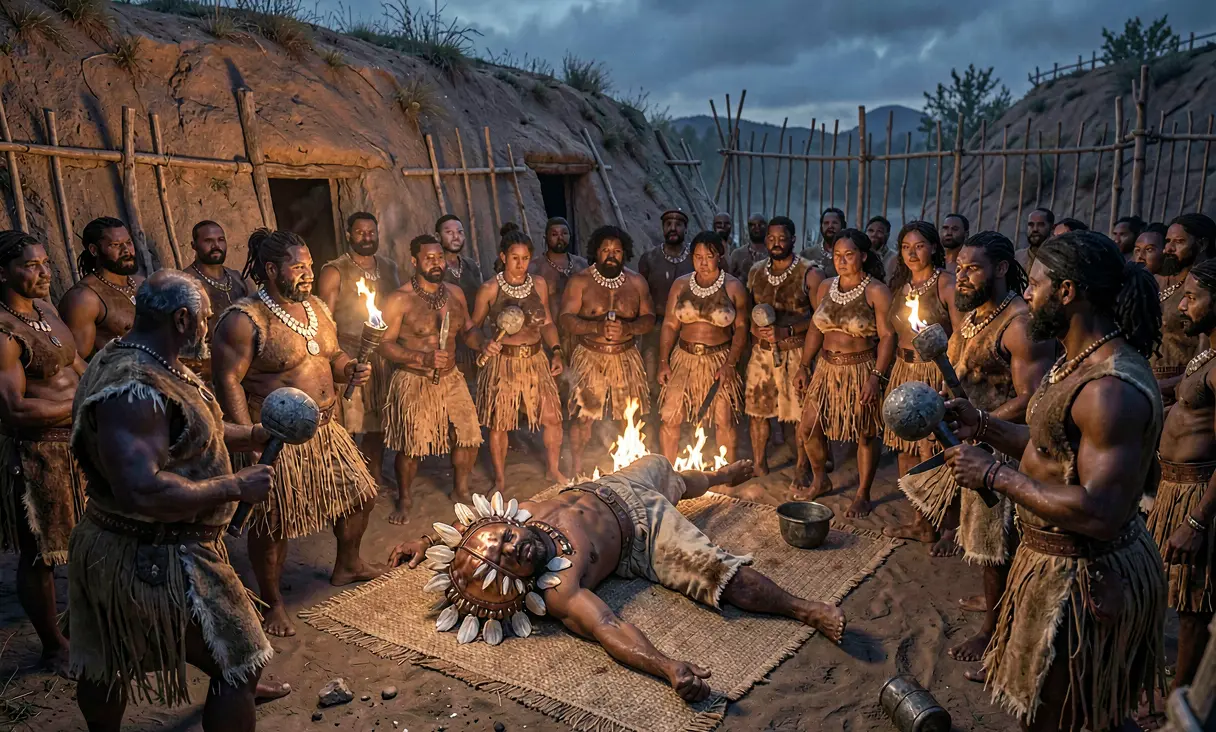
At the heart of Mound 72 lies Burial 37, identified as the paramount chief known as the Birdman. His body rested upon a bed of organic material, interpreted by researchers as a feathered cloak or mat, symbolizing his connection to falcon imagery prevalent in Mississippian iconography. Surrounding him were approximately twenty thousand marine shell beads meticulously arranged into the shape of a falcon, alongside copper plates and earspools sourced from distant trade routes. These artifacts signified immense wealth and spiritual power, marking the individual as a divine ruler capable of channeling celestial energy to protect his people. The intricate beadwork remains one of the most significant artistic achievements discovered in North America, representing the Birdman cult's dominance over the region.
Ritual Sacrifice and Hierarchy
The chief's interment was accompanied by significant ritual violence intended to ensure his safe passage and demonstrate his power. Approximately two hundred and seventy-five individuals were buried within Mound 72, many of whom appear to have been sacrificed to accompany him into the afterlife. Excavations uncovered mass graves containing young women and men who were executed during different construction phases, some bound or showing signs of trauma before death. This practice demonstrated the leader's absolute authority over life and death, cementing his status through the display of human capital. The sacrifice of retainers reinforced the political centralization required to maintain such a large urban center, proving that loyalty was purchased with fear as well as devotion.
Legacy and Significance
The discovery of Mound 72 fundamentally altered modern understanding of Indigenous North American history. It provided tangible evidence of state-level organization and complex ritual practices long before European contact occurred in the region. While Cahokia eventually declined around 1350 CE due to environmental degradation and social fragmentation, the Birdman burial remains a testament to the sophistication of pre-Columbian societies. Today, it stands as a critical archaeological resource managed by the Illinois Historic Preservation Agency, challenging historical narratives that previously underestimated the political complexity of Native American civilizations in the Mississippi Valley. It forces historians to acknowledge a sophisticated urban civilization that rivaled contemporary European cities in scale and organization.
It reveals the complex social hierarchy and sacrificial practices of the largest pre-Columbian city north of Mexico.
Where it happened
Cahokia, Illinois, USA — see it on the interactive map →
Explore related history
 PoliticsSargon of Akkad Establishes the First Empirec. 2334 BCE · Akkad (Location uncertain, near Baghdad, Iraq)Sargon unifies Sumerian city-states to create the world's first multi-ethnic empire.
 PoliticsPromulgation of the Code of Ur-Nammuc. 2100 BCE · Ur, Southern Mesopotamia (Iraq)The earliest known surviving law code is established in the Sumerian city of Ur.
 PoliticsNelson Mandela Elected President of South AfricaApril 27, 1994 · Cape Town, South AfricaSouth Africa holds its first democratic election, ending the apartheid regime and establishing a multiracial government.
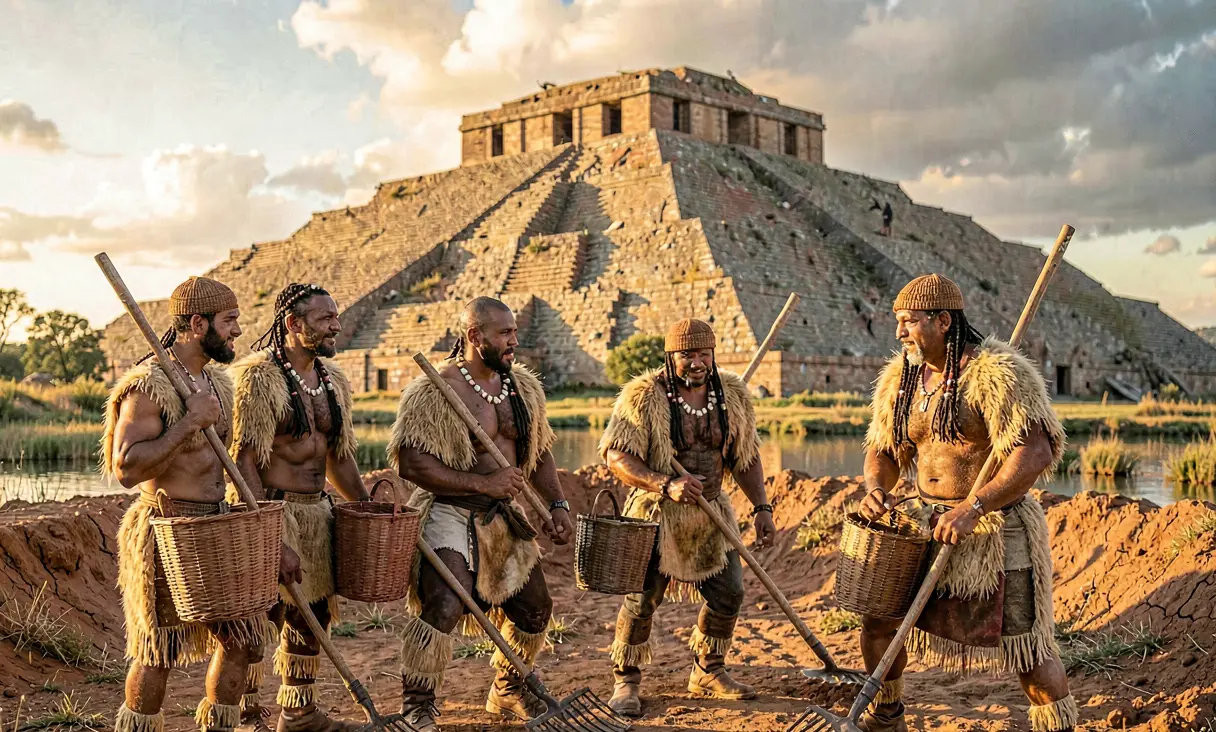 CivilizationConstruction of Monks Mound at Cahokiac. 1050 CE · Cahokia Mounds State Historic Site, Illinois, USAMississippian builders construct the largest pre-Columbian earthwork in North America.
 WarChola Raid on Srivijaya1025 CE · Palembang, Sumatra (Srivijaya)Rajendra Chola I launches a naval raid destroying Srivijayan ports and disrupting trade.
 WarGoryeo Repels Khitan Liao Invasion1018 CE · Pyongan Province, KoreaGeneral Gang Gam-chan defeats the Khitan Liao army at the Battle of Guichu River.
Discussion
Loading…