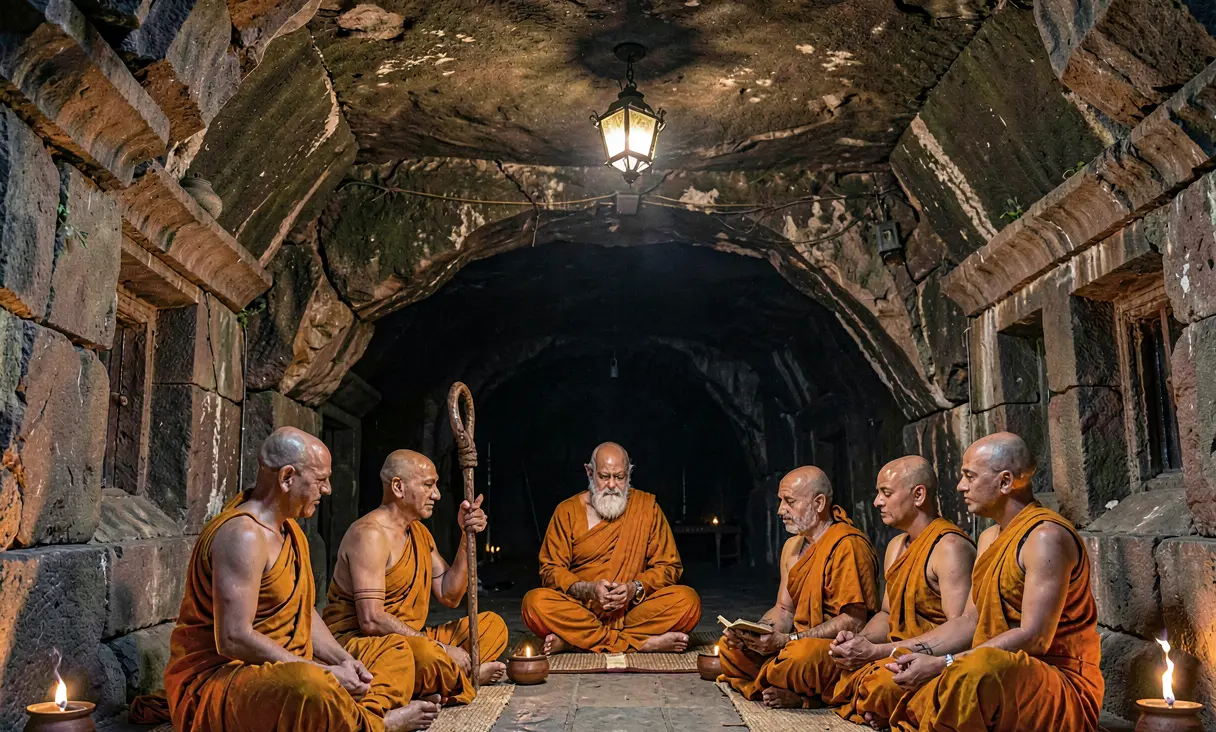
First Buddhist Council at Rajgir
In 483 BCE, five hundred enlightened monks convened at Rajgir to orally codify the Buddha's teachings, preserving the Dharma against fragmentation and establishing the canonical foundation for all fut
The Shadow of Parinirvana
In the wake of the Buddha's passing (Parinirvana) around 483 BCE at Kushinagar, the early Buddhist Sangha faced an existential crisis. Without a living teacher to resolve doctrinal disputes or clarify monastic discipline, there was a genuine fear that the Dharma would fragment and dissolve within a single generation. The community of monks, previously united by the Buddha's personal authority, now risked diverging into conflicting interpretations of his teachings. This anxiety was compounded by the fact that the Buddhist canon had never been written down; it existed solely in the collective memory of the disciples, making the preservation of the oral tradition a matter of urgent survival.
Convening at Sattapanni
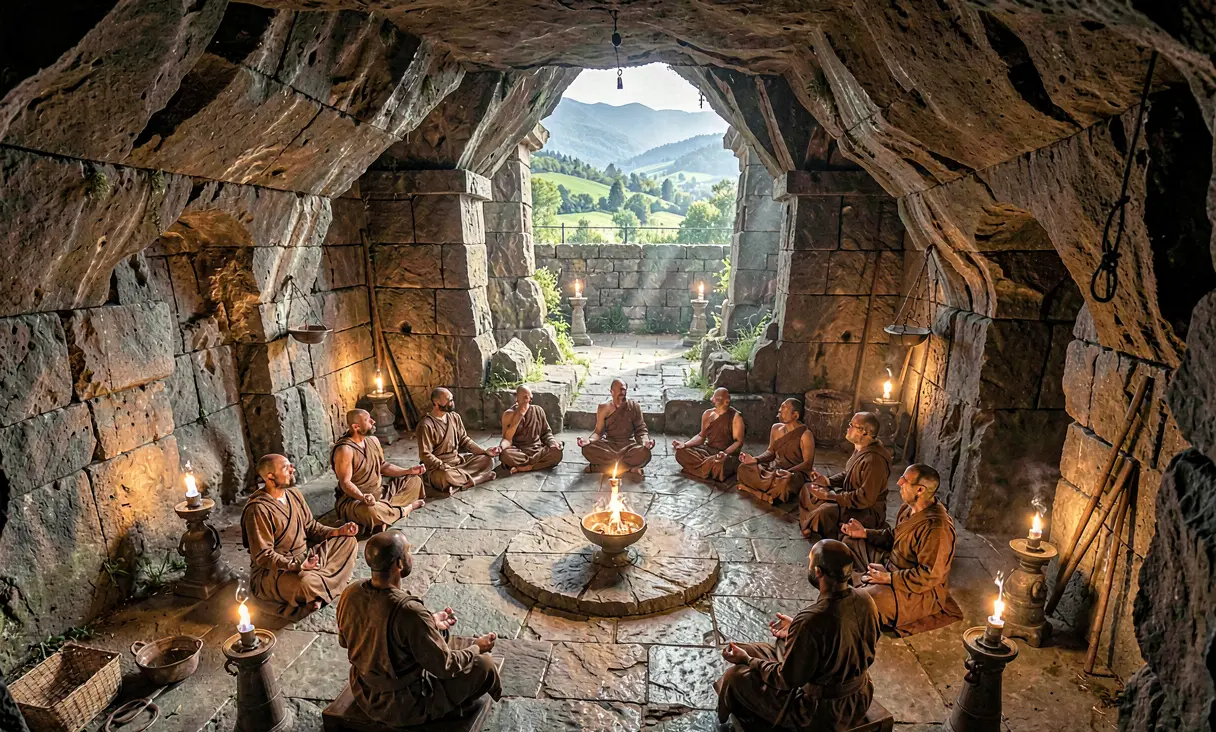
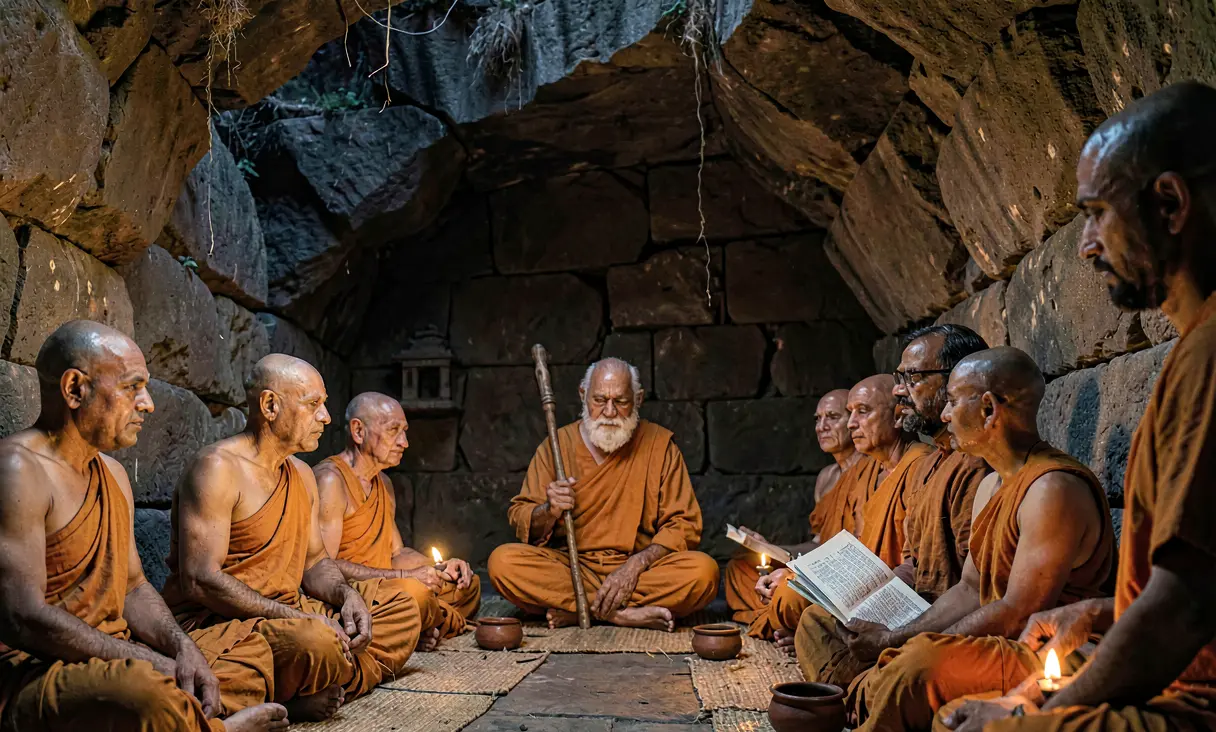
To address this peril, the elder monk Mahakassapa proposed the immediate convening of a great council to recite and codify the Buddha's words. With the patronage of King Ajatashatru of Magadha, who provided logistical support and security, five hundred arahants—monks who had attained full enlightenment—gathered at the Sattapanni Cave on the slopes of Vebhara Mountain near Rajgir (modern-day Bihar). This location was chosen for its cool climate and seclusion, offering an ideal environment for intense meditation and recitation. The gathering was not merely a meeting but a solemn ritual intended to authenticate the teachings against the backdrop of impending schism.
The Architects of Orthodoxy
The council was presided over by Mahakassapa, a stern and ascetic figure who had been instrumental in organizing the event. His leadership ensured that the proceedings remained focused on strict adherence to the original teachings rather than accommodating new interpretations. The two pivotal figures for the recitation were Upali and Ananda. Upali, renowned for his mastery of monastic discipline (Vinaya), was questioned first by Mahakassapa regarding the rules established by the Buddha. Ananda, the Buddha's personal attendant who had memorized the vast majority of the discourses (Suttas), was then called upon to recite the doctrinal teachings. Their flawless recall served as the bedrock for the canon.
Recitation and Standardization
The proceedings followed a rigorous format of question and answer, designed to verify the authenticity of every line recited. Upali began by delineating the Vinaya Pitaka, systematically recounting the rules for monks in ascending order of severity, from minor infractions to the most serious offenses leading to expulsion. Following this, Ananda recited the Sutta Pitaka, organizing the discourses into five collections (Nikayas) based on length and subject matter. The assembly of 500 arahants acted as a collective jury; if any monk detected an error or deviation from what they had heard directly from the Buddha, they were to speak up. Only when unanimous consensus was reached did the recitation proceed, effectively freezing the oral tradition in its most authoritative form.
The Exclusion of Deviations
A critical and controversial aspect of the First Council was the decision regarding the 'minor rules.' Earlier, the Buddha had reportedly stated that the Sangha could abolish minor precepts if necessary after his death. However, Mahakassapa interpreted this as a directive to maintain all existing rules, fearing that relaxing discipline would lead to moral decay. Furthermore, the council excluded Subhadda, an elderly monk who had expressed relief at the Buddha's passing and suggested they should now do as they pleased. This exclusion underscored the council's determination to enforce orthodoxy and prevent the dilution of the ascetic ideal, setting a precedent for future disciplinary rigor within the Sangha.
Legacy and the Seeds of Schism
The First Council successfully preserved the core of Buddhist doctrine and monastic law, creating a unified textual foundation that would survive for centuries. However, it also sowed the seeds of future divisions by establishing a rigid orthodoxy that marginalized more liberal interpretations. While the council is celebrated in Theravada tradition as the definitive moment of canonization, later Mahayana traditions would question its completeness, arguing that deeper esoteric teachings were withheld or lost. Nevertheless, the Sattapanni Cave gathering remains the foundational act of Buddhist institutional memory, transforming a charismatic movement into an enduring religion with a standardized scripture and a structured community.
The First Council preserved the Buddha's teachings in a standardized form, preventing early fragmentation and ensuring the religion's longevity.
Where it happened
Rajgir (modern Bihar/India) — see it on the interactive map →
Explore related history
 ReligionConstruction of the Temple of Kukulcán at Chichén Itzác. 800 CE · Chichén Itzá, MexicoThe iconic pyramid dedicated to the feathered serpent god is built during the Puuc-Toltec fusion period.
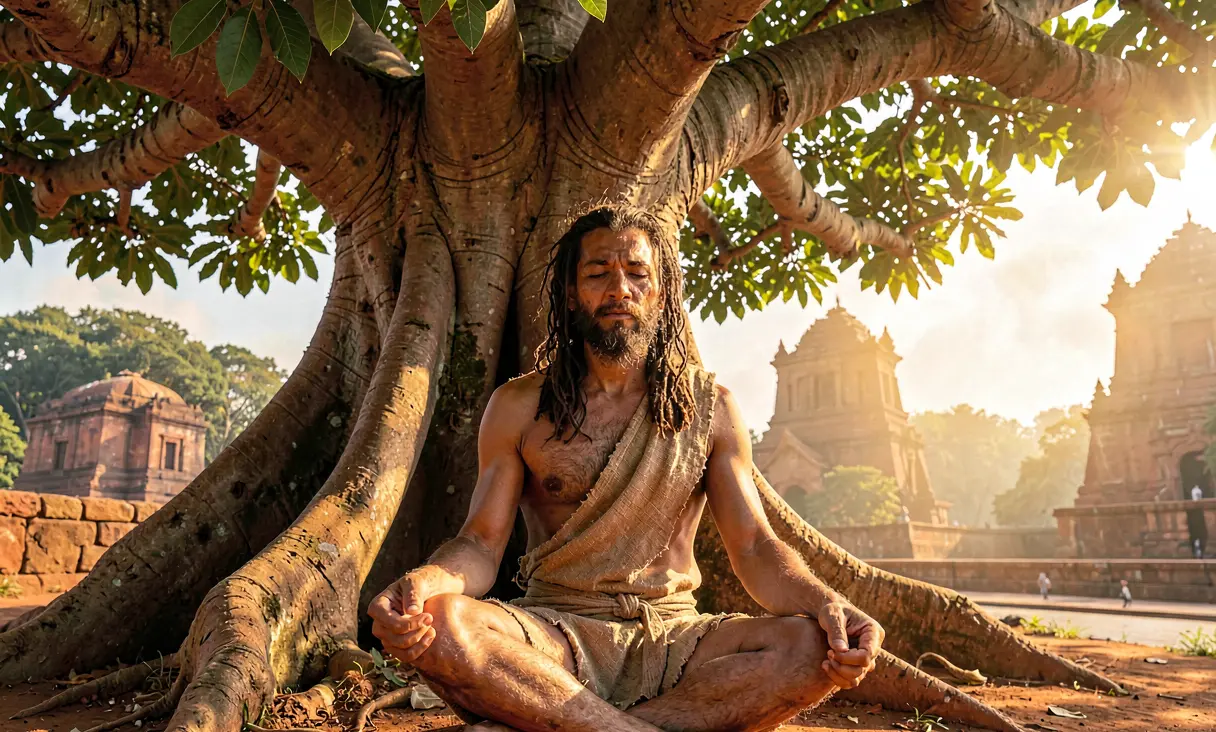 ReligionBuddha Attains Enlightenmentc. 528 BCE · Bodh Gaya, IndiaSiddhartha Gautama achieves nirvana under the Bodhi tree founding Buddhism.
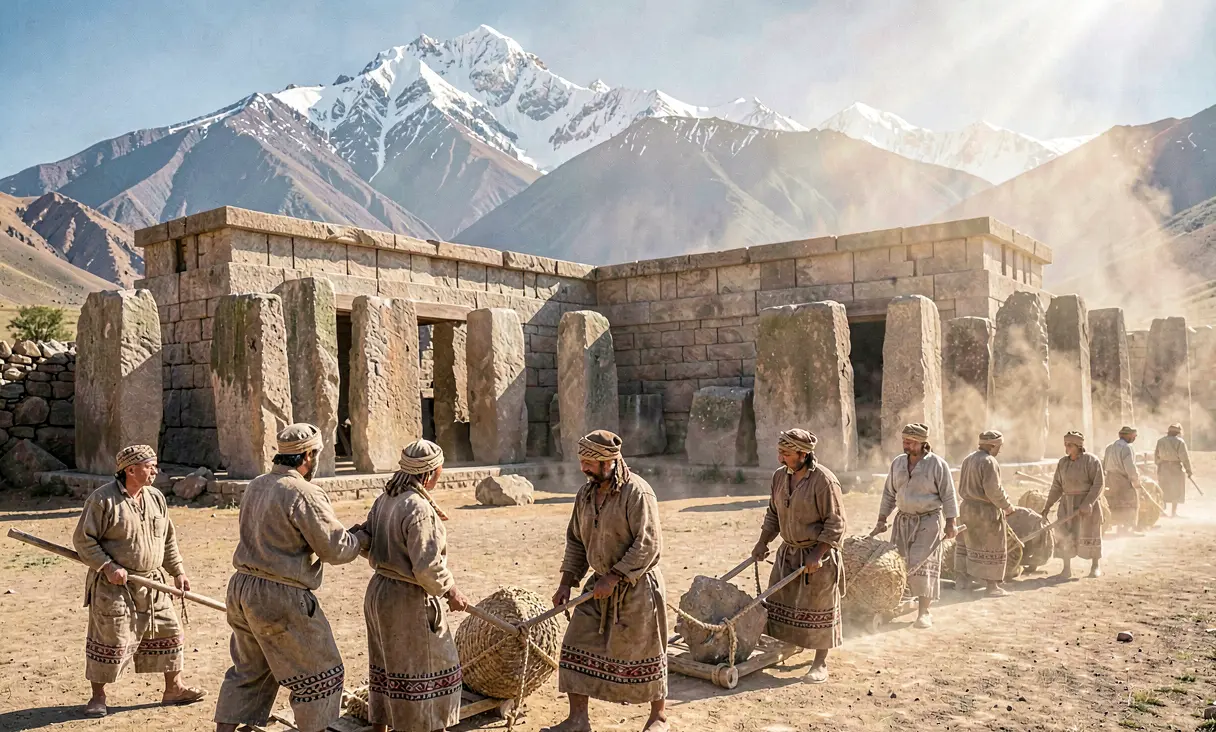 ReligionConstruction of Kalasasaya Temple at Tiwanakuc. 500 CE · Tiwanaku, BoliviaThe Kalasasaya temple is built with monolithic stones for solar observance.
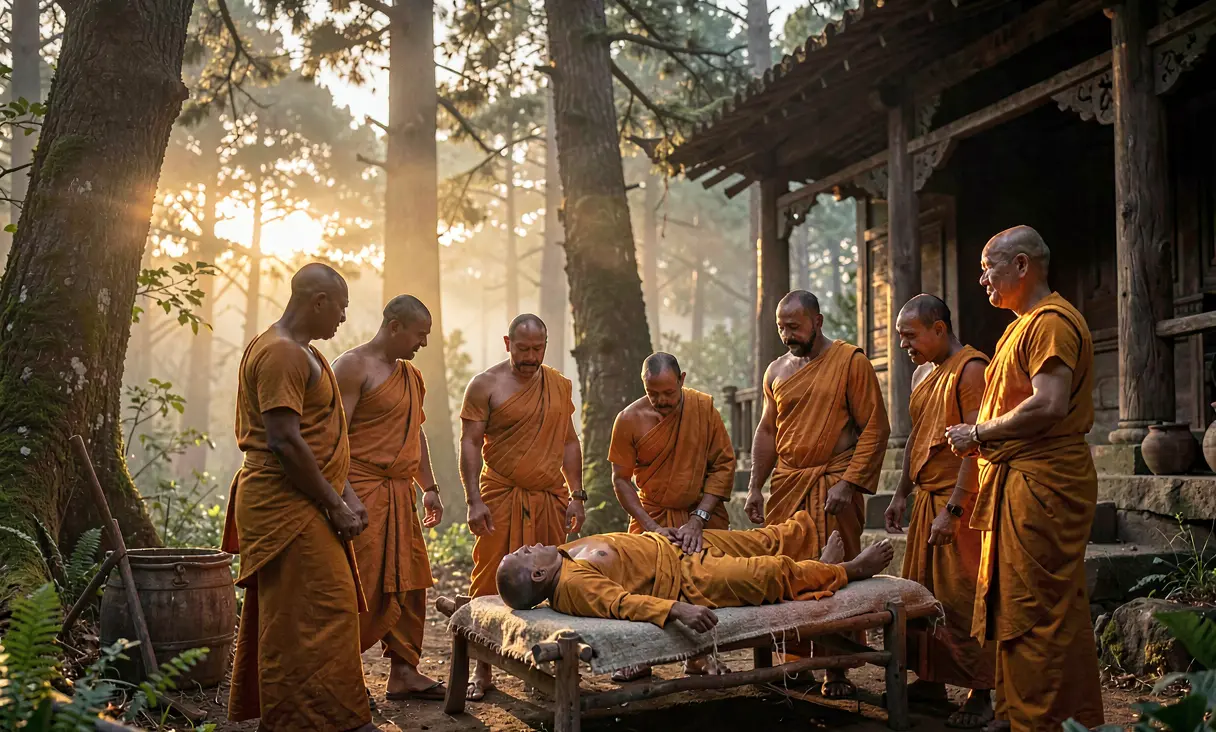 ReligionParinirvana of the Buddhac. 483 BCE · Kushinagar (modern Uttar Pradesh/India)Siddhartha Gautama passes away, entering final Nirvana and leaving his disciples with the Dharma to guide them.
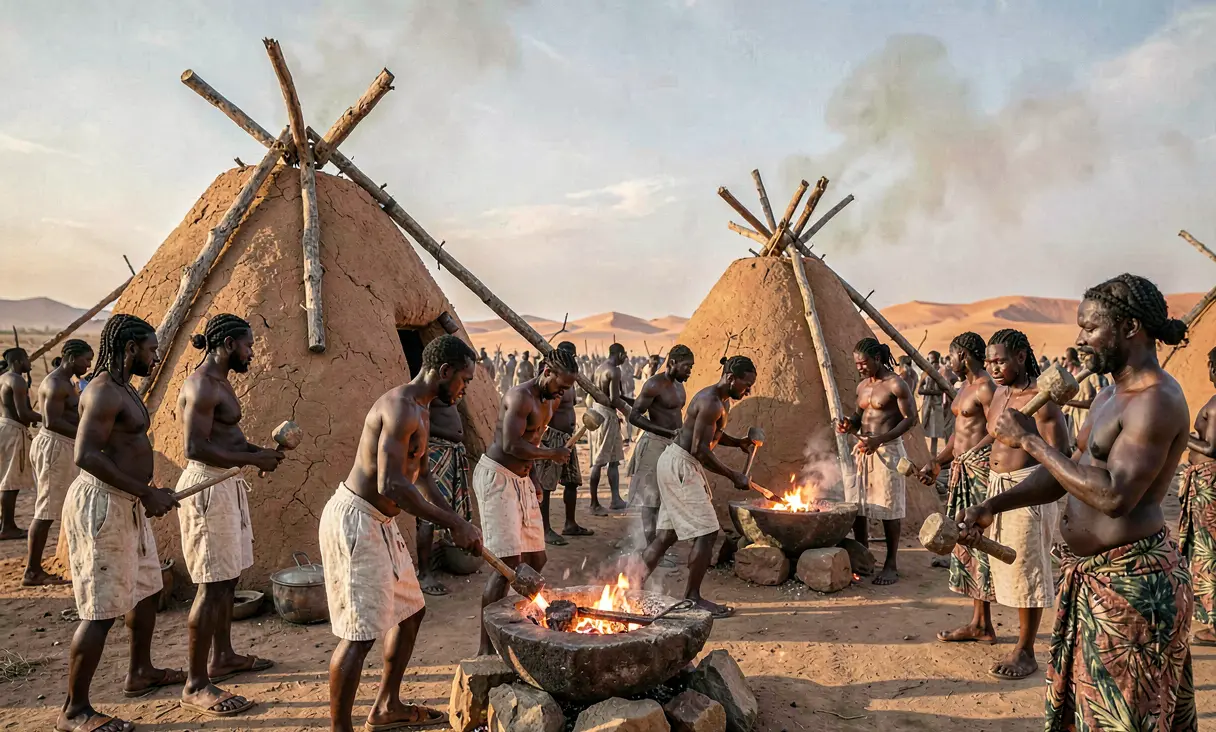 TechnologyMeroitic Iron Smelting Industry Flourishesc. 500 BCE · Meroe, SudanMeroe develops a massive iron smelting industry using abundant fuel and advanced furnace technology.
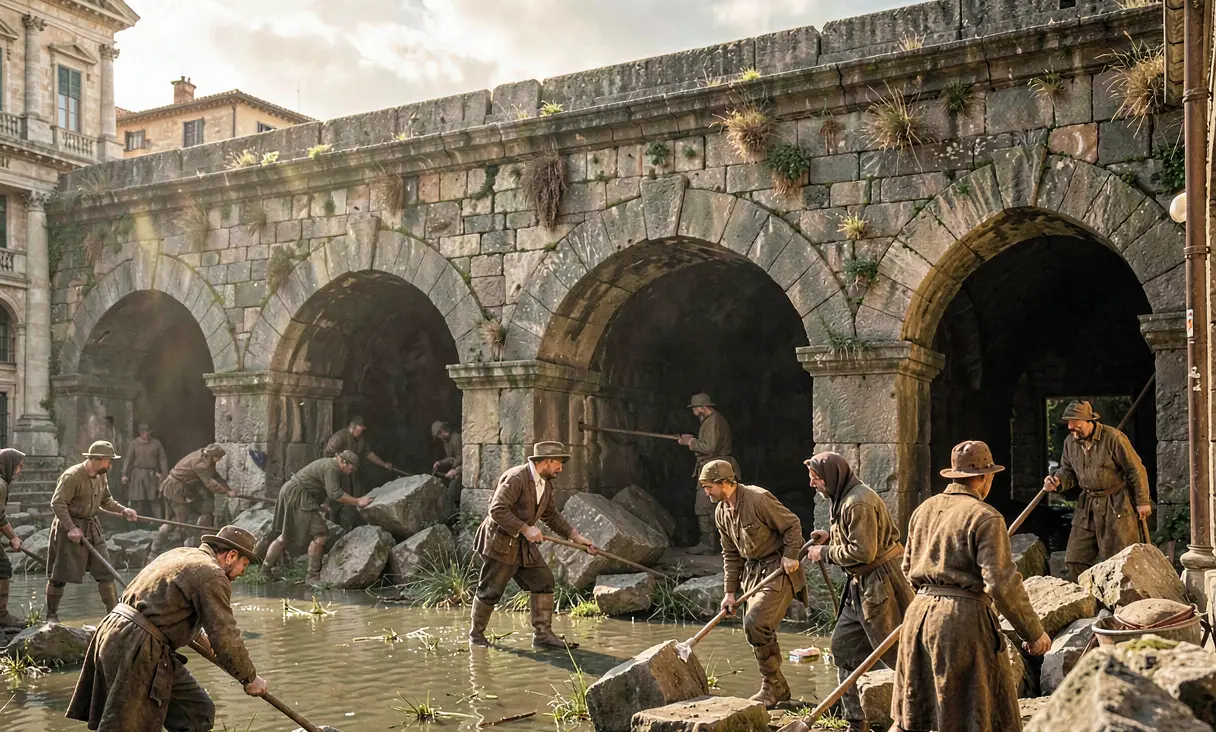 TechnologyConstruction of the Great Cloaca Maxima in Romec. 500 BCE · Rome, ItalyEarly Romans build the massive Cloaca Maxima sewer system to drain marshes and manage waste.
Discussion
Loading…