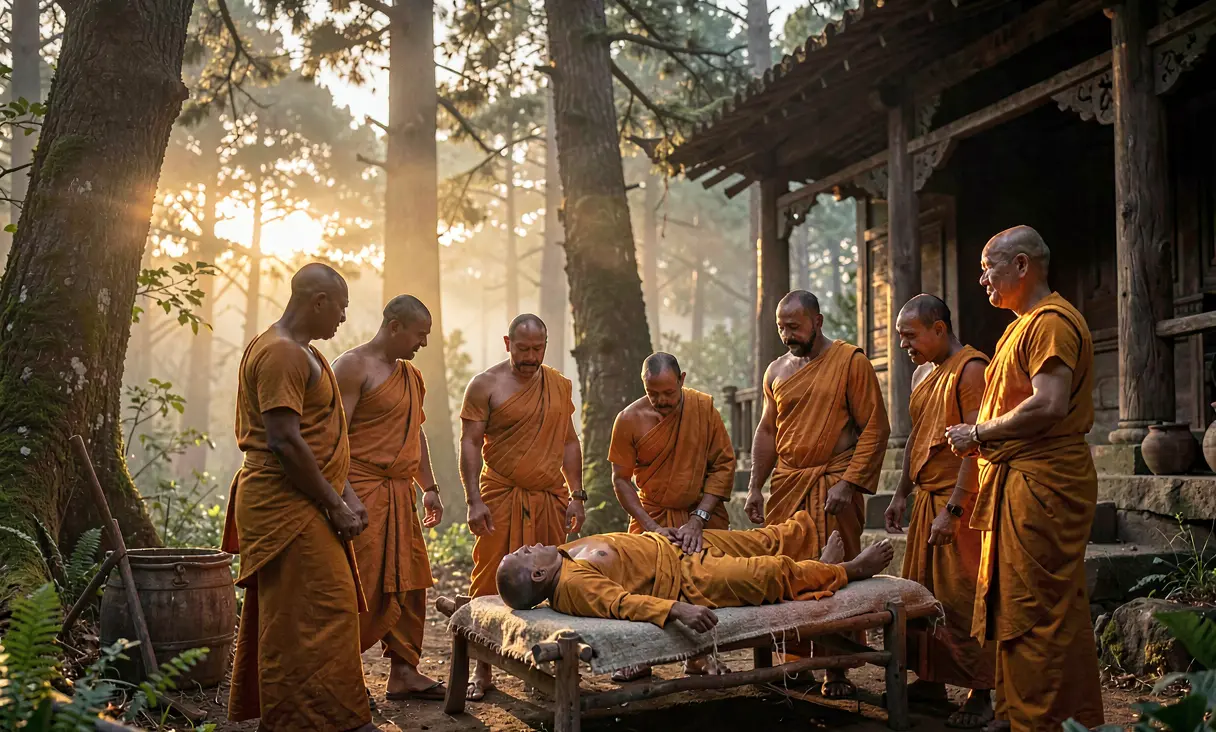
Parinirvana of the Buddha
In c. 483 BCE, the Buddha's final release from rebirth at Kushinagar triggered the codification of his teachings, launching a global religion that reshaped Asian civilization.
The Final Journey
By the age of eighty, Siddhartha Gautama, known as the Buddha or the Awakened One, had traversed the Gangetic plain for decades, establishing a vast monastic community and articulating a path to liberation from suffering. In his final year, he traveled northward from Rajgir toward the kingdom of Malla, accompanied by his devoted attendant Ananda and a retinue of monks. The journey was arduous, marked by the physical decline inevitable in old age; at Pava, he accepted a meal offered by a blacksmith named Cunda, which is traditionally cited as the catalyst for a severe dysentery that would prove fatal. Despite his deteriorating condition, the Buddha continued to Kushinagar, determined to reach the Sal Grove of the Mallas before his end.
The Setting at Kushinagar
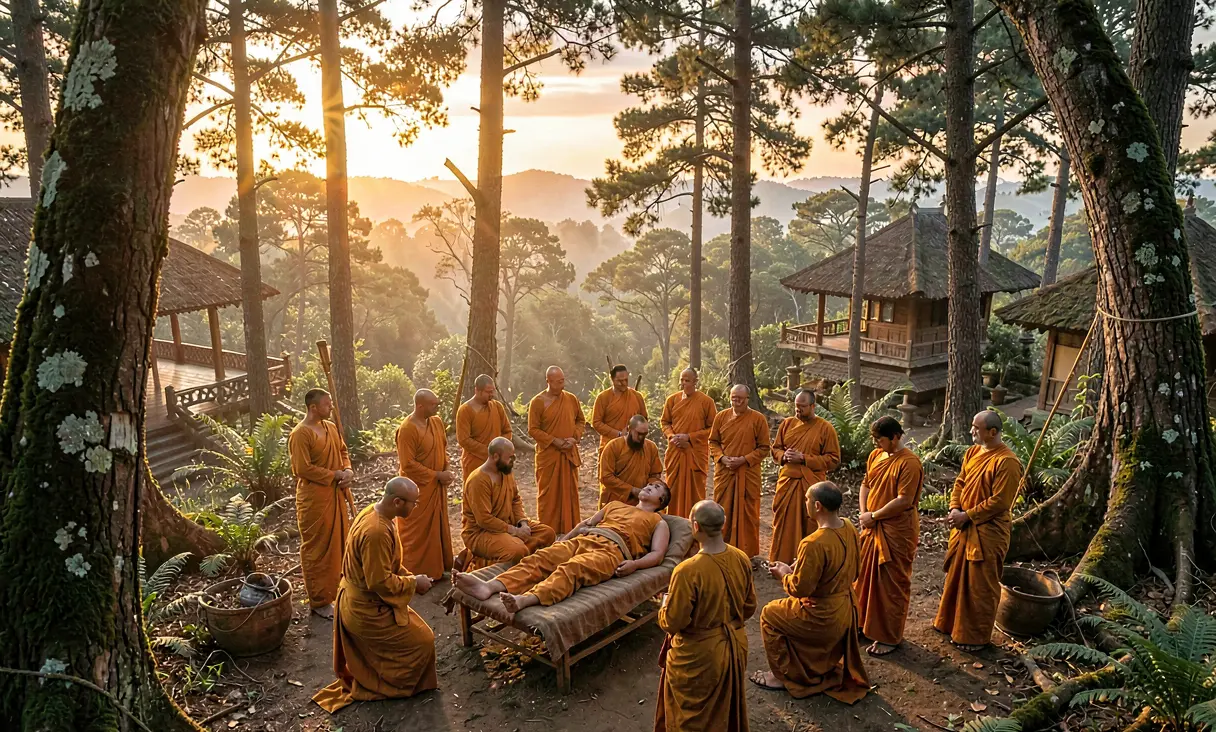
Kushinagar, a minor city-state in ancient India located on the banks of the Hiranyavati River, served as the stage for this pivotal moment. The Malla clan, known for their republican governance and martial prowess, provided a respectful sanctuary. Here, under the twin Sal trees (Shorea robusta), the Buddha prepared for his Parinirvana—the final nirvana signifying complete release from the cycle of rebirth (samsara). He lay down on his right side in the lion's posture, facing north, with his head supported by a pillow. This specific orientation and location were not merely practical but deeply symbolic, establishing Kushinagar as one of the four primary pilgrimage sites for Buddhists worldwide, alongside Lumbini, Bodh Gaya, and Sarnath.
The Final Exhortations
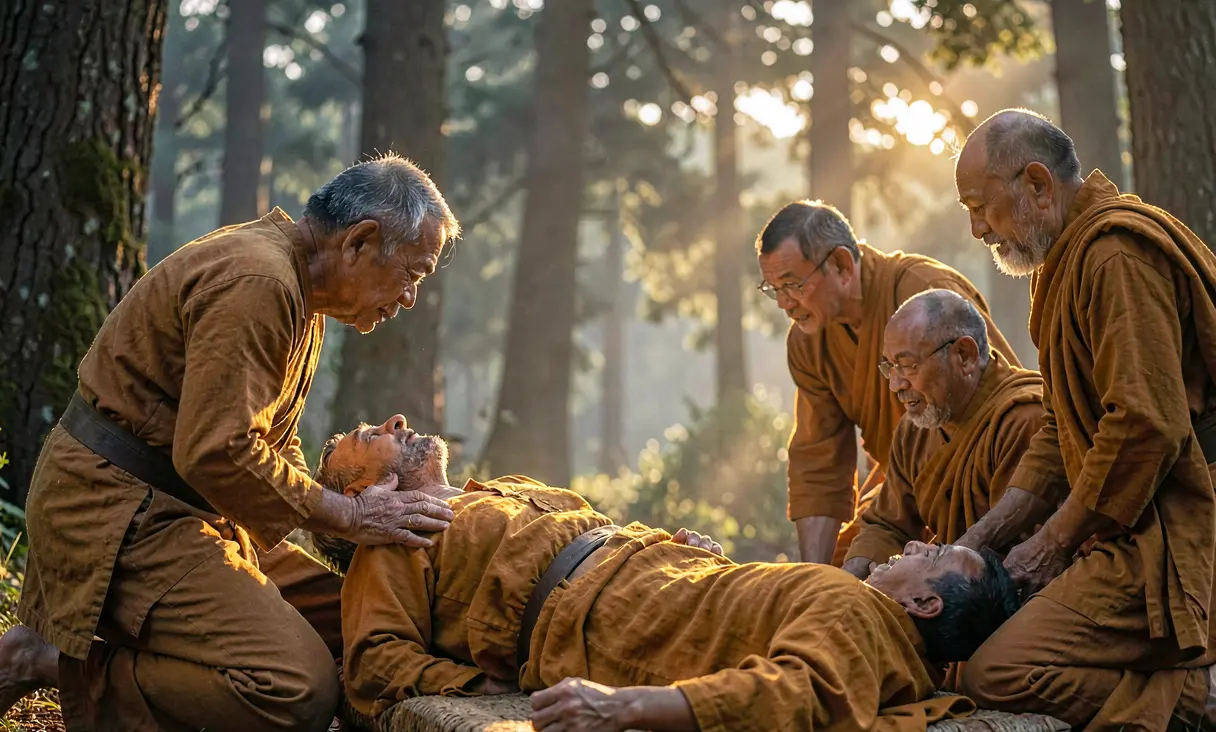
In his dying hours, the Buddha delivered a series of profound teachings that would become the bedrock of Buddhist soteriology. Addressing a grieving Ananda and the assembled monks, he famously declared, 'All conditioned things are impermanent; strive on with diligence.' This admonition against spiritual complacency underscored the core doctrine of Anicca (impermanence). He further instructed his followers to be islands unto themselves, relying on their own effort and the Dharma as a guide rather than seeking external saviors. These final words emphasized self-reliance and the urgency of practice in the face of inevitable dissolution, rejecting the notion that his physical presence was essential for salvation.
The Moment of Parinirvana
According to the Mahaparinibbana Sutta, as the sun set on the waning moon of the month of Vaisakha (circa 483 BCE), the Buddha entered a series of deep meditative absorptions. He ascended through the formless realms and then descended back through the lower states, finally entering the state of cessation before passing away. The texts describe this moment as occurring in the fourth watch of the night, marked by a profound silence that was said to be accompanied by supernatural phenomena, such as the shaking of the earth and the weeping of celestial beings. Unlike a typical death, his passing was viewed not as an end but as the extinguishing of a flame, leaving no residue of existence behind.
The First Council and Preservation
The immediate aftermath of the Buddha's death threatened to fragment the Sangha (monastic community) due to uncertainty over doctrine and discipline. To prevent schism and preserve the integrity of his teachings, the senior monk Mahakassapa convened the First Buddhist Council at Rajgir shortly after the cremation of the body. Over three months, five hundred arhats gathered under royal patronage from King Ajatashatru of Magadha to recite and codify the Buddha's discourses (Sutta Pitaka) and monastic code (Vinaya Pitaka). This rigorous oral compilation ensured that the Dharma survived without reliance on a living founder, transforming Buddhism from a charismatic movement into an institutionalized religion.
Legacy and Global Impact
The Parinirvana of the Buddha marked the definitive transition of his teachings from the personal guidance of a single master to a universal tradition. It catalyzed the spread of Buddhism across Asia, eventually reaching Sri Lanka, Central Asia, China, Korea, Japan, and Southeast Asia, influencing the spiritual and cultural fabric of billions. The event solidified the concept that enlightenment is accessible through individual effort rather than divine grace or ritual sacrifice, challenging the prevailing Brahmanical orthodoxy. Today, the anniversary of this event, celebrated as Vesak in many traditions, remains a central observance, reminding adherents of the impermanent nature of all things and the enduring power of the path he established.
The death of the Buddha marked the transition of Buddhism from a local movement to an organized religion with codified doctrines ready for global expansion.
Where it happened
Kushinagar (modern Uttar Pradesh/India) — see it on the interactive map →
Explore related history
 ReligionConstruction of the Temple of Kukulcán at Chichén Itzác. 800 CE · Chichén Itzá, MexicoThe iconic pyramid dedicated to the feathered serpent god is built during the Puuc-Toltec fusion period.
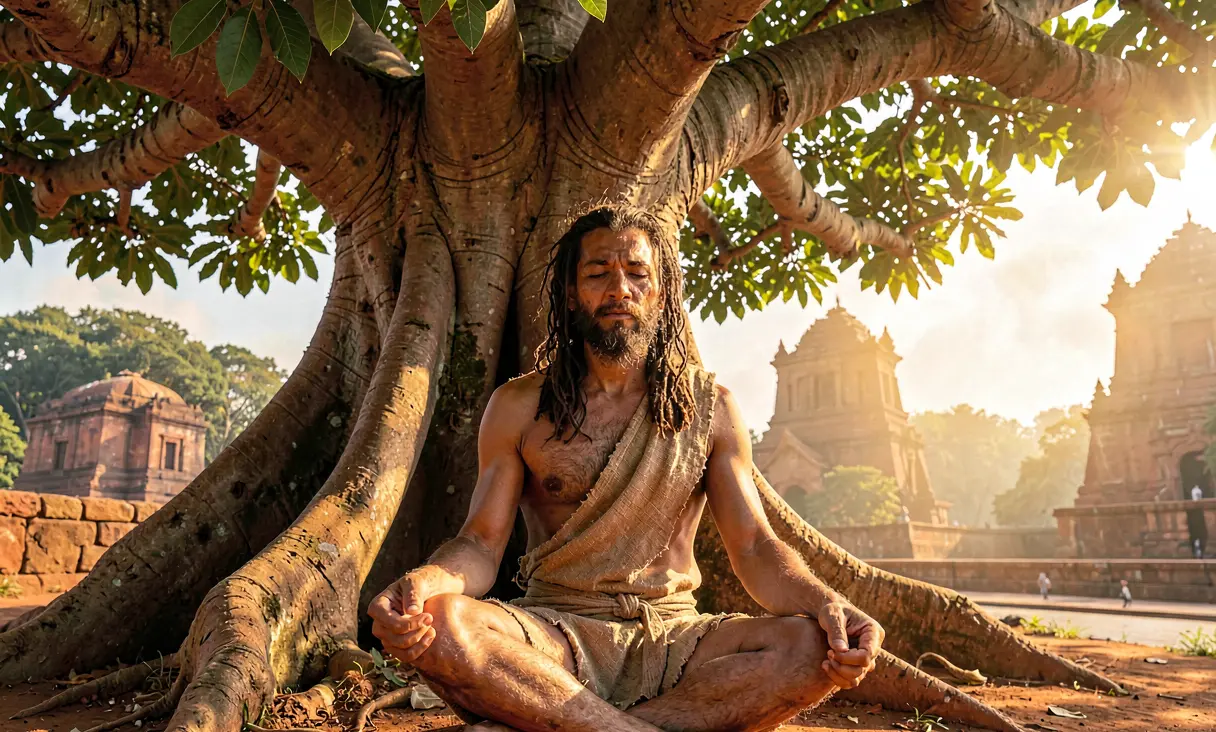 ReligionBuddha Attains Enlightenmentc. 528 BCE · Bodh Gaya, IndiaSiddhartha Gautama achieves nirvana under the Bodhi tree founding Buddhism.
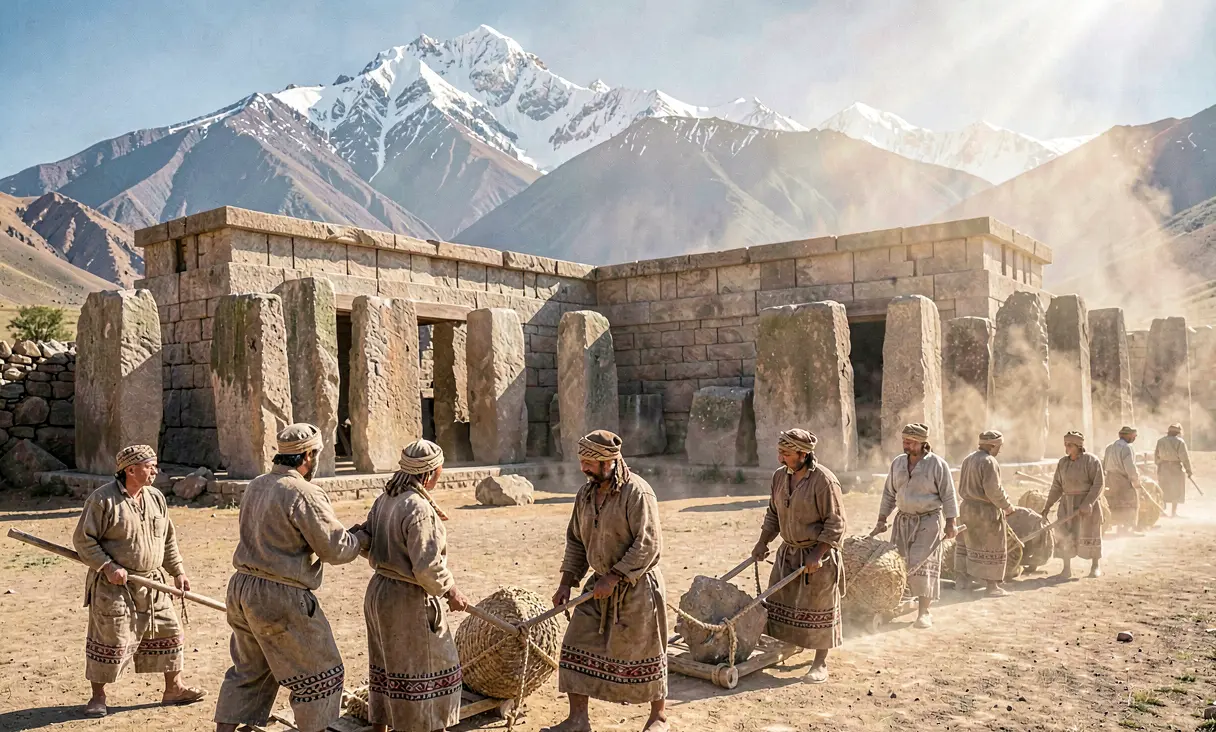 ReligionConstruction of Kalasasaya Temple at Tiwanakuc. 500 CE · Tiwanaku, BoliviaThe Kalasasaya temple is built with monolithic stones for solar observance.
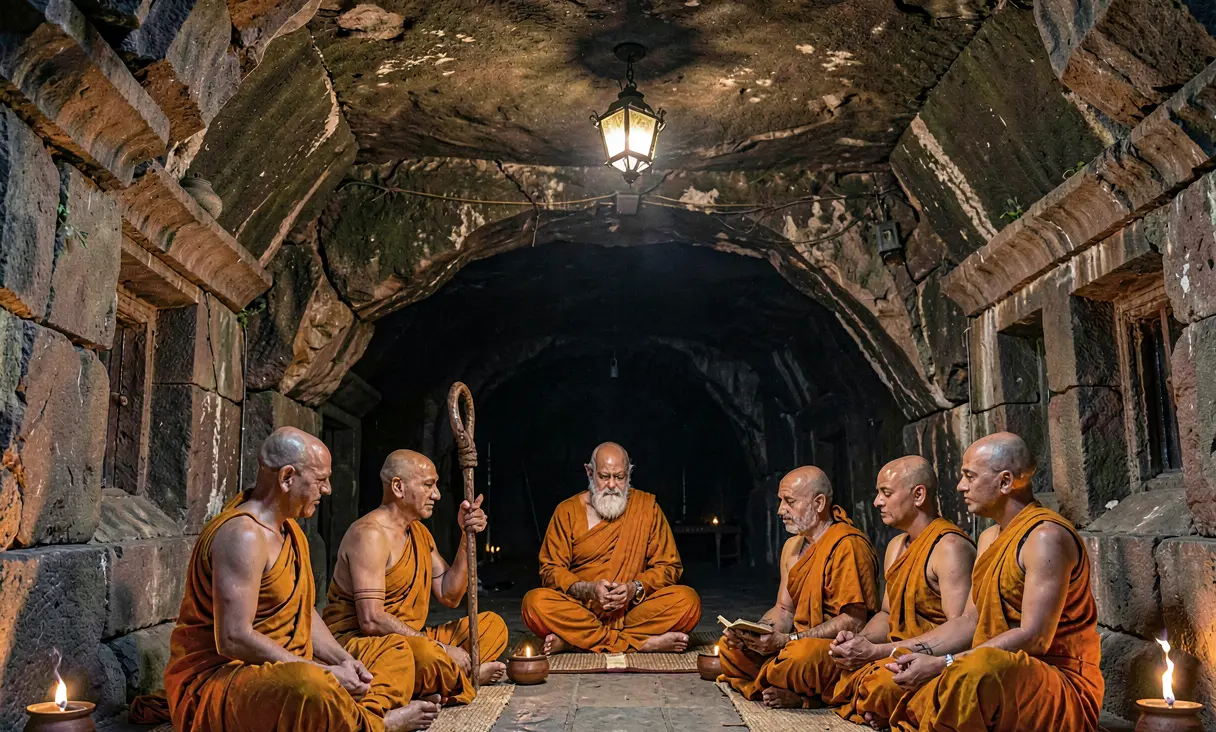 ReligionFirst Buddhist Council at Rajgirc. 483 BCE · Rajgir (modern Bihar/India)Monks gather to recite and codify the Buddha's teachings after his death, preserving the Dharma for future generations.
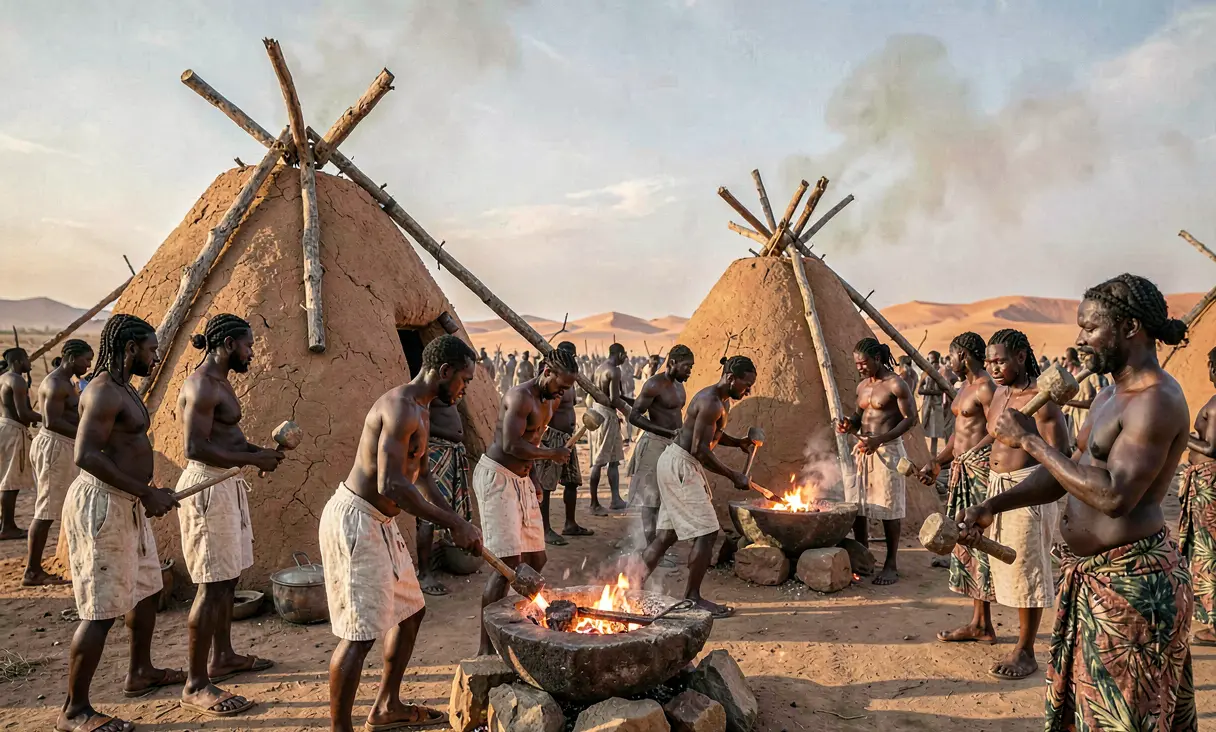 TechnologyMeroitic Iron Smelting Industry Flourishesc. 500 BCE · Meroe, SudanMeroe develops a massive iron smelting industry using abundant fuel and advanced furnace technology.
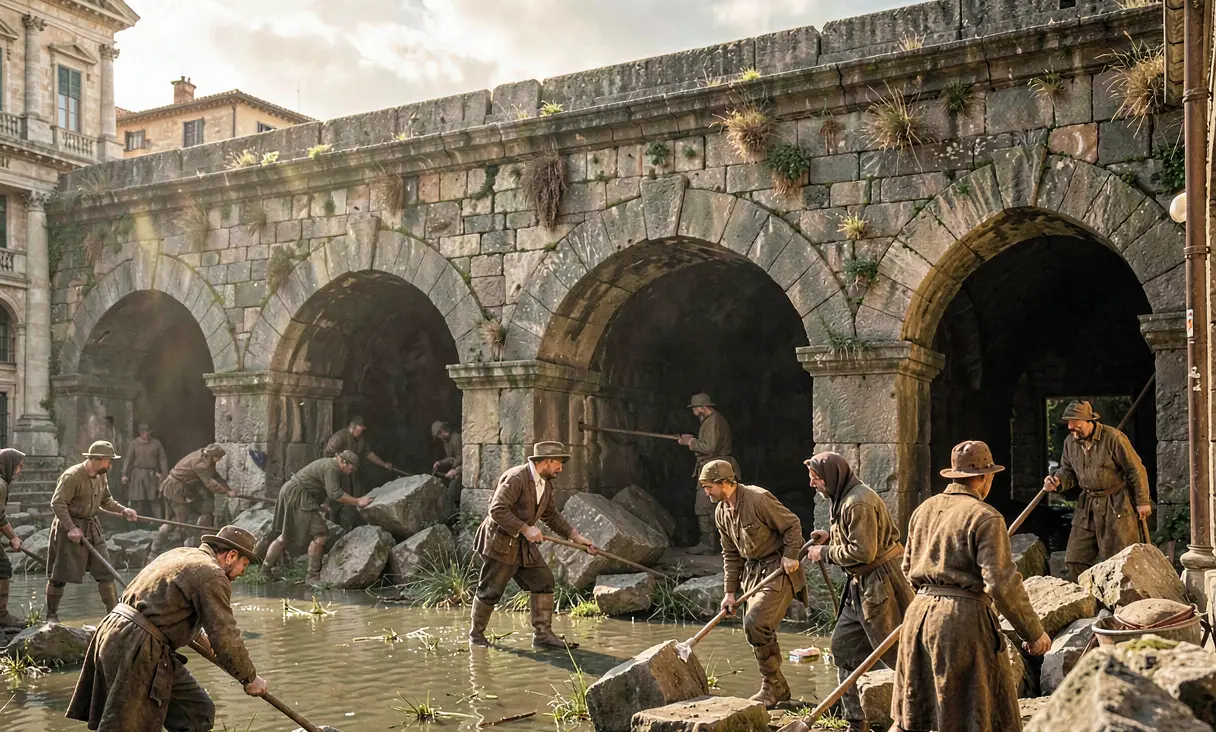 TechnologyConstruction of the Great Cloaca Maxima in Romec. 500 BCE · Rome, ItalyEarly Romans build the massive Cloaca Maxima sewer system to drain marshes and manage waste.
Discussion
Loading…