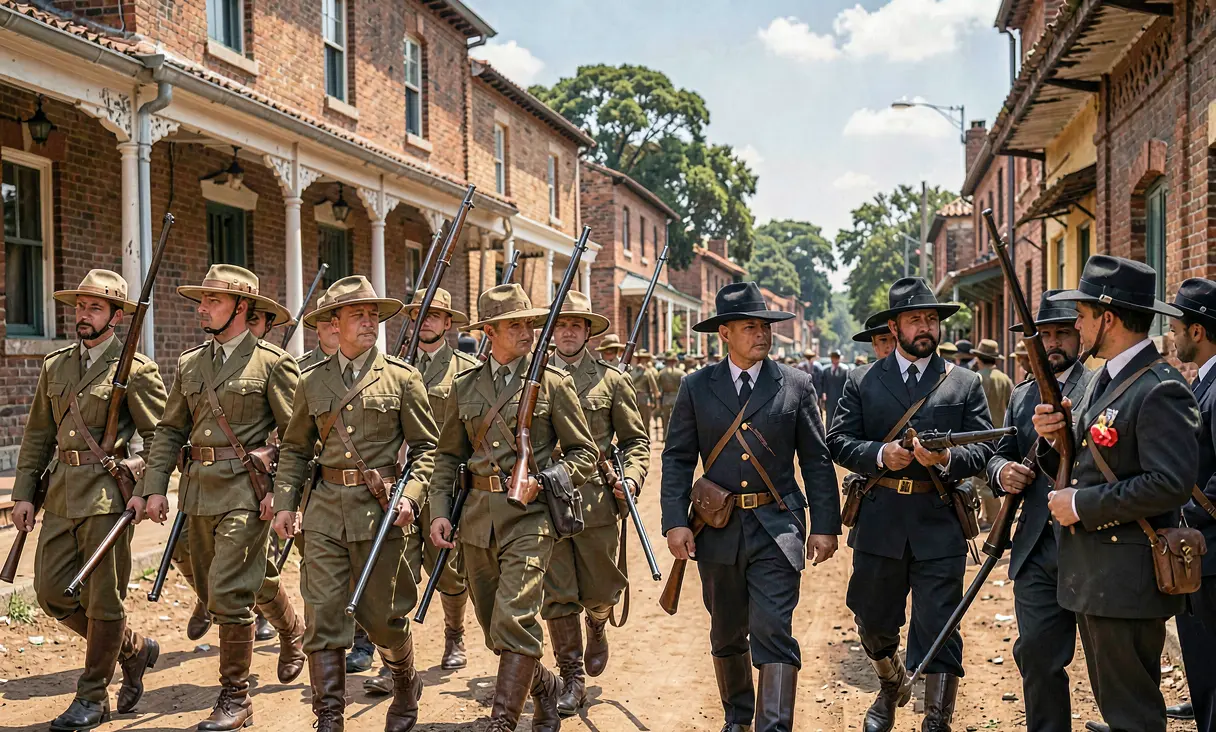
Second Boer War Begins
The Second Boer War marked a brutal transition to modern total war, where British imperial victory came at the cost of thousands of civilian lives in concentration camps, shattering Britain's moral re
Imperial Ambition and the Gold Rush
By the late 19th century, the discovery of vast gold deposits on the Witwatersrand in the South African Republic (Transvaal) had transformed a remote agrarian society into an economic powerhouse. This wealth destabilized the delicate political equilibrium between the British Empire and the two independent Boer republics: the Transvaal under President Paul Kruger and the Orange Free State. Tensions were exacerbated by the presence of thousands of foreign prospectors, known as Uitlanders, who were denied voting rights despite their economic dominance. The British High Commissioner, Sir Alfred Milner, viewed the Boer states as an obstacle to a unified South Africa under the Union Jack, leading to the failed Jameson Raid of 1895 and a subsequent diplomatic breakdown that made war inevitable.
The Ultimatum and Outbreak
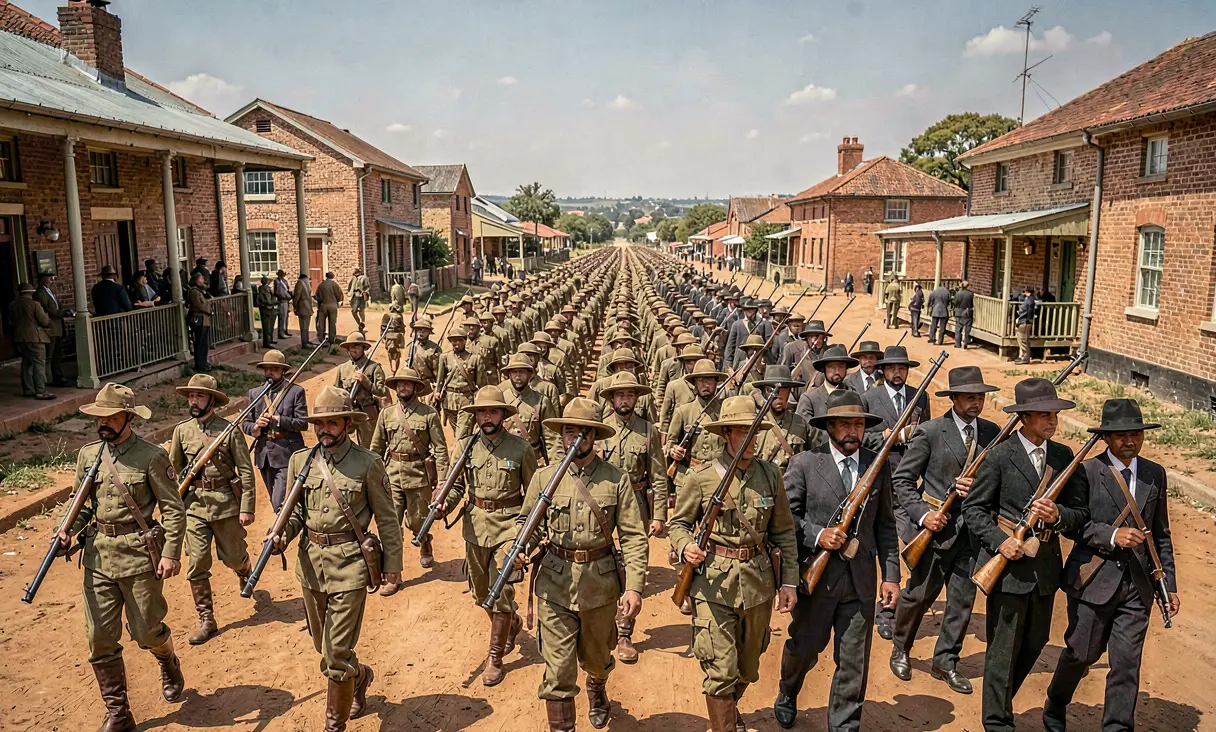
On October 9, 1899, President Kruger delivered a final ultimatum to the British government, demanding the withdrawal of British troops from the borders of the Transvaal and Orange Free State within 48 hours. When the deadline expired at noon on October 11, 1899, without British compliance, the Boer republics declared war. Unlike previous colonial conflicts where indigenous forces faced European armies with outdated tactics, this conflict began with a coordinated offensive by approximately 20,000 well-equipped Boer commandos. They crossed into British-held Natal and the Cape Colony, laying siege to key garrison towns such as Ladysmith, Mafeking, and Kimberley, catching the initially unprepared British forces off guard.
Key Architects of Conflict
The war was defined by the clash of distinct leadership styles. On the Boer side, President Paul Kruger provided political resolve, while military commanders like General Piet Joubert and later the brilliant guerrilla tactician General Christiaan de Wet led irregular forces that utilized their knowledge of the terrain to devastating effect. Opposing them were British figures such as Lord Roberts, who eventually took command to turn the tide with overwhelming numbers, and General Horatio Kitchener, whose ruthless counter-insurgency strategies would define the war's later stages. The conflict also drew global attention through the exploits of figures like Winston Churchill, then a young war correspondent captured at the Battle of Spion Kop, whose escape became a propaganda victory for Britain.
From Conventional Siege to Guerrilla Warfare
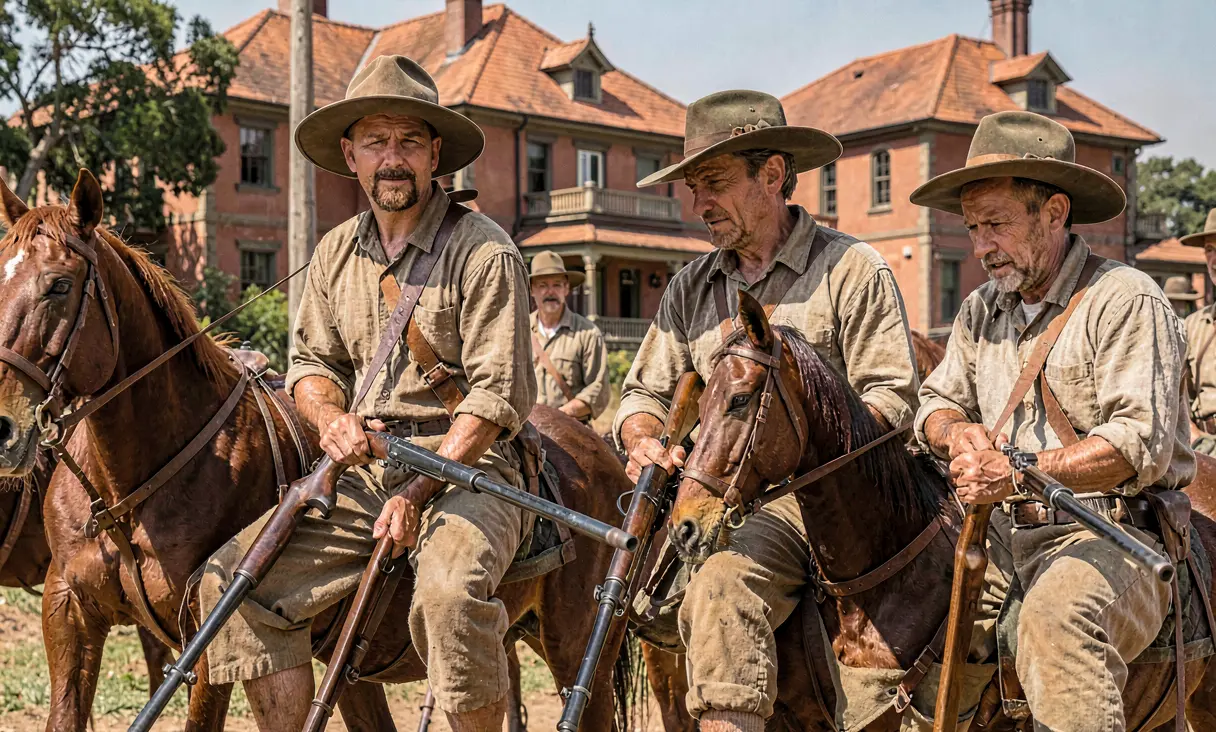
The initial phase of the war saw conventional battles where Boer marksmanship inflicted heavy casualties on British regulars during what became known as 'Black Week' in December 1899. However, once the British relieved the sieges and captured Pretoria in June 1900, the conflict shifted dramatically. The Boers refused to surrender, dispersing into small, mobile commandos that launched lightning raids on supply lines and isolated outposts. In response, Lord Kitchener implemented a scorched-earth policy, burning over 30,000 Boer farms and systematically destroying crops and livestock to deny resources to the guerrillas.
The Concentration Camp Tragedy
To support the scorched-earth strategy, the British established a network of concentration camps for the displaced civilian population, primarily Boer women and children, as well as black Africans who had served on farms. Conditions in these camps were catastrophic; overcrowding, poor sanitation, and inadequate food led to widespread disease outbreaks of measles, typhoid, and dysentery. By the war's end, approximately 26,000 Boer civilians (mostly children) and an estimated 14,000 black Africans died in these camps, a death toll that sparked international outrage and was documented by reformers like Emily Hobhouse, severely damaging Britain's moral standing.
The Treaty of Vereeniging
Exhausted by the prolonged guerrilla campaign and facing internal political pressure in the Cape Colony, Boer leaders negotiated peace. On May 31, 1902, the Treaty of Vereeniging was signed, ending hostilities. The Boer republics accepted British sovereignty but were granted promises of self-government and financial compensation for war damages. Crucially, the treaty deferred the question of black African suffrage, a decision that would later underpin the system of apartheid. While Britain achieved its strategic goal of controlling South Africa's mineral wealth, the victory was pyrrhic, costing over 22,000 British and colonial troops and nearly 75,000 lives in total when civilian casualties are included.
Legacy of Modern Warfare
The Second Boer War stands as a watershed moment in military history, marking the first major conflict where modern industrial warfare met asymmetric guerrilla tactics. It forced European powers to rethink colonial administration and military strategy, introducing concepts like blockhouses and total war against civilian infrastructure that would foreshadow the horrors of the 20th century's global conflicts. Furthermore, the war hastened the decline of British imperial invincibility; the high cost in blood and treasure, coupled with the moral stigma of the concentration camps, fueled anti-imperialist sentiment worldwide and signaled the beginning of a shift in the balance of global power.
It solidified British control over South Africa but introduced the controversial use of concentration camps in modern warfare.
Where it happened
Pretoria, South Africa — see it on the interactive map →
Explore related history
 WarBattle of WaterlooJune 18, 1815 · Waterloo, BelgiumNapoleon Bonaparte is defeated, ending the Napoleonic Wars.
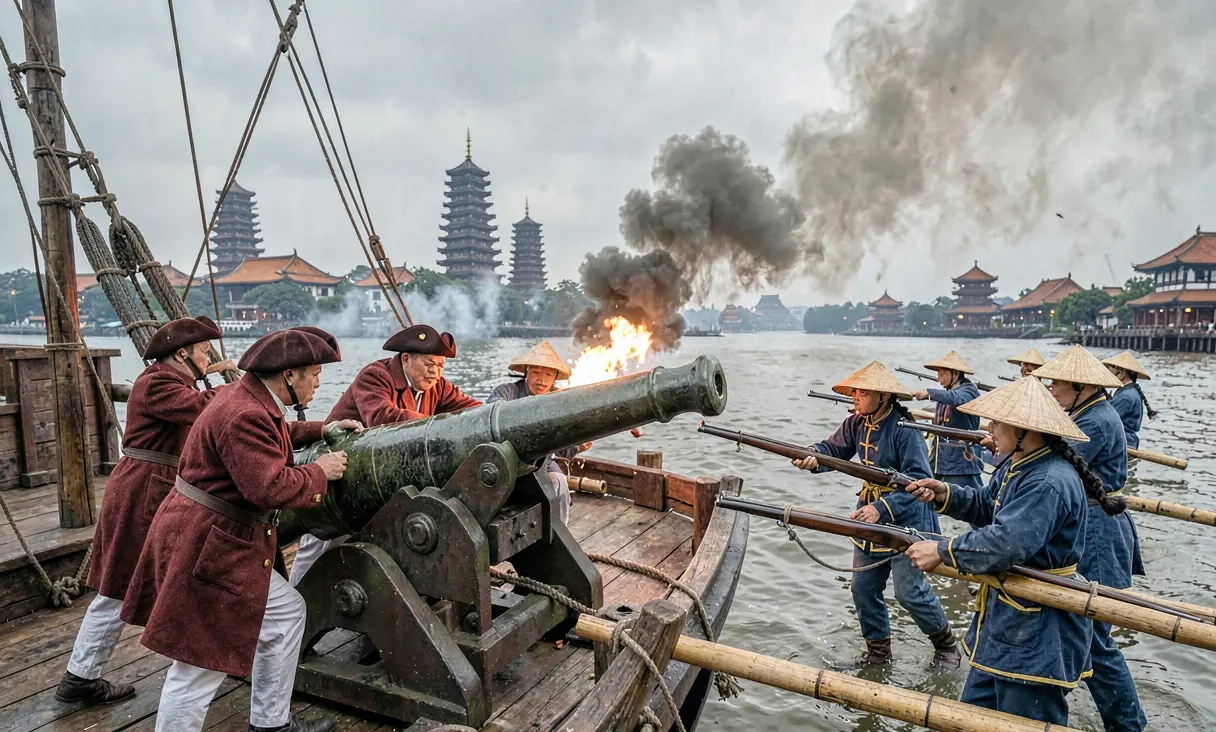 WarFirst Opium War BeginsSeptember 4, 1839 · Guangzhou, ChinaBritain forces open Chinese trade via war, beginning the Century of Humiliation.
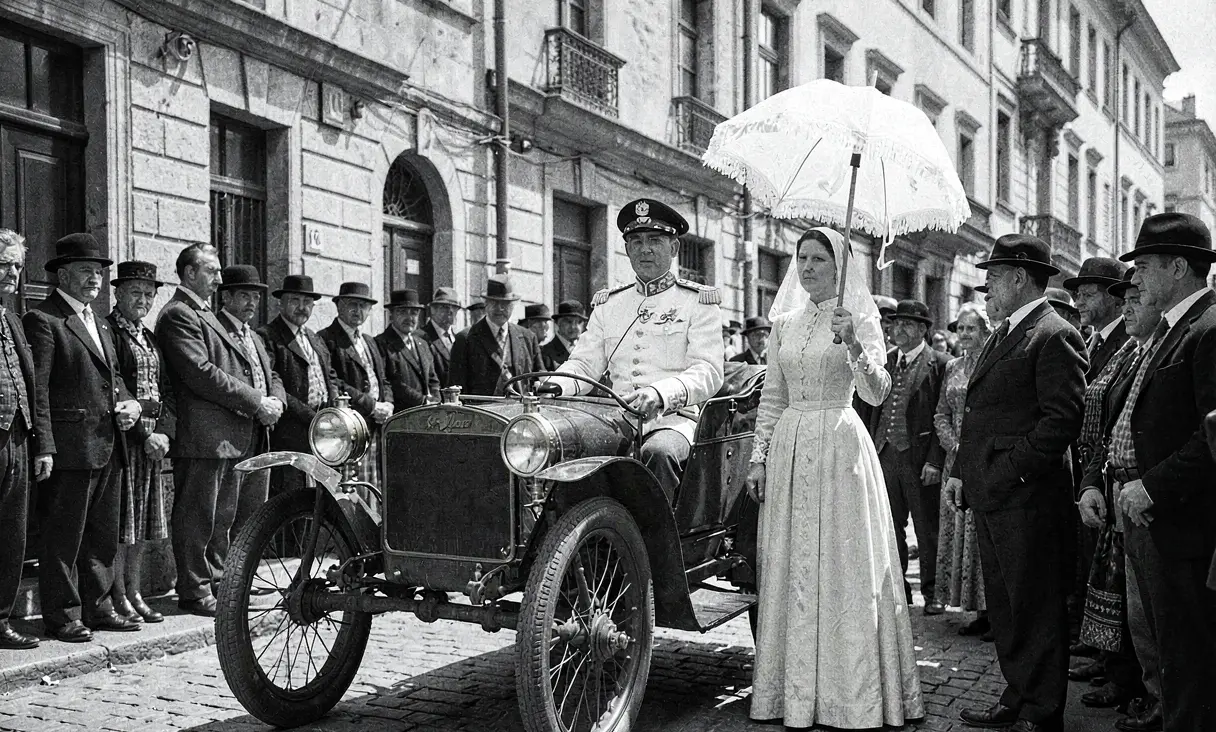 WarOutbreak of World War IJuly 28, 1914 CE · Sarajevo, BosniaAssassination of Archduke Franz Ferdinand triggers a global conflict involving major powers.
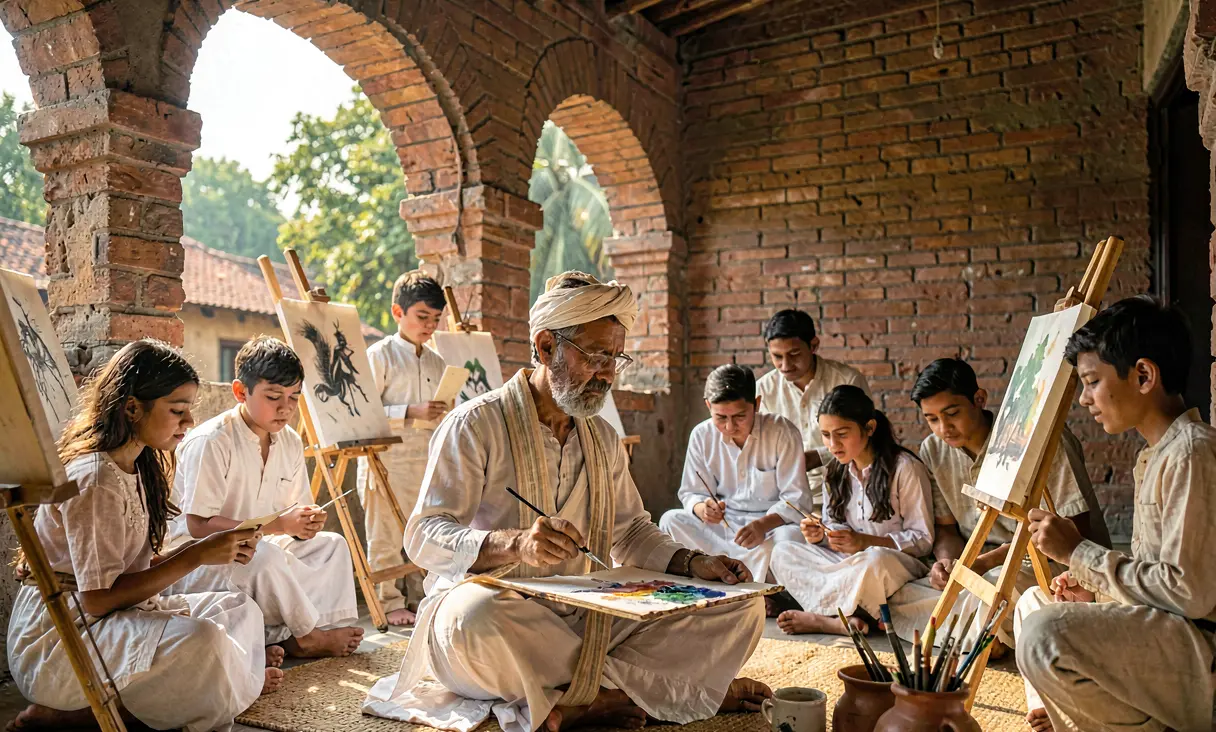 ArtFounding of the Bengal School of Artc. 1905 CE · Calcutta (Kolkata), IndiaAbanindranath Tagore pioneers a new indigenous Indian art style.
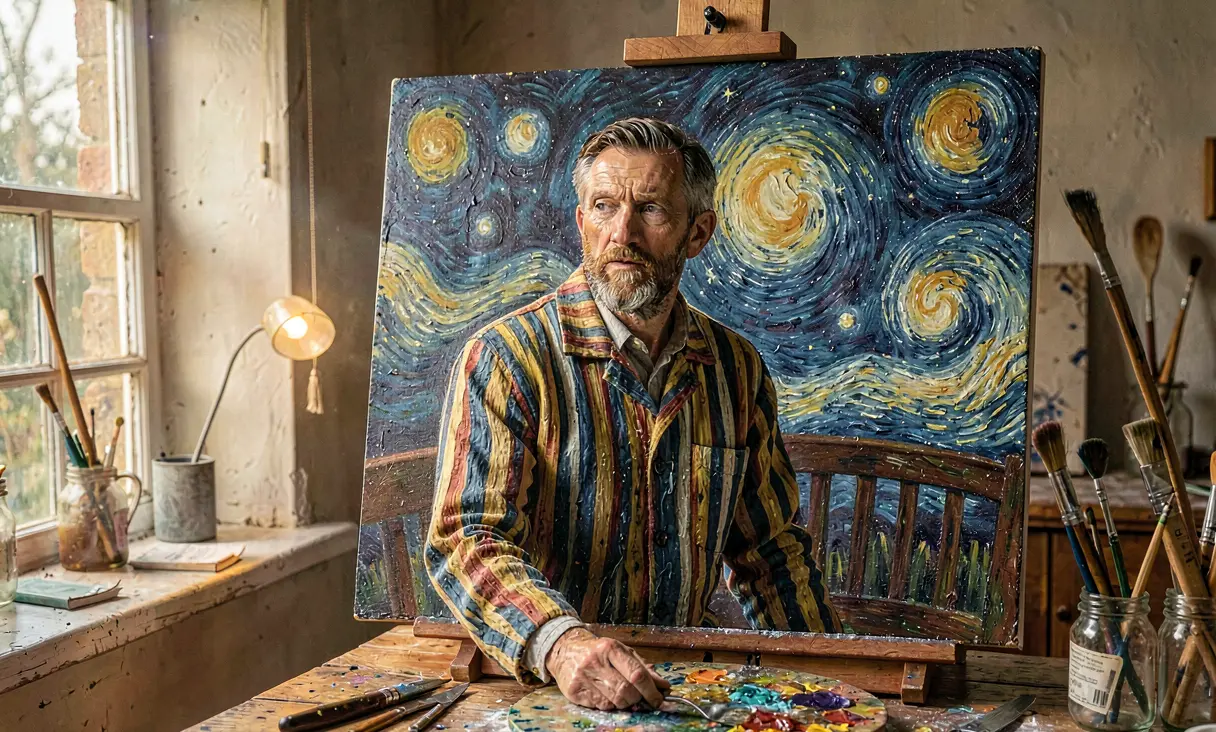 ArtCreation of The Starry NightJune 1889 · Saint-Rémy-de-Provence, FranceVincent van Gogh paints his most famous masterpiece from an asylum window.
 PoliticsOctober RevolutionNovember 7, 1917 · Petrograd (St. Petersburg), RussiaBolsheviks overthrow the Provisional Government, creating the first socialist state.
Discussion
Loading…