Construction of the Benin Walls Begins
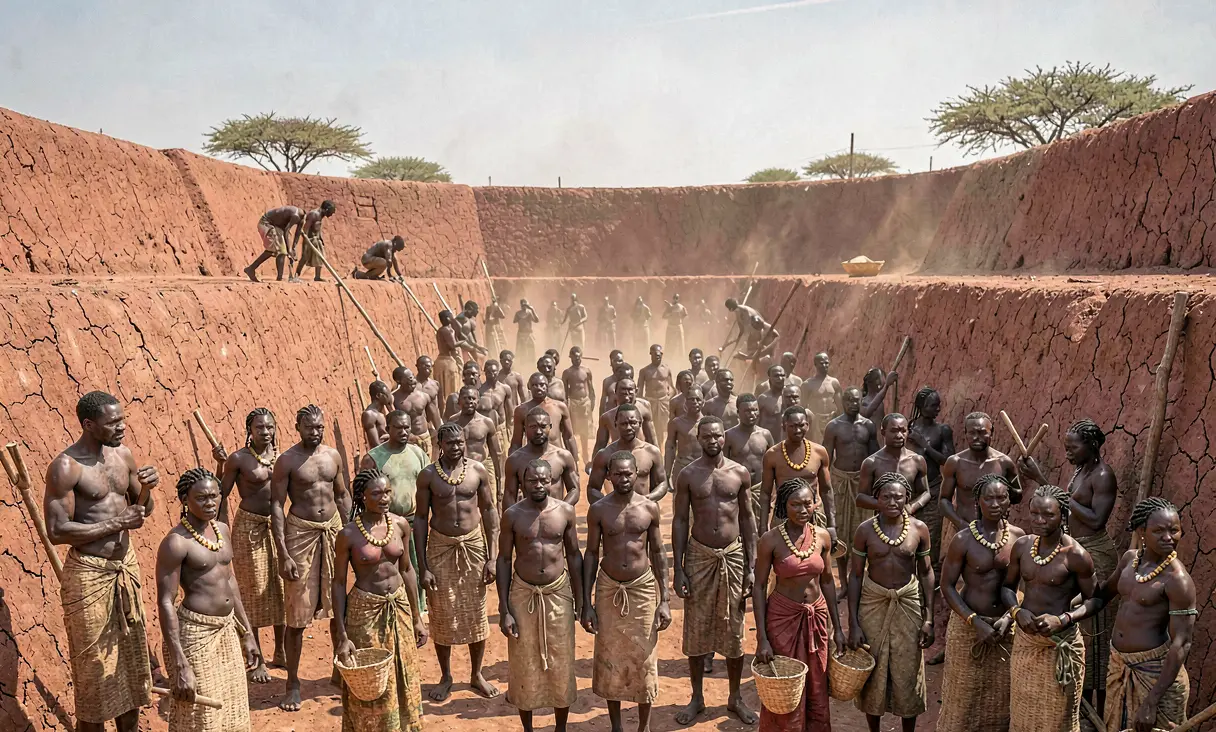
Beginning c. 1200 CE, the Kingdom of Benin constructed the world's largest earthwork by volume, a massive system of walls and moats that defined urban planning and royal authority for centuries.
The Genesis of a Megalithic Landscape
In the early 13th century, amidst the lush rainforests of what is now southern Nigeria, the Kingdom of Benin initiated an engineering project of staggering ambition. Unlike contemporary fortifications in Europe or Asia that relied heavily on stone masonry, the architects of Benin City chose to harness the earth itself. Beginning around 1200 CE under the reign of early Oba rulers, the construction of a vast network of earthen ramparts and moats transformed the region's topography. This was not merely a defensive perimeter but a deliberate reshaping of the environment to reflect the cosmological order of the kingdom, creating a physical manifestation of the Oba's divine authority over the land and its people.
Engineering Mastery in Earth and Water
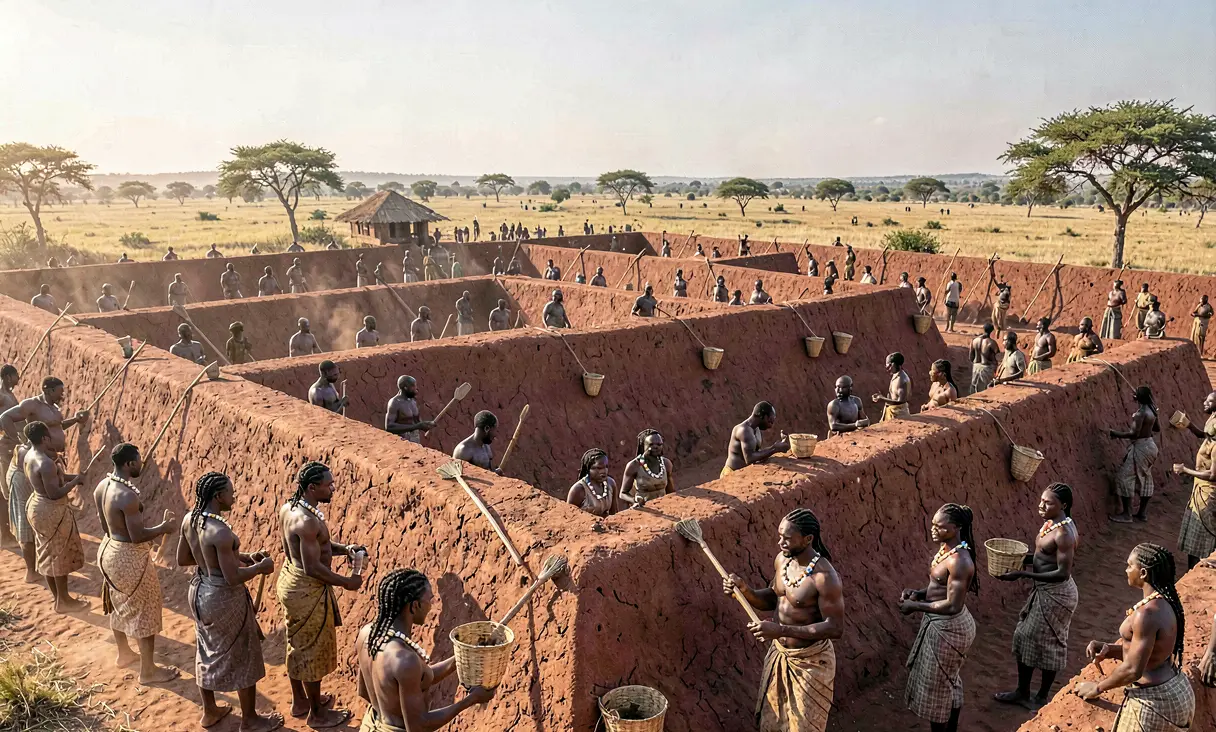
The Walls of Benin represent a pinnacle of pre-colonial African civil engineering. The system consisted of concentric rings of massive earthen banks, often flanked by deep moats that served as both defensive barriers and water management systems. Builders utilized advanced techniques to compact the soil, creating walls that could reach heights of up to 30 feet in certain sections, with a total length estimated at over 16,000 kilometers (approximately 10,000 miles) when including internal divisions. The sheer volume of earth moved—estimated at hundreds of millions of cubic meters—surpassed the Great Wall of China by some metrics, requiring a sophisticated understanding of hydrology, geology, and labor organization that rivaled any contemporary civilization.
The Oba's Divine Mandate
While specific individual architects remain lost to history due to the oral traditions of the Edo people, the project was driven by the absolute authority of the Oba, the divine king. The construction was a state-sponsored endeavor that began in earnest during the consolidation of power under the Ogiso dynasty and continued through the rise of the Obas of Benin. The Oba acted as the spiritual and political center, mobilizing thousands of laborers from across the kingdom. This massive undertaking required precise logistical planning to feed, house, and organize a workforce that likely numbered in the tens of thousands, demonstrating a centralized administration capable of sustaining long-term, large-scale infrastructure projects.
A Phased Expansion Over Centuries
The construction was not a singular event but a continuous process spanning centuries, evolving from local defenses into a sprawling urban grid. The system grew in complexity as the kingdom expanded, with inner walls protecting the royal palace and sacred precincts, while outer rings secured agricultural zones and trade routes against rival city-states like Ife and Nupe. The project utilized a communal labor system known as 'ubodu,' where communities contributed to the state's infrastructure in exchange for protection and spiritual favor. Over time, the walls created a labyrinthine urban landscape that regulated movement, controlled access to resources, and provided a formidable defense against cavalry raids from the north.
Societal Impact and Urban Planning
The completion of these fortifications fundamentally altered the social fabric of Benin City. The walls created a distinct boundary between the sacred center, where the Oba resided, and the profane outer world, reinforcing the hierarchical structure of Edo society. Internally, the walls facilitated organized urban planning, with wide avenues radiating from the palace and distinct quarters for guilds such as bronze casters, ivory carvers, and weavers. The moats provided irrigation for the city's agriculture and a buffer against disease vectors, while the ramparts served as elevated walkways for patrols. This integration of defense, sanitation, and urban design created one of the most sophisticated cities in the pre-modern world.
Enduring Legacy and Global Recognition
By the time of the British punitive expedition in 1897, which destroyed much of the city's physical infrastructure, the Walls of Benin stood as a testament to centuries of continuity. Although erosion and modern urbanization have obscured large portions of the original structure, archaeological surveys confirm their immense scale. In 2011, Guinness World Records recognized them as the largest single earthwork in the world by volume. Today, they stand not only as an engineering marvel but as a powerful symbol of African sovereignty and ingenuity, challenging Eurocentric narratives that historically underestimated the complexity of pre-colonial African states.
Demonstrates unparalleled indigenous engineering capability and urban planning scale in pre-colonial Africa.

Where it happened
Benin City, Nigeria — see it on the interactive map →
Explore related history
 TechnologyIndustrialization of Sericulture in Ancient Chinac. 2600 BCE · Shaanxi Province, ChinaChinese artisans perfect the reeling and spinning of silk from silkworm cocoons.
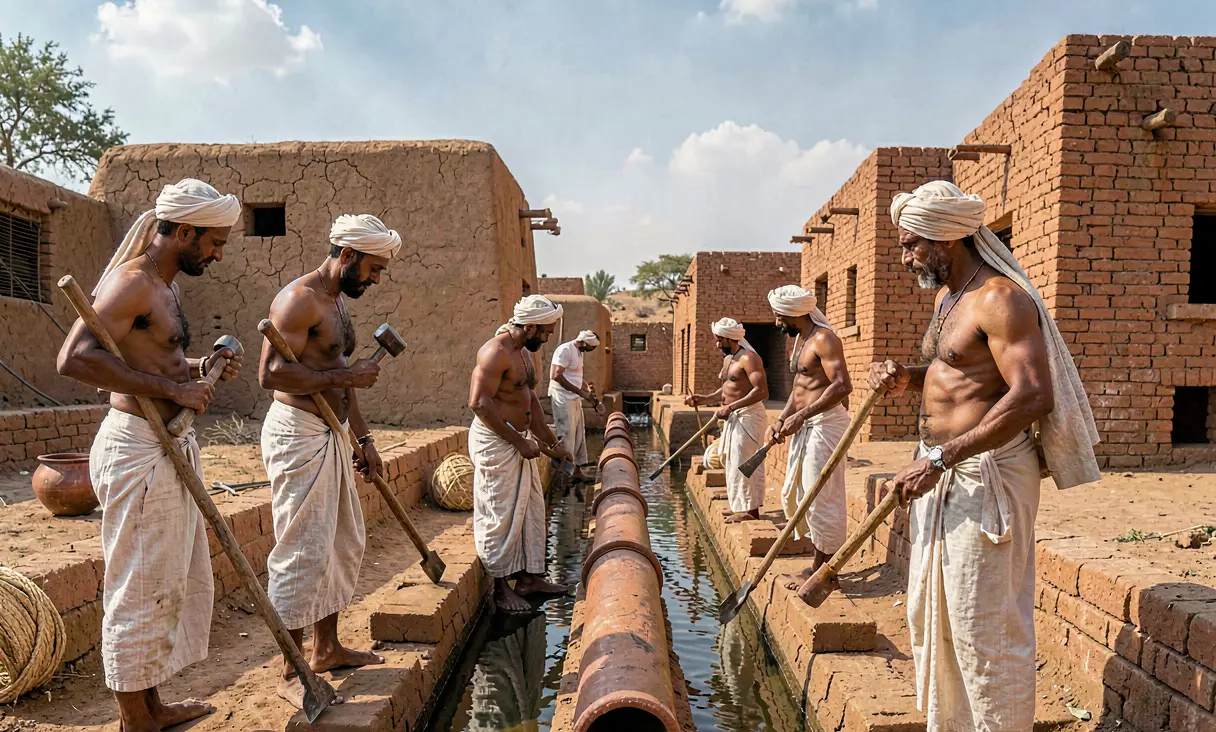 TechnologyAdvanced Irrigation Systems of the Indus Valley Civilizationc. 2600 BCE · Harappa, PakistanEngineers construct sophisticated canal networks and water reservoirs for urban agriculture.
 TechnologyBenin Acquires Cannon Technology from Portugalc. 1500 CE · Benin City, NigeriaThe Kingdom of Benin integrates Portuguese cannon technology into its military arsenals.
 ReligionZoroaster Preaches Dualistic Monotheismc. 1200 BCE · Greater Khorasan, Iran/Afghanistan border regionThe prophet Zoroaster establishes a dualistic faith emphasizing the cosmic struggle between good and evil in ancient Persia.
 CivilizationConstruction and Peak of Great Zimbabwec. 1200 CE · Great Zimbabwe, ZimbabweThe Great Zimbabwe complex reaches its zenith as a major trading hub connecting the interior to the Swahili coast.
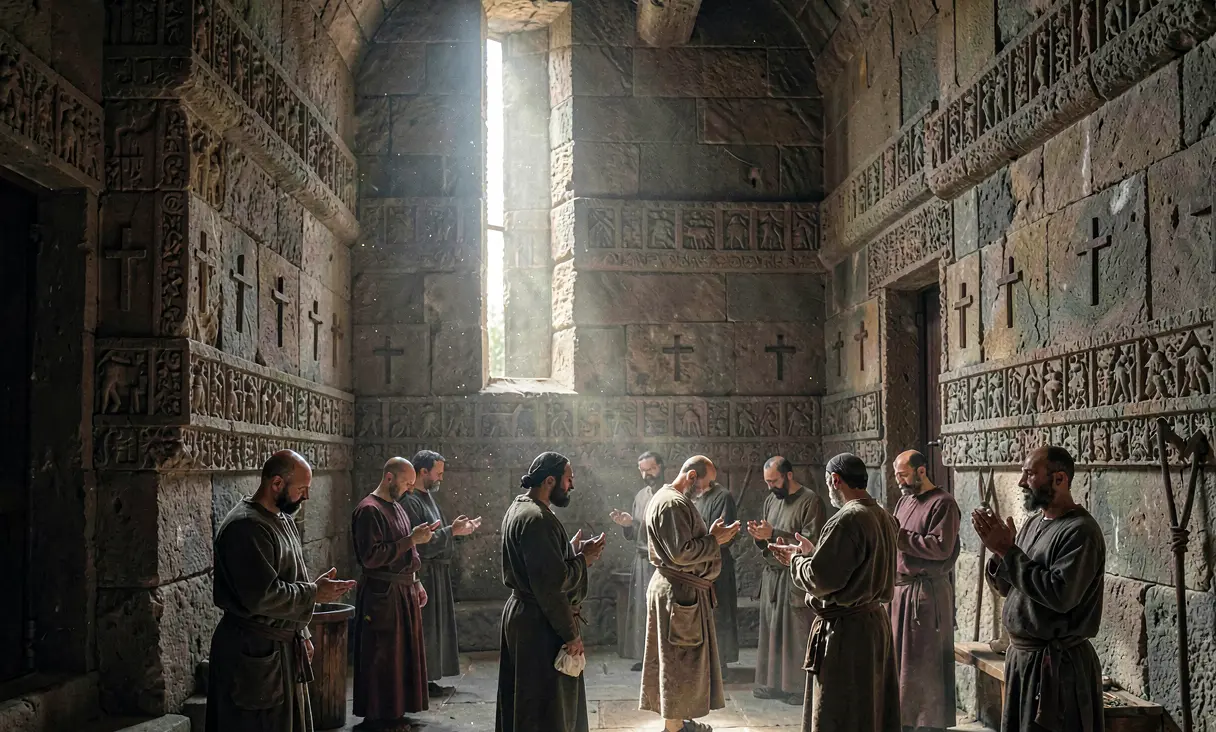 ArtRock-Hewn Churches of Lalibela Completedc. 1200 CE · Lalibela, EthiopiaKing Lalibela commissions the construction of monolithic rock-hewn churches as a 'New Jerusalem'.
Discussion
Loading…