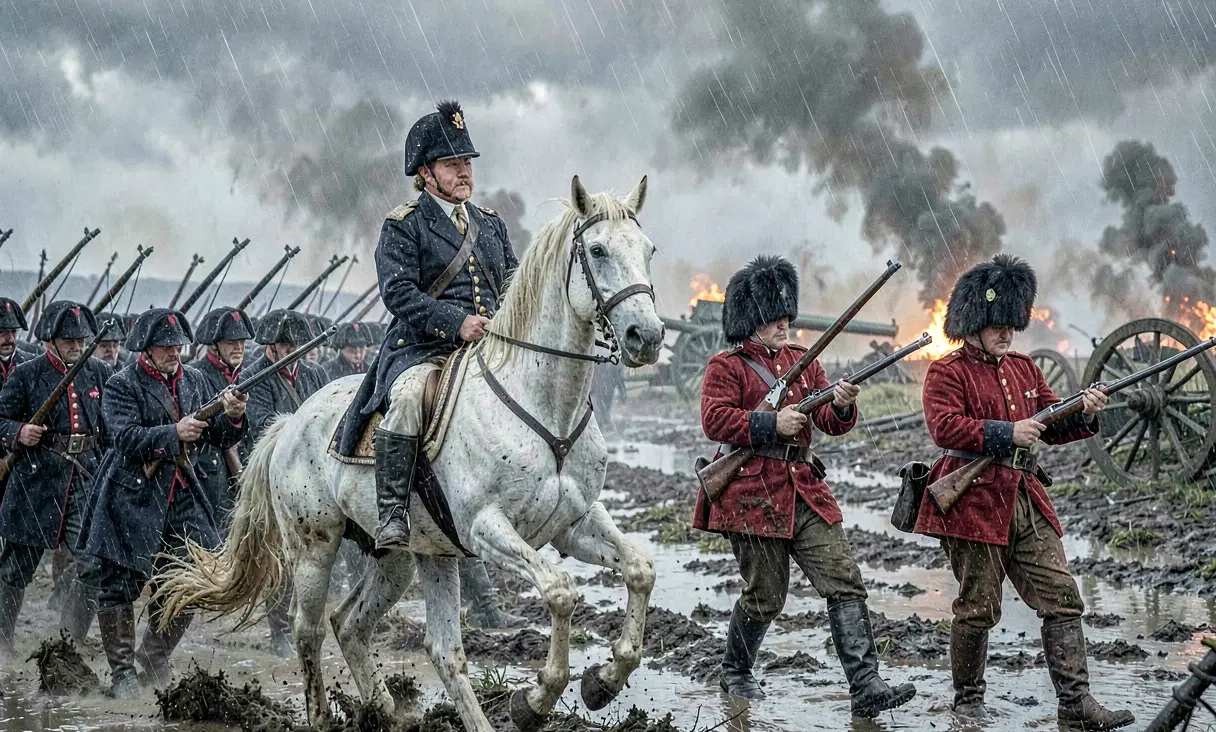
Battle of Waterloo
The Battle of Waterloo ended Napoleon's rule, reshaped the map of Europe, and ushered in a century of relative peace through the Concert of Europe.
The Final Gambit of the Hundred Days
By June 18, 1815, Europe stood on a precipice. Napoleon Bonaparte had escaped his exile on Elba just three months prior, reclaiming the French throne and igniting the 'Hundred Days' that terrified the Great Powers. The Seventh Coalition, comprising British, Dutch, Hanoverian, Prussian, and Austrian forces, moved swiftly to crush the resurgent Emperor before he could consolidate power. Napoleon's strategy was bold: strike first at the dispersed Coalition armies in the Low Countries, defeating them individually before they could unite. He successfully pushed back the Prussians under Gebhard Leberecht von Blücher at Ligny on June 16 and forced the Anglo-Allied army led by the Duke of Wellington to retreat north toward Brussels. However, Napoleon failed to prevent the two armies from linking up, a fatal miscalculation that set the stage for his ultimate demise.
The Terrain and the Stalemate
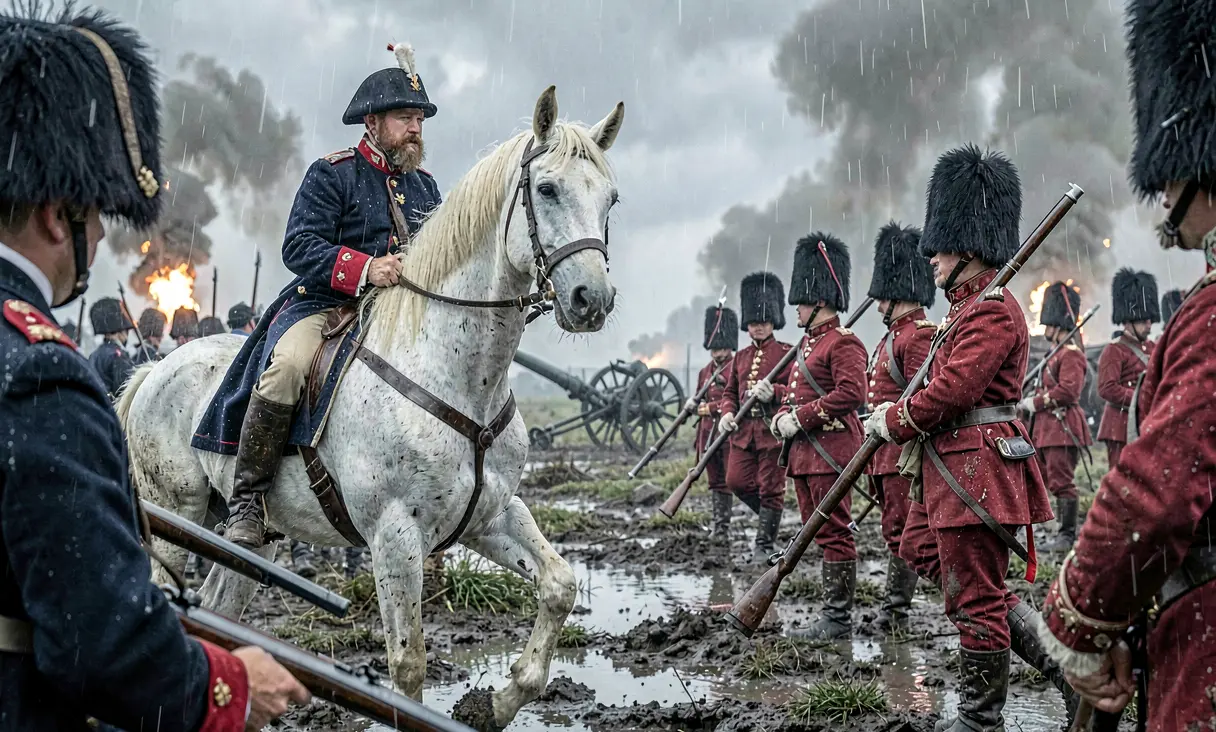
The battlefield near the village of Waterloo in present-day Belgium was a landscape of rolling ridges and muddy slopes, heavily influenced by the torrential rain that fell throughout the night of June 17. The ground was so saturated that Napoleon delayed his attack until midday, hoping the soil would dry enough to allow his cavalry and artillery to maneuver effectively. This delay proved disastrous, granting Blücher's Prussian army crucial hours to regroup and march toward the French right flank. Wellington positioned his forces defensively behind the ridge of Mont-Saint-Jean, utilizing farmhouses like Hougoumont and La Haye Sainte as fortified strongpoints to anchor his line. His strategy relied on absorbing the initial French assaults while waiting for the Prussians to arrive, a gamble that required immense discipline from his multinational army.
The Clash of Titans: Wellington, Blücher, and Napoleon
Commanding the Anglo-Allied forces was Arthur Wellesley, the Duke of Wellington, a master of defensive warfare known for his coolness under fire and meticulous preparation. Opposing him was Emperor Napoleon I, arguably the greatest military tactician in European history, who sought one final victory to secure his legacy. The third pivotal figure was Field Marshal Gebhard Leberecht von Blücher, the indomitable Prussian commander whose relentless drive ensured his army's arrival on the battlefield despite heavy losses at Ligny. While Wellington held the center and left with a mix of British infantry squares, Dutch-Belgian troops, and German contingents, Blücher's IV Corps under General Bülow began to engage the French right flank in the afternoon. The interplay between Wellington's static defense and Blücher's dynamic arrival defined the battle's outcome.
The Unfolding Catastrophe
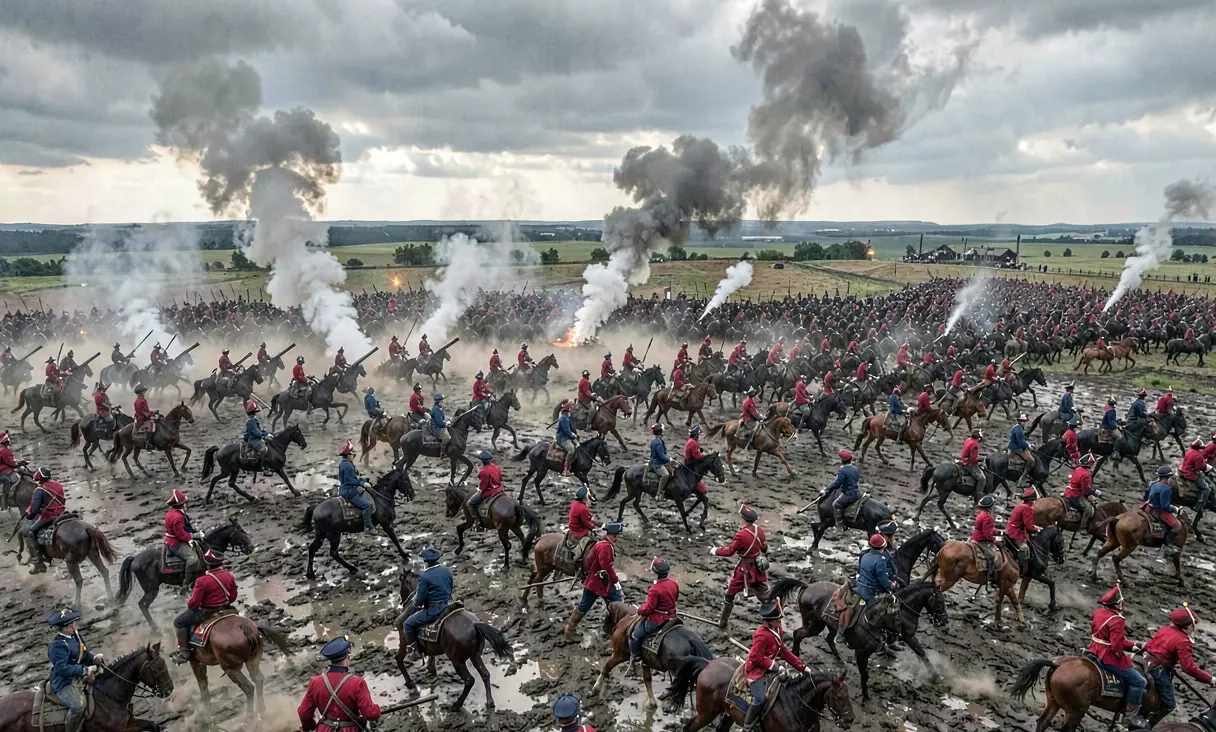
The battle commenced with a diversionary attack on the chateau of Hougoumont, which quickly consumed French resources as Wellington reinforced the position. Around 1:30 PM, Marshal Michel Ney led massive cavalry charges against the Anglo-Allied center, but without infantry support and facing disciplined British squares that repelled them with bayonets and volleys, the assaults failed to break the line. As evening approached, Napoleon committed his Imperial Guard in a desperate final push around 7:30 PM. However, Wellington had positioned fresh troops to counter-attack, famously ordering, 'Now, Maitland, now is your time!' The Guard was repulsed, shattering French morale. Simultaneously, Blücher's Prussians overwhelmed the French right flank at Plancenoit, turning a defensive victory into a rout.
The End of an Empire
By nightfall on June 18, the French army was in full retreat, pursued relentlessly by Wellington's infantry and Blücher's cavalry. The defeat was catastrophic; approximately 25,000 French soldiers were killed or wounded, with another 9,000 captured, while Coalition losses totaled roughly 24,000. Napoleon fled to Paris but found his political support evaporated. He abdicated for the second time on June 22 and surrendered to the British aboard HMS Bellerophon a month later. The Bourbon monarchy was restored under King Louis XVIII, ending the French Revolutionary and Napoleonic Wars that had ravaged Europe since 1792. The immediate consequence was a geopolitical realignment that sought to prevent future French aggression through a balance of power.
Legacy and the Concert of Europe
The Battle of Waterloo marked the definitive end of an era, ushering in nearly forty years of relative peace in Western Europe known as the 'Concert of Europe.' The Congress of Vienna, which had been reshaping the continent's borders during the war, was solidified by this victory. Napoleon was exiled to the remote island of Saint Helena in the South Atlantic, where he died in 1821, cementing his mythic status while removing him from the political stage forever. The battle became a symbol of the triumph of coalition warfare over individual genius and influenced military doctrine for generations. It remains one of the most studied battles in history, representing the final chapter of the Napoleonic Wars and the dawn of the modern European state system.
It marked the final defeat of Napoleon Bonaparte, ending the Napoleonic Wars and reshaping the European political order.
Where it happened
Waterloo, Belgium — see it on the interactive map →
Explore related history
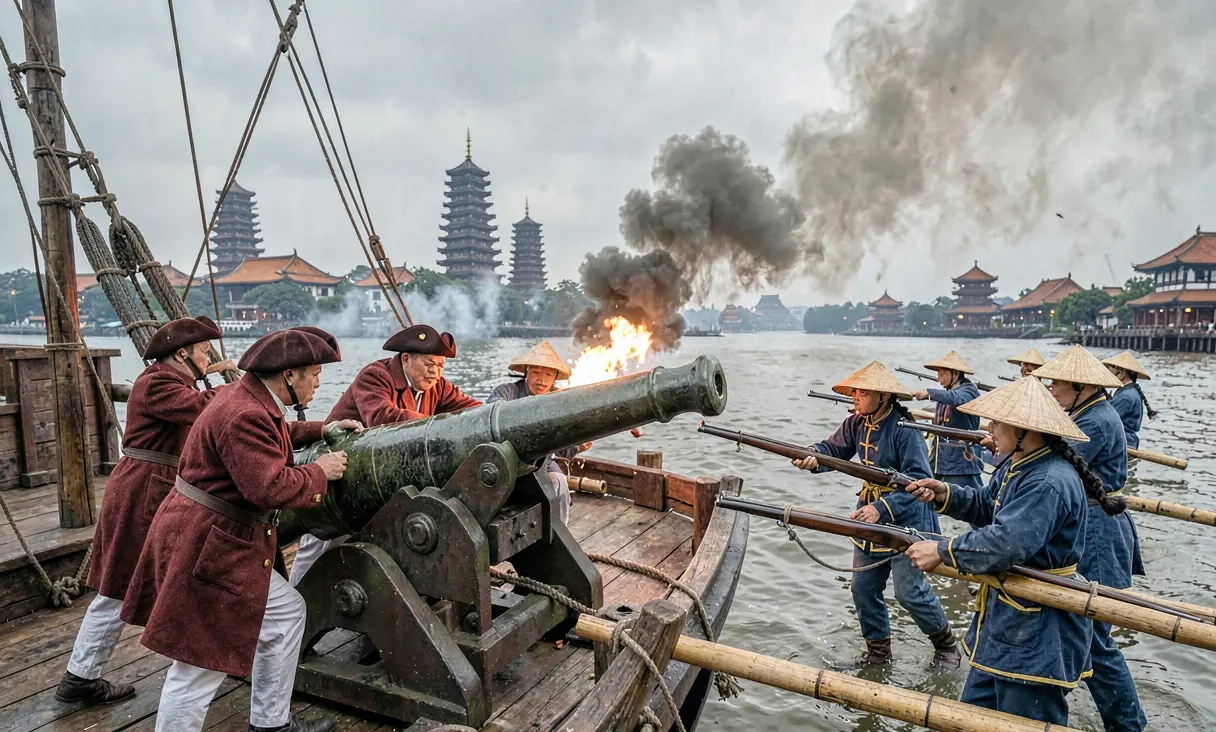 WarFirst Opium War BeginsSeptember 4, 1839 · Guangzhou, ChinaBritain forces open Chinese trade via war, beginning the Century of Humiliation.
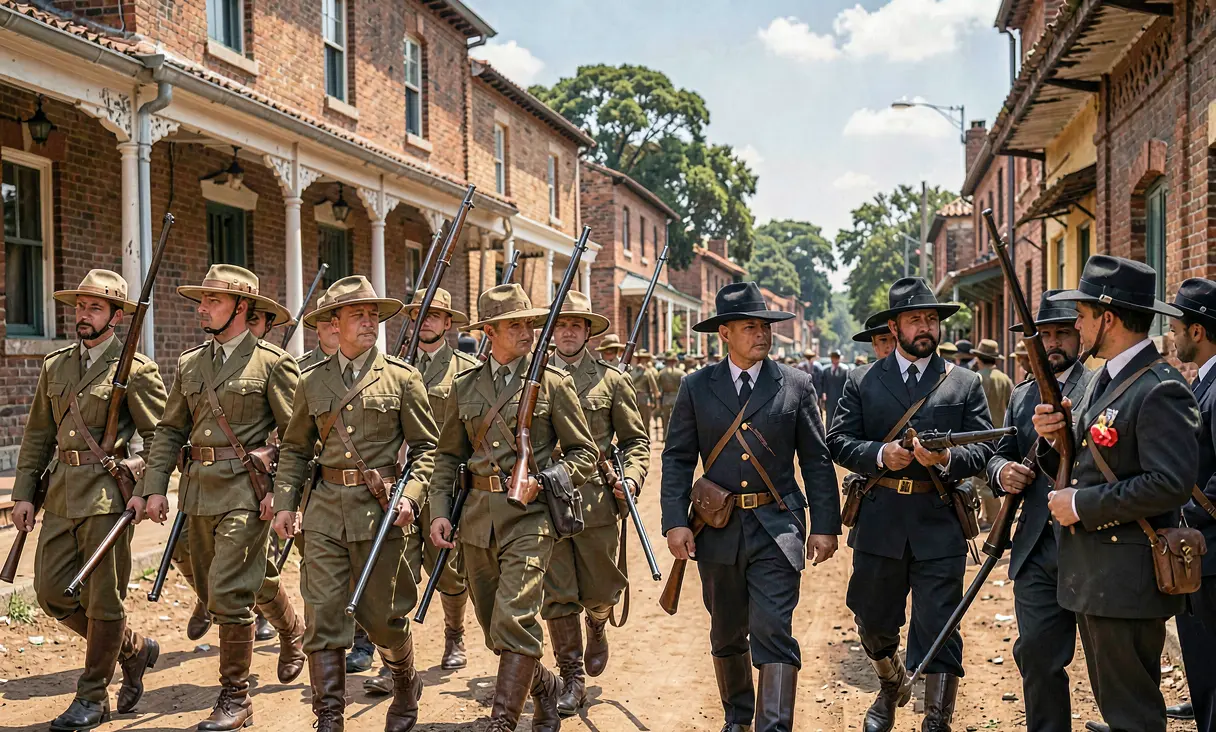 WarSecond Boer War BeginsOctober 11, 1899 · Pretoria, South AfricaBritish Empire fights Boer republics, introducing concentration camps.
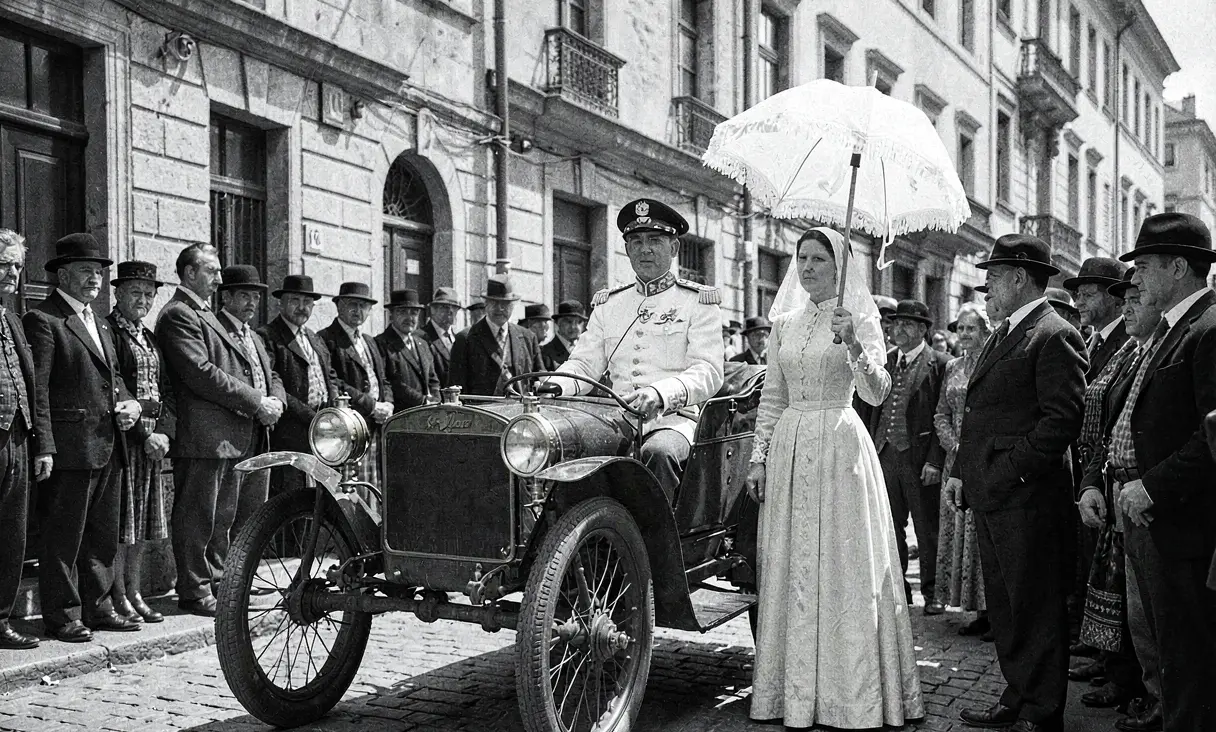 WarOutbreak of World War IJuly 28, 1914 CE · Sarajevo, BosniaAssassination of Archduke Franz Ferdinand triggers a global conflict involving major powers.
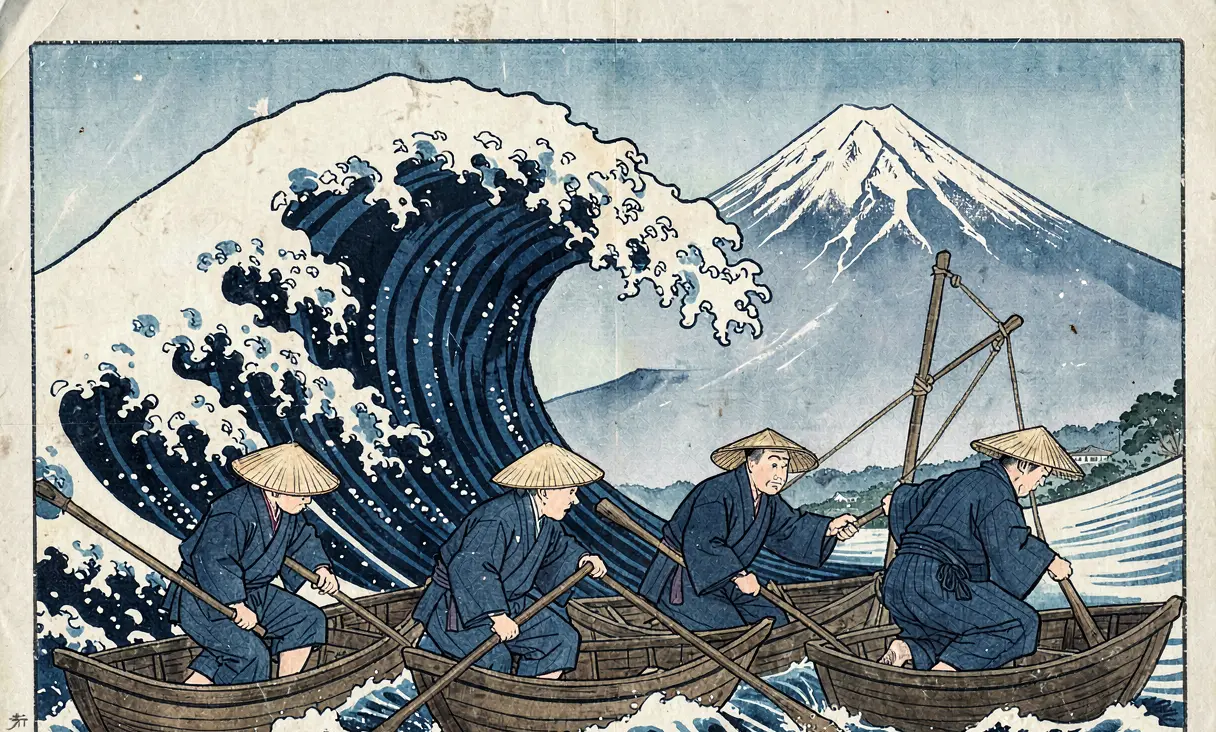 ArtCreation of The Great Wave off Kanagawac. 1831 CE · Kanagawa, JapanHokusai produces iconic woodblock print influencing Western art movements.
 ArtPublication of Hokusai's Great Wavec. 1831 CE · Edo (Tokyo), JapanKatsushika Hokusai releases the iconic woodblock print of Mount Fuji.
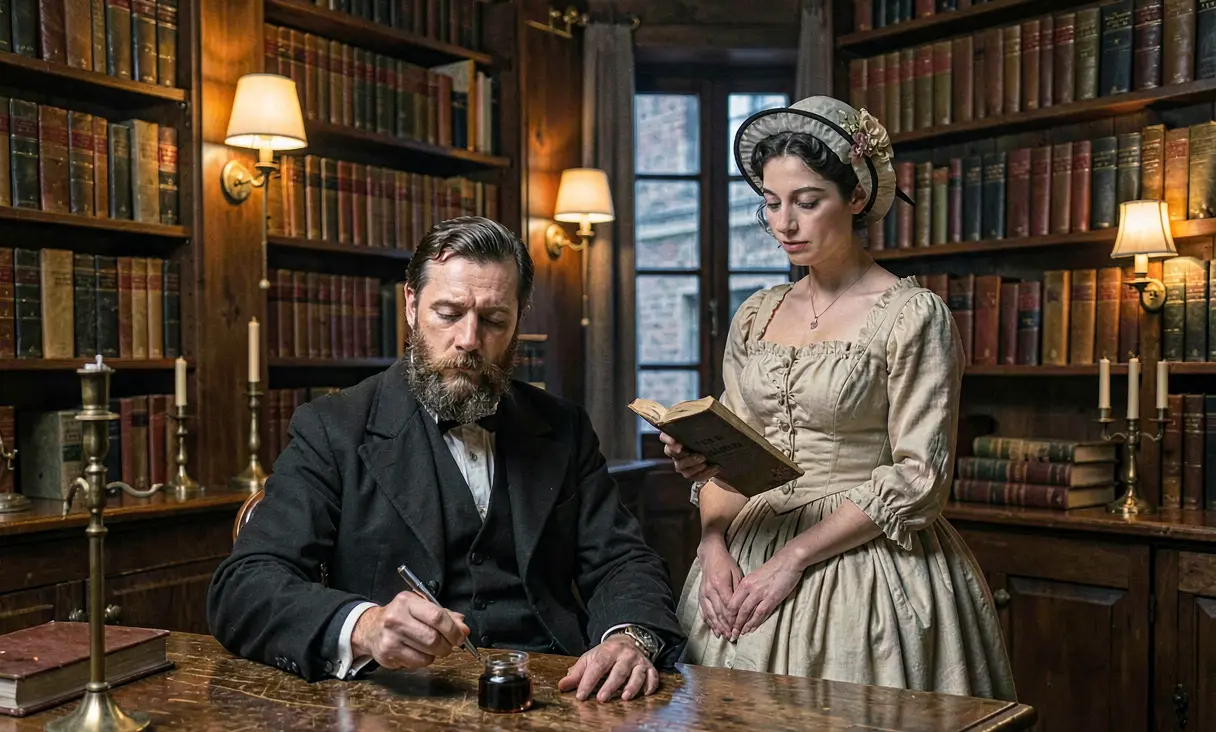 SciencePublication of Origin of SpeciesNovember 24, 1859 CE · London, EnglandCharles Darwin proposes natural selection as the mechanism for evolution of life.
Discussion
Loading…