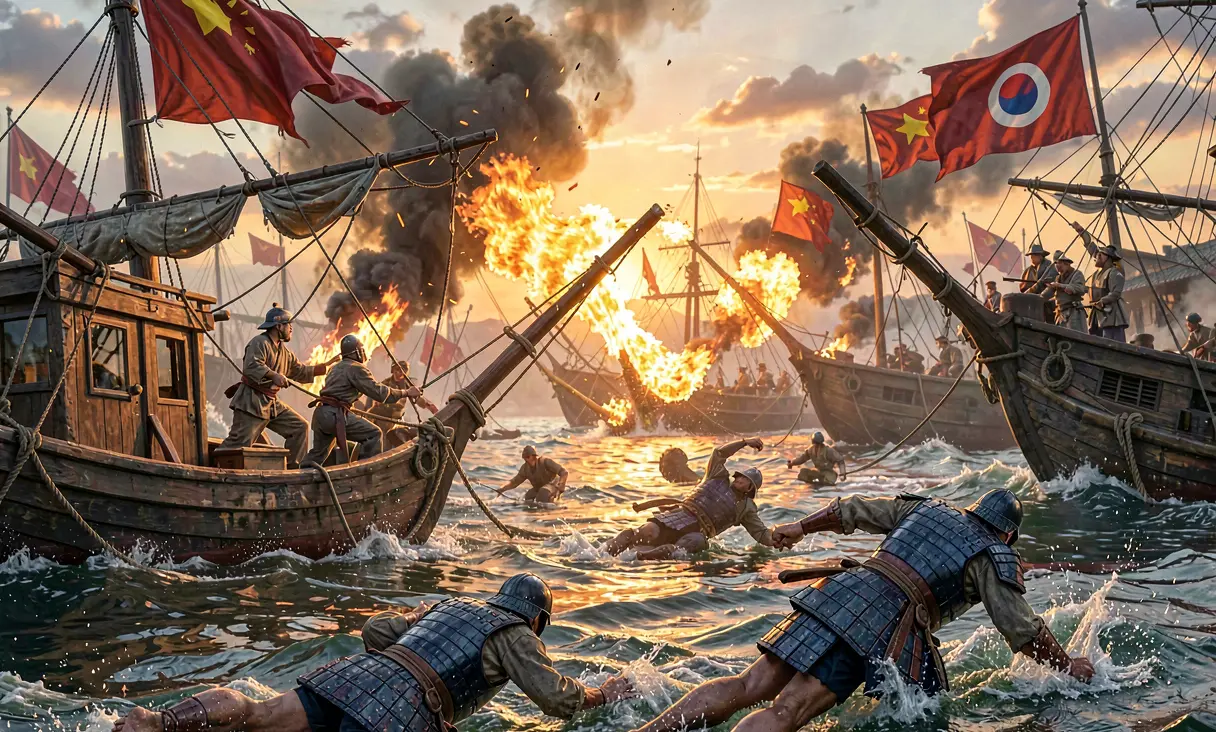
Battle of Baekgang: Silla-Tang Victory over Japan
The 663 CE naval annihilation of Japanese forces at Baekgang ended continental ambitions, secured Unified Silla's dominance over Korea, and forced Japan to turn inward for centuries.
The Struggle for the Peninsula
By the mid-7th century, the Korean peninsula was a volatile theater of competing powers. The kingdom of Baekje, one of the Three Kingdoms of Korea, had long maintained close cultural and political ties with the Yamato court in Japan. However, in 660 CE, a massive Tang-Silla coalition launched a devastating invasion that swiftly toppled the Baekje capital at Sabi, capturing its king, Uija. While Silla sought to consolidate control over the fallen kingdom, a significant faction of the Baekje nobility, led by the general Gwisan and the prince Buyeo Pung, refused to accept defeat. They rallied surviving forces and urgently appealed to their traditional ally, Japan, for military intervention to restore the kingdom.
The Yamato Intervention
Emperor Tenji of Japan viewed the restoration of Baekje as a strategic imperative to prevent Silla and Tang China from dominating the peninsula, which would threaten Japanese security. In 662 CE, Japan dispatched a formidable force under the command of Abe no Hirafu, who had previously served in Korea. By 663, the Yamato court assembled a massive fleet estimated at over 400 ships and 27,000 troops, transporting Prince Buyeo Pung back to Korea. They established fortified positions along the Geum River (Geumgang) estuary, aiming to launch a counter-offensive against Silla and Tang forces while securing a beachhead for further operations.
The Clash at the Geum River
The decisive confrontation occurred in August 663 CE at the mouth of the Geum River. The allied Silla-Tang fleet, commanded by the Tang general Liu Rengui and supported by Silla's King Munmu, intercepted the Japanese-Baekje forces. The Tang navy possessed a distinct technological advantage; their ships were larger, heavily armored, and equipped with advanced naval artillery and boarding tactics designed for open-water combat. In contrast, the Japanese fleet relied on smaller, faster vessels optimized for coastal raiding but ill-suited for a pitched naval battle against such heavy opposition.
The Annihilation of the Fleet
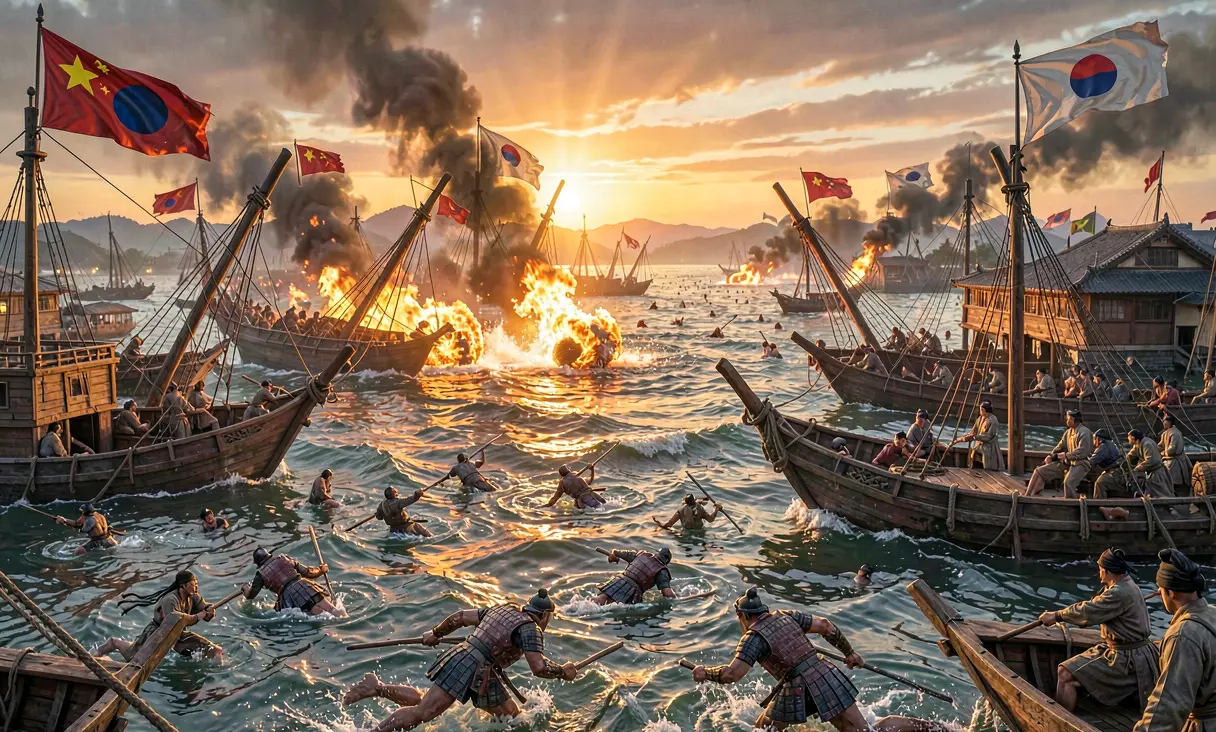
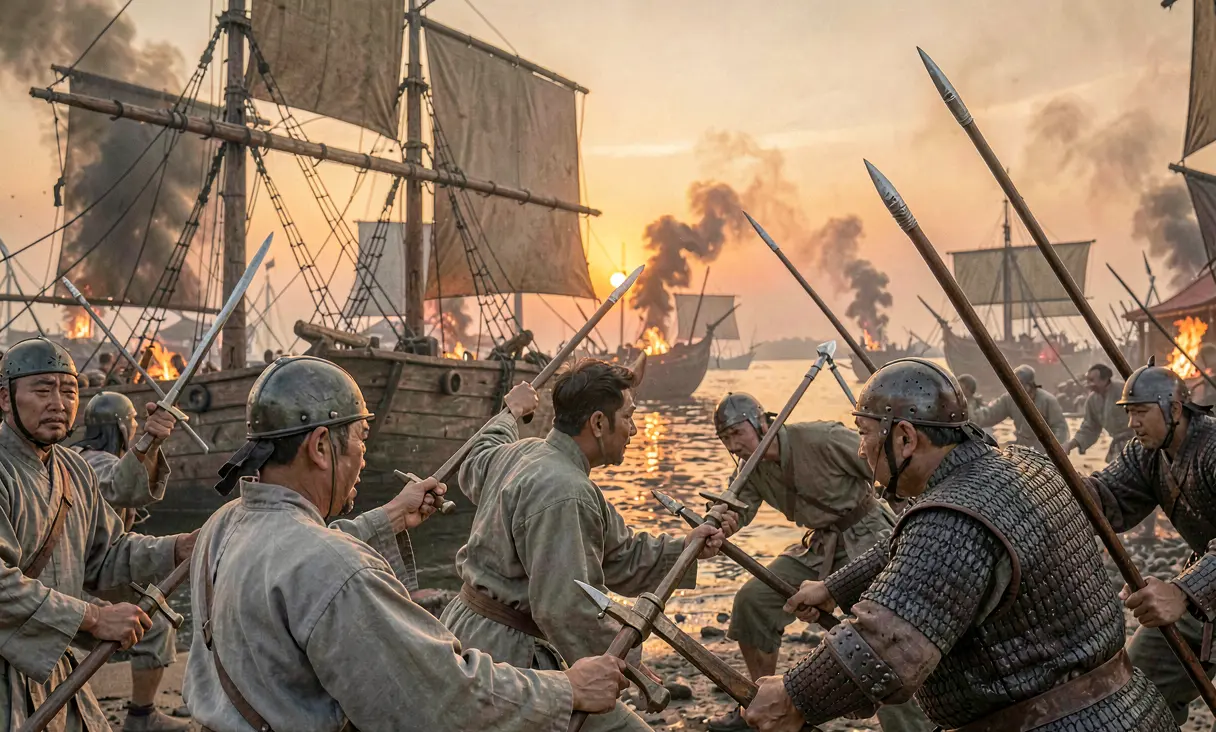
The battle unfolded with brutal efficiency. The Tang-Silla forces utilized fire ships and coordinated maneuvers to trap the Japanese fleet in the narrow estuary. Historical records, including the *Nihon Shoki*, describe a chaotic scene where hundreds of Japanese vessels were burned or sunk in a single day. The fighting was fierce, but the numerical superiority and tactical discipline of the Tang-Silla coalition proved overwhelming. By the end of the engagement, an estimated 400 Japanese ships had been destroyed, and thousands of soldiers perished. Prince Buyeo Pung fled the scene, eventually escaping to China before later returning to Japan, while the remnants of the Baekje resistance collapsed entirely.
Immediate Aftermath and Strategic Shift
The catastrophic defeat at Baekgang marked the end of Japanese military ambitions on the Asian continent for centuries. The Yamato court, shaken by the loss of life and resources, immediately shifted its foreign policy from expansionism to defensive isolation. Fearing a potential Tang-Silla invasion of Japan itself, they accelerated the construction of coastal fortifications known as *mizuki* across Kyushu. Domestically, the disaster catalyzed profound internal reforms; the Japanese elite looked inward, adopting Chinese administrative models and legal codes more aggressively to centralize power and prevent future fragmentation.
Legacy of Unified Silla
For Korea, the victory at Baekgang was the final nail in the coffin for the Three Kingdoms era. With the Japanese threat neutralized and the Baekje resistance extinguished, Silla turned its attention to expelling Tang forces from the peninsula, a campaign that culminated in 676 CE. This led to the establishment of Unified Silla, a golden age of Korean culture and stability that would last for nearly three centuries. The battle effectively redrew the geopolitical map of East Asia, cementing the dominance of the Silla-Tang alliance in the region while forcing Japan into a prolonged period of cultural introspection and state-building.
Historical Significance
The Battle of Baekgang stands as one of the most significant naval engagements in pre-modern East Asian history. It was the first recorded instance of large-scale naval warfare involving Chinese, Korean, and Japanese forces, setting a precedent for future regional conflicts. Beyond the immediate military outcome, the battle served as a pivotal turning point that defined the trajectories of three major civilizations: it secured the independence and unity of Korea, halted Tang expansion into Japan, and forced Japan to forge its own distinct path of development, laying the groundwork for the Nara period's centralized state.
The crushing Japanese defeat halted their continental ambitions, allowing Korea to unify under Silla and Japan to turn inward for cultural development.
Where it happened
Geum River Mouth, Korea — see it on the interactive map →
Explore related history
 WarAn Lushan Rebellion Begins755 CE · Chang'an, ChinaGeneral An Lushan revolts against Emperor Xuanzong, devastating the Tang Dynasty and population.
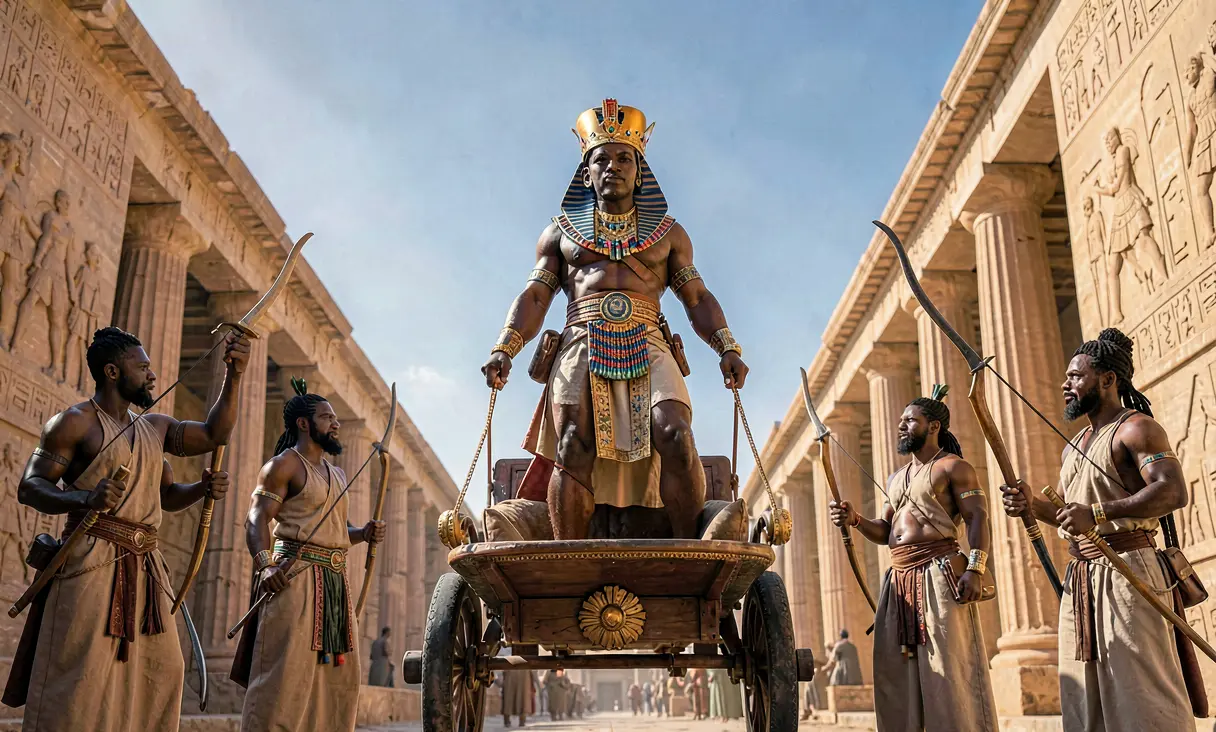 WarKushite Conquest of Egypt (25th Dynasty)c. 747 BCE · Thebes, EgyptKing Piye of Kush conquers Upper and Lower Egypt, establishing the first African-led dynasty in Egyptian history.
 WarKushite Conquest of Egypt Establishes 25th Dynastyc. 744 BCE · Napata, Nubia (Modern Sudan)King Piye of Kush conquers Upper Egypt, establishing the 25th Dynasty and restoring traditional Egyptian religious practices.
 ScienceCompilation of Ashurbanipal's Royal Libraryc. 650 BCE · Nineveh (Mosul), IraqKing Ashurbanipal assembles the largest collection of cuneiform tablets in the ancient world.
 ArtRise of Black-Figure Vase Paintingc. 700 BCE · Athens, GreeceGreek potters perfect the black-figure technique to depict mythological scenes.
 PoliticsReign of Emperor Taizong and the Zhenguan Era626 CE · Chang'an, ChinaLi Shimin ascends the throne after the Xuanwu Gate Incident, ushering in a golden age of governance.
Discussion
Loading…