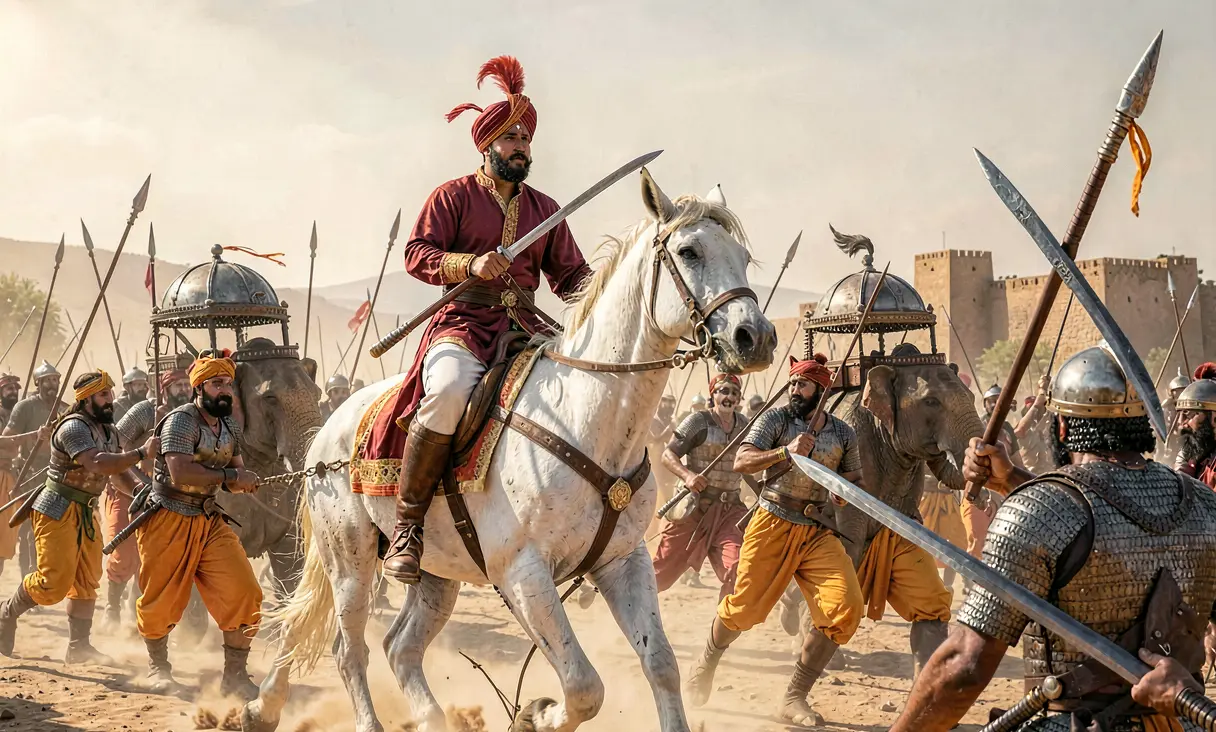
Babur's Victory at Khanwa
Babur's 1527 victory at Khanwa crushed Rana Sanga's Rajput coalition using superior gunpowder tactics, securing Mughal dominance over North India and revolutionizing Indian warfare forever.
The Fractured North and the Rise of a Coalition
Following his decisive victory at Panipat in April 1526, Babur found himself ruling a kingdom that was far from secure. While he had defeated Ibrahim Lodi, the Afghan nobility remained restless, and the Rajput confederacy under the formidable Rana Sanga of Mewar posed an existential threat to the nascent Mughal state. Sanga, a warrior-king renowned for his ferocity and having fought over eighty battles without retreating, rallied a massive coalition of Rajput chiefs, including Rao Karamsank of Amber and Medini Rai of Chanderi. This alliance aimed not merely to expel Babur but to restore indigenous Hindu hegemony over the Gangetic plains, creating a force that historians estimate numbered between 80,000 to 100,000 men.
Strategic Stalemate at Khanwa
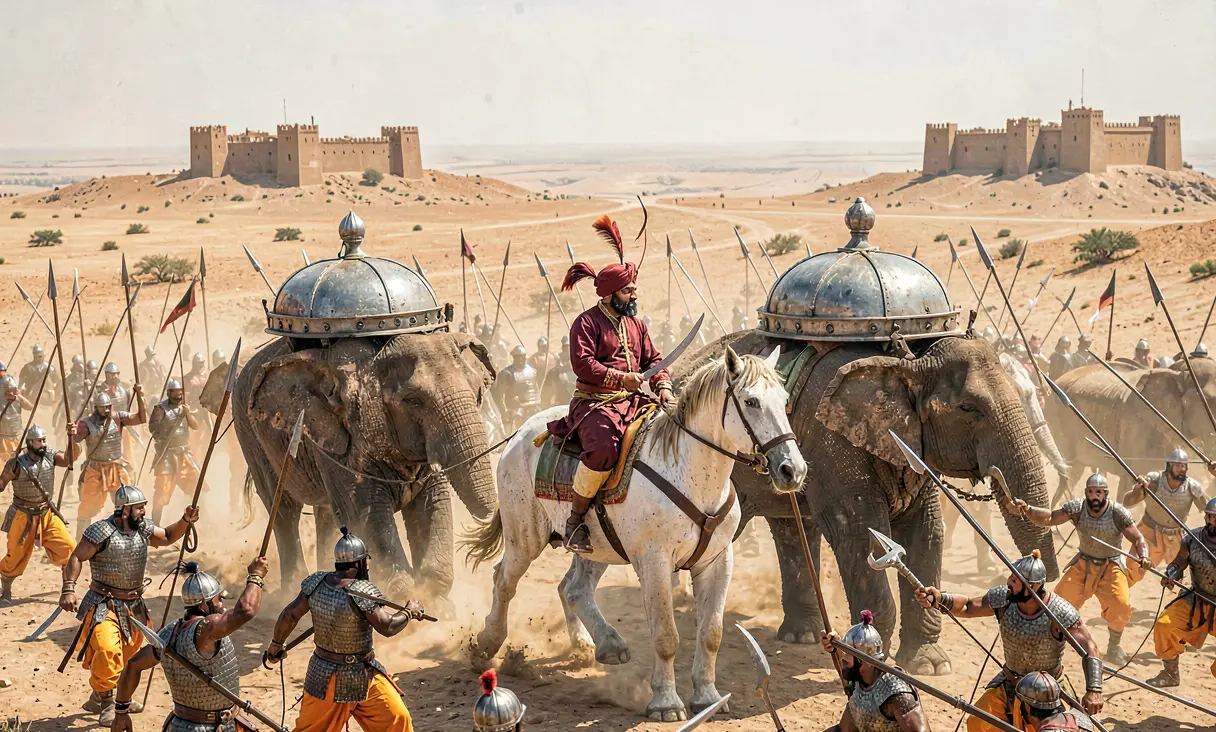
By early March 1527, the two armies converged on the village of Khanwa, approximately 40 kilometers west of Agra. The terrain was open and flat, ideal for cavalry maneuvers but also exposing the Mughal forces to a potential envelopment by the superior numbers of the Rajputs. Babur, acutely aware that his infantry and artillery were outnumbered, adopted a defensive posture reminiscent of Ottoman tactics he had observed in Anatolia. He ordered the construction of a fortified line using 700 carts tied together with rawhide ropes (araba), creating a mobile fortress behind which his musketeers and artillerymen could operate safely from cavalry charges.
The Clash of Titans: Babur vs. Rana Sanga
The opposing commanders represented the zenith of their respective military traditions. Babur, a Timurid prince exiled from his ancestral lands in Fergana, was a master of combined arms warfare, integrating Central Asian cavalry with Ottoman-style gunpowder technology. In stark contrast, Rana Sanga led a traditional Rajput force that relied on shock tactics, heavy cavalry charges, and the sheer morale of warriors fighting for faith and honor. Sanga's strategy depended on overwhelming the Mughal lines before they could effectively deploy their cannons, while Babur's plan hinged on breaking the enemy's charge with concentrated firepower before launching a counter-attack.
The Battle Unfolds: Tulghuma and Gunpowder
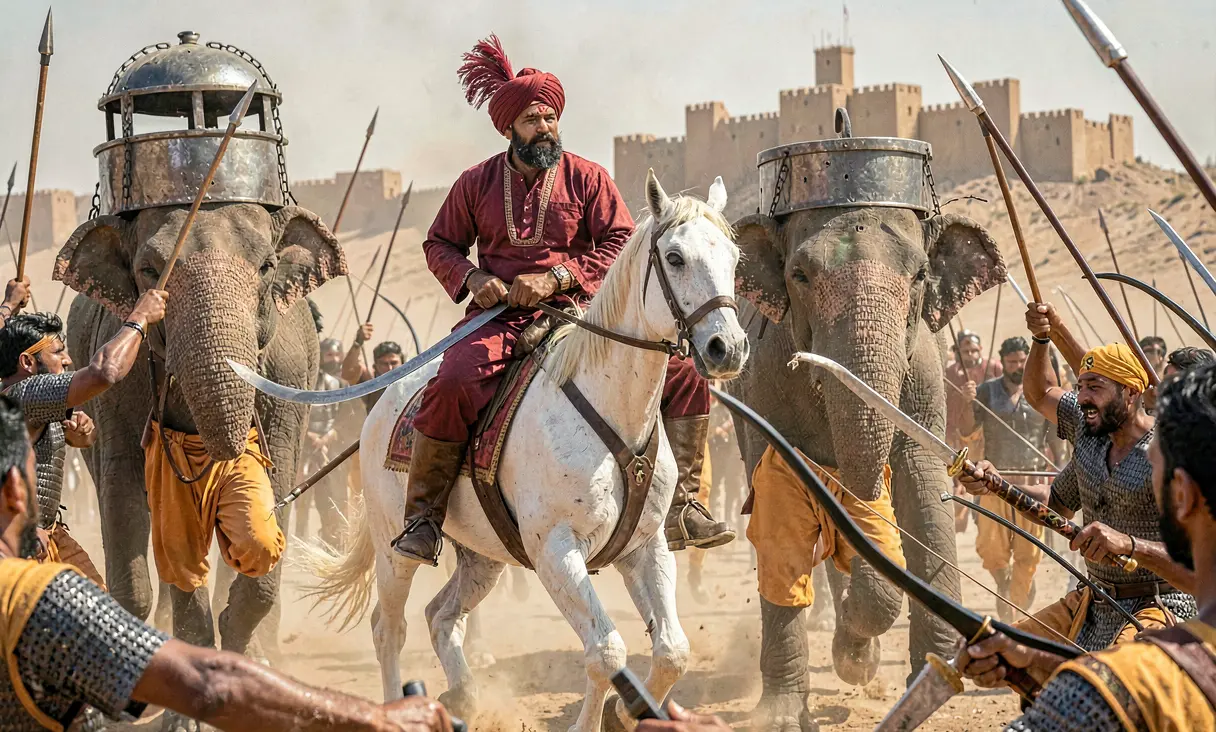
On March 16, 1527, the battle commenced with Sanga ordering a massive frontal assault. As the Rajput cavalry charged, they were met not by a wall of men but by a hail of cannon fire and matchlock muskets (tufang), which had never been deployed on such a scale in India before. The noise and smell of gunpowder, combined with the devastating accuracy of the firearms, caused panic among Sanga's war elephants and horses. Seizing the moment, Babur executed the 'Tulghuma' tactic: his flanking cavalry units swept around the enemy lines, trapping them between the fortified carts and the encircling Mughal horsemen. The Rajput forces, unable to maneuver their heavy charges effectively against the entrenched gunners, were systematically decimated.
The Aftermath: A Decisive Shift in Power
The Battle of Khanwa was a catastrophic defeat for the Rajputs. Rana Sanga himself was wounded and forced to flee the field; he died shortly thereafter, either from his wounds or by suicide to avoid capture, marking the end of a unified Rajput resistance for decades. Medini Rai and many other prominent chiefs perished in the fighting. The victory effectively shattered the coalition that threatened to erase Babur's conquests. Unlike Panipat, which opened the gates of Delhi, Khanwa secured the throne by eliminating the most dangerous internal rival. It confirmed Mughal dominance over North India, allowing Babur to consolidate his rule and begin the administrative integration of the subcontinent.
Legacy: The Gunpowder Revolution in India
Khanwa stands as a watershed moment in Indian military history, demonstrating the supremacy of gunpowder warfare over traditional feudal cavalry. It marked the permanent shift from medieval siege and charge tactics to early modern combined arms strategies. The battle established the Mughal Empire not merely as a transient conquest but as a stable imperial power capable of defeating the most formidable indigenous forces. For centuries thereafter, Indian rulers would be forced to adapt their military doctrines to incorporate artillery and firearms, fundamentally altering the nature of warfare on the subcontinent and paving the way for the golden age of the Mughal Empire under Babur's successors.
The Battle of Khanwa solidified Mughal dominance in India and established Babur as the true founder of the Mughal Empire.
Where it happened
Khanwa, Rajasthan, India — see it on the interactive map →
Explore related history
 WarBabur's Victory at Panipat and Founding of Mughalsc. 1526 CE · Panipat (modern Haryana/India)Babur defeats the Lodi Sultanate at the First Battle of Panipat, establishing the Mughal Empire in India.
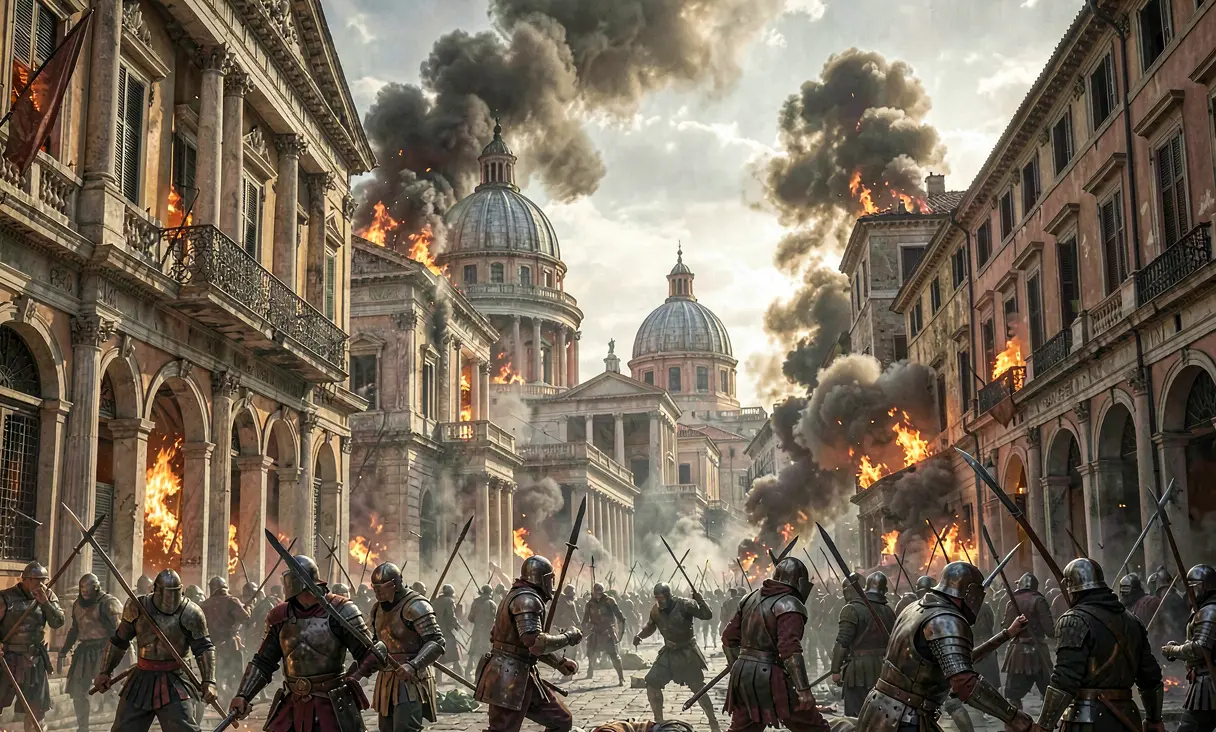 WarSack of RomeMay 6, 1527 · Rome, ItalyMutinous troops of Charles V brutally loot Rome, ending the High Renaissance.
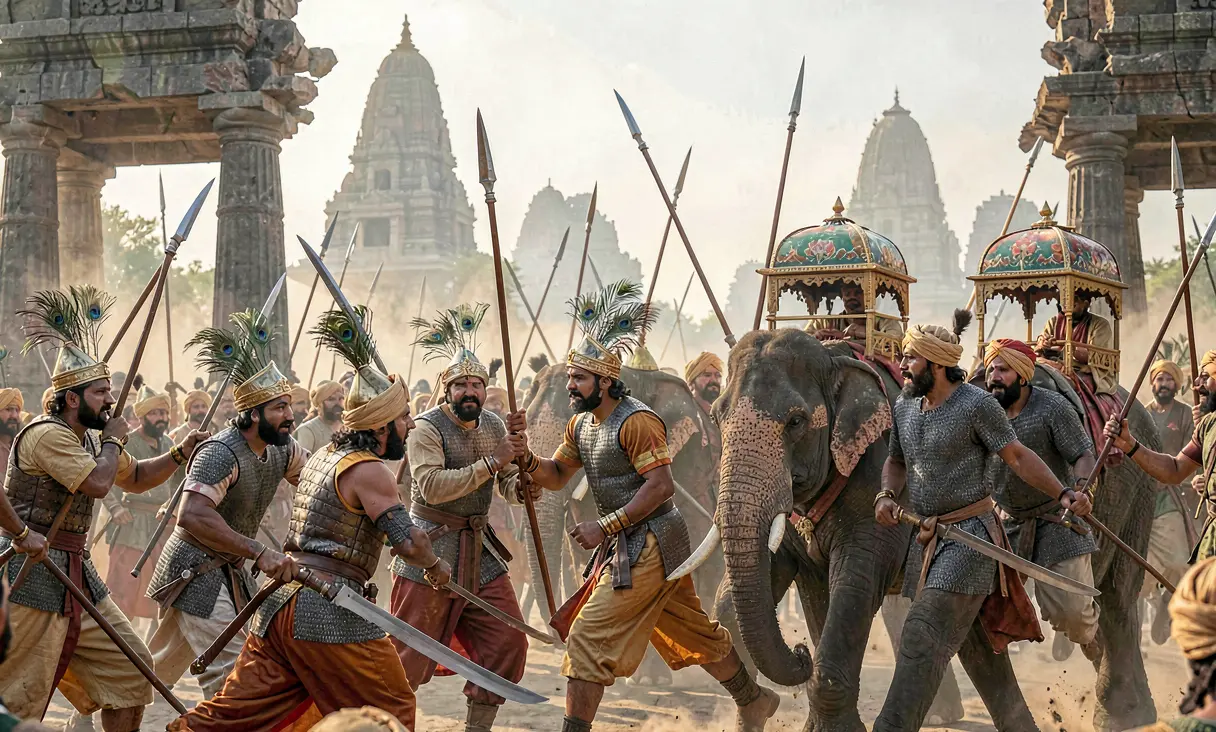 WarBattle of Talikota and Fall of Vijayanagarac. 1565 CE · Talikota, Karnataka, IndiaThe Deccan Sultanates defeat the Vijayanagara Empire in a decisive battle, leading to the sack of Hampi and the empire's collapse.
 ExplorationMagellan's Circumnavigation CompletedSeptember 6, 1522 CE · Seville, SpainFirst expedition sails around the globe proving Earth is round and vast.
 TechnologyIntroduction of the Tomato to Europec. 1520 CE · Rome, ItalyTomatoes arrive in Europe from the Americas, revolutionizing global cuisine.
 ReligionLuther Posts Ninety-Five ThesesOctober 31, 1517 CE · Wittenberg, GermanyMartin Luther challenges Catholic Church practices sparking the Protestant Reformation.
Discussion
Loading…